
The Battle of the Trop Cherry OG and the Double Cherry Pie
By Beth Mathieu
Owner of North Atlantic Seed + Dirty Bird Genetics
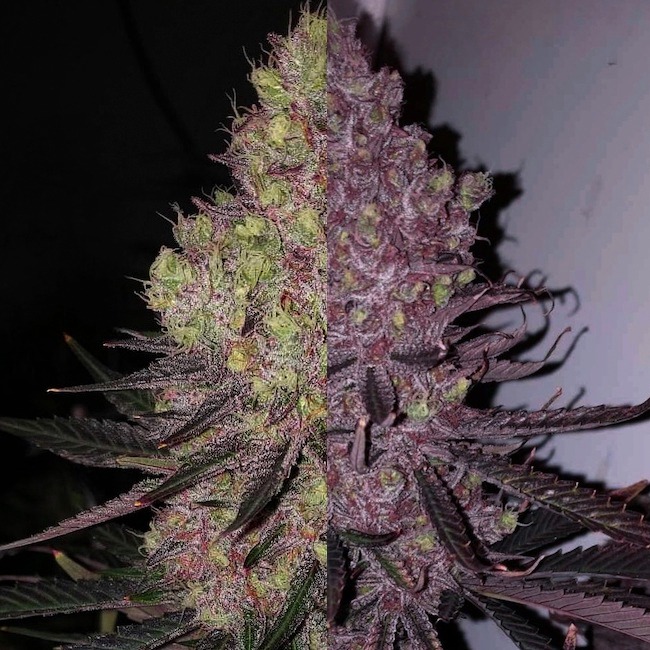
I’ve been a long time fangirl of Ethos’ work. They were one of the first breeders I had the privilege of working with when North Atlantic Seed was in its infancy, and up until 2023, I had personally grown virtually their entire menu strain-by-strain as it was released. When NASC had its 1st annual Discord Photo Contest last fall, I was struck by one plant in particular that I had yet to grow. The Trop Cherry submissions were striking, and interestingly, we received several submissions which told me there was likely something special here. The knuckly, dense, large purple colas in the photos were a great example of ideal flower structure as far as I’m concerned, and I was impressed by the size of the flowers. It’s not often that you see colas as large as these with such minimal leaf and such high quality. I wasted no time. I immediately sent a text over to Ben–our head Breeder at Dirty Bird Genetics– and we added Ethos’ Trop Cherry Duet to our 2025 “pop list.”
Within the Trop Cherry Duet pack, the Trop Cherry OG came paired with another eyecatching selection: The Double Cherry Pie. Both strains featured the Trop Cherry genetics in their lineage, so we decided we would germinate them both and do a “grow off” to find out which of the two strains captured the deep purple coloring, chunky flower structure, and the cherry chapstick terpene profile we were after.
While both the Trop Cherry OG and the Double Cherry Pie had their strengths, there could be only one winner. Continue reading to find out which of the Trop Cherry crosses we decided to keep a cut of for the Dirty Bird Genetics library...dun dun dun.
The Line Up:
6x Double Cherry Pie R1: (Trop Cherry x Cherry Pie)
5x Trop Cherry OG R1: (Trop Cherry x SFV OG)
TROP CHERRY OG by ETHOS
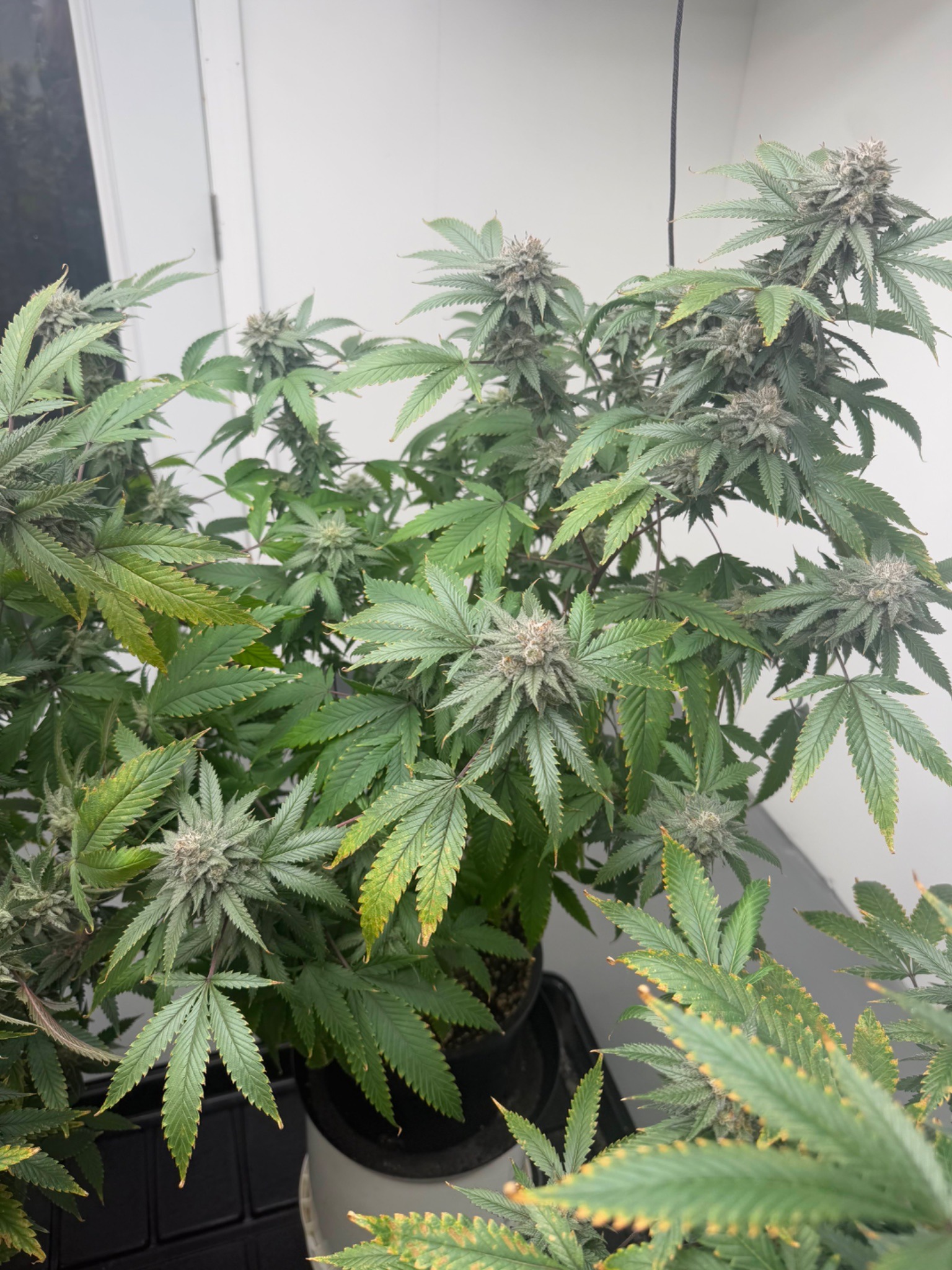
Of the five Trop Cherry OG seeds we grew, we observed three phenotypes, making for a relatively high PVI. This cohort showed divergence in color, terpenes, and flower structure:
- Color: Three of 5 were green and 2 of 5 had purple flower
- Terpenes: The purple plants had no observable terpenes, whereas the green plants had mild orange/cherry/gas smells come through.
- Flower Structure: Flower structure was spear shaped with granular bracts versus stella form and more dome-shaped.
- Herms: One of the five plants showed signs of hermaphrodism in the first three weeks of flower so we had to toss it.
All of the plants had medium internodal spacing, great lateral branching, and grew as rounded bushes with moderate foliage and moderate calyx-to-leaf ratio. Morphologically, they were well proportioned plants with self-supporting stalks; we did not have to stake the plants at all. One plant in particular had notably heavy flowers. Yields and stacking were moderate overall. One of the purple plants was a bit finicky and yellowed dramatically toward the end of flower, which can be normal, but the majority were easy to grow and remained healthy through harvest. All of the plants turned out well, but none were show-stoppers for us, so we did not choose to keep a mother plant from this lot. That said, I have seen some photos of truly beautiful plants that have come from these seeds, so I wouldn’t dissuade anyone from trying them or hunting them. If I were to re-hunt these myself, I would be looking for a pheno that has the beautiful purple coloring paired with a stronger terpene profile.
DOUBLE CHERRY PIE by ETHOS
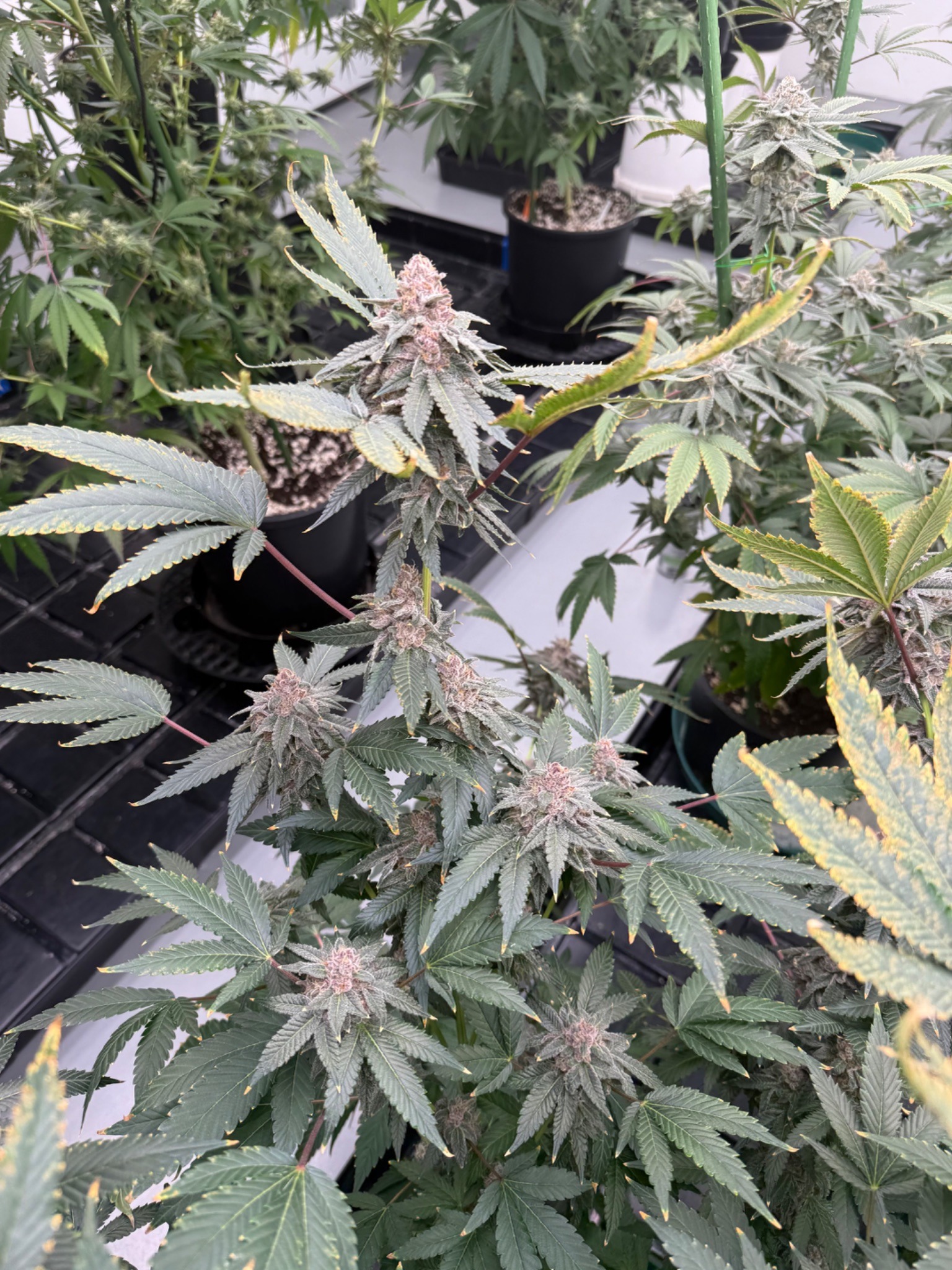
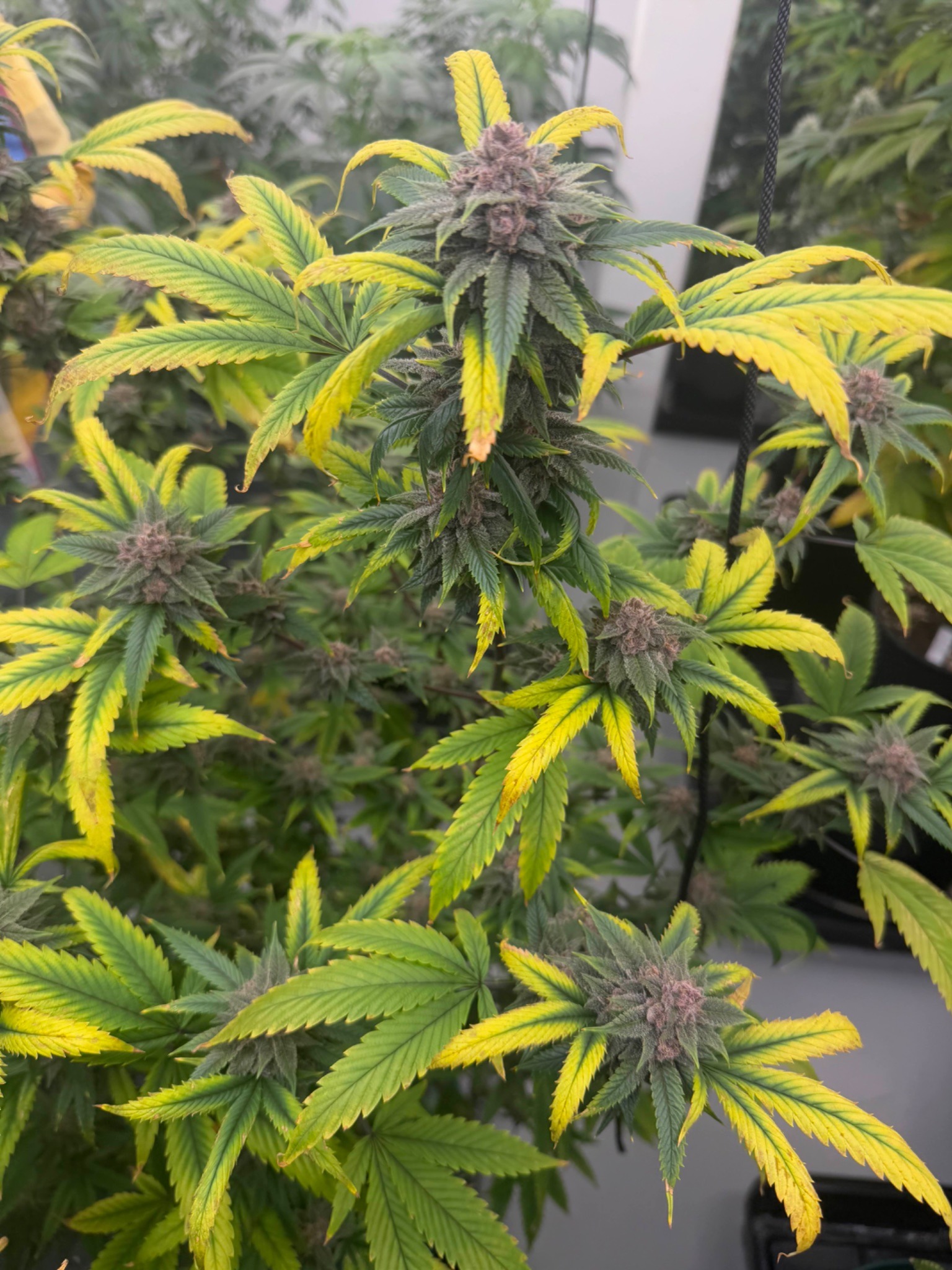
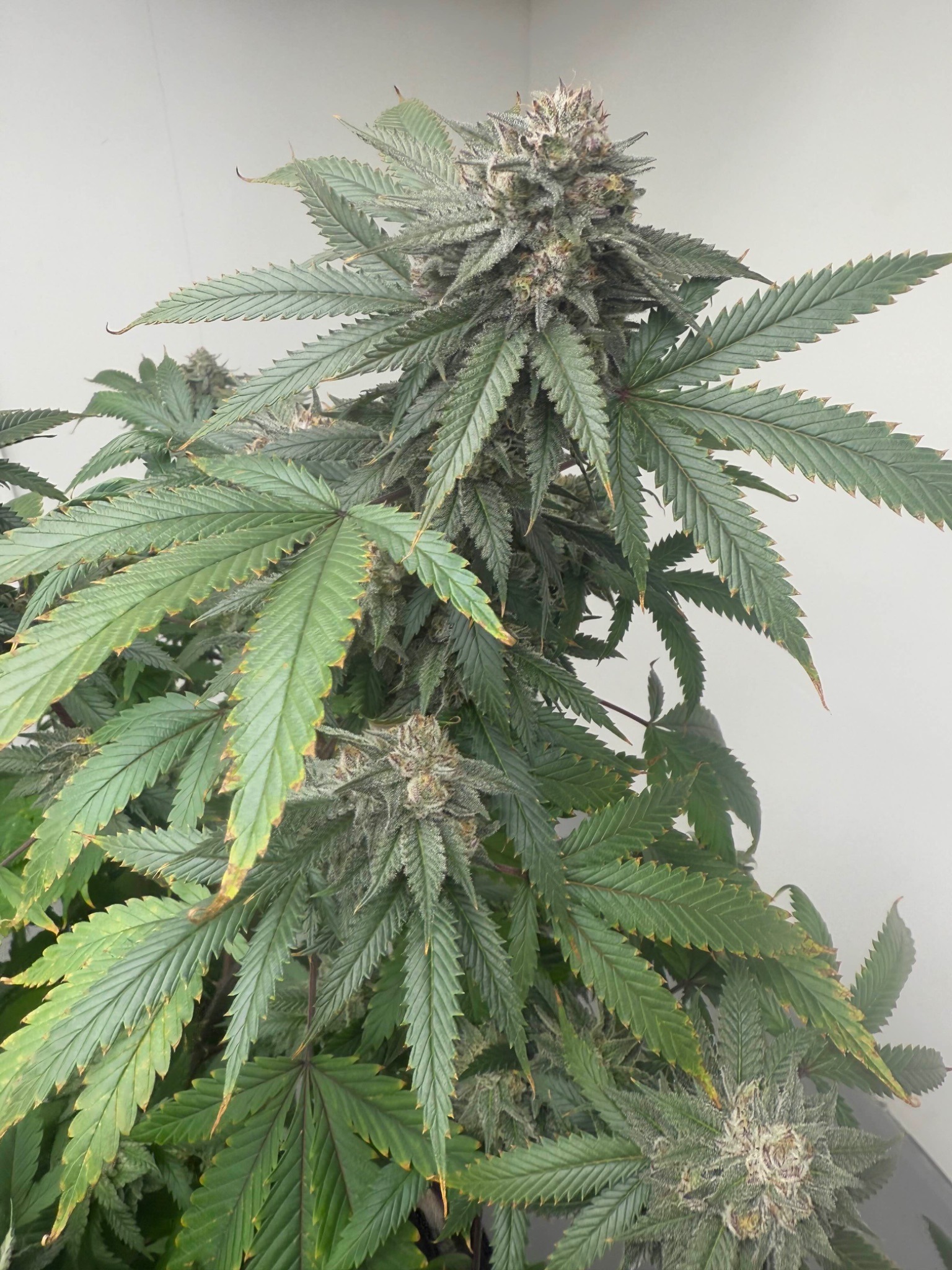
Similar to the Trop Cherry OG, the Double Cherry Pie showed divergence in color, terpenes, and flower structure; however, as a whole they appeared more uniform, and the terpenes we observed in this grow were stronger and more consistent. These factors really tipped the scales in the Double Cherry Pie’s favor.
- Color: One out of six of the DCP plants we grew had purple flowers and green foliage and the remainder were deep green.
- Terpenes: Mandarin orange/cherry chapstick terpenes were pungent on the purple pheno that became our keeper cut. As a whole, the rest of the cohort leaned more cherry than citrus/orange/tangie.
- Flower Structure: The majority of plants had spear-shaped flowers that came to a point at the apex of the cola. One out of six had rounder, dome-shaped flowers.
- Herms: 0/6
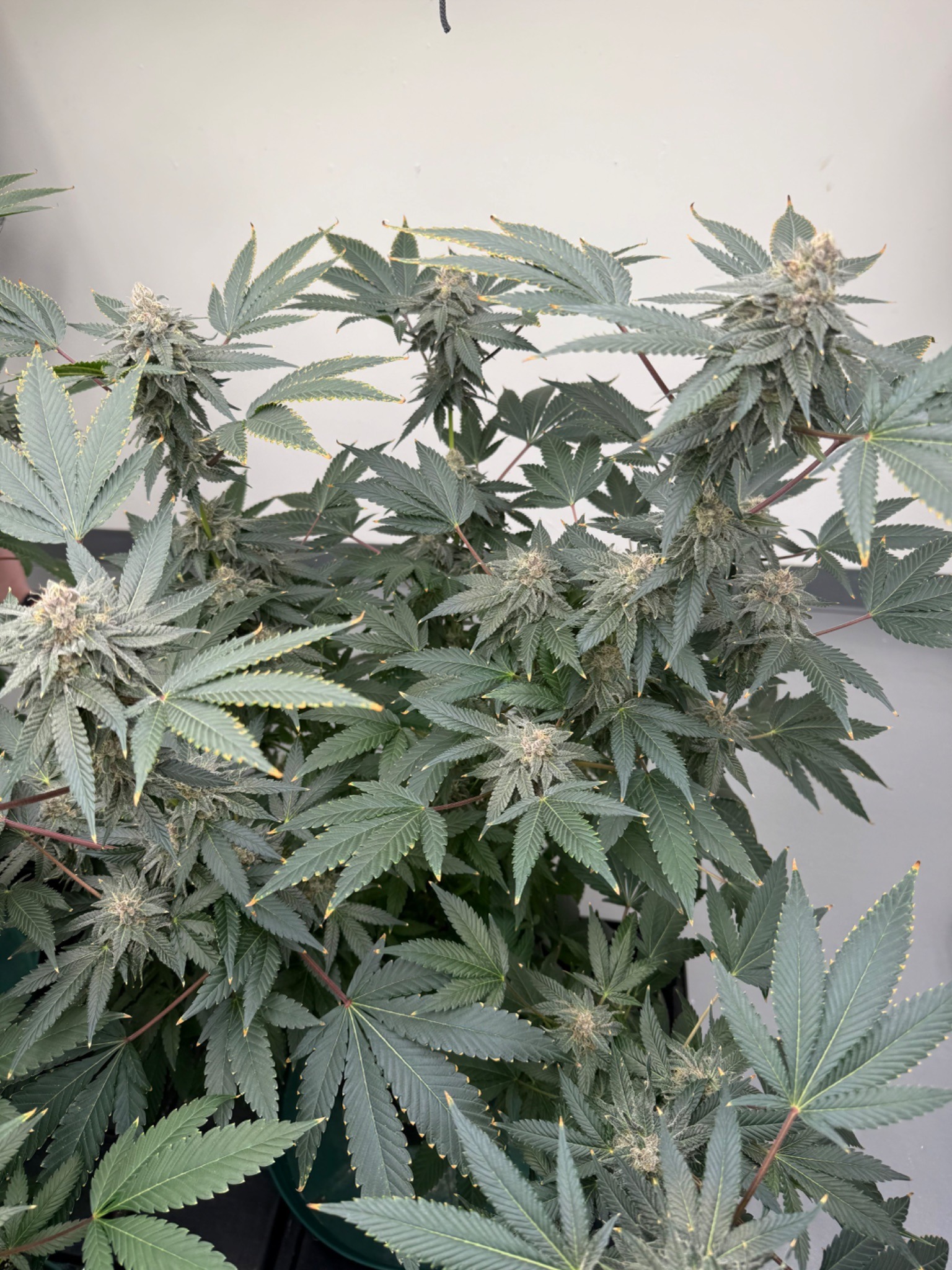
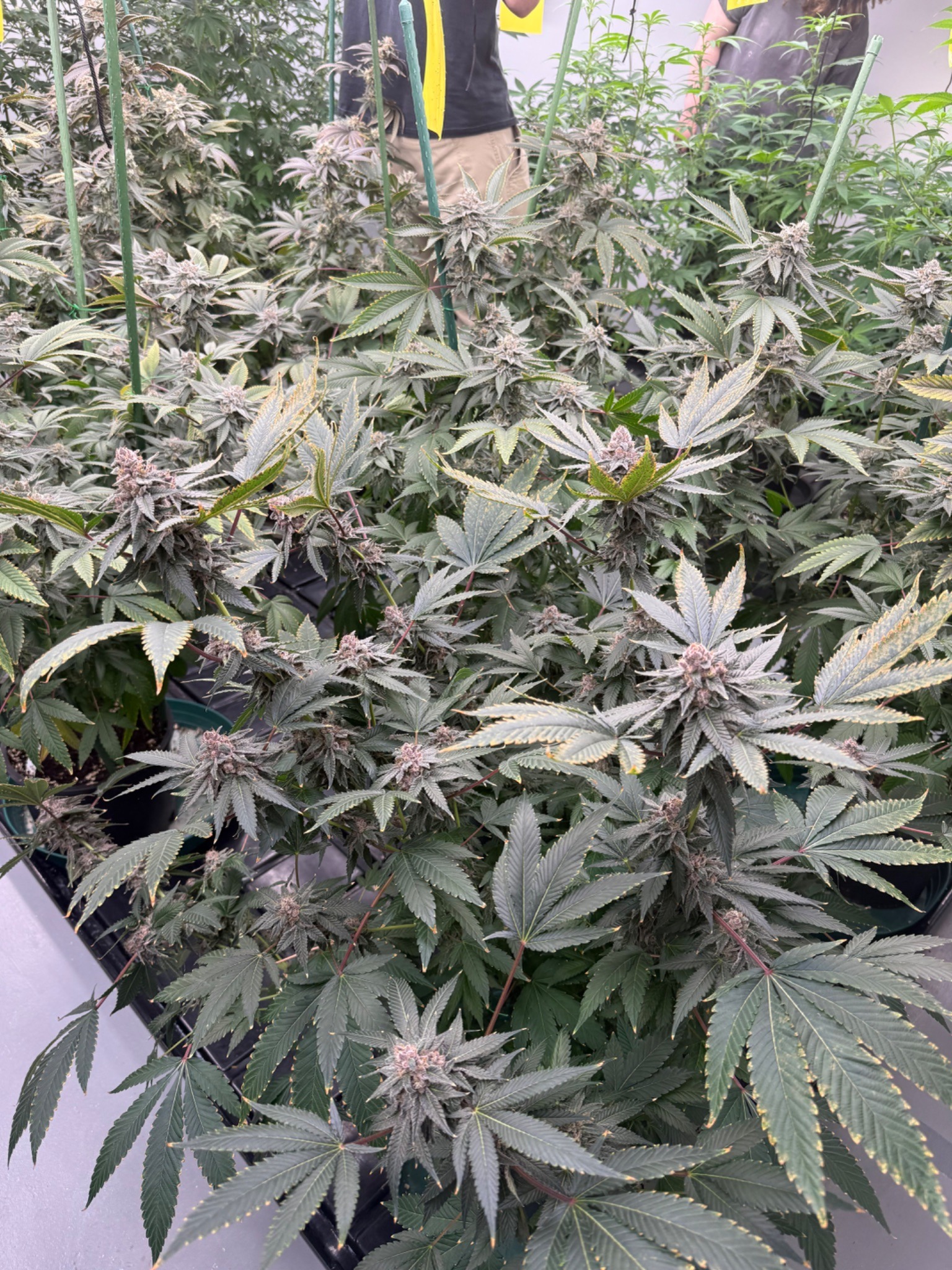
Overall, I would rate the terpenes in the Double Cherry Pie as moderate with the one purple pheno being a stand out both in color and smell. Moderate-high yield was consistent across the board on the Double Cherry Pie, as well as strong, self-supporting stalks. Morphologically, the plants were quite similar to the Trop Cherry: They grew as bushes with great lateral branching making for a beautiful, even canopy. The Double Cherry Pie’s foliage was slightly less dense than the Trop Cherry OG’s was with more room for air flow, and the calyx-to-leaf ratio was notably higher. On top of these factors, we didn’t observe any signs of hermaphrodism in the DCP, and the trichome production was observably superior.
The Double Cherry Pie was the clear winner here for the Dirty Bird team. This seed cohort was where we found our keeper cut. If you couldn’t guess, it was the sole purple Double Cherry Pie plant that exhibited fantastic tangie and cherry chapstick terpenes. This cut will be appearing in an upcoming Cherry AK breeding project that we have maturing behind the scenes as of this writing. Overall though, I think both of these strains are worth your time; thank goodness since they’re sold together! Both exhibited beautiful purple flowers in at least 20% of the plants we tested (for those of you who love purple like us Mainer’s do), and both had great internodal spacing and that classic-bushy morphology that’s hard not to love. We didn’t find any duds. All of the plants yielded well and produced high quality flowers. Feel free to send us some pics if you find any fun keepers in your own hunts!
Stay tuned for more Grow Reports as Dirty Bird continues hunting great genetics from the NASC breeder family!
HAPPY GROWING!