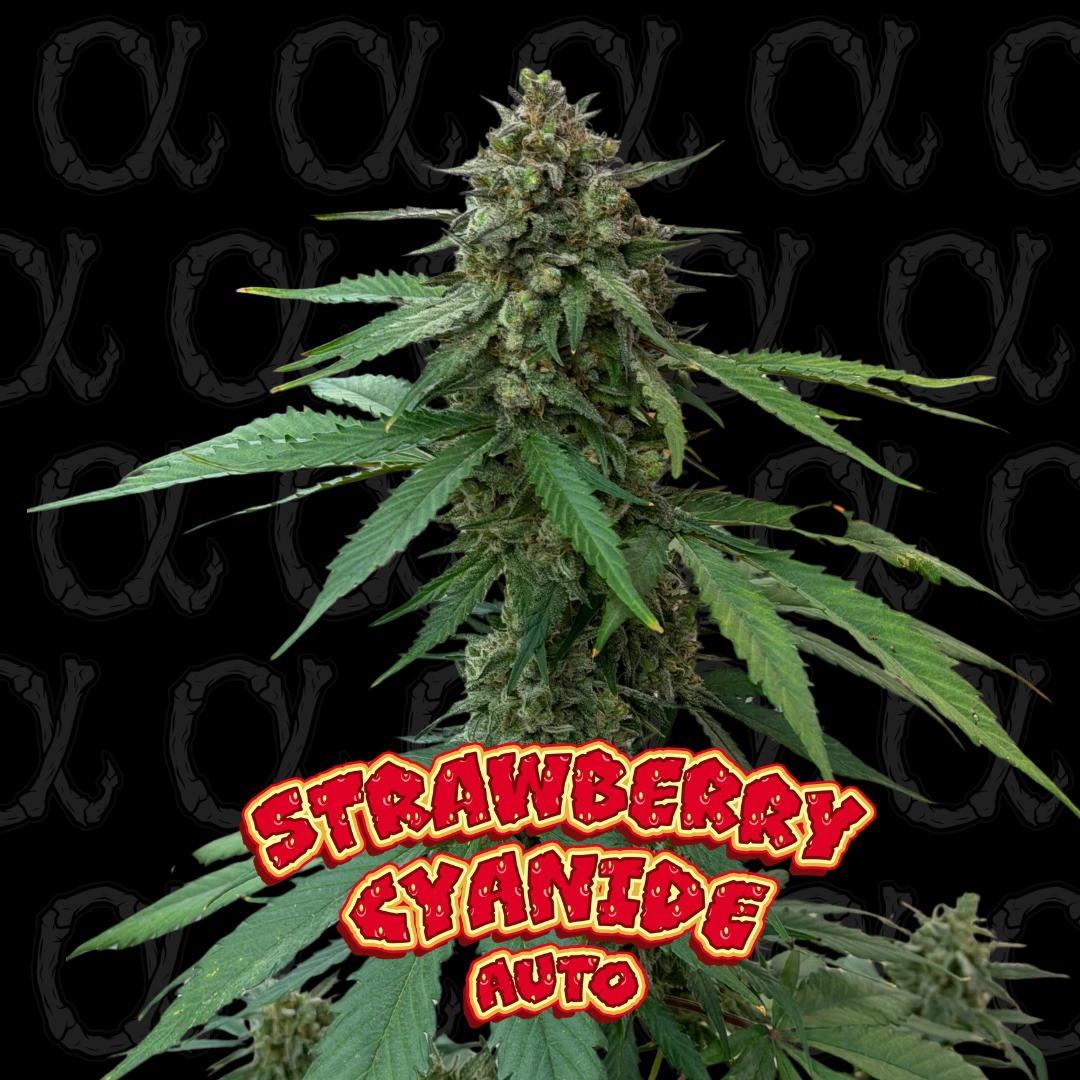
Strawberry Cyanide Auto: A Throwback to the Old School Sour Diesel

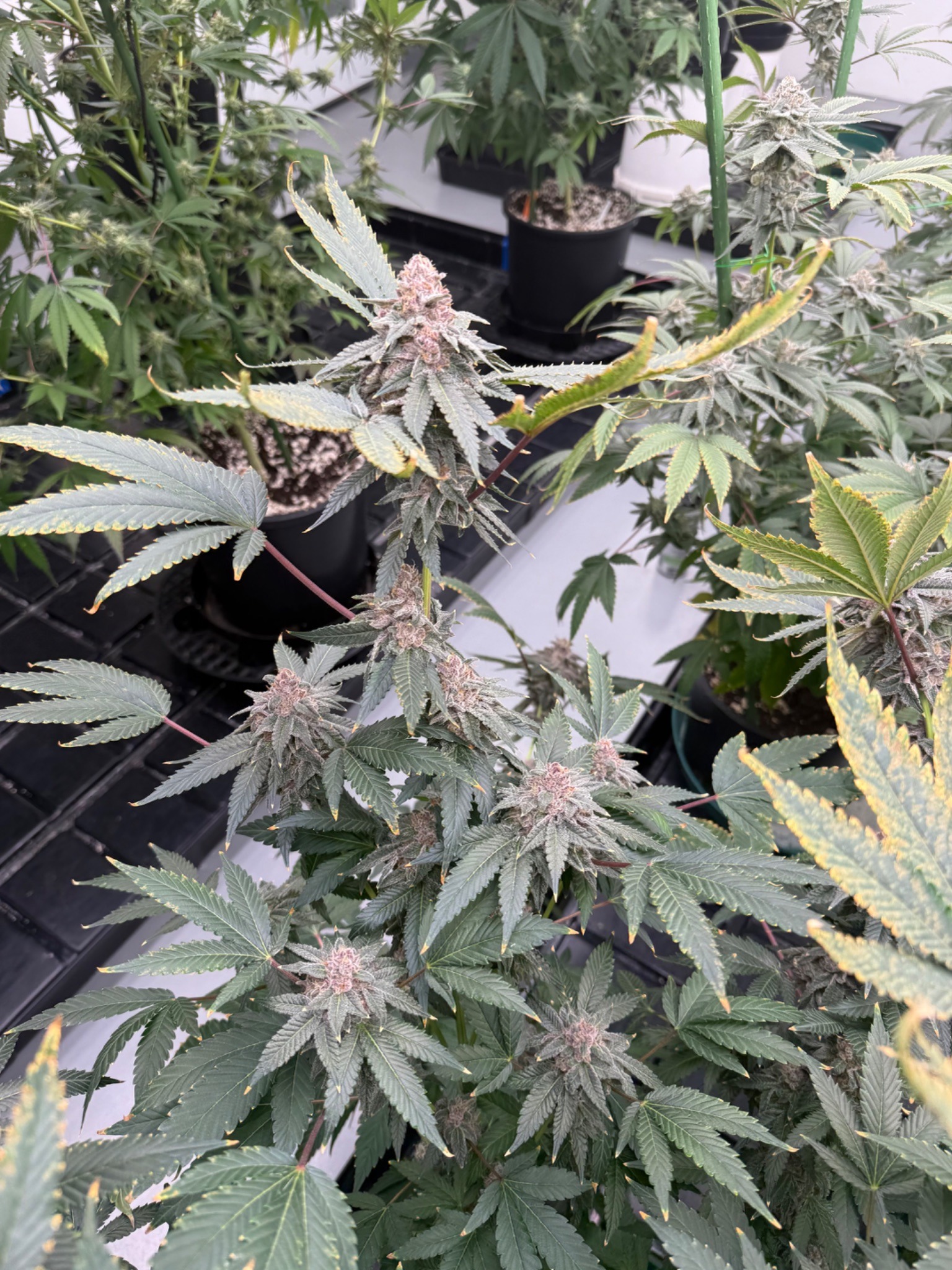
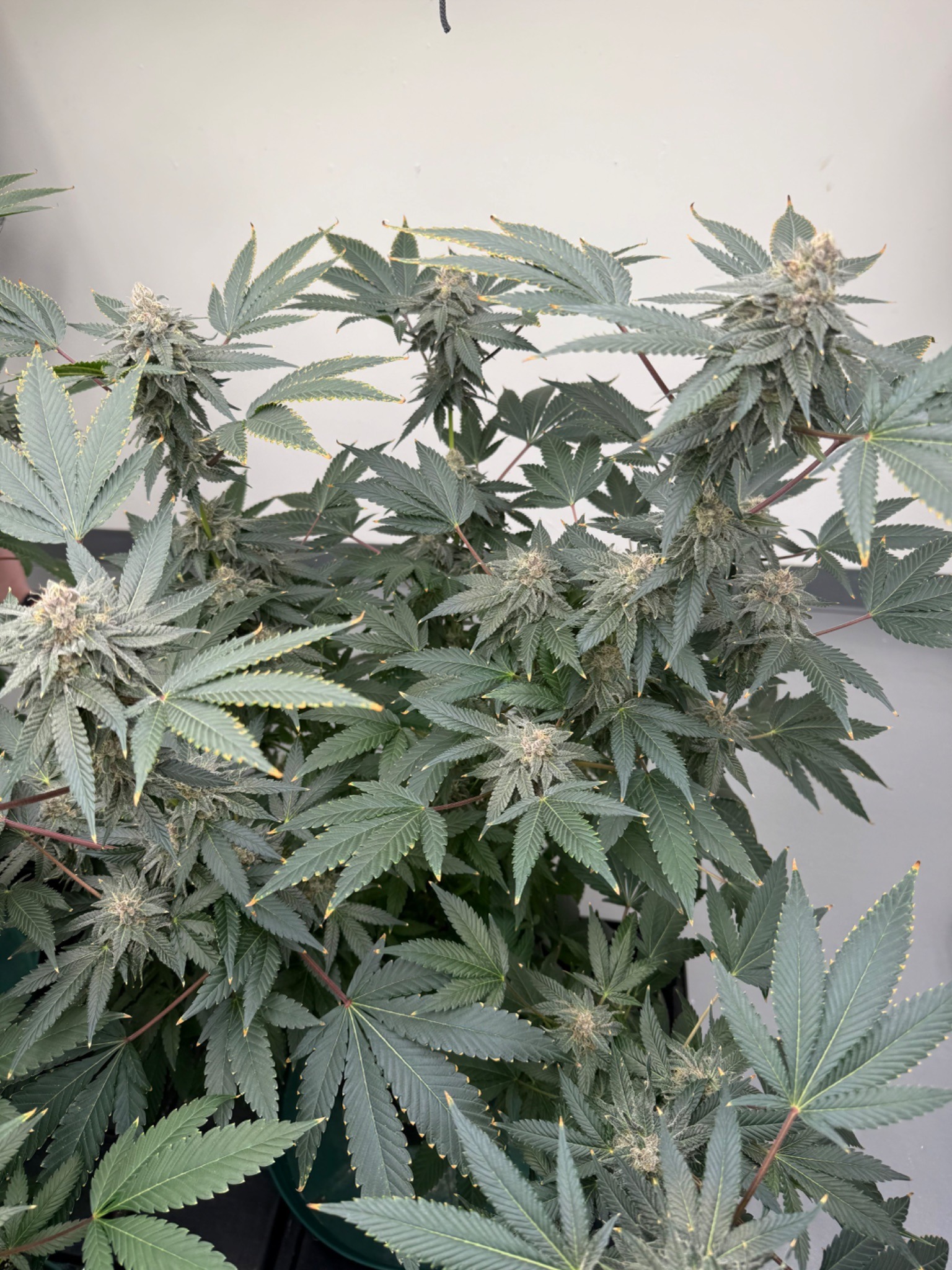
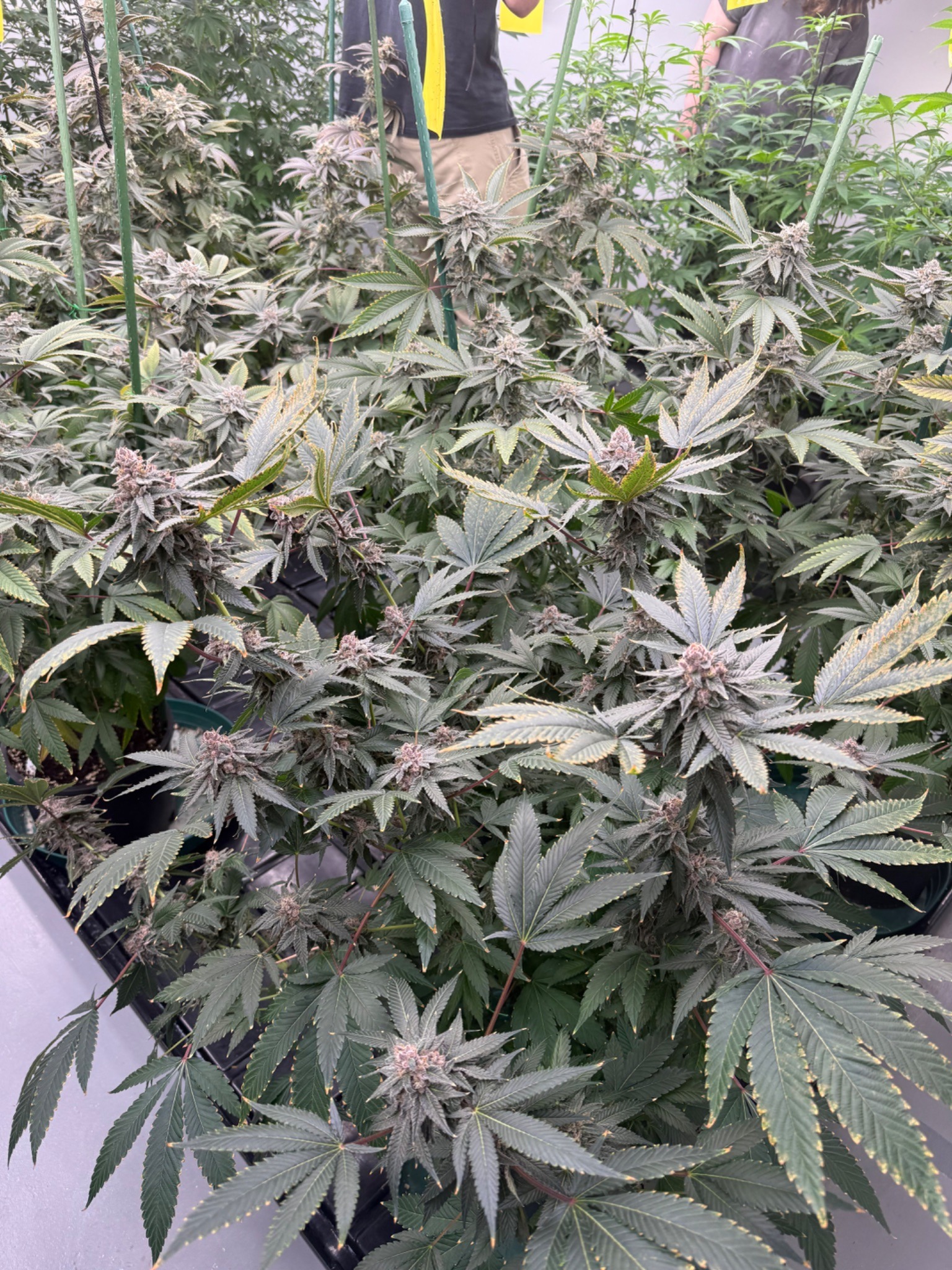
Strawberry Cyanide Auto is the pungent, Strawberry Diesel-forward cross of the Bruce Banner and Dirty Bird’s own, Sour Gorilla Auto. In tracing these genetics back, you’ll find that the aforementioned mother and the father have strong sour diesel and strawberry diesel lineages in common. This explains why the Strawberry Cyanide Auto felt so timeless when we first tested the genetics in early 2026. The look and smell brought us back to the early 2010’s when medical cannabis was just gaining steam here in Maine. The east coast Sour Diesel genetics dominating the genome back then were truly unforgettable and, until this point, equally elusive. Anyone who has worked closely with us knows we’ve been hunting for an incredible Sour Diesel ever since. While we have yet to find it in the photoperiod gene pool, this cross has unexpectedly delivered us a win.

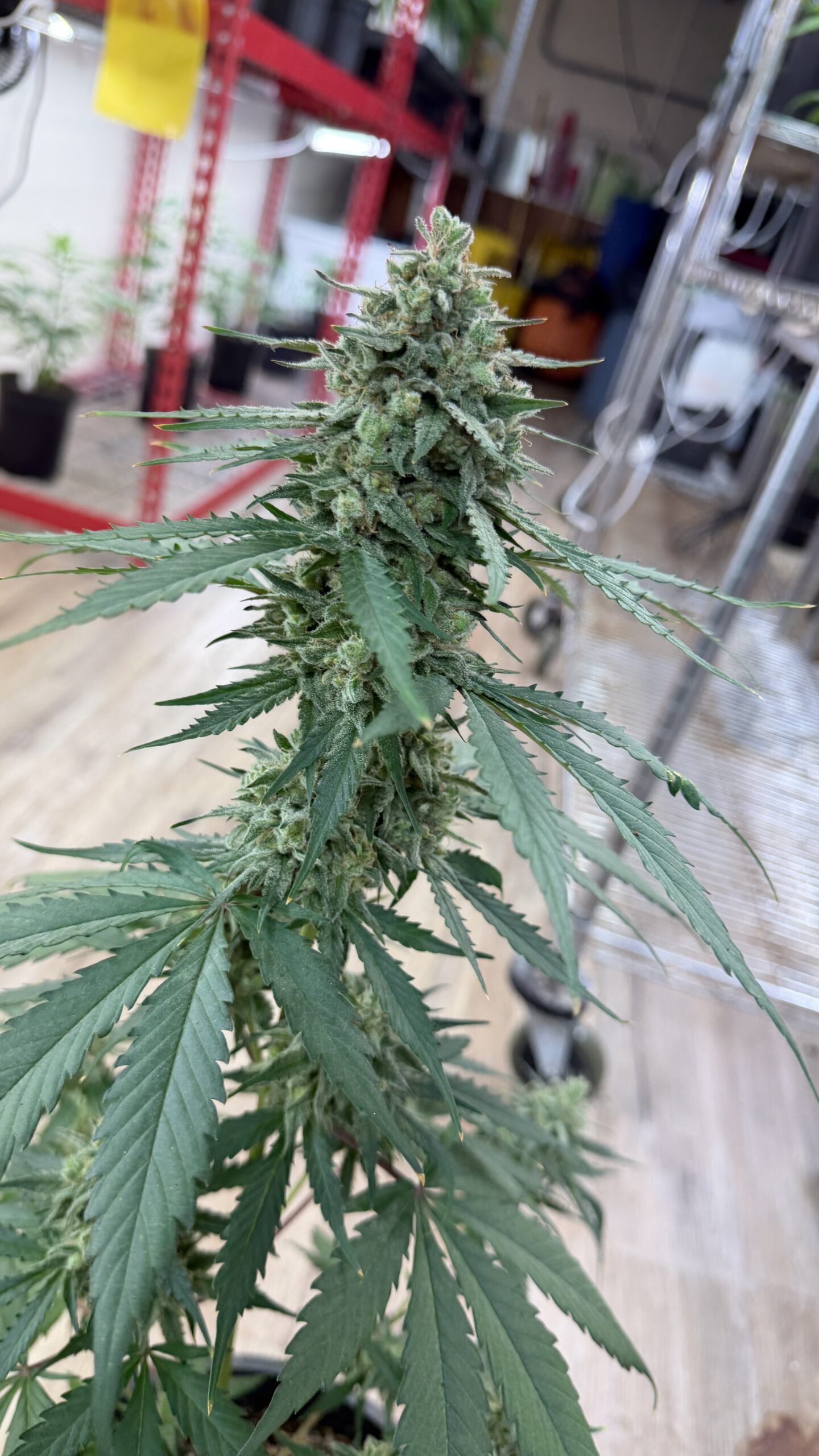
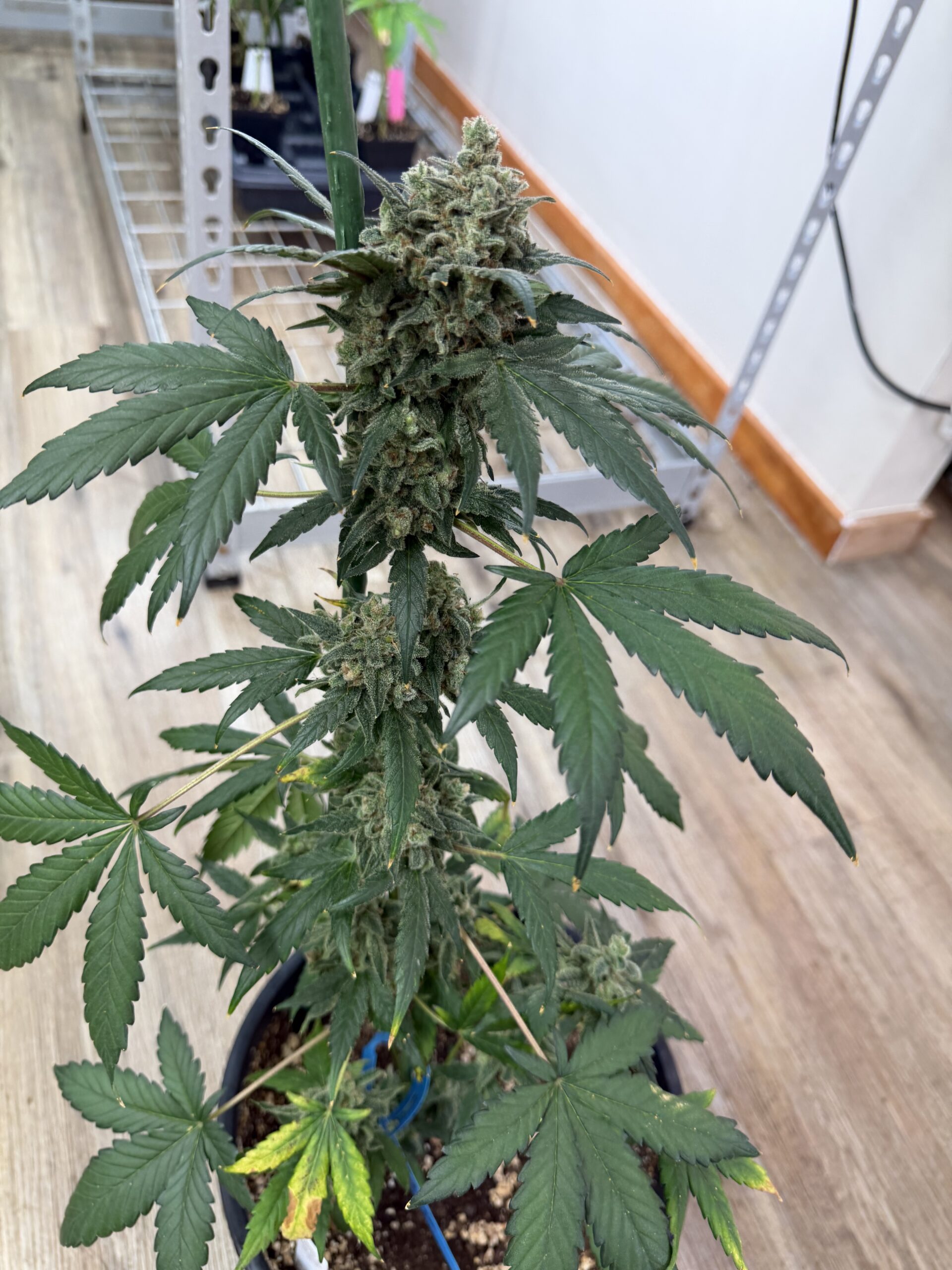
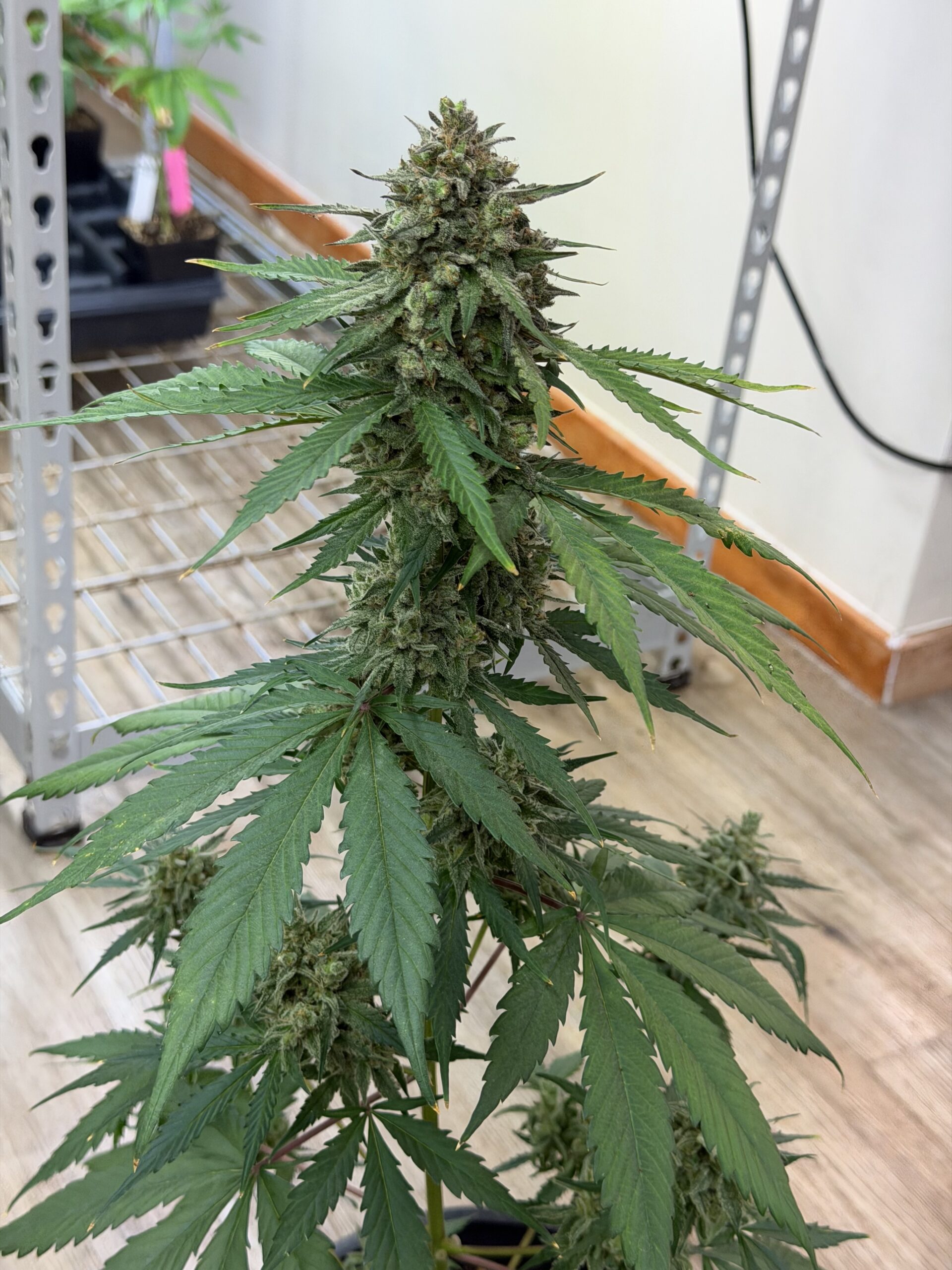
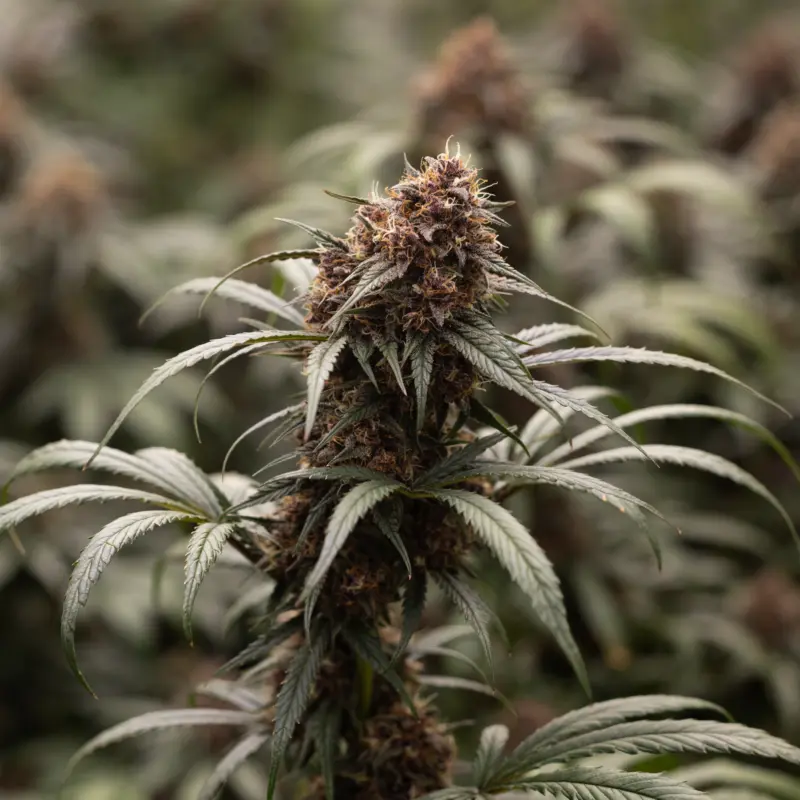
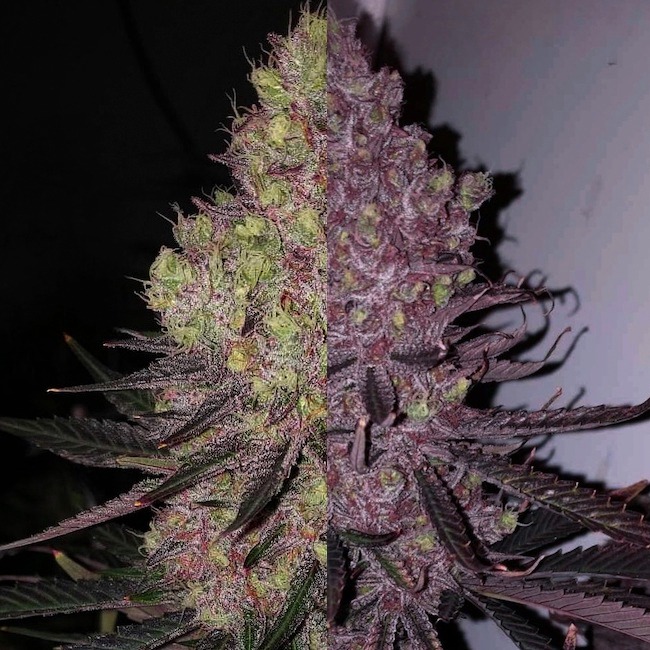
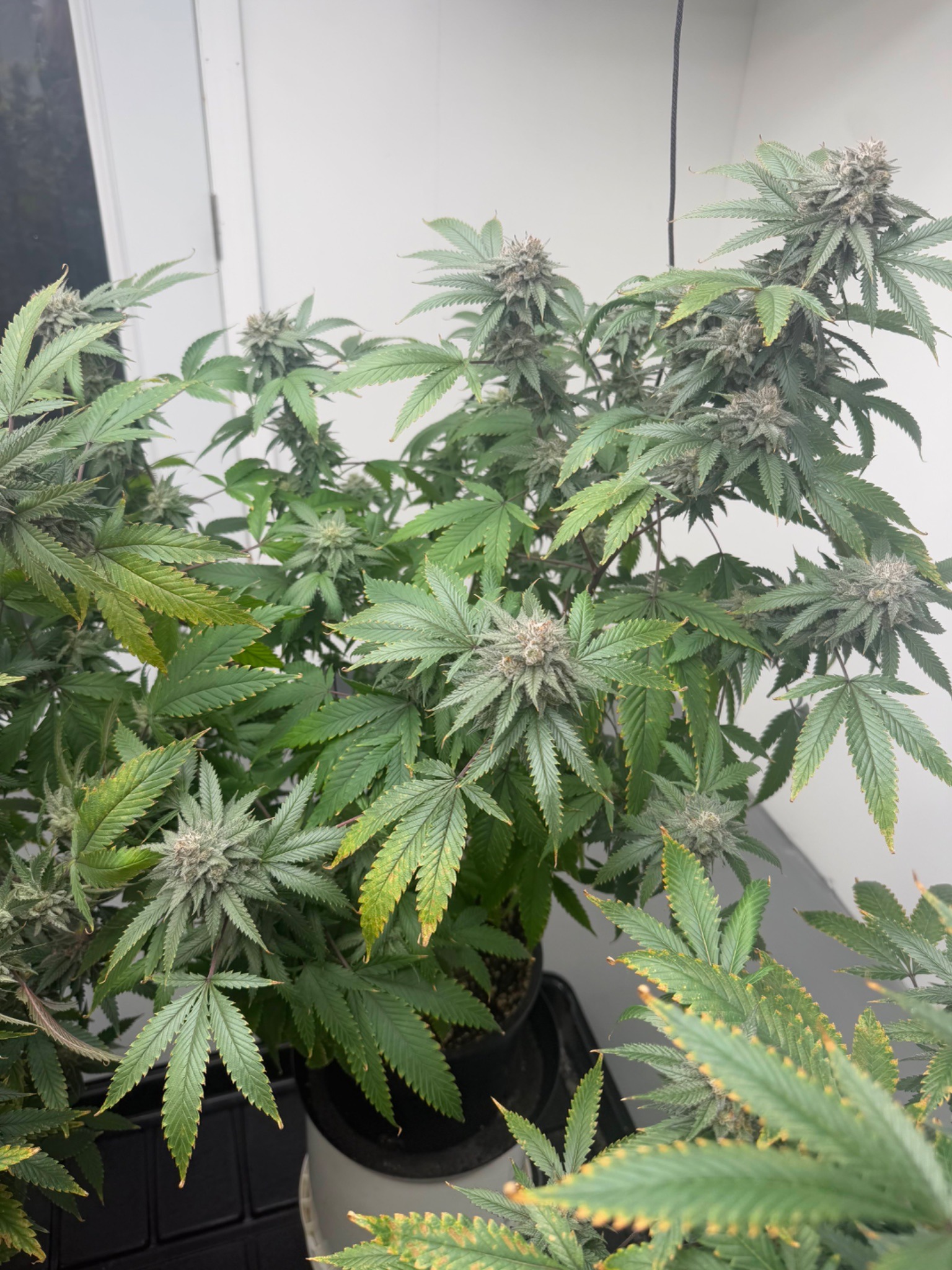
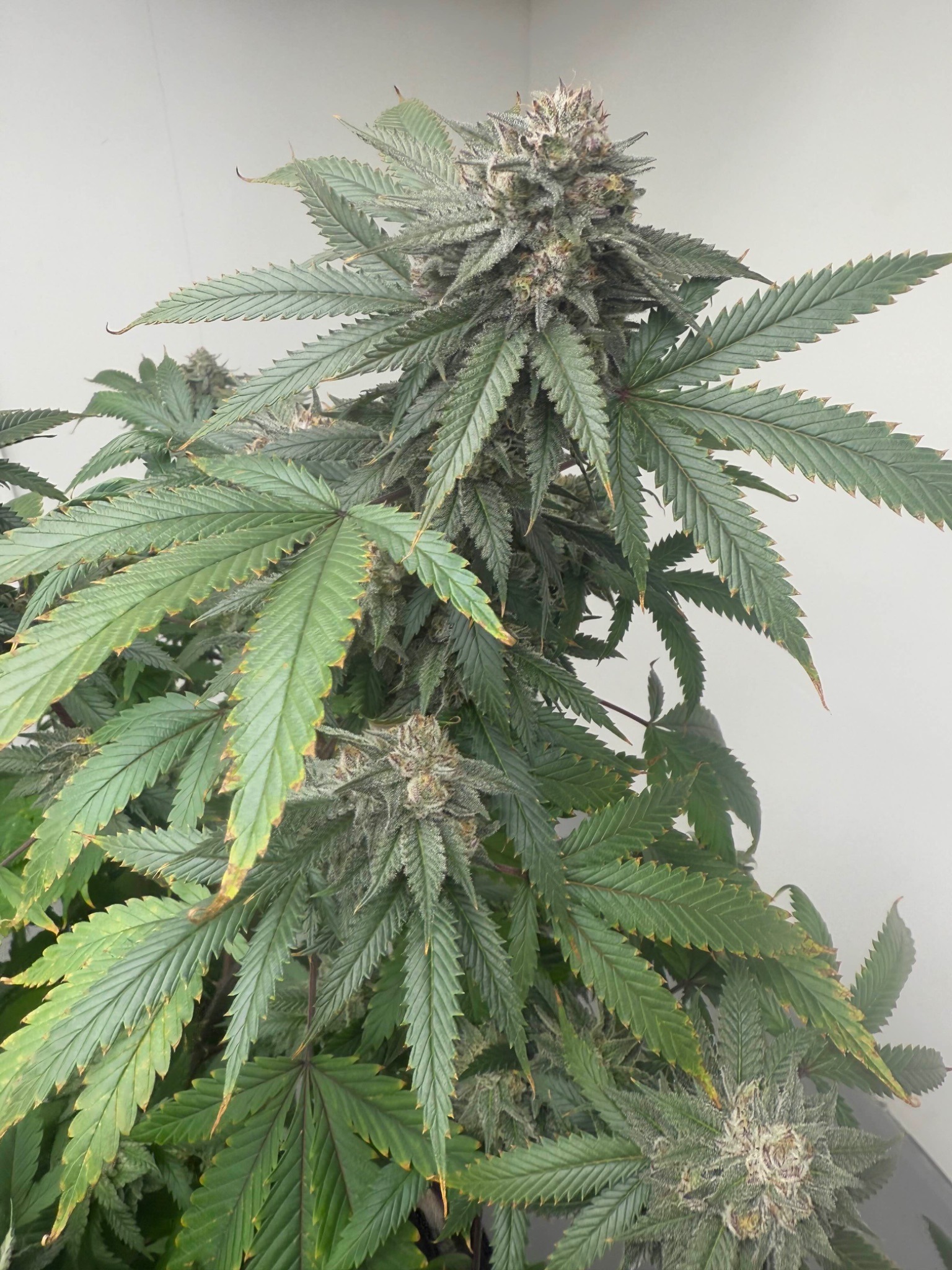
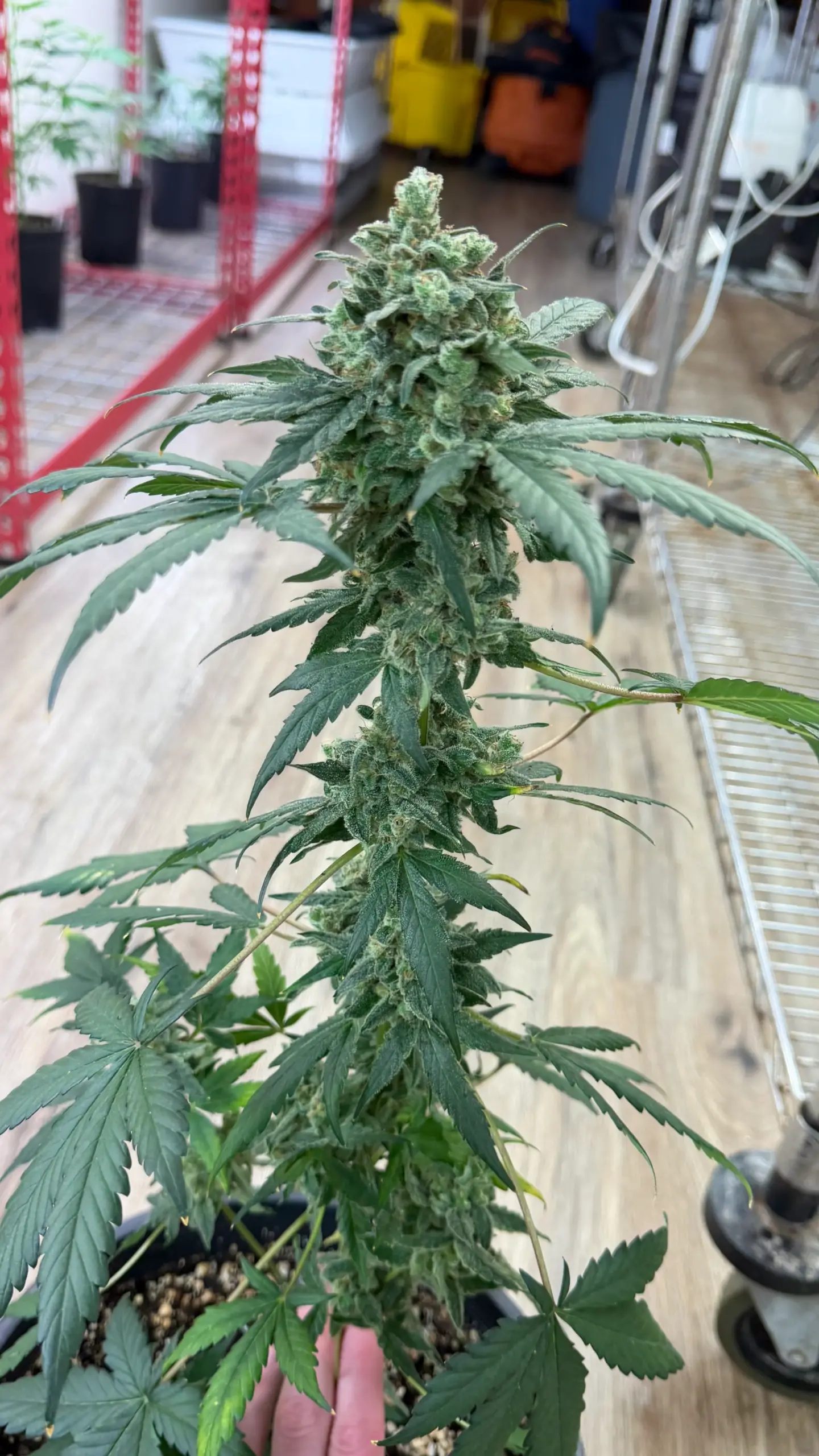
The Strawberry Cyanide F1 Auto is a hybrid cross that exhibits great uniformity and vigor, and incredible terpenes. In the first 5-6 weeks of its life, it may appear moderately stretchy due to its vertically-oriented structure, but by the end of week 7 it kicks into high gear and begins filling out its gorgeous, multi-toned flowers. By harvest, most of the cohort will have calyxes and fan leaves flecked with maroon and dark purples. Flower morphology is long and conical with minimal leaf, making this strain easy to manicure and process. Some plants will fill out their length better than others, with the shorter, tighter phenos being the keepers we chose to move the line forward to the upcoming F2 generation.
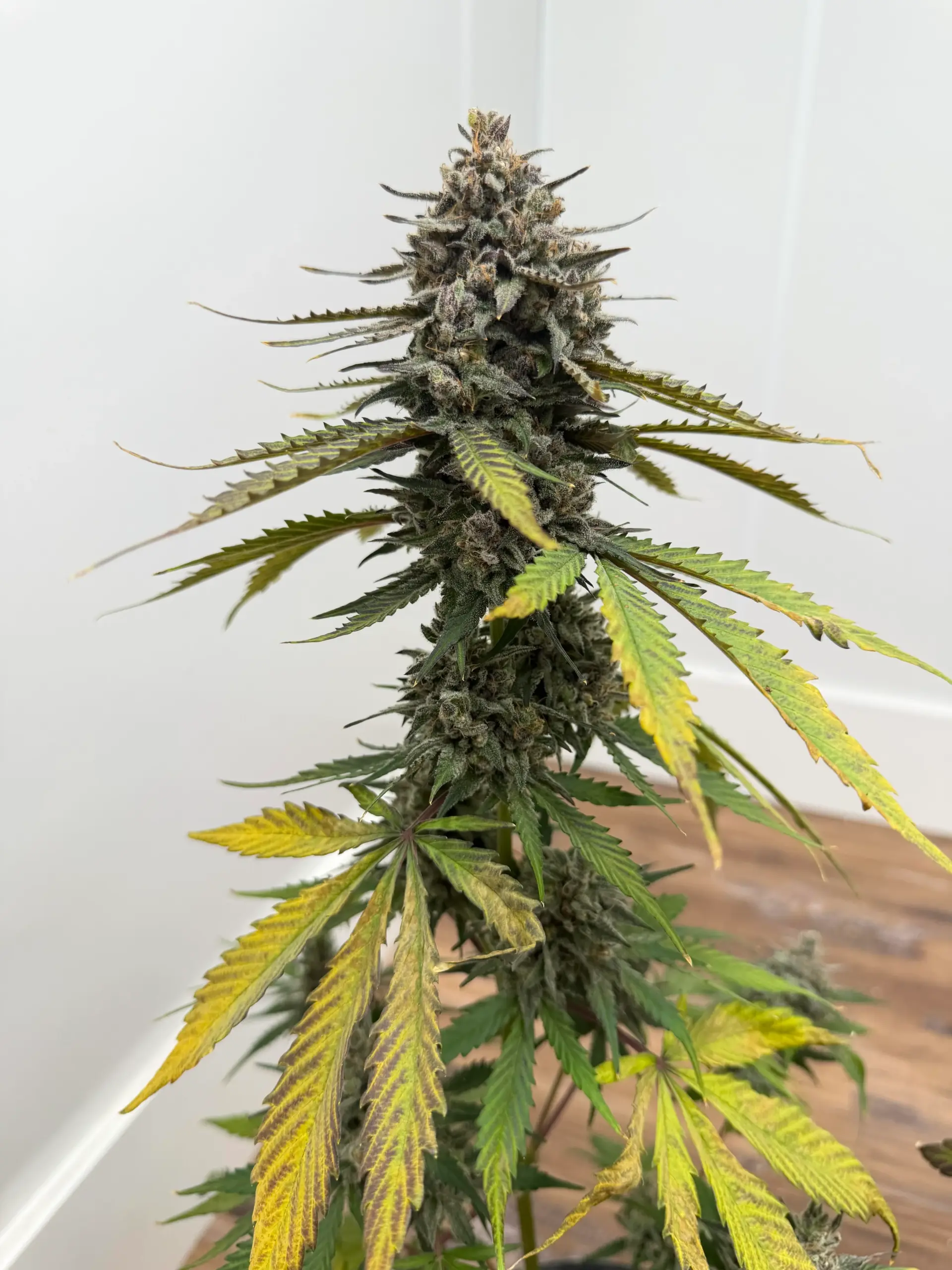
Terpenes are unwavering in their potency, but diverge slightly between sour petroleum and strawberry sandalwood. Bright sour, chem, and gas is definitely the dominant profile, and a token example of the terp profile that gave the legendary Sour Diesel its name. The strawberry comes in as a strong second adding complexity and flavor to an already bright, intriguing palate. About 15% of plants were strawberry-dominant with sour/chem undertones. 

Expect plants to finish between 65-75 days. When scoped at day 65, we observed amber coloring in approximately 5% of trichomes, making it an early finishing autoflower in our indoor grow. Trichome stalks were tall and copious with medium, average sized heads. Flowers were incredibly greasy. In breeding this line forward, we noted that the plants remained very healthy when pushed past their prime into 80-90 day territory, indicative of healthy, stable genetics that are unlikely to herm, even in adverse environments. Plants will gain deeper color the further you push them.
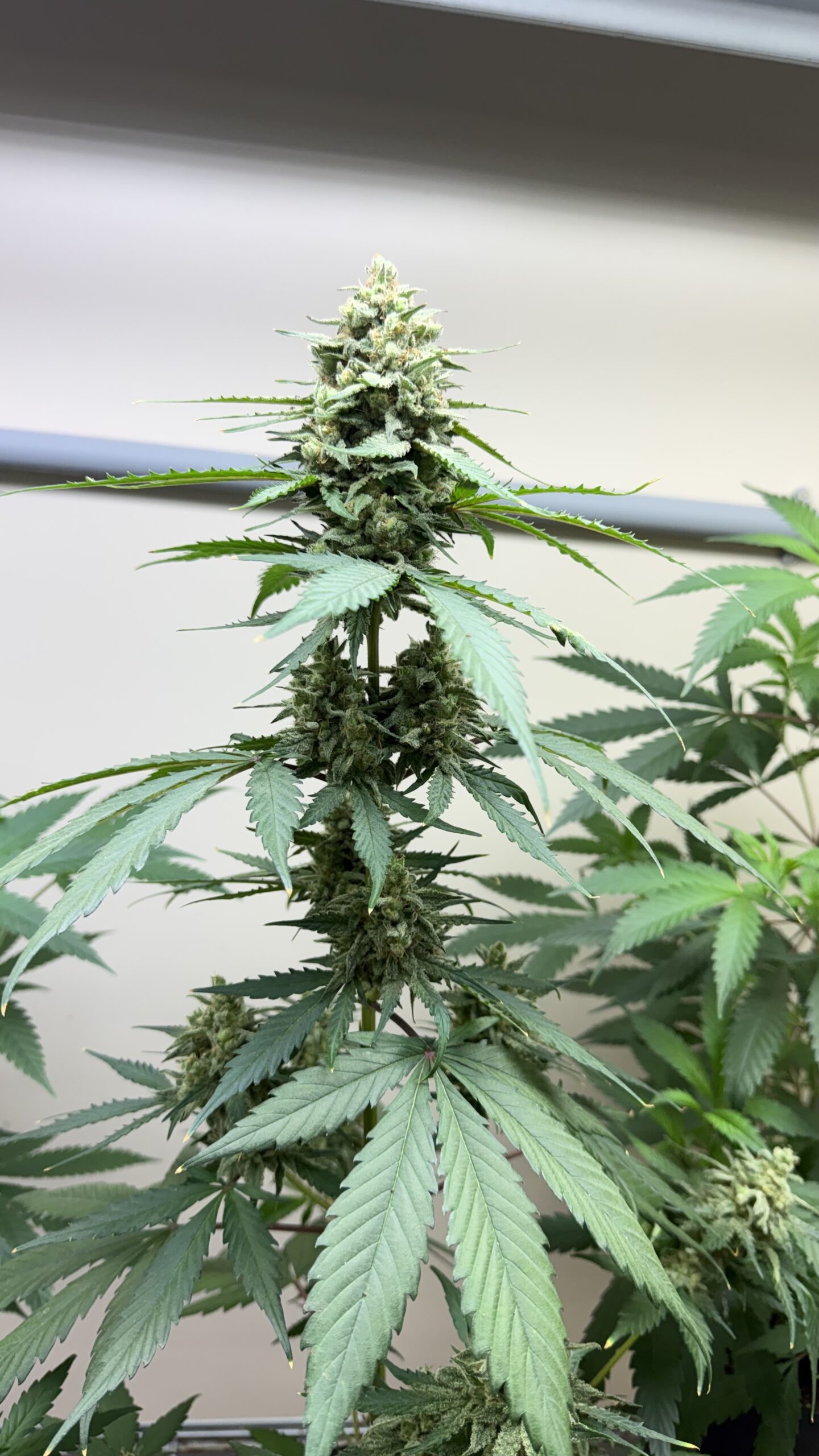
PVI: Low-moderate – Strawberry Cyanide is a plant that grows vertically with a strong central cola, moderate stretch, and moderate internodal spacing. Great for sea of green or scrog. About 25% of plants will be shorter with tighter internodal spacing and stacking, but these will otherwise resemble the taller, dominant phenotype. Flowers are tall and conical with a high calyx-to-leaf ratio making them easy to process. Coloring will range from a vibrant green to a dark green with maroon and purple flecks of color in the fan leaves and calyxes.

Yield: Average to high 

Flowering Time: 65-75 days

Terpenes: Our favorite kind of gas, very reminiscent of the classic Sour Diesel! Bright Sour/Chem/Petroleum; Strawberry; Undertones of Pine and Sandalwood.


Buy Strawberry Cyanide Auto (F) here!


Browse all Dirty Bird Genetics here!

Products by Category


HAPPY GROWING!

Grow Report: Trop Cherry Duet by Ethos

The Battle of the Trop Cherry OG and the Double Cherry Pie

By Beth Mathieu

Owner of North Atlantic Seed + Dirty Bird Genetics

I’ve been a long time fangirl of Ethos’ work. They were one of the first breeders I had the privilege of working with when North Atlantic Seed was in its infancy, and up until 2023, I had personally grown virtually their entire menu strain-by-strain as it was released. When NASC had its 1st annual Discord Photo Contest last fall, I was struck by one plant in particular that I had yet to grow. The Trop Cherry submissions were striking, and interestingly, we received several submissions which told me there was likely something special here. The knuckly, dense, large purple colas in the photos were a great example of ideal flower structure as far as I’m concerned, and I was impressed by the size of the flowers. It’s not often that you see colas as large as these with such minimal leaf and such high quality. I wasted no time. I immediately sent a text over to Ben–our head Breeder at Dirty Bird Genetics– and we added Ethos’ Trop Cherry Duet to our 2025 “pop list.”

Within the Trop Cherry Duet pack, the Trop Cherry OG came paired with another eyecatching selection: The Double Cherry Pie. Both strains featured the Trop Cherry genetics in their lineage, so we decided we would germinate them both and do a “grow off” to find out which of the two strains captured the deep purple coloring, chunky flower structure, and the cherry chapstick terpene profile we were after.

While both the Trop Cherry OG and the Double Cherry Pie had their strengths, there could be only one winner. Continue reading to find out which of the Trop Cherry crosses we decided to keep a cut of for the Dirty Bird Genetics library...dun dun dun.

The Line Up: 

6x Double Cherry Pie R1: (Trop Cherry x Cherry Pie)

5x Trop Cherry OG R1: (Trop Cherry x SFV OG)

TROP CHERRY OG by ETHOS

Of the five Trop Cherry OG seeds we grew, we observed three phenotypes, making for a relatively high PVI. This cohort showed divergence in color, terpenes, and flower structure: 

  • Color: Three of 5 were green and 2 of 5 had purple flower
  • Terpenes: The purple plants had no observable terpenes, whereas the green plants had mild orange/cherry/gas smells come through. 
  • Flower Structure: Flower structure was spear shaped with granular bracts versus stella form and more dome-shaped.
  • Herms: One of the five plants showed signs of hermaphrodism in the first three weeks of flower so we had to toss it. 

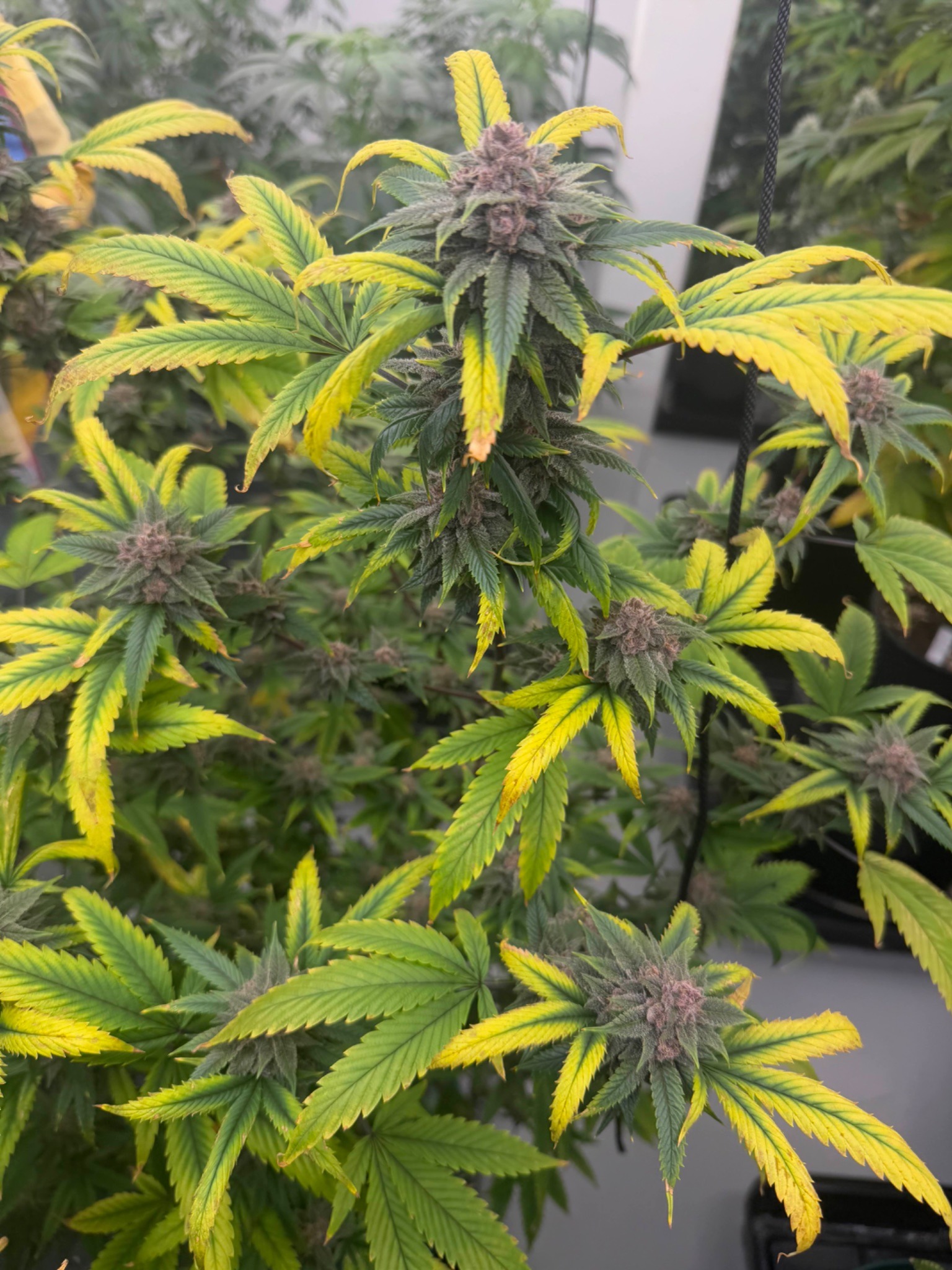
All of the plants had medium internodal spacing, great lateral branching, and grew as rounded bushes with moderate foliage and moderate calyx-to-leaf ratio. Morphologically, they were well proportioned plants with self-supporting stalks; we did not have to stake the plants at all. One plant in particular had notably heavy flowers. Yields and stacking were moderate overall. One of the purple plants was a bit finicky and yellowed dramatically toward the end of flower, which can be normal, but the majority were easy to grow and remained healthy through harvest. All of the plants turned out well, but none were show-stoppers for us, so we did not choose to keep a mother plant from this lot. That said, I have seen some photos of truly beautiful plants that have come from these seeds, so I wouldn’t dissuade anyone from trying them or hunting them. If I were to re-hunt these myself, I would be looking for a pheno that has the beautiful purple coloring paired with a stronger terpene profile. 

The finicky Trop Cherry OG purple plant.
Trop Cherry OG with dome/stelliform flowers

DOUBLE CHERRY PIE by ETHOS


Similar to the Trop Cherry OG, the Double Cherry Pie showed divergence in color, terpenes, and flower structure; however, as a whole they appeared more uniform, and the terpenes we observed in this grow were stronger and more consistent. These factors really tipped the scales in the Double Cherry Pie’s favor. 

  • Color: One out of six of the DCP plants we grew had purple flowers and green foliage and the remainder were deep green.
  • Terpenes: Mandarin orange/cherry chapstick terpenes were pungent on the purple pheno that became our keeper cut. As a whole, the rest of the cohort leaned more cherry than citrus/orange/tangie. 
  • Flower Structure: The majority of plants had spear-shaped flowers that came to a point at the apex of the cola. One out of six had rounder, dome-shaped flowers. 
  • Herms: 0/6 

Overall, I would rate the terpenes in the Double Cherry Pie as moderate with the one purple pheno being a stand out both in color and smell. Moderate-high yield was consistent across the board on the Double Cherry Pie, as well as strong, self-supporting stalks. Morphologically, the plants were quite similar to the Trop Cherry: They grew as bushes with great lateral branching making for a beautiful, even canopy. The Double Cherry Pie’s foliage was slightly less dense than the Trop Cherry OG’s was with more room for air flow, and the calyx-to-leaf ratio was notably higher. On top of these factors, we didn’t observe any signs of hermaphrodism in the DCP, and the trichome production was observably superior. 

The Double Cherry Pie was the clear winner here for the Dirty Bird team. This seed cohort was where we found our keeper cut. If you couldn’t guess, it was the sole purple Double Cherry Pie plant that exhibited fantastic tangie and cherry chapstick terpenes. This cut will be appearing in an upcoming Cherry AK breeding project that we have maturing behind the scenes as of this writing. Overall though, I think both of these strains are worth your time; thank goodness since they’re sold together! Both exhibited beautiful purple flowers in at least 20% of the plants we tested (for those of you who love purple like us Mainer’s do), and both had great internodal spacing and that classic-bushy morphology that’s hard not to love. We didn’t find any duds. All of the plants yielded well and produced high quality flowers. Feel free to send us some pics if you find any fun keepers in your own hunts!

Stay tuned for more Grow Reports as Dirty Bird continues hunting great genetics from the NASC breeder family!


HAPPY GROWING!

Contact Us

Email:
[email protected]

Mailing Address:
PO Box 2724
Waterville, ME 04903

Frequently Asked Questions

Customer Service:
Mon. to Fri.: 9am to 4pm EST

Shipping:
Monday – Friday


Disclaimer: Cannabis seeds are sold as souvenirs, and collectibles only. They contain 0% THC. It is imperative that you check your state and local laws before attempting to purchase seeds, and we are not liable for what you do with seeds after receiving them. The statements on this website and its products have not been evaluated by the Food and Drug Administration. These products are not intended to diagnose, treat, cure or prevent any disease. Consult your doctor before use. North Atlantic Seed Company assumes no legal responsibility for your actions once the product is in your possession and is not liable for any resulting issues, legal or otherwise, that may arise.