A Simply Nuggets Sit-Down with North Atlantic Seed Company and Dirty Bird Genetics owner Beth Mathieu, and Joe the head of the autoflower department at Dirty Bird

Original Interview Article HERE

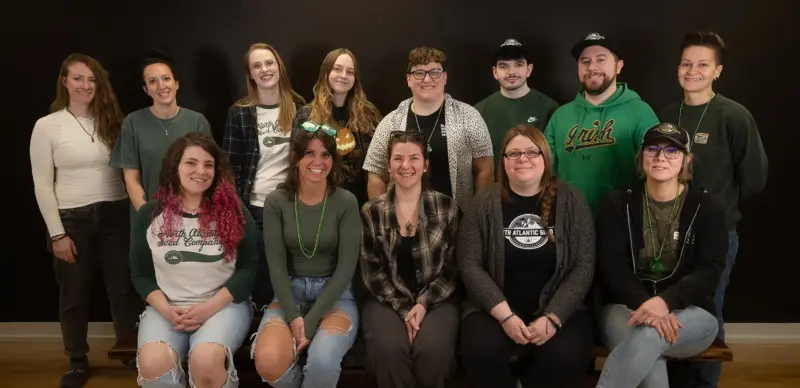
Dirty Bird Team Photo

[Dirty Bird Team]

Introduction:

Earlier this month, Simply Nuggets had the pleasure of sitting down with two of the people behind one of the most respected names to come out of Maine’s cannabis scene in the last decade: Beth Mathieu, owner of North Atlantic Seed Co., Maine Clone Company, and Dirty Bird Genetics, and Joe, who runs the day-to-day of Dirty Bird’s autoflower breeding program.

Beth built her business from the ground up starting as a caregiver back in 2012, and Dirty Bird — the breeding arm of that world — officially launched its seed line in 2023 after nearly a decade of pheno-hunting and culling genetics.

The autoflower side of the operation is newer and still scaling: Dirty Bird’s first-ever auto release, Black Goliath Auto, dropped in early 2026 after about a year and a half of development, and the line has since grown to dozens of strains in testing. Joe’s the one steering that program day to day.

This is a partnership interview — NASC & Dirty Bird are joining the Autoflower Network community, and this piece is meant to introduce them properly: who they are, how they got here, and what they’re building next.

Part One: Beth Mathieu — Owner, Maine Clone Company, North Atlantic Seed Co. & Dirty Bird Genetics

MJ Biz Conn 2024 Crystal Beth Jess

[MJ Biz Conn 2024: Crystal, Beth, Jess]

1. You started out as a caregiver back in 2012, and before that you were writing for a college newspaper. Do you see a throughline between those two chapters and the person running three companies today?

Definitely! Caregiving in the early days of medical cannabis in Maine has very direct connections to the work I do now, and everything really built on that foundation in an organic way. Even before I started working in the cannabis industry, it was in college that I first started growing and learning the tricks of the trade in apartment closets and tents as I’m sure many people can relate to. It was an interesting time to get into the hobby. I watched the local cannabis culture evolve from Mexican-imported “brick weed” to high-end, locally grown indoor quite quickly. Grow shops started to crop up and a community quickly followed. It was love at first sight, and even though I struggled my way through my first several grows, I was so happy and so engaged by the hobby of it all. When I graduated college, I went on to work a miserable desk job just long enough to save up a downpayment for a house, and the day I closed on my house, I quit my job and officially embarked on this next phase of life working for myself in the cannabis industry.

2. Maine Clone Company, then North Atlantic Seed Co., then Dirty Bird — each one seems to have grown out of the last. At what point did you realize a clone company needed to become a seed bank, and a seed bank needed its own breeding program?

Beth in the garden

[Beth in the garden]

Having the opportunity to try new genetics has always been the most intriguing part of growing cannabis. As a collector, I started saving my favorite mother plants almost immediately, and within a couple of years, my basement was full of over 100 of my favorite strains. It certainly wasn’t the most economical way to caregive, but it was reflexive–something I had a passion for.

About five years into my career, the medical scene here in Maine was growing more crowded by the day. It dawned on me one day that there may be a niche here that I could explore with all of these mother plants I’d collected, and that perhaps that would set me apart enough to give me staying power. On a whim, I opened Maine Clone Company. It happened that fast. I stumbled my way through building a website (not a good one, but a functional one) and became one of the first people to sell clones professionally to patients and caregivers in the state of Maine. I suspect that because I got in early, the business really took off. It grew so much faster than I expected it to. It wasn’t too long before I hired two of my best friends from college–first Siobhann (aka Doc Skunch) and then Ben (aka head breeder of Dirty Bird) to help me run the clone operation.

As the years went on, another lightbulb moment hit me (If you know me, you know I get a lot of these). Why not sell seeds, too? Seeds go hand-in-hand with clones. At this point in time, breeders were beginning to crop up here in the US, competing with the well-established European market. These were breeders that I admired so much, and I was already growing their work so I had a really good pulse on the quality of their work. Slowly, I started reaching out and trying to form relationships with these breeders one-by-one. It was really invigorating and exciting when I would hear back and receive a yes. I will never forget the moment that Ethos emailed me back saying that they were willing to work with me. And honestly, it was that pick up that really changed the trajectory of my businesses and my life. Ethos was on fire and really gaining steam quickly, and I was one of the few lucky enough to sell their seeds at this critical point in time for the industry.

At that time, my seed menu was still very modest and it was all being sold under the Maine Clone Company name and website. Back then, I manually took every order that came in via text and email, and I was hand packaging and shipping every package myself. There is one moment that will always stand out to me in July of 2018 when I was 9 months pregnant with my son. The heat was brutal on this particular day, and I was running up and down the stairs of my basement potting and prepping the 250 clones that I would be hand-delivering that day, breaking only long enough to throw up in the trashcan and check my phone for the seed orders that were coming in. In this moment I knew that something had to give because it had quickly become too much to manage. Over the next 6 months, I built the first iteration of the North Atlantic Seed Co website which would help me to automate all the things I had been doing manually up to this point. I also hired my first employee for NASC and officially separated the seed business from Maine Clone Company.

As North Atlantic Seed Co. grew, my interest in genetics continued to grow with it. Eventually, in 2019 I purchased a big 10,000 sq foot building so that we could finally move Maine Clone and North Atlantic out of my house. Just about as soon as we dialed that grow in, and with all the additional space, myself and the MCC crew (which had expanded to a group of 4) started building out small breeding rooms and experimenting with the holy grail: breeding. At first, it was purely in the spirit of innovation and curiosity, but before long, a new vision started to emerge, and with it Dirty Bird Genetics was formed.

This is where everything really came together. The trifecta of businesses all made so much sense, working in perfect harmony. By this time, we had pheno-hunted thousands of strains, and the best 100 still occupied a home in the Maine Clone Company garden. We were now working hand-in-hand with all of these incredible breeders at NASC which afforded us unique access to invaluable recommendations and the best genetics in the world. We knew that our collection of mother plants was one of the most special that existed, and given our deep creativity, and our interest and background in science and genetics, breeding only seemed right. And it was.

After years of breeding, we finally opened the doors to Dirty Bird Genetics in 2023. Dirty Bird is the true culmination of everything that came before, and it’s truly my pride and joy and my connection to the place where this all started: the garden.

3. Dirty Bird spent years pheno-hunting and collecting before you ever released a seed. What made you finally decide the genetics were ready, and was there a specific plant or cross that told you “this is the one”?

Brunch F1 - the original

[Brunch F1]

Yes, I had been collecting and pheno-hunting genetics for over a decade when Dirty Bird was founded, and we had some truly special mother plants that we were sitting on. We knew we had a very solid foundation to breed upon, but the reality is, you don’t actually know what those genetics are made of until you start breeding and testing them in that context. This is what consumed us for the first several years, long before the name Dirty Bird Genetics was in the public ethos. We tested many dozens of our own crosses before things really started to take shape. Between Ben and myself, we had extremely high standards and we were not going to release something that was half-baked or subpar. The Brunch happened to be the first strain we bred that we felt confident releasing, but it was only one strain, and we wanted at least six in order to launch, so we kept working and we kept learning the craft and experiencing our genetics in a this new light. Eventually, in October 2023, we launched Dirty Bird Genetics with a menu of six strains, including three of our flagship strains that we continue to develop to this day: The Brunch, Sour Lime Haze, and Dirty Mimosa.

4. Between running NASC’s day-to-day, keeping Maine Clone Company going, and now steering Dirty Bird’s breeding direction, how do you decide where your own attention goes? Is there a part of the business you wish you had more time for?

NECANN Chicago 2024

[NECANN Chicago 2024]

If there was one thing that I wish I had more time for now-a-days, it would always involve breeding and being in the garden hands-on with the plants. It is incredibly grounding, therapeutic, and creatively stimulating.

While I no longer care for the plants day-to-day, it’s always been top priority to stay connected to the grow. To this day I remain very involved in our breeding programs and selection processes at Dirty Bird despite the handful that NASC has become, and honestly, I think NASC is all the better for it.

Currently, I work one day a week in the garden at Dirty Bird/MCC, and I also spend a lot of time outside of the grow managing the logistics: writing strain profiles, naming strains, working with marketing, etc. On Thursdays when I work at Dirty Bird, we always start with a quick team meeting so that we can catch up, review incoming test results, and make selections. Afterwards we head straight into the grow as a team and we do our weekly walkthrough. This always takes the better part of the day. We start with photoperiods and we end with autoflowers, going room by room and examining every plant and project. Currently we have seven breeding rooms that range in size, two breeding tents, and a huge mother room where we keep over 100 mother plants that supply both Maine Clone and Dirty Bird. Our weekly walkthrough gives everyone on the team an opportunity to see what we are working on and stay connected to the program. We ask questions, make observations, and I always take detailed notes and loads of pictures. Ben, Joe and Sarah also collect data and take notes in their day-to-day for their respective programs, and when it’s time for a release, it all comes together.

Dirty Bird is a tight team and they’ve been with me longer than anyone. They each have a role that they play in managing the plants and the breeding programs. Joe is the newest addition to our team, and auto breeding is our newest venture. Joe came to us as a referral from Ben, and has been a mutual acquaintance for years. He is the longtime drummer for a band that he, Ben and JP (our photographer + videographer) are all a part of. With no prior breeding experience and an eagerness to learn and to step out of his comfort zone, Joe seamlessly evolved into his role, closely mentored by both myself and by Ben.

5. You’ve talked about Dirty Bird growing out of a group of women in the industry building something for themselves and each other. What does that actually look like day to day and how has building this as a women-led, family-and-friend run operation shaped the decisions you make that other companies might not?

Field Day at the Lake 2026

[Field Day at the Lake 2026]

When I tell people that Dirty Bird Genetics and NASC are entirely run by family and friends, they typically look at me like I’m insane. Most people couldn’t dream of working with 30 of their closest friends and family members. Ninety-nine percent of the time, it’s a recipe for disaster, and I can totally see why.

For us though, it is everything. Our workplace is built upon trust and heart, and it’s incredibly important to us that we take care of each other, our community and our customers.

I truly believe this is what has set us apart in this increasingly crowded industry. We have a very special team (of men and women – shout out to our wonderful men). They are loyal, hardworking, invested in their jobs and in each other. We have fun at work, laugh a lot, and care so much. That kind of company culture is priceless, and I’d like to think it’s infectious.

When you run a business, it is far too easy to get caught up in the money, the competition, and the power, and as a result you begin to overlook the glue that holds it all together: the employees, the community, and the customers. Maintaining that perspective is so important and honestly, probably the best advice I could ever give someone just starting out on this journey.

What does this look like in the day-to-day? It looks like really big, often-distracting meetings; working in gaggles on the porch in the summer, and in the winter, leaving early because your kid is sick but knowing that your co-workers have your back. It looks like field days, swimming in the lake, afternoon walks down the road, seizing any excuse for a potluck, kids tearing up the office, sharing your lunch with the person who forgot theirs, fair wages, as much PTO as we can muster, and so much more. It’s not always perfect, but it works, and I’d love to see more business owners embracing this style of leadership.
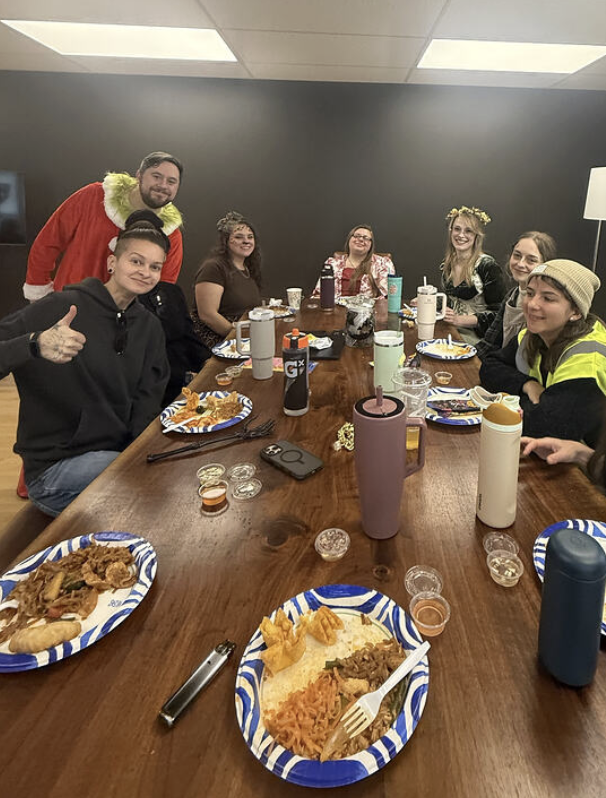
[Halloween Potluck 2025]

6. Looking at where Dirty Bird’s genetics collection stands today versus where it started, what are you most proud of — and what’s still missing that you’re chasing?

Oh my gosh, it’s mindblowing how far we’ve come in the last five years. Every single time I am working with the plants at Dirty Bird, I am taken by this, and it’s often hard to wipe the shit eating grin off my face.

As you breed forward your genetics and become familiar with them and their combining potential on a much deeper level, you gain the ability to make better decisions, and every part of the job becomes more predictable. This is something we are experiencing now in our photoperiod breeding program. Our projects are increasingly stronger, more stable, and more predictable. Terpenes have been a significant focal point for us since the beginning, and we’ve made tremendous strides forward over the last 18 months. Nowadays, every single photo we release is virtually guaranteed to knock it out of the park in terms of terpenes, and we are so invigorated by the unique profiles we’ve encountered along the way.

Our autoflower breeding program is a few years younger than our photo program, so we are now going through the same discovery process and growing pains that we experienced with photoperiods at the beginning. In the past six months in particular, we’ve made tremendous gains and I’ve seen everything starting to click into place. I always love an opportunity to learn and explore something new and creative, and auto breeding is so unique compared to photoperiod breeding. Dialing in our workflows and learning the ins-and-outs of autos has been really exciting and energizing. Continuing to develop our auto lines is definitely the thing I’m most excited to continue pursuing.

Ben in Garden

[Ben in the Garden]

7. Autos have historically had a reputation for being the less glamorous, less respected side of breeding compared to photoperiod work. Why did Dirty Bird decide to go all-in on building out an auto line, and why was Joe the right person to lead it?

At NASC we’ve been able to see a growing trend moving towards autoflowers, and we like a challenge. The breeding process for autos is so different from what we are accustomed to because you cannot keep mother plants. This changes everything, and it has been really fun to explore and build something new from the ground up again.

Autos make a lot of sense for a lot of people, and they have come such a long way in the past decade thanks to all of the incredible breeders that have made this their craft. They are so much newer than photoperiods, but with every year that passes, the auto gene pool matures into something increasingly refined, more potent, more terpy, and more stable. It baffles me that auto breeding would be less respected than photo breeding. It’s like the new frontier, and if anything, that should be respected and it should stoke curiosity.

Joe was really the person that made autos feasible for Dirty Bird because we wouldn’t have had the manpower to do justice to this huge new project otherwise. To us it’s an asset to have someone like Joe come in with no prior breeding experience. He has a good head on his shoulders, he learns quickly, he has a genuine interest in the work. I value these things so much more than industry experience. All of this has enabled myself and the rest of the team to learn alongside Joe, and it has kept us very close to the project which is where we want to be. If there is one thing we all have in common, it’s that we love to learn.

8. What’s actually different about breeding for autoflower stability versus photoperiod — what are you selecting for in an auto pheno that wouldn’t matter as much on the photo side?

Doc Skunch + Christy in the Garden

[Doc Skunch + Christy in the Garden]

The approach to breeding autoflowers is very different from photoperiods, and that boils down to one thing: You cannot keep auto cuts indefinitely. With photoperiods, you have the ability to select parents that have all of the traits you are looking for, and you can go back to breed with genetic replicas of those plants anytime. You simply cannot do this with autos.

By nature, autoflowering plants are going to flower whether you like it or not, so you cannot keep clones or mother plants. This forces you to make breeding selections when the plants have barely even started to flower. The approach is entirely different. Breeding forward for uniformity and stability becomes very critical, otherwise you’re shooting in the dark. Secondly, it means that you must always reverse and pollinate many more plants than you actually need so that you can cull the losers and select your winners when the plants have matured enough to make those judgement calls. It’s difficult to determine the terpenes, the color, the yield, or the potency of a plant that is 4 weeks old, but this is the age that you need to pollinate the plants if you wish to make seeds. This is why we chose to work from a pool of plants versus a single plant like you would in most photo breeding programs. One perk of autos is that they are much faster to breed forward generationally, and all of the selections we make are done live. This means that we are able to move a new cultivar forward generationally speaking (from F1 to F2 to F3 and so on) significantly faster than you can with a photo plant.

9. Of everything currently in the works in the auto program, what are you most excited about — the cross or line you’d want the AFN community to keep an eye on?

Honestly, there are so many projects that have me excited. The first project that really stood out, and one that continues to excite me, would be the Sour Strudel Auto. We are currently hunting two F3 generations of the Sour Strudel in addition to a backcross we made, and we will make plans for the line once we’ve seen our options.

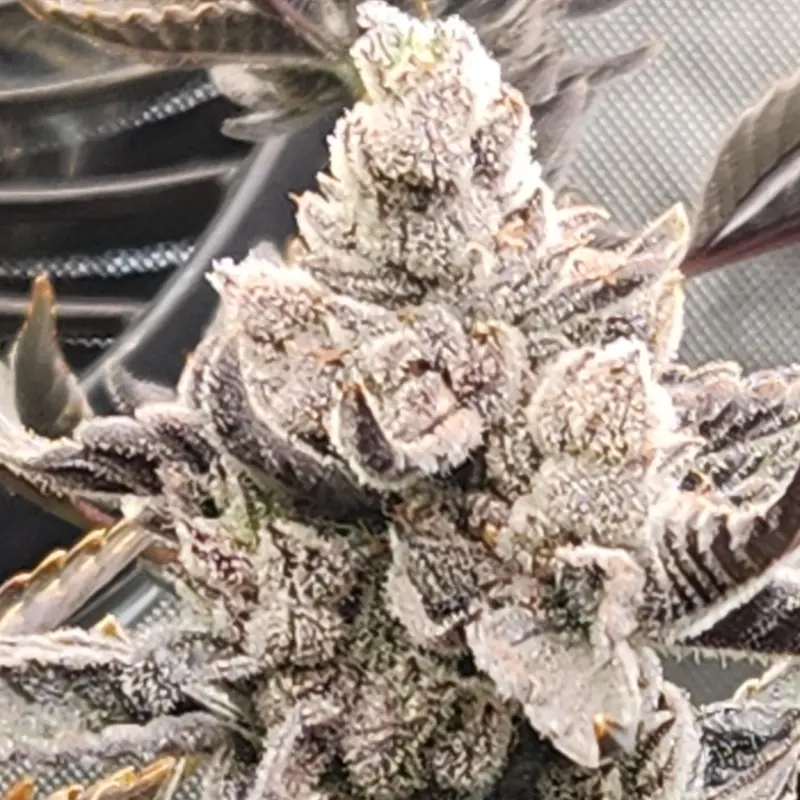
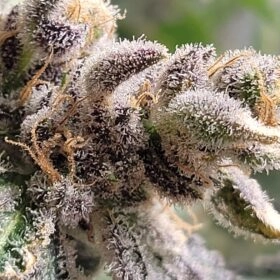
There are so many reasons to love this strain, but to name a few: The trichome accumulation is unmatched and truly incredible; the terpenes–which we are still locking in–are a great balance of sweet and sour; the coloring of the flower, at its best, is the most vibrant purple I’ve ever seen–an insane contrast to the thick white stigmas and the slender (equally vibrant) green foliage; and the morphology of the plant is truly special. Some may have heard me talking about this already, but the Sour Strudel has given us this incredibly unique lateral pheno that we’ve had a lot of fun playing with. It’s something we’ve never seen before in photos or autos. The lateral pheno–which we are breeding forward in a separate, more experimental project–does not have one dominant cola. Left totally untopped and untouched, it naturally splits off and creates multiple colas which reach up like purple arms forming one even canopy. It’s so neat to see this pheno naturally occurring in every generation we’ve bred. In our F2 seed lots, it occurred in about 50% of plants, so you’re almost guaranteed a plant with this trait if you pop a pack of seeds.

Lateral Sour Strudel

[Lateral Sour Strudel]

Some other projects that stand out as really special right now: Star Fists Auto, Heavy Metal Breath Auto, Cursed Coast Auto, Mint Lemonade auto, Gas Berry Auto, and some of the newer, unreleased crosses that we are testing like the unnamed Sour Strudel F2b2 x Gas Berry Auto.

10. You’re one of the loudest voices right now fighting the federal reclassification set to hit in November, and you’ve been building out ASIGA (American Seed Innovation & Growth Alliance) to organize the industry’s response. For growers and customers who aren’t following the legislative side closely, what’s actually at stake for them if this law takes effect, and what can they do right now to help?

Yes, 2026 has been quite a whirlwind with all of the upcoming legislative changes. I’m not one to scare easily, but this has definitely been a huge thing for us and for me personally this year.

The seed industry is one of the few multi-billion dollar industries that does not have a presence in DC, let alone a unified voice of influence. And it’s understandable why: it’s one of the few industries that has remained grassroots, and I think we can all appreciate that. But because we’ve been off doing our own thing, outside of the public eye, this new statute dubbed the “hemp ban” was able to slide through last November 2025 with no prior industry consultation, no due diligence, and with very little industry awareness. I think it took most of us by surprise.

What’s at stake? Everything, really. This new statute–Sec 781(1)(c) of the FY2026 Appropriations Act–which now goes into effect on Dec 11, 2026 will supercede the 2018 Farm Bill by making cannabis/hemp seeds federally illegal if they come from a parent plant that contains more than 0.3% THC. How regulators plan to determine this is still very unclear, but nonetheless, this new law stands to threaten every arm of the cannabis/hemp, medical, and industrial hemp industries. Shipping seeds over state lines will be illegal. Banks and payment processors will shut down our accounts making it impossible to do business, especially for ecommerce businesses like our own. Really, it stands to uproot virtually everything that our industry and home growers have built and have come to rely on over the last decade.

Quickly after this law passed, I got together with a couple of industry leaders and we started to take action. I am very proud of the strides we’ve made, and I’m happy to say that nearly every US legislator that we’ve spoken with has agreed that this law will cost a fortune to regulate, it will shut down thousands of small US businesses, it will restrict access to genetics across the board, and it does not solve any problems; it creates problems. I am very hopeful that our legislators will right this wrong, but right now it’s a bit of a waiting game. We have to find a piece of legislation to get our technical amendment into, and Congress is passing less legislation now than ever in the history of the US. All we can do is to keep moving forward, educating ourselves and our legislators in the meantime.

For anyone who would like to help, I would suggest reaching out to your state’s US Representatives and Senators and letting them know, as respectfully as possible, how this law affects your life and your community. If you own a business that depends on seeds, that’s all the more reason to contact your legislators. We want to make this a non-controversial, science-backed issue that has a very simple and logical fix: to strike the one sentence exclusion about hemp seeds from Sec 781(1)(c) of the 2026 Appropriations Act. Some talking points include:

  • Cannabis/hemp seeds are a non-intoxicating, agricultural input.
  • We already regulate consumable cannabis, so what do we gain by adding more cumbersome regulations that will make it harder for small businesses to thrive.
  • This new law will necessitate the development of a costly, labor intensive traceback program at a time when our government has bigger fish fry and is in more debt than ever. Not only that, it’s going to be incredibly costly and nearly impossible to maintain and regulate.
  • Restricting access to genetics does not just impact the recreational and home grow markets, it also impacts the industrial hemp industry, the medical and wellness industry, the food industry, and research and science communities.
  • The US is in the position to be a world leader in the development and innovation of hemp genetics. This law will change that.

Here is a great website you can use to find the contact information for your local US legislators: Democracy.io - Contact Members of Congress

If you’d like to donate to the cause, we have a Go Fund Me set up on the ASIGA website: Fundraiser for ASIGA Alliance by Tom R : Save American Hemp & Cannabis Genetics — Deadline Nov 12

You can stay up to date on ASIGA by visiting our website or following us on LinkedIn:

And lastly, NASC will be continuing to take donations to the Keep Seeds Legal campaign at checkout, and we have a menu of breeder-donated seeds available which you’ll find in our breeder menu. All proceeds go directly to ASIGA.


Part Two: Joe — Autoflower Breeding Program Lead, Dirty Bird Genetics.

db-team-joe

1. How did you first get into growing and breeding? Was there a moment or a plant early on that made you realize this was going to be more than a hobby, or made you fall in love?

My growing and breeding journey both started at Dirty Bird Genetics about three years ago, actually! I was brought on to learn the basics and to help around the shop where ever needed.

While my previous work was in the granite industry, my appreciation and enthusiasm for cannabis, light background in forest resources, and strong working relationships with established Dirty Bird employees helped get me in the door.

During that first year I was gaining hands-on experience with every step of the photoperiod breeding process. From the first day I was feeling at home with the plants. Surrounded by shelves of clones, a sea of green in every room to observe and tend to. From seed to harvest, it simply brings a lot of joy to work with plants. A while into my first year is when the talk of the autoflower program came up. This is where the passion and interest started to compound. This is where it went from hands on to “how far can I take this?” It is in that, the creating of projects where I really developed my love for growing and breeding specifically. Searching for desirable and unique traits to capture and move forwards is where a lot of the excitement comes from.

2. What brought you into the Dirty Bird fold specifically, and how did you end up being the one running the autoflower program day to day?

MJ Biz Conn 2026

[MJ Biz Con 2024]

I accidentally already touched on this a bit in my first response, but what brought me to Dirty Bird was simply me needing a change of work. It just so happened that my friend Ben had mentioned how they were looking for help where he worked.

He got me connected with Beth, and a few months later I got in! It started with learning all the basics, watering, general maintenance and such. After learning things like plant reversal, pollen collection and pollination, I was definitely gaining the skills to take on more.

Late into that first year is when the autoflower program came into the conversation. The opportunity ultimately landed in my hands! While I still had (and have) plenty to learn, my ability to plan and manage projects alongside the photoperiod operations has helped the autoflower program take flight!

3. Black Goliath Auto was the program’s first release after roughly a year and a half of development. What did that early stretch look like, and what did you learn from it that’s shaped how you’re approaching the strains that have followed?

ProfileBlackGoliathnologo

That first stretch in development was full of many learning experiences, as I’m sure one can imagine. Dialing in the environmental conditions to get consistent results was huge.

Then after that foundation was set, it was on to creating a pollen bank to work with. One of our early, promising reversals was the strawberry gorilla, and so we worked that into a bunch of plants to start collecting observations and data on the offspring.

As we approached the time of the Black Goliath, we had already found and reversed a promising cross in the sour apple x strawberry gorilla. I had a group of Anvil (by Gnome Genetics) plants growing for observation and decided to hit one of them with that “sour gorilla” pollen, looking to marry in the dark purple and lush vegetation of the Anvil with the dense trichomes and fragrance of the sour gorilla. A couple months later we were very happy to find that it was our most stable cross yet. That is to say, it was extremely uniform in all of its traits.

Seeing that result has definitely shaped my process and expectations. Specifically, when planning ahead I always make sure to have a few groups of new strains to observe while pushing planned projects forward. This way there is always room for a little unplanned magic.

4. What does your selection process look like when you breed autos? What are you selecting for?

Ben showing off a seed harvest

[Ben showing off a seed harvest]

With the autos, I’m always looking for distinctly strong traits attached to strong foundational characteristics.

For example, super strong terpene profiles and high trichome density are my favorite traits. But I need to also see things like proper flower density, flower stacking, and overall morphological sturdiness to want to push a plant forward.

So when growing a new strain I start with at least 8 and up to 16 plants. This way I can watch them week to week and observe any phenotypic differences.

By time they get to week 7 I’ve seen enough to evaluate their consistency and traits to determine if they are worth the time to breed with. By this time I also have a very good idea of the strain and if it is worth rerunning to reverse for pollen collection.

So to be more specific, the selection process starts around week 3 when the plants start to ramp up in growth. On a weekly basis and as a team, we tour the grow rooms and make note of what interests us.

As the plants hit their heavy flowering stage we make our final judgments and selections on what is worth moving forward. Those selections revolve around the overall appearance and vigor of the single plant and its cohort.

As mentioned before, the terpenes and trichomes are obviously a large factor, whether sweet, sour and sticky, or spicy, funky and gritty. Dense flowers, interesting and vibrant colors. They all play a variable role in the selection process, but it is absolutely essential that all these boxes are filled in some manner.

5. Of everything currently in the works in the auto program, what are you most excited about — the cross or line you’d want the AFN community to keep an eye on?

This is an exciting question as there have been a few projects recently that are really starting to feel like unique and outstanding strains.

If I were to answer this a few months back, I would have answered Sour Strudel easily, as they are absolute trichome machines. Sweet, sour, candy and apple scents, purple and green phenotypes and a great potential to stack. A line we have worked forward a few generations and into other crosses.

But! Recently I have found through another unplanned project our “Star Fists,” the pineapple runts x purple lemonade.

profilestarfistsauto

This line is definitely worth keeping your eyes on as it checks all the boxes. Where it shines is in its size and form. Large to hulking buds, great stacking, and uniform growth across each plant. Hints of purple in the calyxes, and range of smells from durban and spice to tropical fruits. It is truly a beautiful plant.

6. For home growers who want to try pheno-hunting or basic breeding with autos themselves, what’s the one piece of practical advice you’d give them before they start?

I would say to start with a replicable process. Make sure that you are as dialed in as possible to be able to determine outliers in your grow. Start with at least 4 plants of the same strain to get a decent idea of any variation or potential. Most importantly, take notes! As we won’t be taking any clones of autos, taking notes and creating that repeatable work flow is vital in making sure your breeding decisions matter.

In closing I would just like to say that I’m extremely happy to be involved in the Autoflower Network. When I first started working with autoflowers, the AFN quickly became my go to forum to seek knowledge and information. While I always browsed silently without much interaction, it was apparent that the AFN was full of passionate growers and breeders who are willing to share their experiences for the love of it. It was a little daunting to step up to the plate knowing that everything I’m working with is based on the hard work and dedication of breeders past and present. That being said, it is the passion I observed here that has given me the confidence to step and fully participate in this line of work.
Where to find them -

@Beth_DirtyBirdxNASC

@DirtyBird_Joe

@MattNASC

@NASC_Jaden

@NASC_Crystal

Dirty Bird Genetics

North Atlantic Seed

Maine Clone Company

NASC Instagram

Dirty Birds Genetics Instagram

One month extension of the hemp ban, and other Keep Seeds Legal updates

KSL Update September 2026

Hey guys! For any of you who don’t already know, I have some good news to share: This week, Congress officially passed a Continuing Resolution which includes an extension delaying the implementation of the “hemp ban” from Nov 12 to Dec 11, 2026.  

This Continuing Resolution was passed in lieu of the FY2027 Appropriations Act, which is a very large funding bill that Congress must pass every year in order to fund our government. If you remember, it was this same appropriations bill last year that was used as the vehicle to redefine what the federal government recognizes as hemp seed. Because Congress is currently unable to pass the annual budget to fund the government, they have instead opted for a Continuing Resolution, buying themselves a bit more time.

Thankfully, this also gives us a little more time to work on a permanent technical fix for the seed issue. Our goal is to strike the exclusion that redefines hemp seeds from Sec 781(1)(c) of the FY2026 Appropriations Act and return the industry to the status quo. The team of attorneys and lobbyists who are running ASIGA are doing an excellent job of educating legislators on why this is important and keeping the seed issue relevant and non-controversial on the Hill. However, in order to accomplish this, we need a bill that our issue can ride on, and Congress isn’t passing very many bills right now, as divided as they are. Needless to say, we have a very close eye on several potential legislative avenues, and we are very hopeful that we will be able to get this done before time runs out. Fingers crossed! 

Seeds in a heart shape
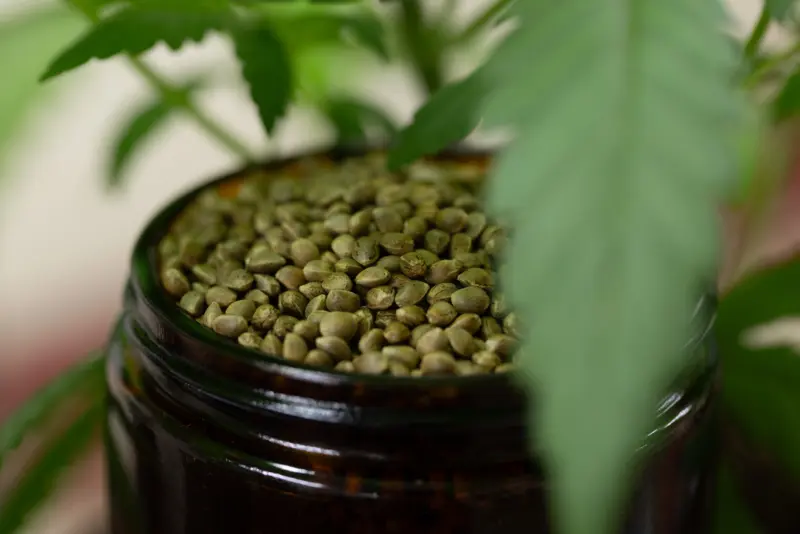
Seeds in a jar with leaves in the foreground

On your end, please consider contacting your local US Senators and Representatives today to let them know how this new statute will affect you and your community. Remember, we want to keep things professional, and we want to stay away from the cannabis debate and keep this solely about the seeds. This issue should not be controversial. It’s a matter of preserving access to non-intoxicating hemp seed genetics–a critical agricultural input. 

Thank you guys for all of your support in this critical effort to Keep Seeds Legal! It means so much to me personally, and I know it means just as much to you. We will continue to keep you informed as best we can as we ride out these last few months. Until then, please consider reaching out to your US legislators. 

All my gratitude, 

Beth and the entire North Atlantic Seed Co Team


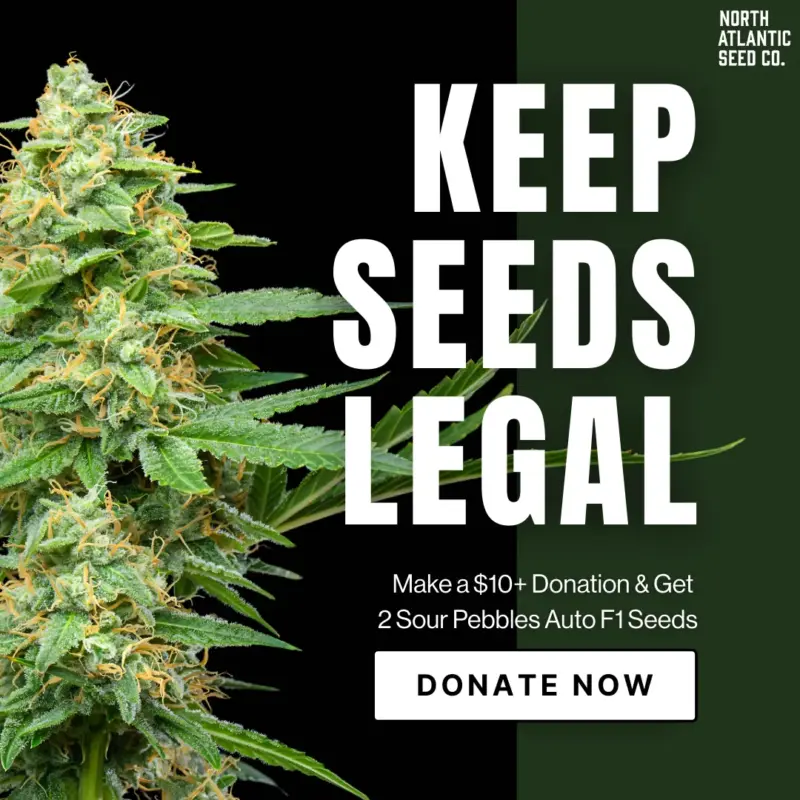
Donation options also available at checkout. Donate $10+ and get (2) FREE Purple Jesus Fem Photo (NASC Commercial Cultivars). While supplies last. All donations and proceeds received will directly fund the legal future of cannabis seeds.

Purchase products in the Keep Seeds Legal section of our website today!


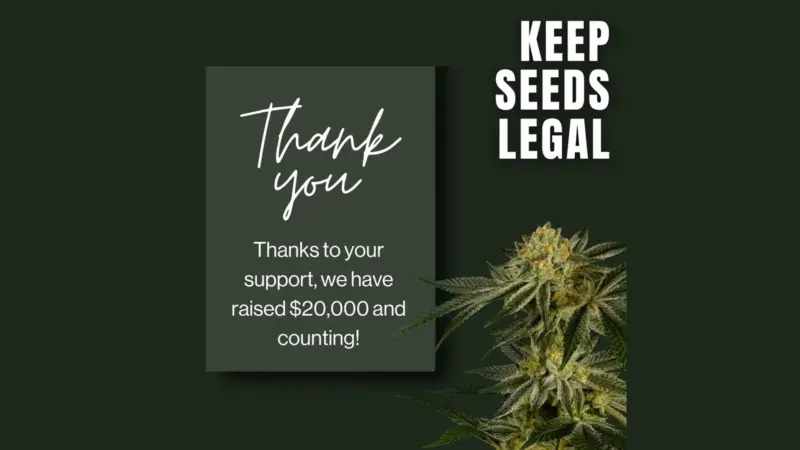
Keep Seeds Legal - Thank you for donating over $20,000! Blog Image

Keep Seeds Legal – A Word From ASIGA

Learn more about the Keep Seeds Legal Issue by reading American Seed Innovation & Growth Alliance's Technical Brief.

Issue Brief: Section 781’s Seed Exclusion Threatens America’s Seed Industry, Hemp Farmers, and Innovation.

ASIGA Issue Brief (2-page PDF) ASIGA White Paper (7-page PDF)

Buried in the FY2026 Agriculture Appropriations Act, signed into law November 12, 2025 and coming
into effect on November 12, 2026, is a provision that quietly redefines how cannabis seed is regulated
under federal law. Section 781(1)(C)(i) would, in an unprecedented manner, disrupt the U.S. hemp seed
supply chain by classifying seeds as a federally controlled substance based on the THC content of the
parent plant, regardless of the chemistry of the seed itself. The provision is unnecessary to accomplish
the stated purpose of Section 781, which separately restricts intoxicating cannabinoid products through
targeted product-level limits. The seed provision would unnecessarily hamstring American farmers,
researchers, breeders, small businesses, and medical patients by criminalizing seeds, ceding the global
hemp cannabis genetics market to international competitors.


The provision regulates seed by lineage and traceback, not chemistry and subjects seeds to DEA
jurisdiction.


Section 781(1)(C)(i) excludes from the federal hemp definition “any viable seeds from a Cannabis sativa
L. plant that exceeds a total tetrahydrocannabinols concentration (including tetrahydrocannabinolic
acid) of 0.3 percent in the plant on a dry weight basis,” with the result that seeds would be controlled
substances (mandating seed destruction and DEA penalties). For the first time in U.S. hemp law, a
material’s legal status is determined not by what it is, but by where it came from. Cannabis seeds do not
produce THC — cannabinoid biosynthesis is localized exclusively to glandular trichomes, tissues that
seeds do not contain. Yet under Section 781(1)(C)(i), even though a seed tests below the 0.3% total THC
threshold, it can be criminalized and classified as a DEA Schedule I controlled substance because of the
parent plant’s chemistry. No other agricultural commodity in active U.S. commerce is regulated this way.
No federal regulation evaluates wheat seed by the alcohol content of the beer it could be brewed into;
no federal regulation evaluates corn seed by the aflatoxin level of its parent field. Section 781(1)(C)(i)
breaks from this established principle without precedent.


The compliance standard cannot be met.


The statute is too vague for USDA’s successful implementation. The statute requires traceback from the
seed to the parent plant, and the parent plant must in turn be tested and shown to be below 0.3% THC
by dry weight (as a living plant, testing is dependent on field location, temperature, days to harvest, etc.,
and is virtually impossible to enforce as part of a traceback system). A full traceback system would
require, at a minimum, significant new regulations and appropriations for USDA. In addition, jurisdiction
would be shared with DEA, which would have a role enforcing penalties and managing destruction of
criminalized seeds, requiring new funding for DEA.


Implementation of the statute would result in the loss of U.S. seed banks and genetic material passed
down for centuries. For germplasm already in lawful possession on the effective date, parental THC
history cannot be reconstructed at any cost — the parent plant no longer exists to be tested. No
regulation USDA could issue can supply a compliance pathway for material already in lawful commerce.
Without congressional action, a seed bank or research institution that lawfully holds tens of thousands
of seeds on November 12, 2026 becomes subject to the Schedule I framework.


The provision harms patients, veterans, and Americans.


Implementation of the provision would restrict access by patients, veterans, and Americans to the
genetics needed for home and state-licensed cultivation. As of 2024, 47 states, the District of Columbia,
and three territories allow medical cannabis use. Approximately 25 jurisdictions authorize home
cultivation, where registered patients reproduce specific cultivars from seed to maintain consistency of
cannabinoid and terpene profile — including CBD:THC ratios used in seizure management and low-THC,
high-CBG cultivars used in inflammatory and neuropathic pain management. Section 781(1)(C)(i)
withdraws the federally compliant pathway by which seed for those cultivars moves interstate, at the
same moment that federal rescheduling under AG Order No. 6754-2026 expands medical recognition.
Veterans accessing alternative therapies, patients treating seizure conditions, and Americans using
cannabis for chronic pain and sleep lose access to the specific genetics on which their stabilized care
depends. Implementation of the provision would interfere with state laws, federal laws, and the
direction of policy to provide access for patients to needed inputs for home cultivation.


The provision cedes the global cannabis genetics market to foreign competitors and ends U.S.
interstate commerce.


No global trade competitor’s jurisdiction regulates and criminalizes cannabis seed by parental plant THC
traceability. At a time when other countries are opening up their seed markets and deregulating to
obtain competitive advantage, the U.S. would impose a compliance burden no major trading partner
imposes, hobbling our U.S. dominance. At the same time, the provision would balkanize our own U.S.
market among 50 states, ending interstate commerce when a domestic market is needed. Federal law
governs interstate commerce, and Section 781 will make seeds federally illegal scheduled products —
based on a vague, unenforceable standard — thus chilling interstate commerce in seeds. Without a
national market, investment in seed innovation and commercialization will be severely set back.


The economic stakes are real and growing.


Hemp grown specifically for seed production was valued at $41.5 million in 2021 (USDA NASS, 2022),
contracted sharply in 2023 to $2.9M, and has since rebounded — reaching $16.9 million in 2024 and
$49.7 million in 2025, surpassing the 2021 peak (USDA NASS National Hemp Report, April 2026). Total
U.S. industrial hemp production value reached $739 million in 2025.
Classification of seed as a controlled substance has deep-reaching negative impacts for small rural
businesses, investments, financial institutions, credit card processing, and banking services. American
breeders are well-positioned to lead the global cannabis genetics market. Section 781(1)(C)(i) hands that
opportunity to international competitors at precisely the moment when U.S. operators are scaling to
compete. The overarching result would be unnecessary job loss through misguided and excessive
regulation.


Congress should act before the November 12, 2026 deadline.
ASIGA’s proffered remedy is to strike Section 781(1)(C)(i) in its entirety. Seeds are already covered by
the base hemp definition under the 2018 Farm Bill — if a seed tests at or below 0.3% THC, it is hemp
under federal law. Section 781(1)(C)(i) is not needed to accomplish Section 781’s stated purpose;
Sections 781(1)(C)(ii) through (iv) already restrict intoxicating products directly by regulating the final
consumer product. Congress must take urgent action to protect America’s seed future for growth and innovation.

For more information visit asiga.org or donate directly at https://www.gofundme.com/f/protect-us-innovation-genetics-and-leadership

Keep Seeds Legal - Thank you for donating over $20,000! Blog Image

By purchasing one of the following items, you can help fund the legal future of cannabis seeds! Donation options also available at checkout!

An Update on Keep Seeds Legal from Beth and Team NASC + Dirty Bird

Thank you to everyone that donated to this important cause! Together we have raised over $20,000! Let's continue to fight and protect home growing for years to come. Read more for the latest updates on Keep Seeds Legal!

Keep Seeds Legal - Thank you for donating over $20,000! Blog Image

Happy Spring, Everyone! 

I sincerely hope that you have all been keeping your chins up amidst the uncertainty that surrounds us right now, enjoying a beautiful spring (damn if that sun doesn’t feel so good), and gearing up for another growing season ahead. 

For the last several months, we've been quieter with you than usual, and we feel that it’s due time for an explanation. 

Behind the scenes, we've been working on something we believe will shape the future of the American seed industry: the launch of the American Seed Innovation & Growth Alliance (ASIGA) – www.asiga.org.

ASIGA is a coalition we’ve built to challenge the legislative changes scheduled to take effect in November 2026. We deliberately chose not to ring alarm bells in your inbox until we had something real to show you. Now we do.

What this fight is — and what it isn't: 

We want to be clear up front about how ASIGA is positioned, because framing matters so much in Washington. 

ASIGA's political case rests on three pillars: Innovation, genetic diversity, and American leadership in plant science and breeding. The legislation moving toward November 2026 threatens all three. It risks narrowing the genetic pool that U.S. breeders can legally work with, slowing the pace of innovation that has put American breeders and banks at the front of a global industry, and ceding ground to overseas competitors who will happily fill the gap.

This coalition is a big tent, fighting for an agenda that affects every arm of the US hemp industry: Industrial hemp, seed banks, plant scientists, breeders, and home-growers alike.  The case we are making on the Hill is about protecting an American industry, American jobs, and American scientific leadership. That's the case that wins votes, and that's the case ASIGA is built around. We feel optimistic that we have a winning and compelling position if we maintain a narrow focus: Preserving access to seeds, a non-intoxicating agricultural input that is at the heart of a multibillion dollar industry. 

What we've been doing:

For months, we've been meeting at the highest levels in Washington — quietly, persistently, and with a team built specifically for this fight. ASIGA's lobbying and communications group brings together experienced hemp policy advocates, former USDA officials, and seasoned operators who know how the Hill actually works. Alongside a number of other independent businesses, and industry organizations, we're funding this effort monthly — structured for the long haul, not a one-off campaign. We need a voice in DC representing seeds, an often-overlooked, but foundational part of the industry. 

The work is unglamorous: briefings, redrafts, relationship-building, education, and the slow grind of getting the right facts in front of the right people. It's also the only thing that moves the needle on legislation of this scale.

What's at Stake:

If the November 12 law takes effect this fall, it will restrict access to essential genetic material, undermine breeding innovation and new cultivar development, damage legitimate operators, and push activity underground to the black market.

Criminalizing hemp seeds will reduce consumer and patient safety, destroy small businesses and jobs across the supply chain, inhibit access to the medicine that works for you, stifle critical research and development, and hand global leadership in hemp and cannabis genetics to Europe, Latin America, and emerging Asian markets.

The United States has the science, the agricultural infrastructure, and the entrepreneurial base to lead this industry for the next decade if our leaders cultivate a safe environment to do so. This law would foreclose that future before it begins.

Where you come in:

We held back from asking until we had earned it. We now have an active coalition, a strong team, and meetings happening that simply wouldn't have happened six months ago. To carry this through to November 2026, we need our customer base with us. 

This community has shown incredible generosity already in donating to the Keep Seeds Legal campaign that we’ve run on the NASC website over the past two months. We’ve raised over $14,000 dollars for this cause already thanks to each and every one of you who donated. We plan to continue this campaign until this fight is resolved. 

There are two other things you can do right now:

1. Contribute to the GoFundMe. Every dollar goes directly into ASIGA's lobbying, legal, and communications work. We chose the GoFundMe infrastructure specifically so that donors receive ongoing, transparent updates on where the money is going and what it's accomplishing. In addition, 100% of funds donated at checkout to NASC’s Keep Seeds Legal campaign will go directly to this fight as well.  

→ https://www.gofundme.com/f/protect-us-innovation-genetics-and-leadership

2. Watch for the white paper. We're finalizing a detailed white paper that lays out the specific legislative threats, the policy alternatives ASIGA is advancing, and what each scenario means for the American seed industry. 

One last thing…

We're sorry we haven't brought you in sooner. The honest answer is that we wanted to wait until we had something concrete; something worth standing behind. We do now — and we'd rather have you with us than reading about it after the fact.

Thank you for being part of this community and fighting the good fight alongside us. We know you all care about this issue as much as we do. We'll be in touch again soon, and far more often.

With Gratitude, 

Beth + the entire North Atlantic Seed + Dirty Bird Genetics Family 

By purchasing one of the following items, you can help fund the legal future of cannabis seeds! Donation options also available at checkout!

Challenges of Marketing Cannabis

Before 2019, the world was a much different place. Our team was scattered throughout Maine doing different jobs and still trying to find purpose in our careers. The owner of North Atlantic Seed Co, Beth Mathieu, was working as a medical care giver in central Maine. Providing clones and care to her patients opened her eyes to the need for accessible genetics in the United States. Maine Clone Company was already established and connected her with locals that reaffirmed that need. 

North Atlantic Seed Co. launched in 2019 and Beth started to find a few breeders to work with and distribute their genetics. We were fortunate to work with a few that had proven quality including Ethos Genetics, Barney’s Farm and a few more. As demand grew, Beth hired me to help with marketing and expand our reach domestically so she could continue to balance her other businesses. Back in 2020 when I first got my start, Covid forced people to stay at home and many were looking for a new hobby as well as alternative forms of self-care. I quickly discovered how fortunate we were to launch when we did. Word of mouth was the most important marketing we could do so we put all our focus into top-notch customer service and improving the customer experience with our website. We still have that mentality today because we understand that builds loyalty in our community and will continue to set us apart.

As time went on we started working with more breeders, hired more friends and family, got a payment processor to work with us and customers helped build trust online about our business. Marketing cannabis online has always posed a challenge. Our industry has never had access to common marketing tools like GoogleAds, social media sponsored content, text marketing and standard SEO tools so we have had to get creative. Seeds have been legal since the 2018 Farm Bill but algorithms and community standards have been unable to differentiate our legal business from the illegality of cannabis at the federal level. We adapted our approach to each platform and learned some lessons the hard way.

North Atlantic Seed Co Team 2026

Meta (Facebook and Instagram)

These platforms have a large audience for our target demographic but can be the most restrictive in reach. Facebook flags bud pics and removes our content more than any other platform so we use it more as a re-direct for our customers these days. There are also scammers on Facebook that pretend to be us so we try to manage that as much as possible. We will never ask for money on any social platform so be aware of these common scams!

Instagram used to allow more than it does currently. They have started to remove cannabis accounts altogether. Our original account went down when we had 11k followers. The backup account had 30k followers and all content archived or deleted when it went down. This was incredibly frustrating when our account was removed based on content that could not be reported. Meta was completely incompetent when providing ‘support’. They refused to provide the report of what content triggered the removal. Their community standards are intentionally vague stating that they don’t allow the sale of illegal goods - even though seeds are legal and they are wrong. This allows scammers to thrive on Instagram and we see more scam accounts here than any other platform. Meta often won’t remove these scam accounts when they are reported. Further proving that their platform is broken.

We still have accounts on both platforms today. For Instagram we have started leaning towards more educational and lifestyle content than cannabis or promotional content. Even now, giveaways trigger the algorithm, most content is not populating followers feeds and we run the risk of losing our accounts at any moment.

X and BlueSky

X and BlueSky are the least restrictive but have a smaller audience. We can post more promotional content here compared to any other social platforms. Follow us HERE and HERE to stay up to date on all our best drops and promotions.

YouTube and RSS

YouTube recently tightened restrictions and has consistently taken down our content. We have seen this happen to many other cannabis YouTube channels as well. This is unfortunate because YouTube has a lot of reach potential. All the video content can be found on an alternative platform - Vimeo. Most of our video content comes from our NASC Cast team where they interview breeders and learn their backgrounds, what they love to grow and what the future looks like for their brands. NASC Cast has interviewed some of the best in the industry like Solfire Gardens, Twenty20 Mendocino, Gnome Automatics, Brothers Grimm, Dirty Bird Genetics and MORE! If you haven’t checked the NASC Cast out, you can listen or watch anywhere you get podcast content or watch on Vimeo.

Email Marketing

Email marketing is our best way to get our drop info and promotional info directly to you. Plus you get a 10% OFF code when you sign up! If you want to stay up to date and be the first to hear about things like 4/20 specials, please sign up!

Reddit

Reddit has proven to be valuable from the very beginning. Long before we had an account, customers would advocate for North Atlantic Seed Co. on Reddit when people would ask where to buy seeds. We are grateful for everyone that ever gave us a shoutout on Reddit and sent customers our way.

Follow us on Reddit to stay up to date on our blog, educational content and see what others are growing! We will be more active here in the months to come so make sure to join and engage with the community HERE!

Discord

Up until recently, Discord was a fantastic community building platform. We lost our Discord channel twice and decided to pivot towards other options. Getting our community to move to a new platform every few months is not ideal but we remain optimistic and hope you all continue to find ways to stay active in our community.

Patreon

Today we launch our newest community option on Patreon. We are so excited about this FREE to join Patreon that allows cannabis content and should prove to be similar to our Discord. Please join us on Patreon for educational content, a growing community and so much more!


Here’s a word from Jaden, Marketing Associate, on both Discord and Patreon.

“Discord was a platform that was a major back and forth battle for us. The community aspect of Discord was something far different than traditional social media and it was amazing to see so many people from so many different places come together and share their love for growing. Getting to know the members of our community was always one of my favorite parts of my job. Whether it be through them sharing plants, pets or some of their other favorite activities, I was always interacting with the NASC community in one way or another. Unfortunately on the other side of the coin there was an increase of action taken against cannabis servers on the platform. With constant violations being given to both us and our members, our server being taken down multiple times, and the majority of other cannabis servers facing the same issues as us, we ultimately decided to move away from the platform for the foreseeable future.

With all of that being said there was a light at the end of the tunnel. After once again losing our Discord server I started to look for alternative platforms that have a strong emphasis on building a community, that we also wouldn’t face as many struggles with. So, I am excited to announce that as of today we have launched a free Patreon page that utilizes the platform's community chats feature to allow a similar experience to Discord and the ability to share your plants freely. Along with that we will be using the posts section to keep you updated on all of our future educational content. Blogs and NASC Cast episodes will be posted there, allowing us to have a strong emphasis on education. Also be on the lookout for future paid tiers for more exclusive content available on Patreon, as we plan to expand what we offer while always keeping the community free to access. I am excited to dive back into the NASC community and see faces both new and old. Please visit https://www.patreon.com/cw/NorthAtlanticSeedCo and join for free today!”


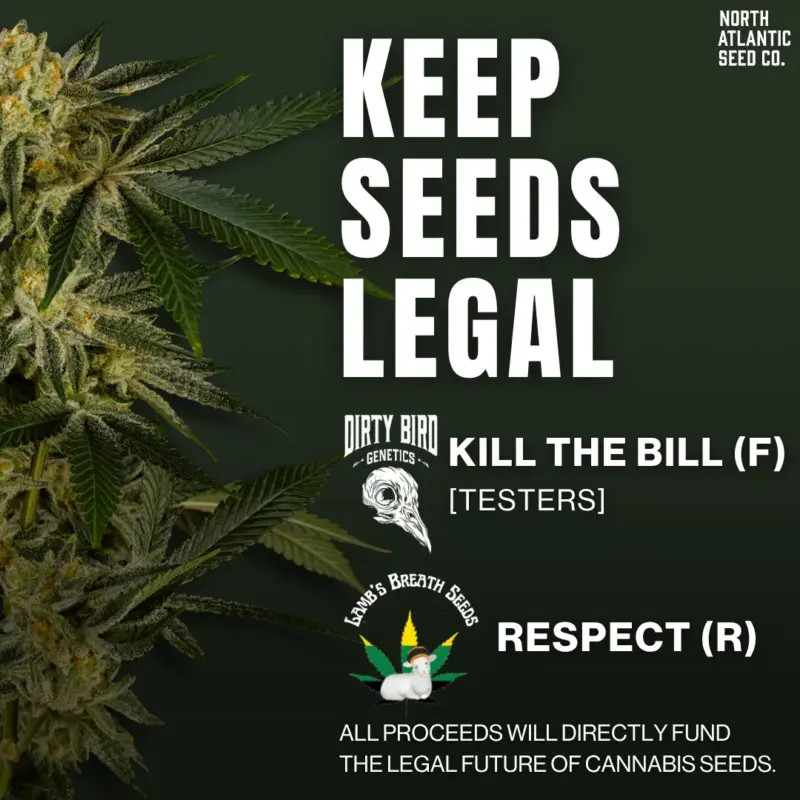
2026 will prove to be a pivotal year in our industry. Cannabis rescheduling and the potential hemp ban will shape the future of genetics in the United States. Please support our efforts in Keeping Seeds Legal by purchasing packs HERE or making a donation at checkout. All proceeds will directly fund the legal future of cannabis seeds.

Keep Seeds Legal - Proceeds Go Towards Preserving Seeds
Keep Seeds Legal - Sour Pebbles F1 Auto $10 Donations

Read more about this important cause HERE

Thank you for reading and for your continued support! We wouldn’t be here without you. Please follow us anywhere and everywhere you engage online. We want to hear from you and grow with you!

As a small token of our appreciation, please use this 10% OFF code on your next order: 

MattSentMe 

Good for one time use. Exclusions apply. $25 min. Expires 4/17/26.

-Matt Pagliaro, Marketing Manager

The Fight to Keep Cannabis Seeds Legal with North Atlantic Seed Co. by Beth Mathieu

Keep Seeds Legal - Proceeds Go Towards Preserving Seeds

In Nov 2025, a statute was passed in the FY2026 Agriculture Appropriations Act that will federally redefine and criminalize most cannabis seeds sold in the US by excluding them from the previous definition of hemp set forth in the 2018 Farm Bill. Set to take effect on Nov 12, 2026, seeds will become recognized as “cannabis” rather than “hemp” if the mother plant contains over 0.3% THC. 

This new statute – found in Sec 781, Exclusion C –undermines the definition of hemp as set forth by the 2018 Farm Bill, and it reverses the 2022 DEA ruling that effectively legalized cannabis seeds by clarifying the DEA’s operative definition of hemp as inclusive of cannabis seeds.

The 2018 Farm Bill defines hemp as any part of the cannabis sativa L plant, including the plant itself and the seeds thereof, that contain 0.3% THC or less on a dry weight basis. Cannabis seeds contain 0% THC, and are therefore federally recognized as hemp. 

The new statute, found in Sec 781, Exclusion C of the FY2026 Agriculture Appropriations Act, excludes seeds from the previous definition of hemp if the seeds were derived from a plant that contains more than 0.3% THC. This shifts the onus from the seed to the mother plant. 

As a result, legal interstate sale of cannabis seeds will no longer be permitted under federal law. Banking and payment processing will become inaccessible to cannabis seed businesses and breeders, and shipping carriers like USPS will no longer ship cannabis seeds. Despite containing 0% THC, cannabis seeds will become a Schedule III drug.  

NASC has been working hard behind the scenes to advocate for sensible changes to this statute before it takes effect this November 2026. By teaming up with industry leaders, attorneys, and politicians, we are hopeful we can get the job done. Now more than ever, we need to unite as a community to fund this effort, to educate our politicians and our peers, and to make our stories, our experiences, and our voices heard. 

This week, North Atlantic Seed will be launching the Keep Seeds Legal! Limited Series. With the help of our breeders and allies, we hope to raise money to fund this cause. 100% of proceeds from the sale of any items on this limited edition menu will go to the Keep Seeds Legal advocacy effort. If this is an issue you care about, please consider shopping from the KSL menu this season, and check back regularly as we hope to continue expanding upon the line with added breeders and genetics. 

In addition, you will find that you can make a donation at check out should you choose, and we plan to pair this with free seeds in order to give back to all of our amazing customers who donate to this important cause. 

If you are willing to reach out to your state US Representatives and Senators, here you will find a website called Democracy.io which simplifies and streamlines this process. Below are some helpful messaging points to lean into. We strongly encourage everyone to make this as personal as it can be, and to lean into the talking points and issues that matter most to your elected politicians. We recognize that doesn’t always align with what matters most to us as individuals or collectively as a community and industry; however, if we expect results, we have to speak the same language they are speaking, meet them where they are at, and attempt to resonate. 

Key Messaging Points: 

  1. We think the cannabis/hemp seed exclusion set forth in Sec 781(c)(1) of the FY2026 Agriculture Appropriations Act should be removed entirely from the bill. 
  2. Cannabis Sativa L seeds contain 0% THC, and they are not intoxicating. We feel they should be regulated the same way all seeds are regulated in the US–as an agricultural input. Cannabis seeds should not be lumped in with intoxicating end-products. Doing so unnecessarily overcomplicates an already complex regulatory issue by placing two very different and very nuanced things (agricultural inputs versus intoxicating substances) under the same regulatory umbrella, and categorized as equivalents as Schedule III controlled substances. 
  3. As written, we feel this law will inhibit economic growth, research, and innovation across multiple industries, from industrial hemp to medical research and science initiatives. This law effectively limits the gene pool necessary for innovation in breeding, an issue which is equally relevant to research communities as it is to the US industrial hemp industry. Much like any other crop, scientists require access to genetics in order to isolate and breed forward the desirable traits they are seeking, while breeding out undesirable traits. Beyond just that, genetic diversity is crucial to creating and innovating any vigorous, elite crop. 
  4. The US is well-positioned to be a world leader in the hemp genetics space if we can create a safe regulatory environment for businesses and scientists to innovate and thrive. This statute hamstrings the work we’ve done to set the US apart as trail blazers. There are businesses all over the world attempting to mimic the US’s hemp genetics in order to fulfill demand. Up to this point, it has been nearly impossible to do business outside of the country in the hemp genetics space due to an unclear and often contradictory regulatory framework. US Customs has seized millions of dollars of hemp seeds from US businesses who are 100% compliant with federal law. This bill now threatens our ability to do business and innovate within our own country as well, and we expect that to have a devastating effect on small businesses, their employees, and the state and federal economies that rely on the economic impact this industry has. 

By purchasing one of the following packs, you can help fund the legal future of cannabis seeds! Donation options also available at checkout!


Keep Seeds Legal by Jim Riddle, Lambs Breath

Keep Seeds Legal - Proceeds Go Towards Preserving Seeds

In 2022, the DEA ruled that all cannabis seeds are "hemp" because the seeds themselves contain no THC. That ruling allowed for the legal interstate sale of cannabis seeds. USPS and other shippers began handling seeds. Banks and credit card processors started providing services to the cannabis seed sector. 

A new “hemp ban” passed by congress reverses the DEA ruling by removing cannabis seeds from the definition of "hemp” if the mother plant contained over 0.3% THC. 

While most of the hemp industry is focused on delaying or reversing the intoxicating hemp product ban, the seed issue gets little attention.

The cannabis seed sector and its supporters need to push for a narrow law change that either deletes the new seed definition, or that amends the law by requiring that all cannabis and hemp seeds be regulated under the Federal Seed Act, which is a truth-in-labeling law. 

If the Section 781(c)(1) of the law goes into effect in November 2026 as written, it will become illegal to ship cannabis seeds internationally and between states; USPS and other shippers will likely stop delivering seeds; banks and credit card processors may pull out of the seed market; and the future of legal cannabis genetics will be damaged.

As another breeder put it, “Lawful access to cannabis and hemp genetics matters for research, agriculture, education, medical study, preservation, and innovation."

Please contact your U.S. Senators and Representatives and ask them to delete or amend 781(c)(1) to keep cannabis seeds legal.

Contact your members of Congress here:

https://democracy.io/#!


By purchasing one of the following packs, you can help fund the legal future of cannabis seeds! Donation options also available at checkout!


Contact Us

Email:
[email protected]

Mailing Address:
PO Box 2724
Waterville, ME 04903

Frequently Asked Questions

Customer Service:
Mon. to Fri.: 9am to 4pm EST

Shipping:
Monday – Friday


Disclaimer: Cannabis seeds are sold as souvenirs, and collectibles only. They contain 0% THC. It is imperative that you check your state and local laws before attempting to purchase seeds, and we are not liable for what you do with seeds after receiving them. The statements on this website and its products have not been evaluated by the Food and Drug Administration. These products are not intended to diagnose, treat, cure or prevent any disease. Consult your doctor before use. North Atlantic Seed Company assumes no legal responsibility for your actions once the product is in your possession and is not liable for any resulting issues, legal or otherwise, that may arise.