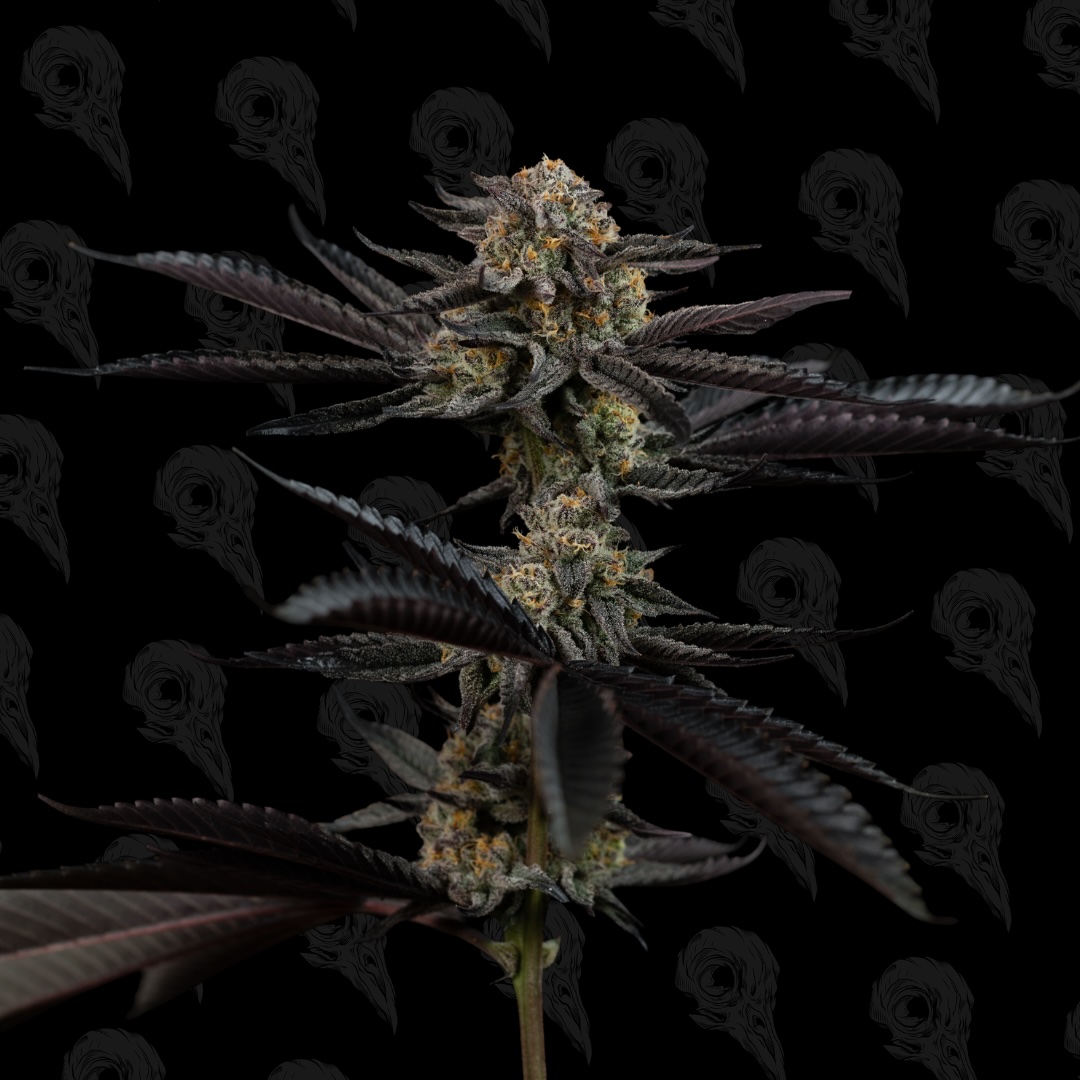
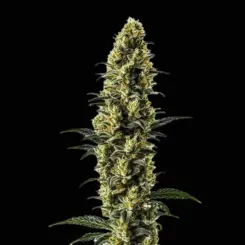
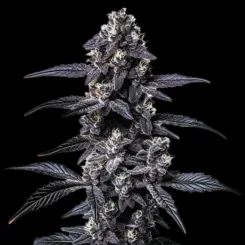
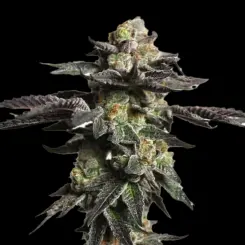
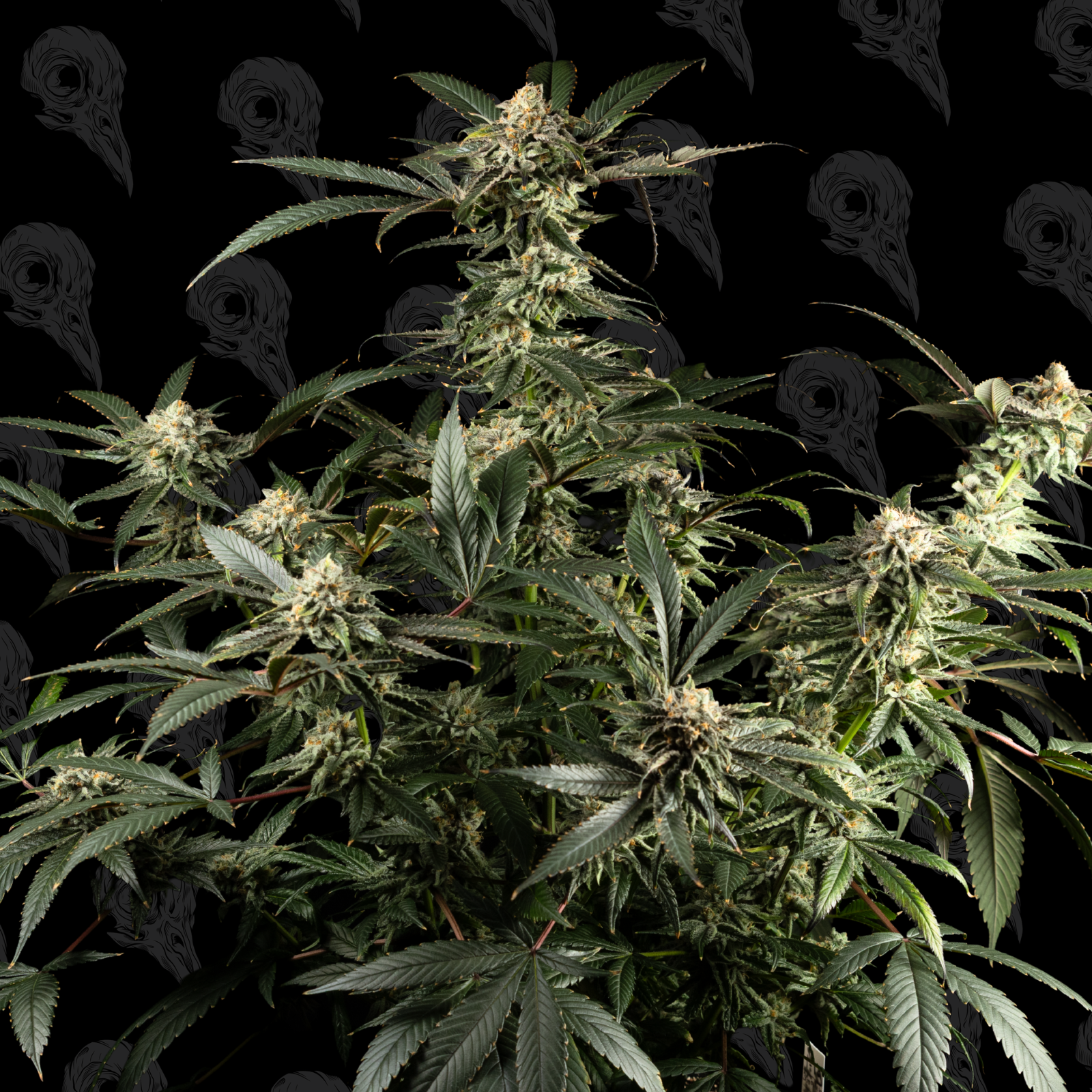
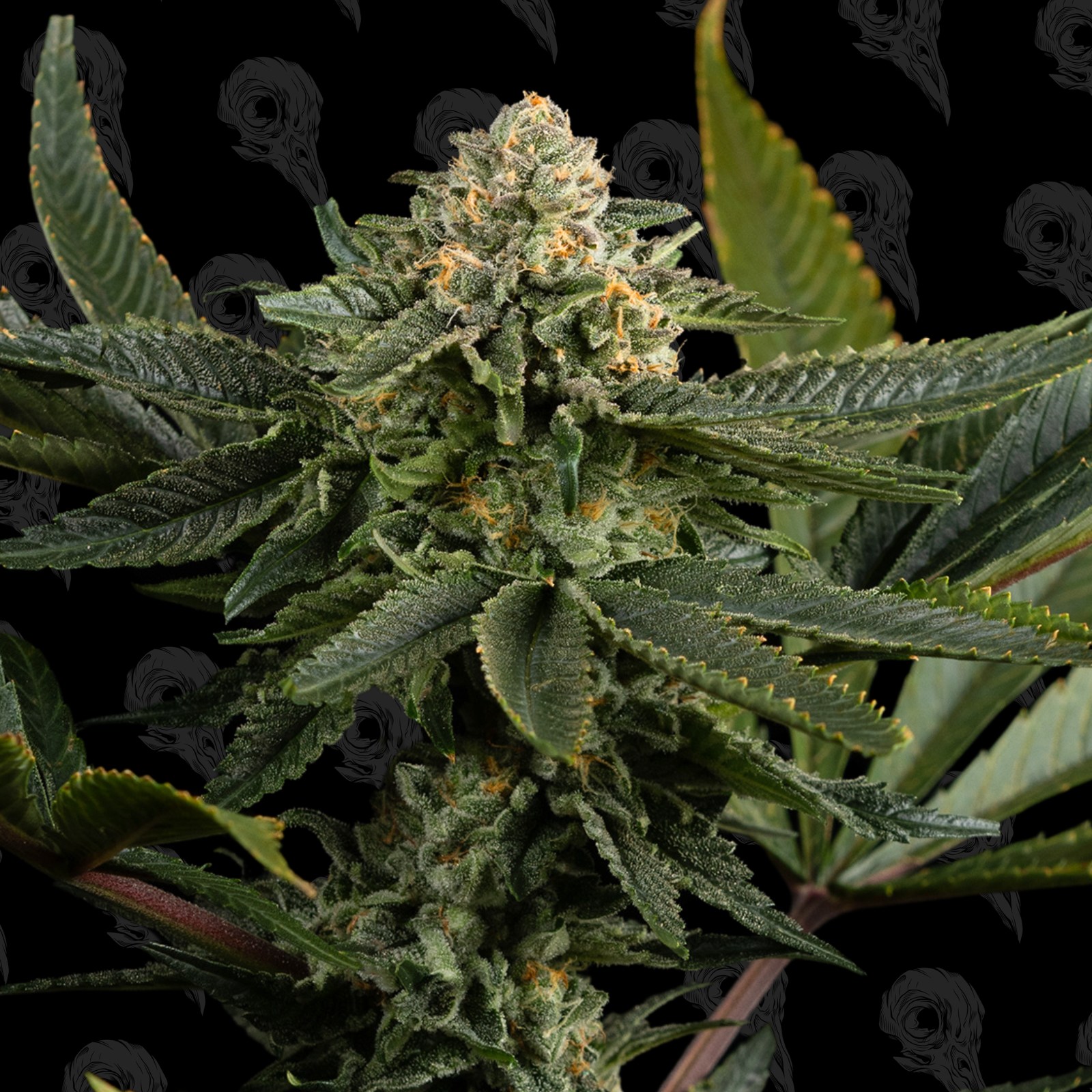
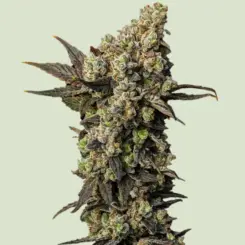
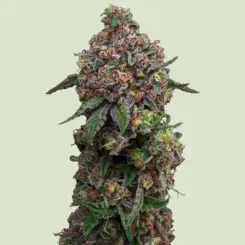
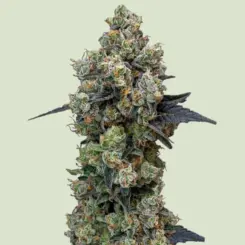
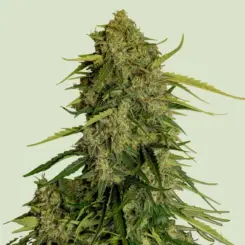
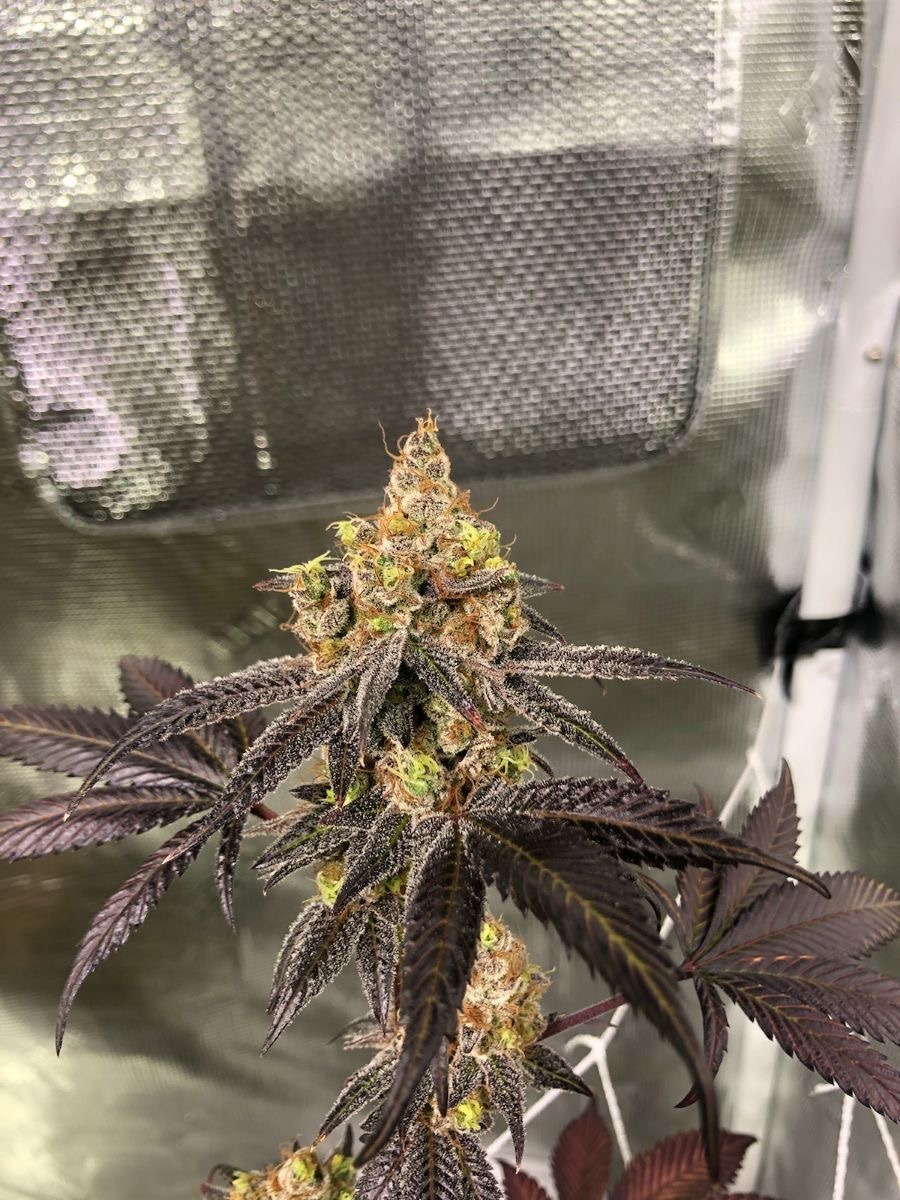
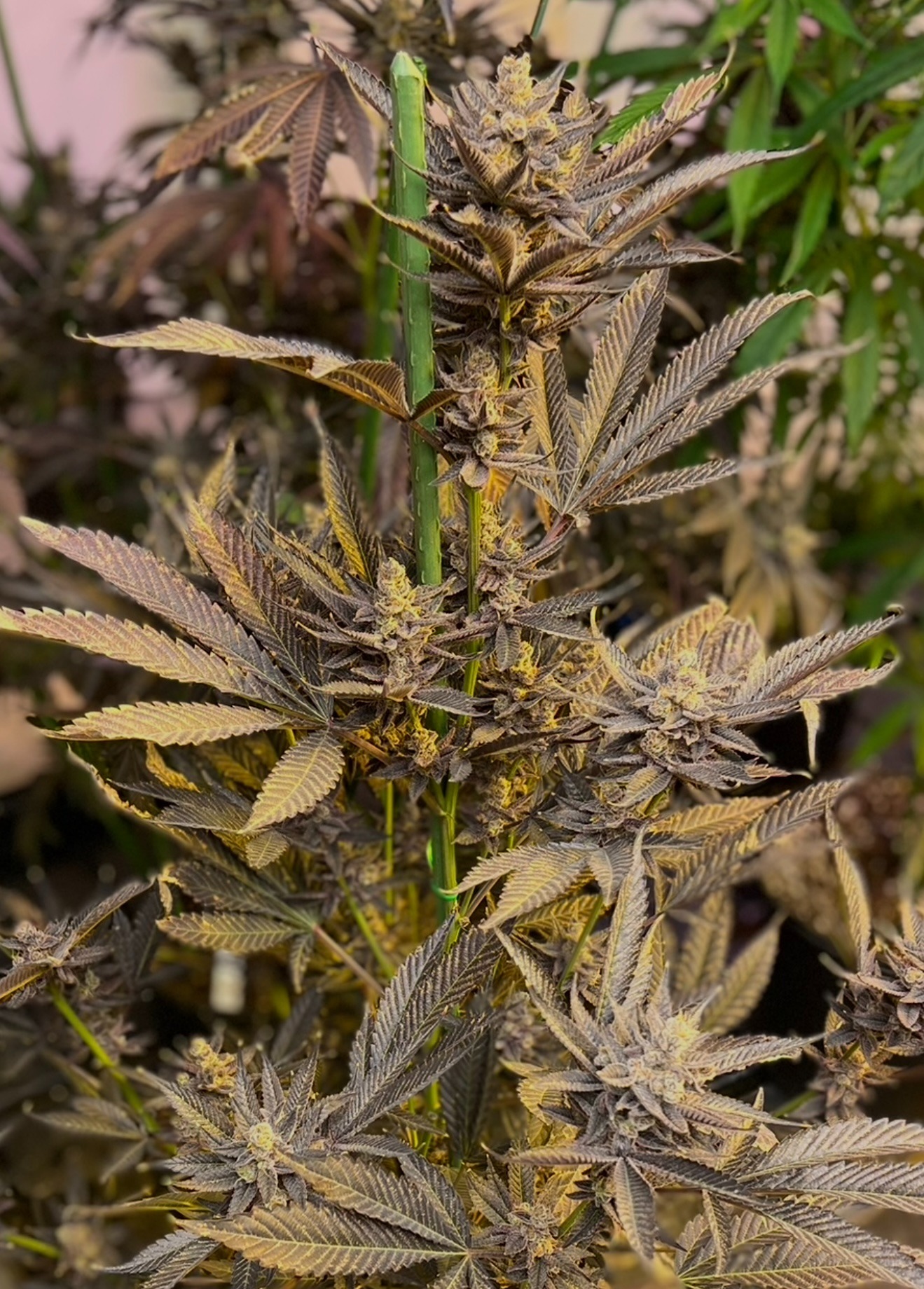
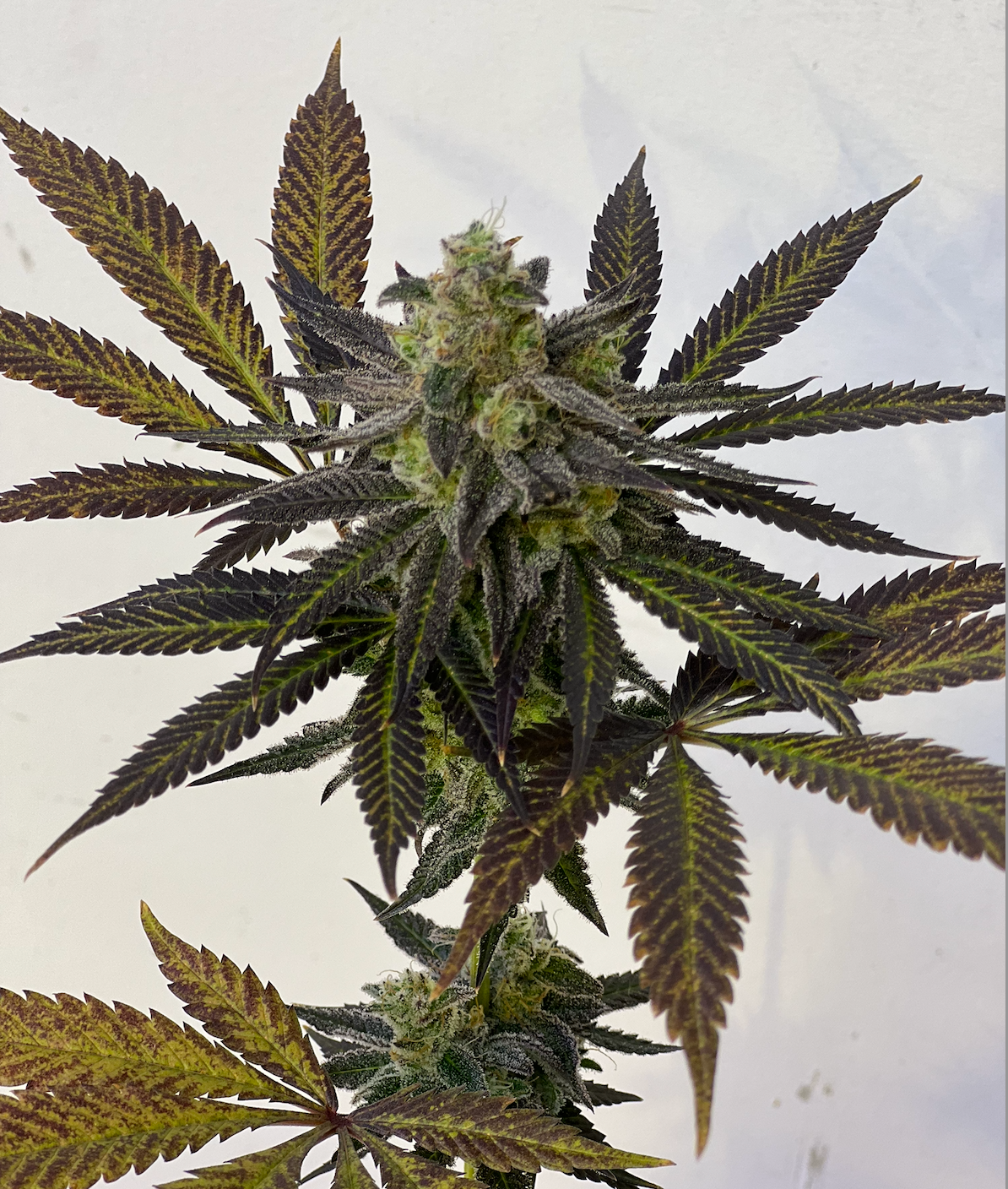
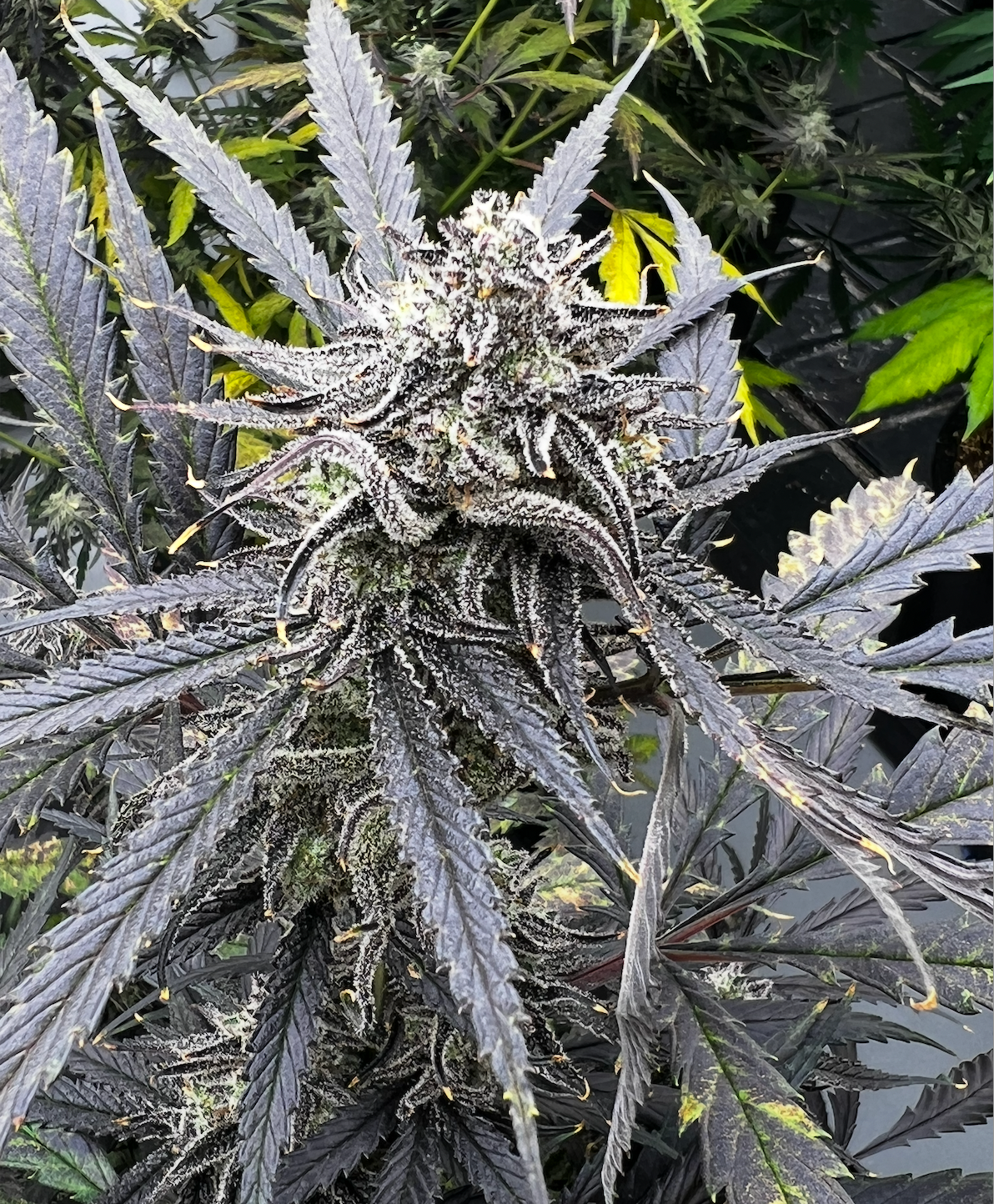
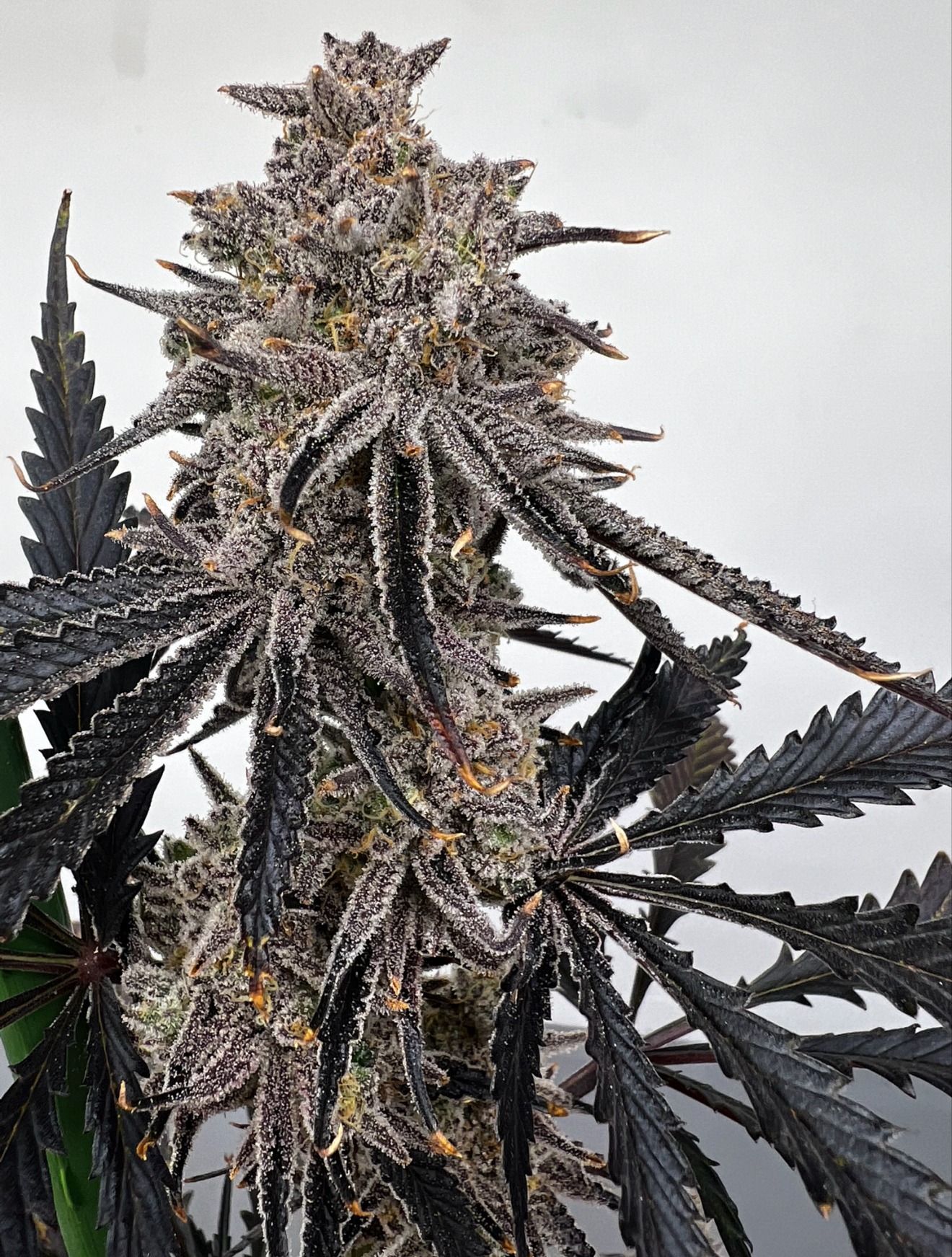
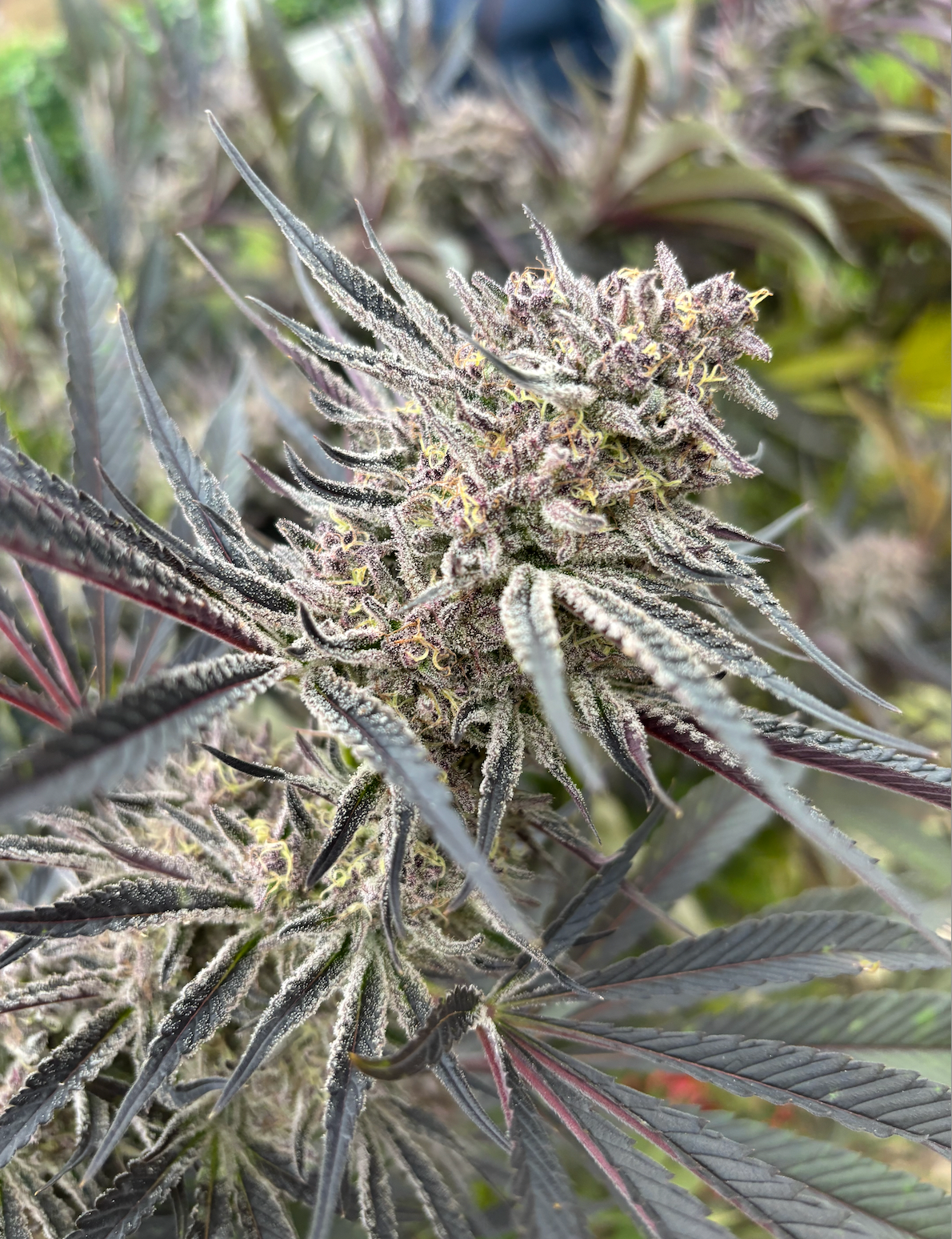
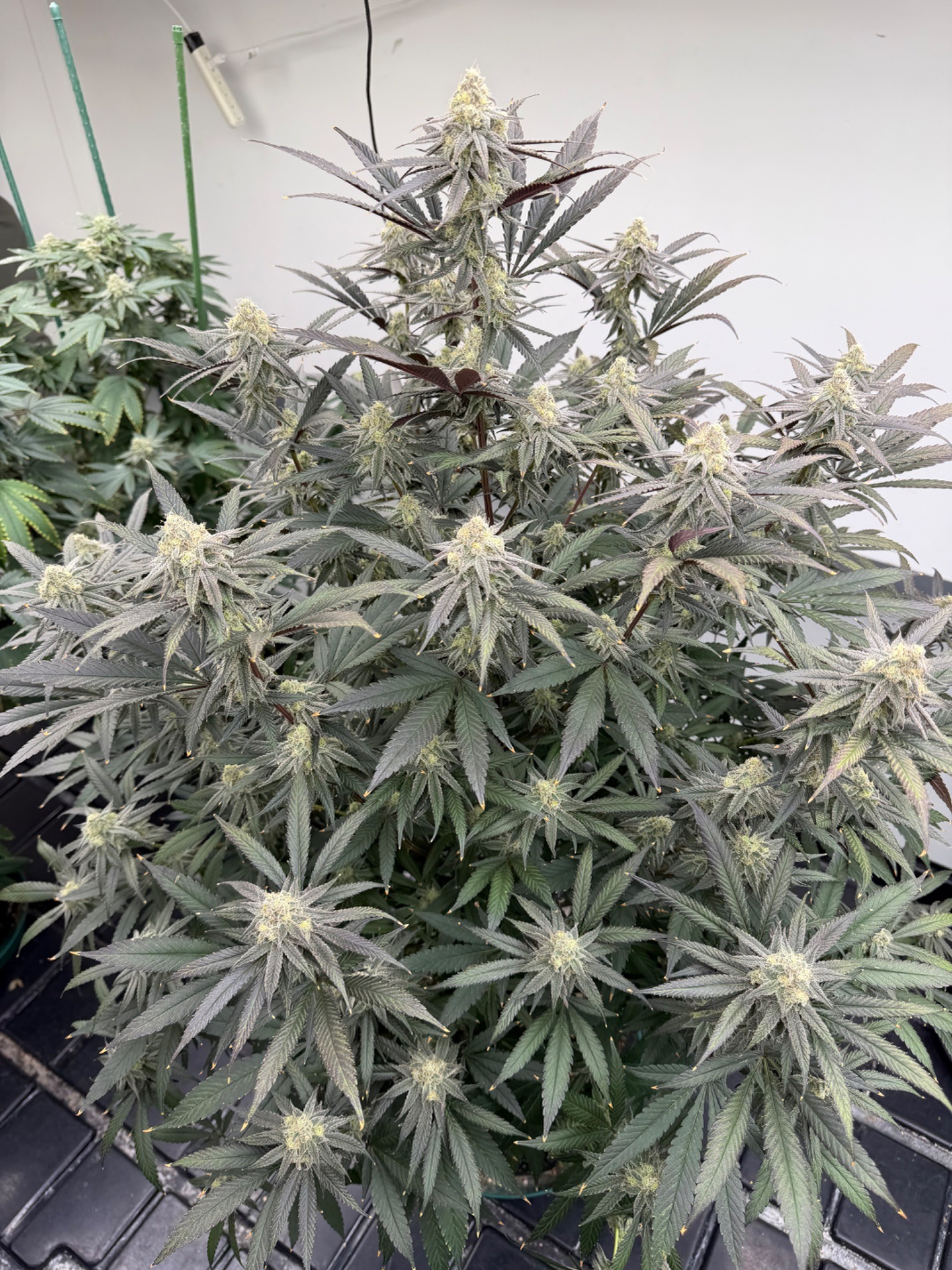
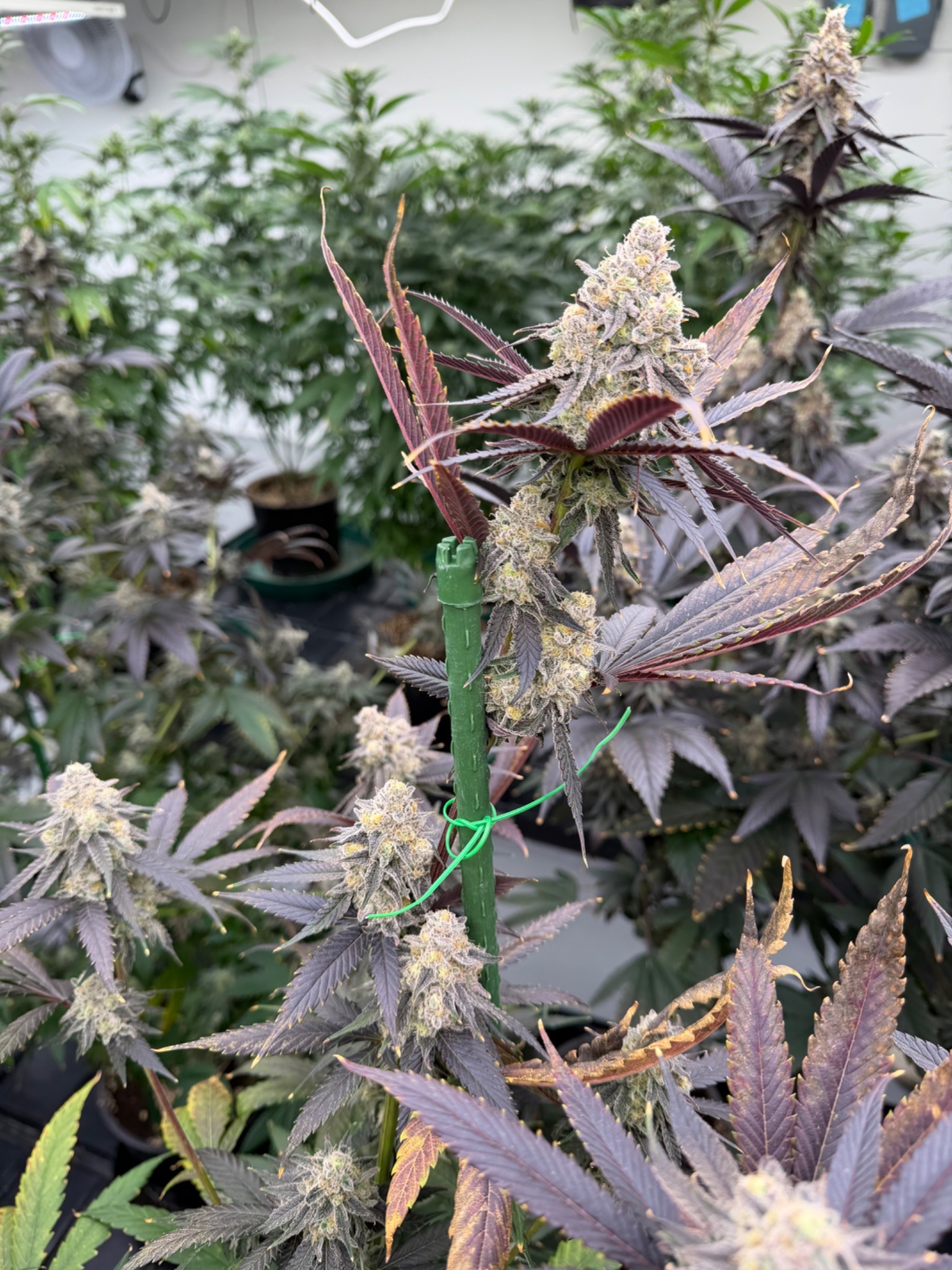
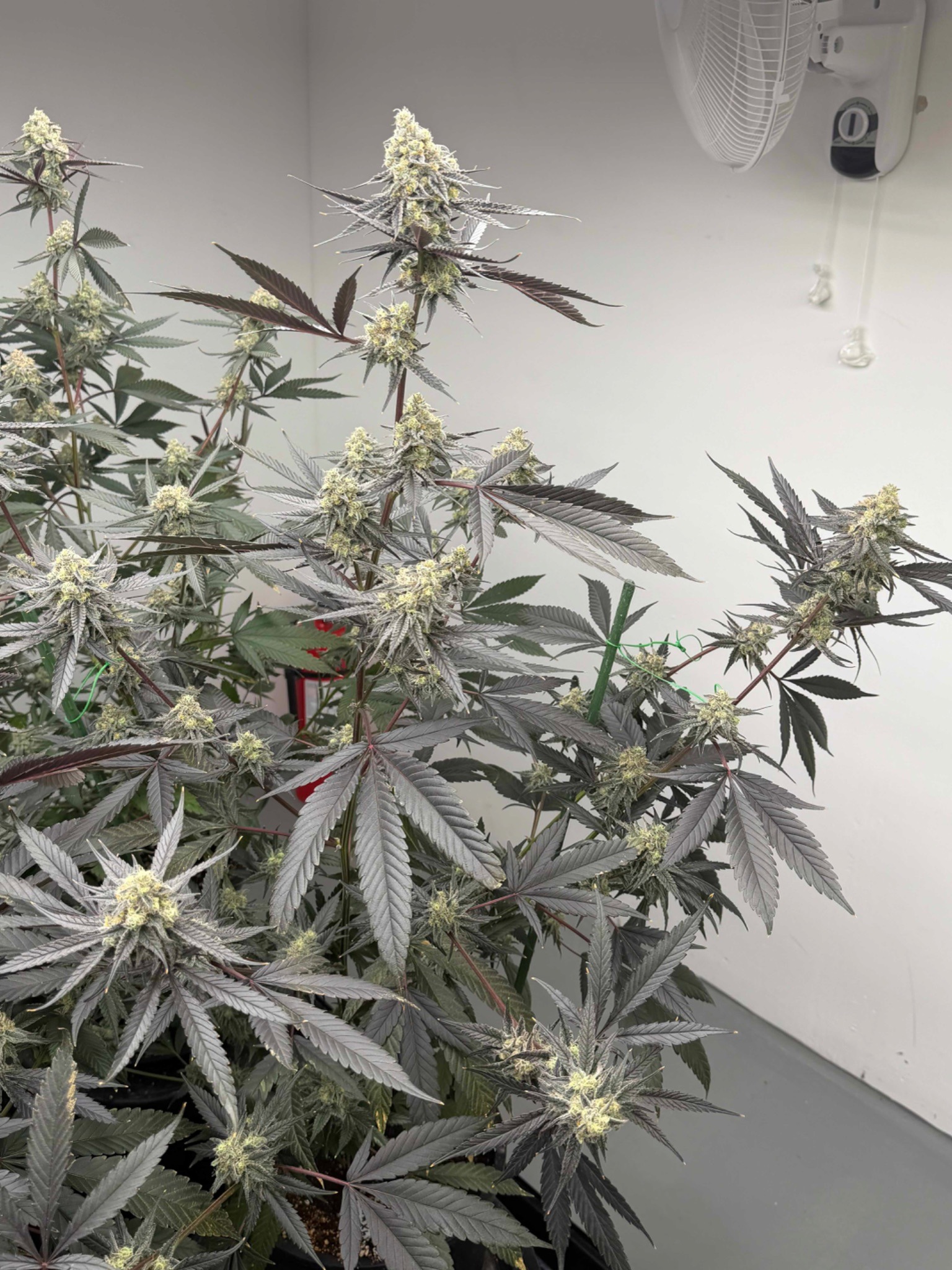
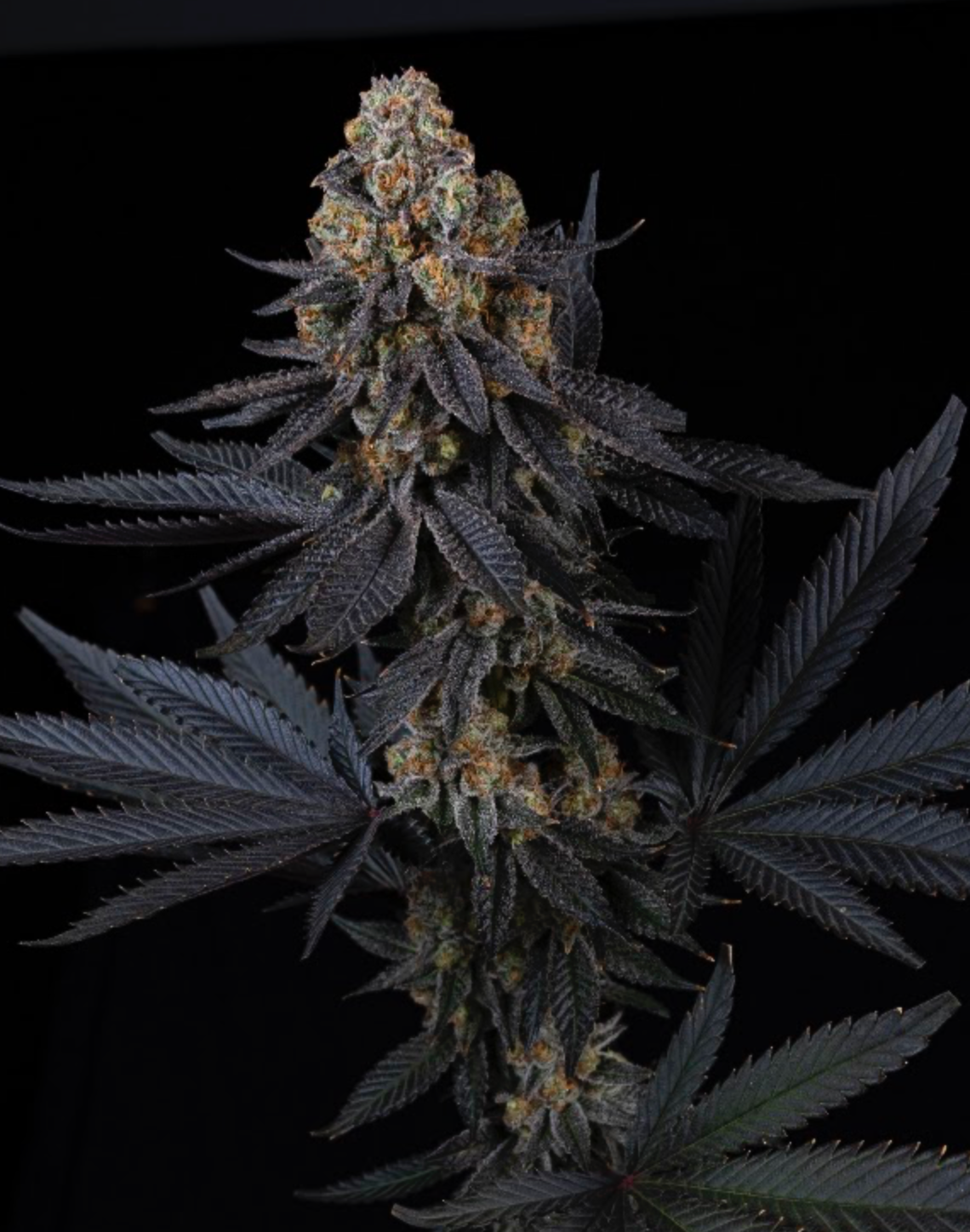
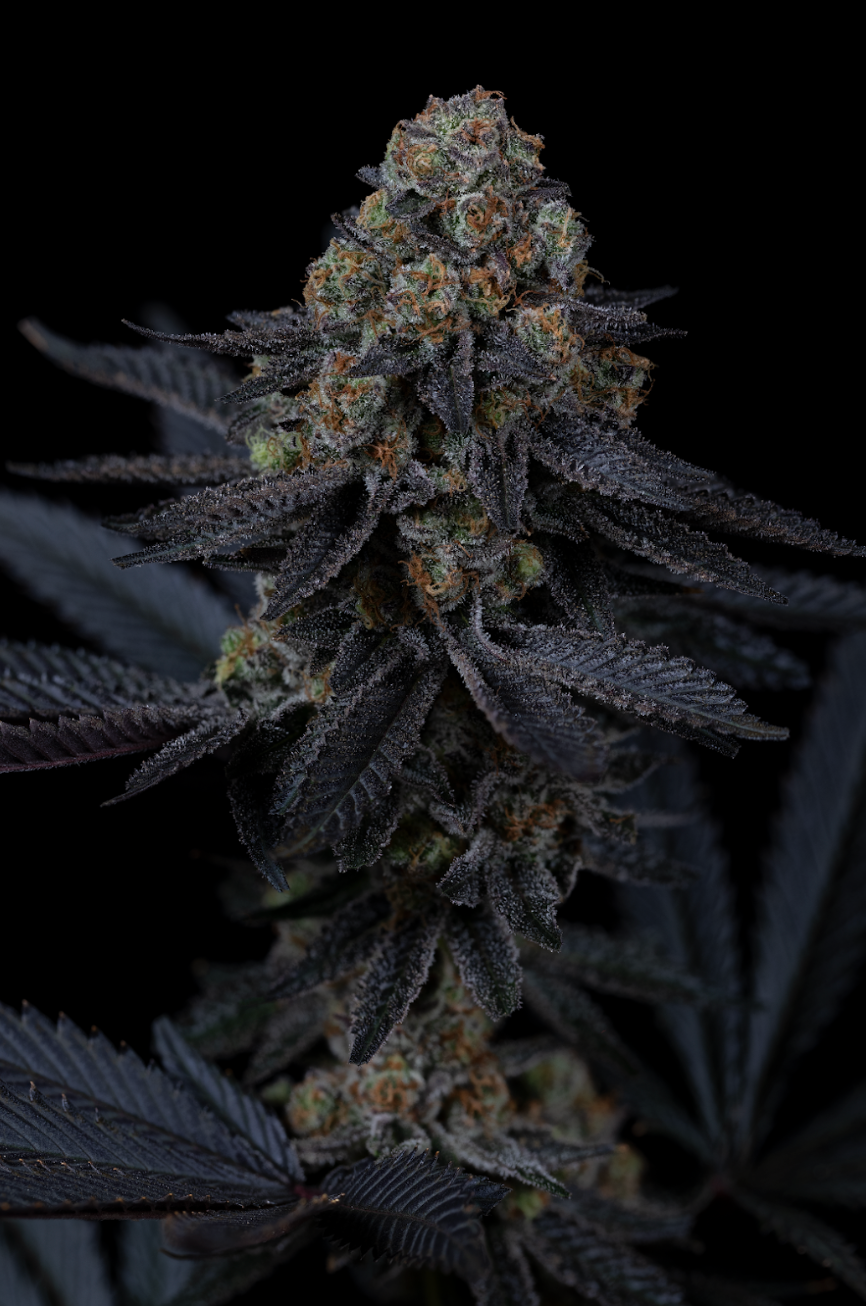
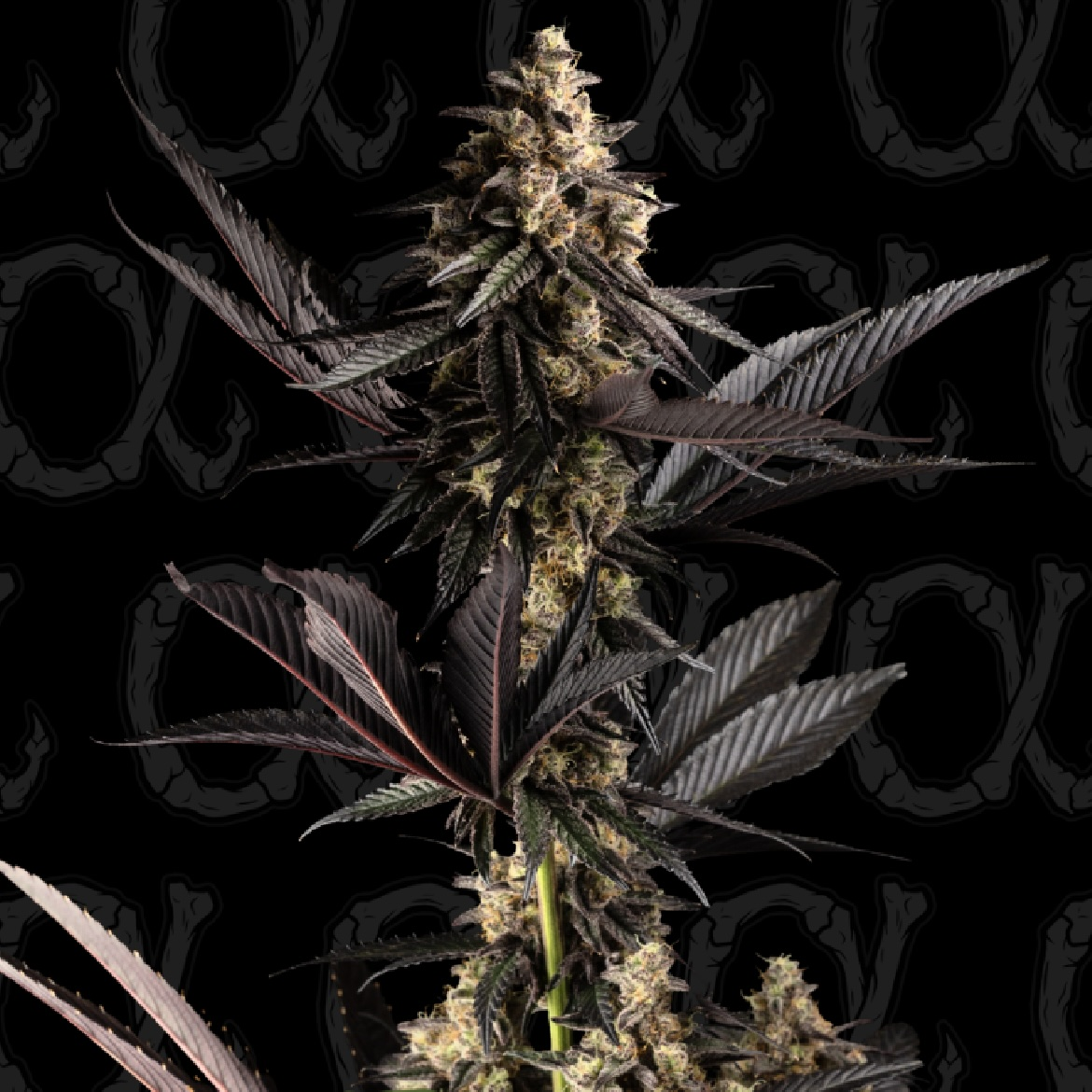
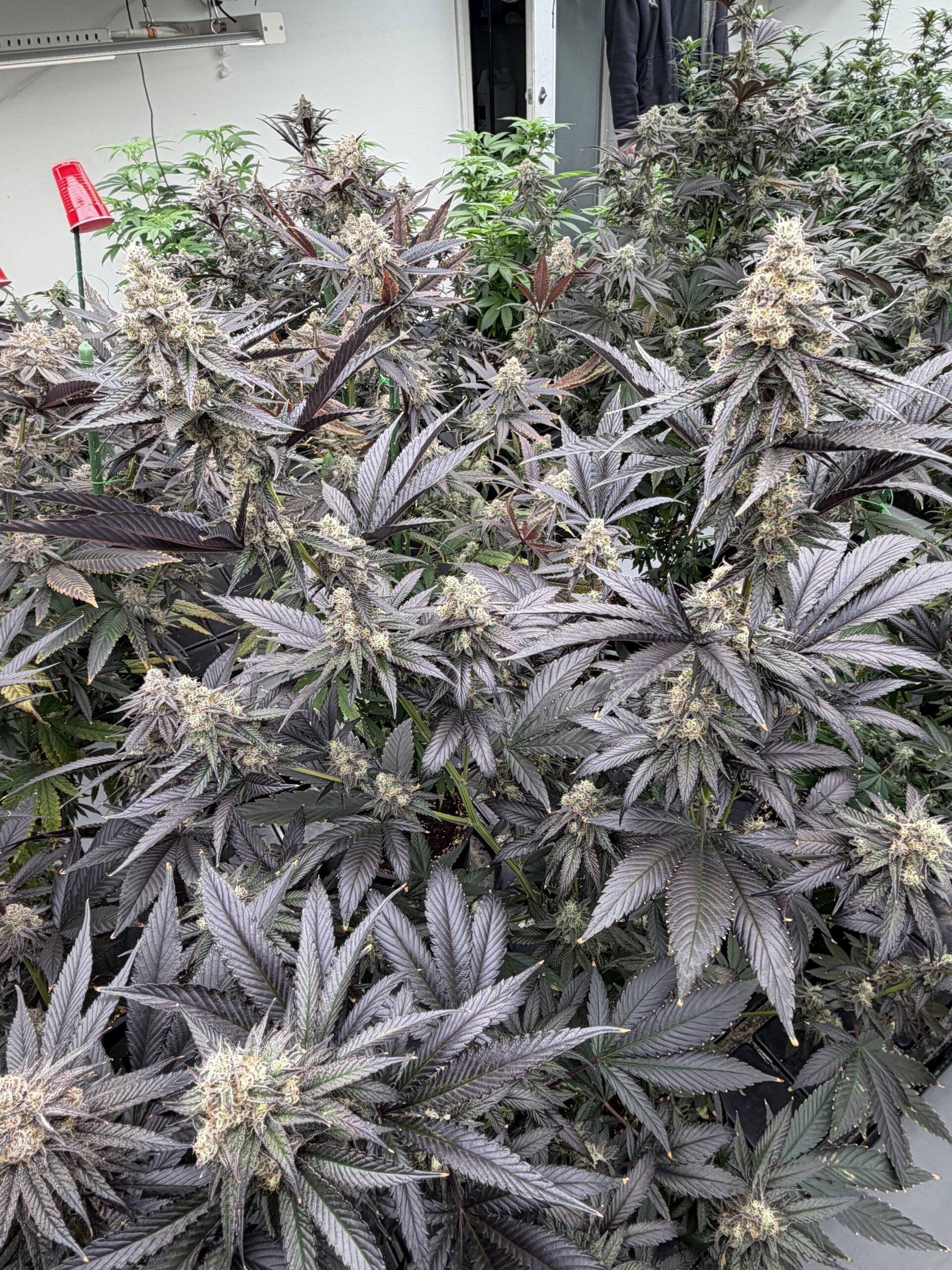
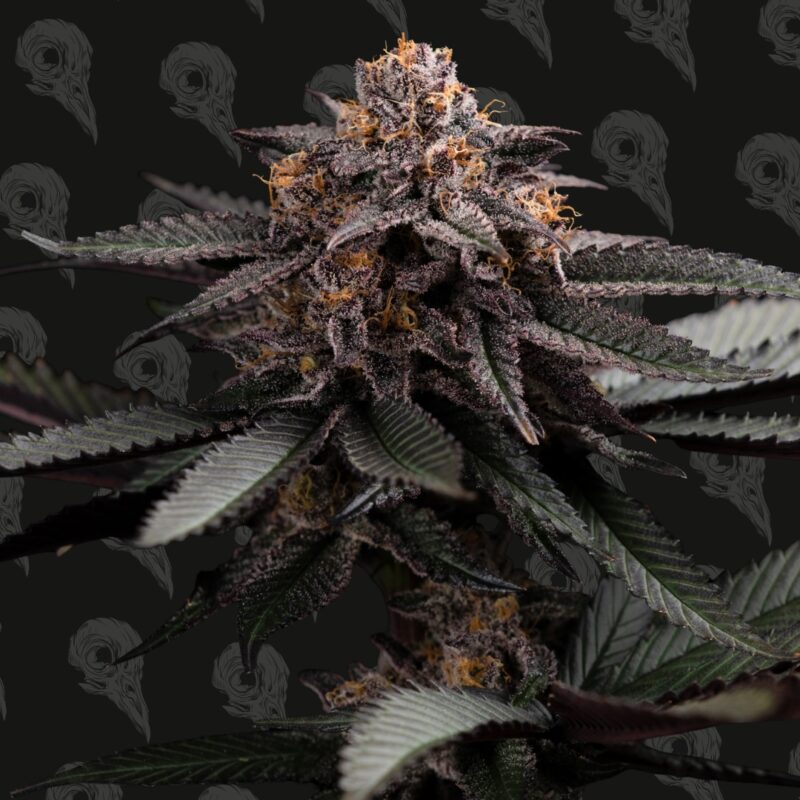
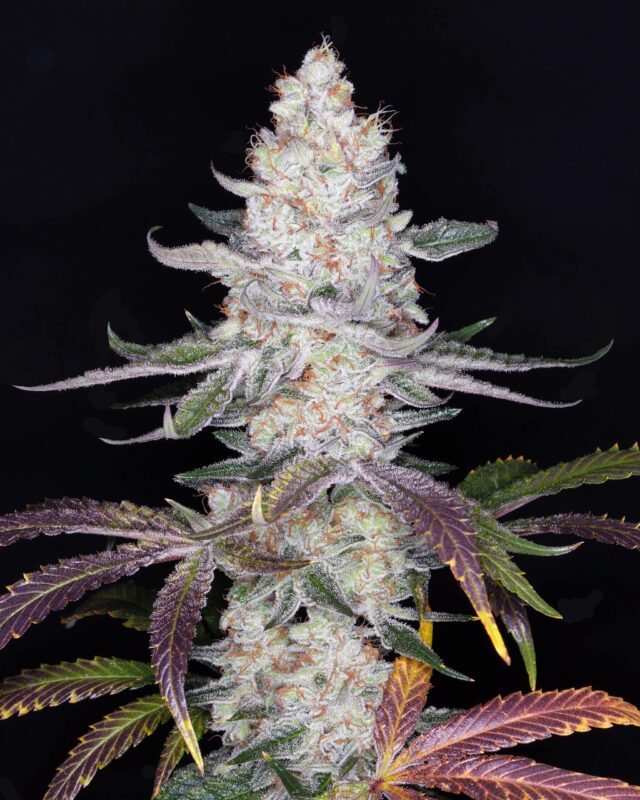
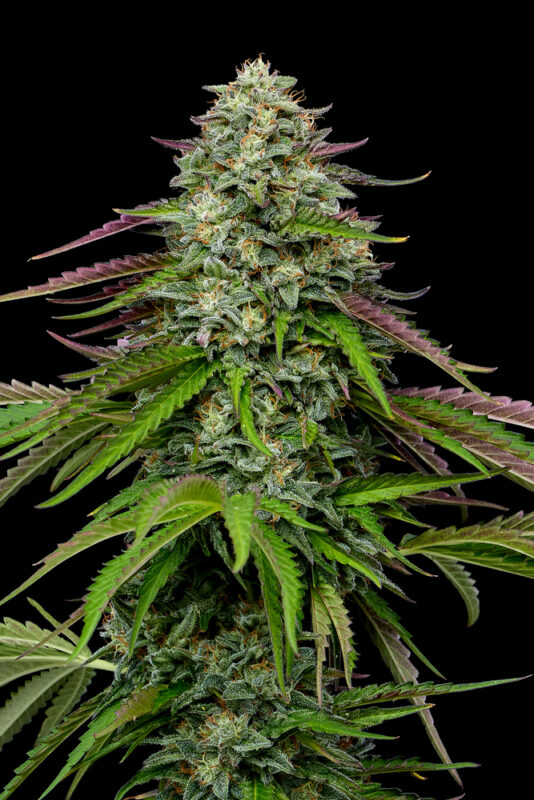
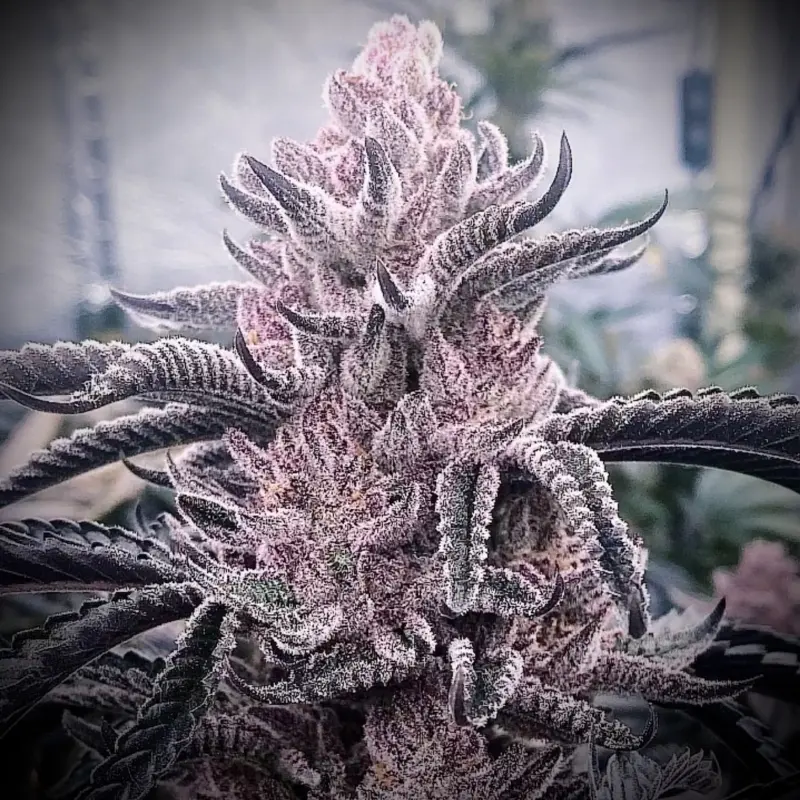
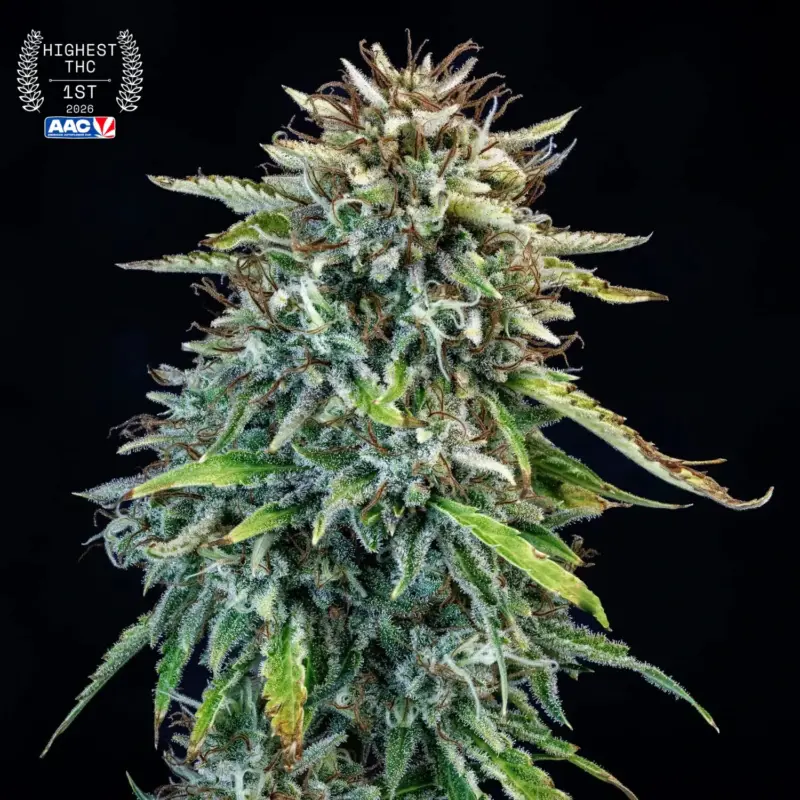
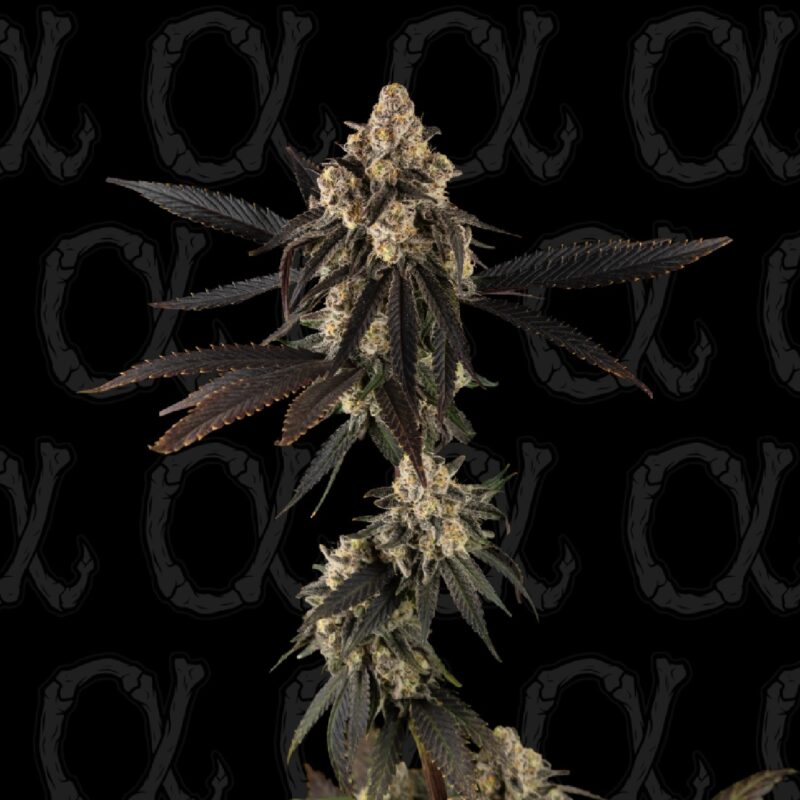
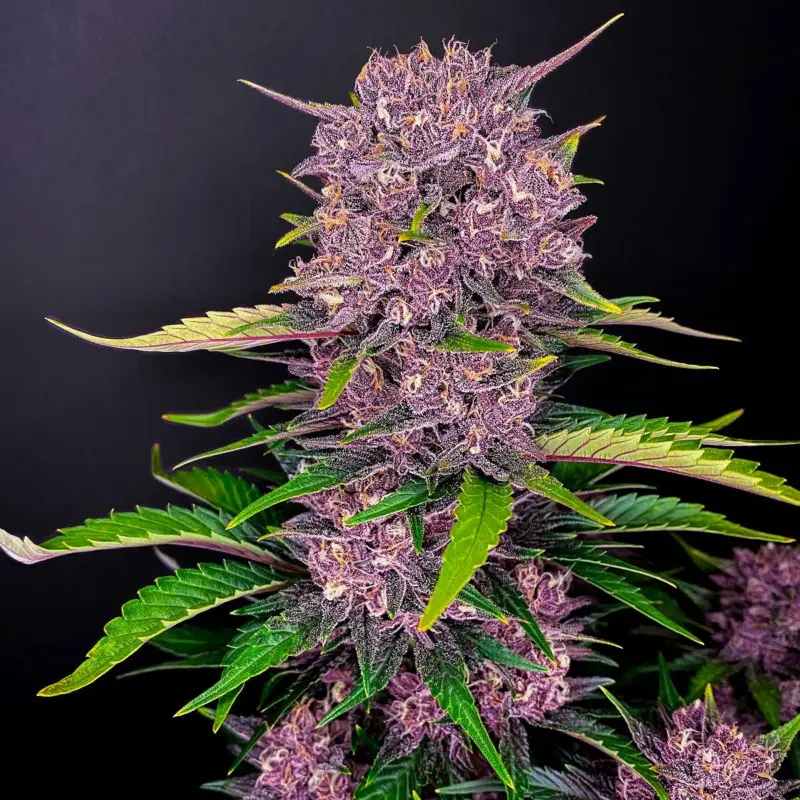
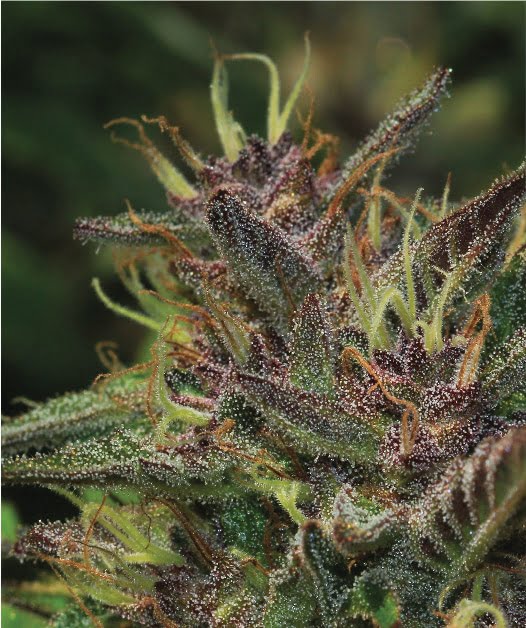
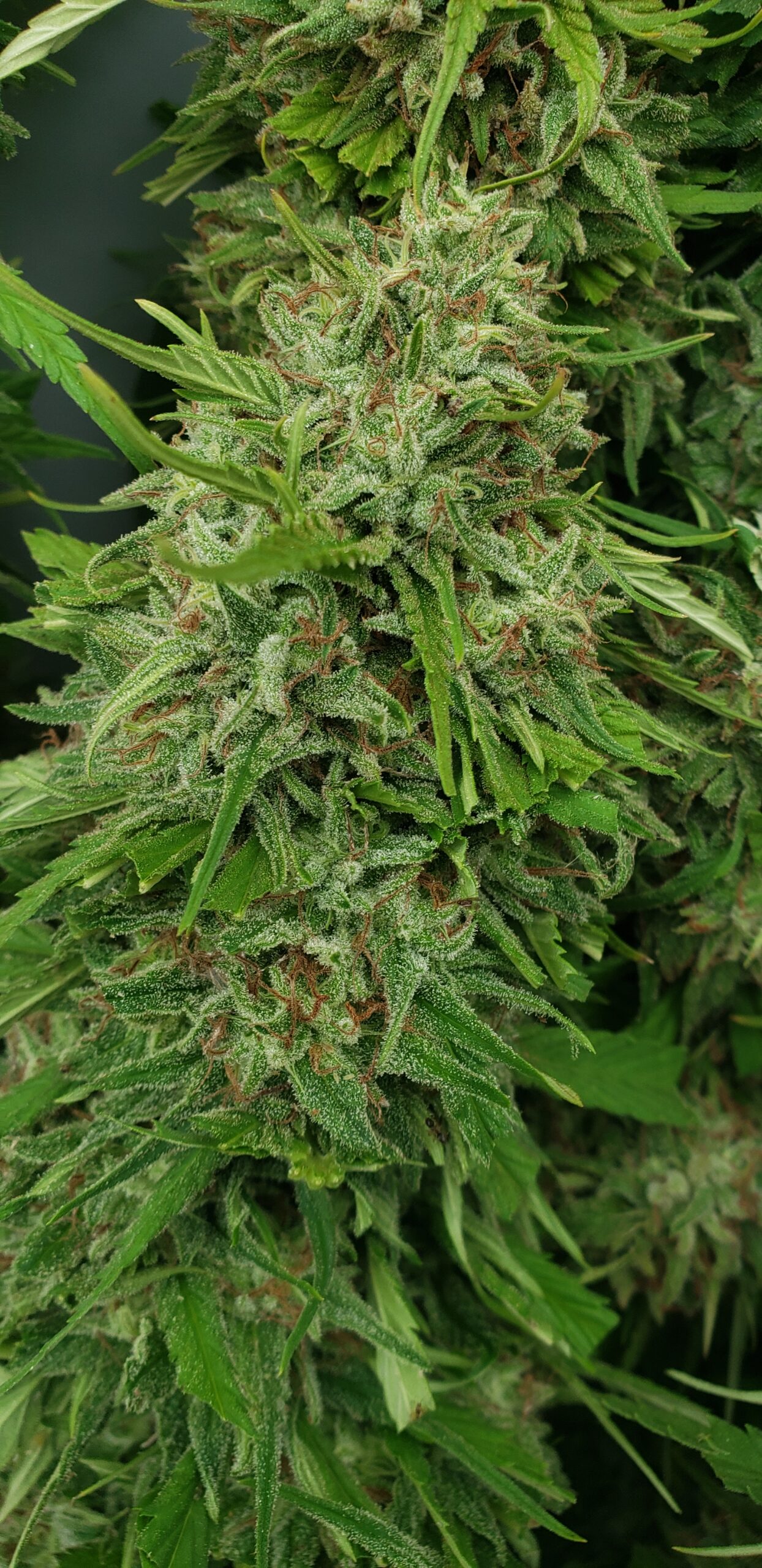
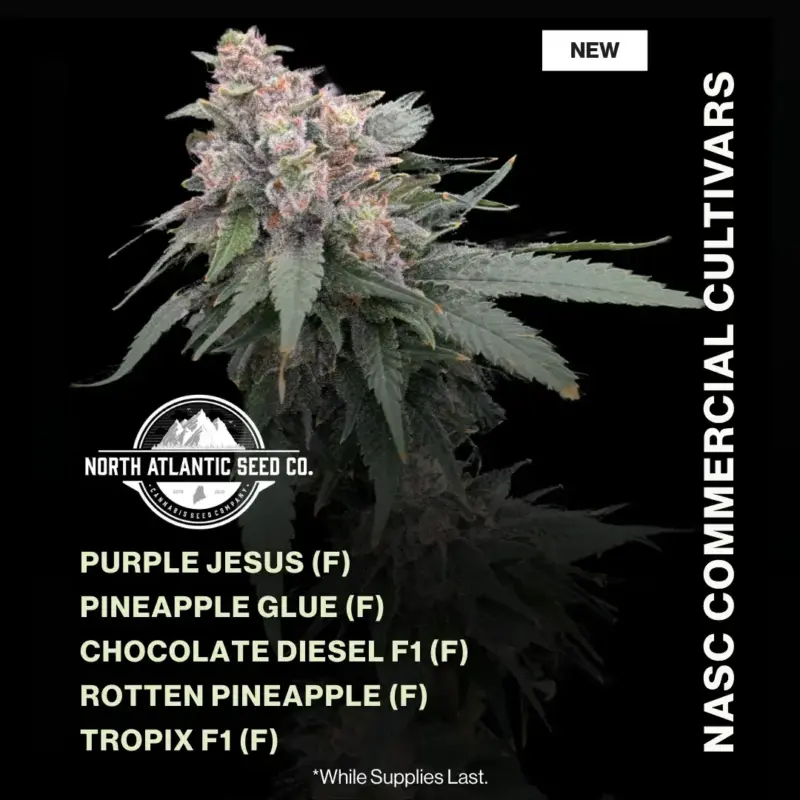
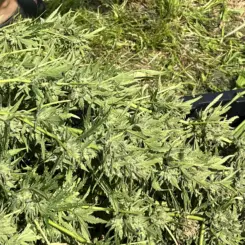
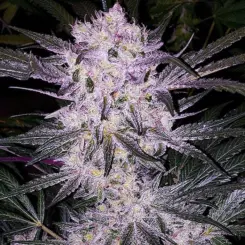
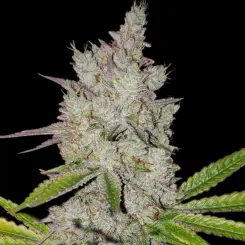
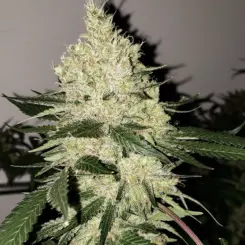
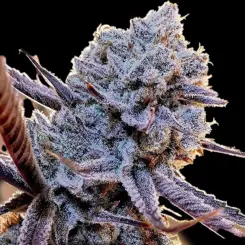
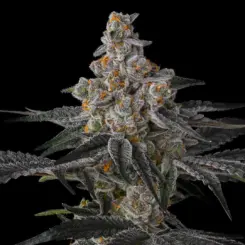
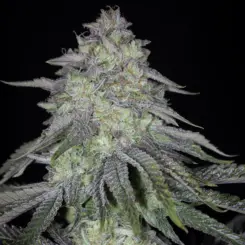
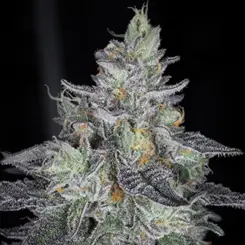
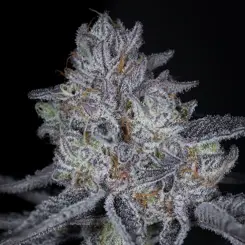
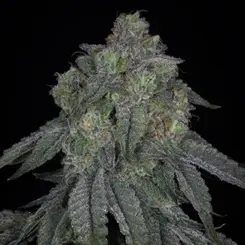
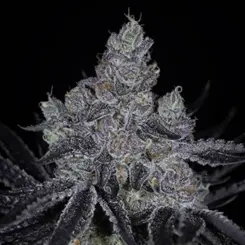
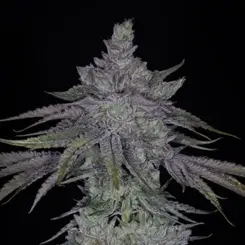
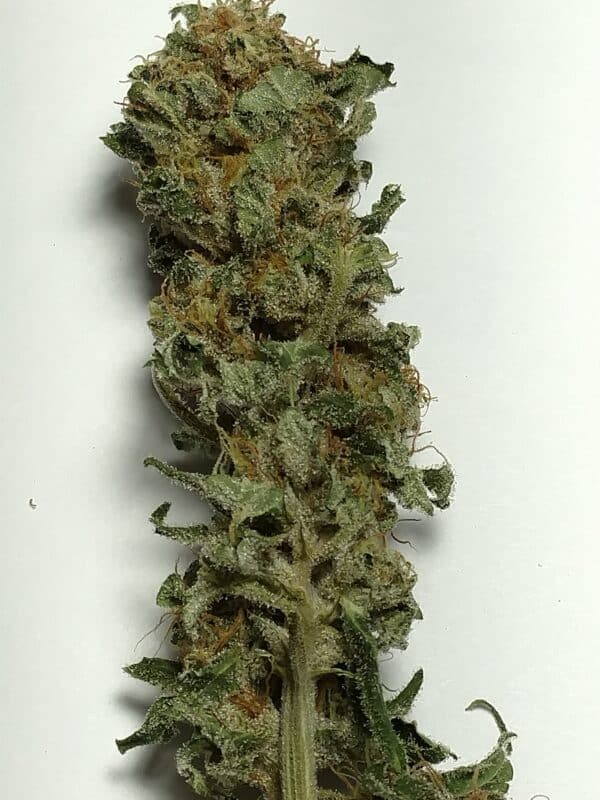
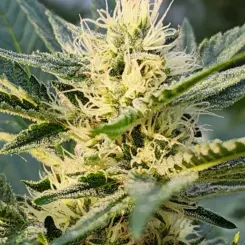
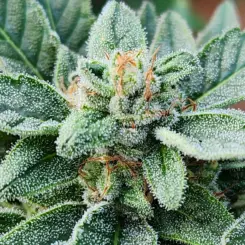
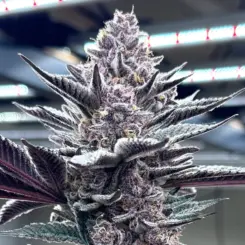
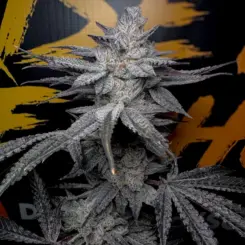
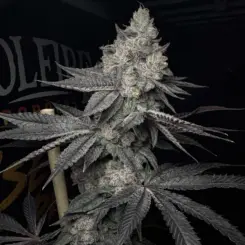
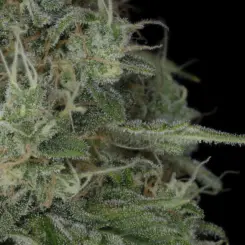
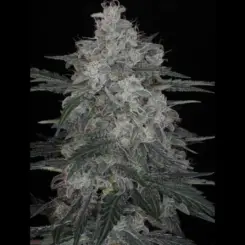
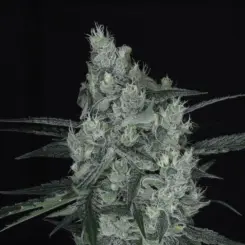
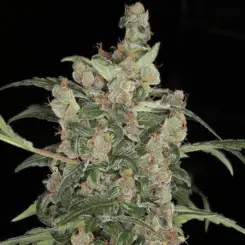
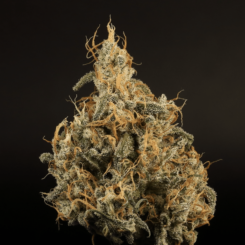
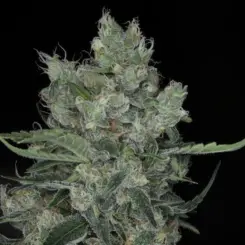
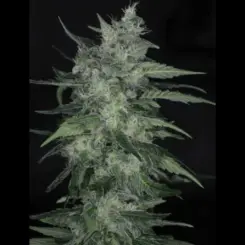
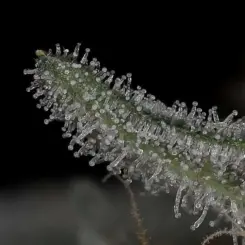
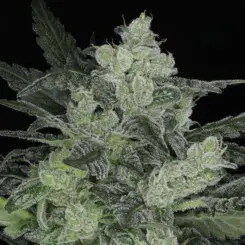
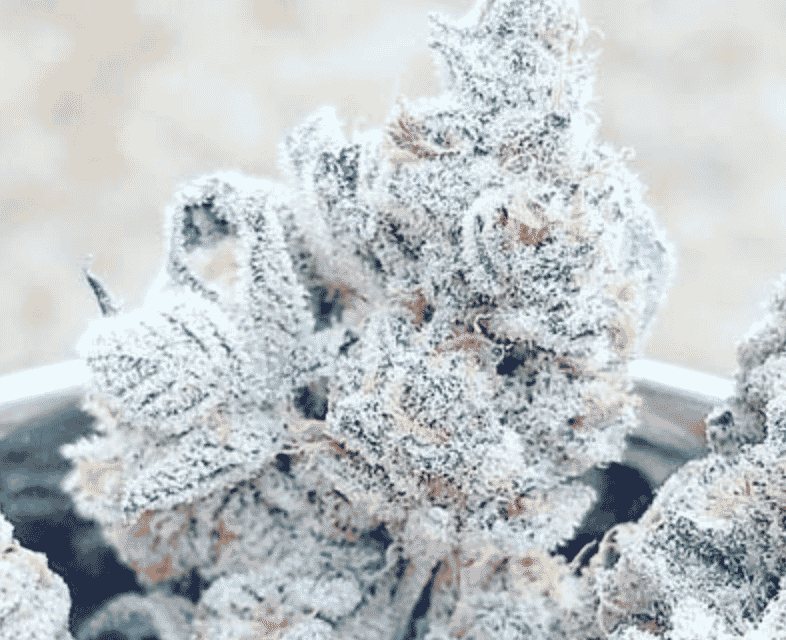
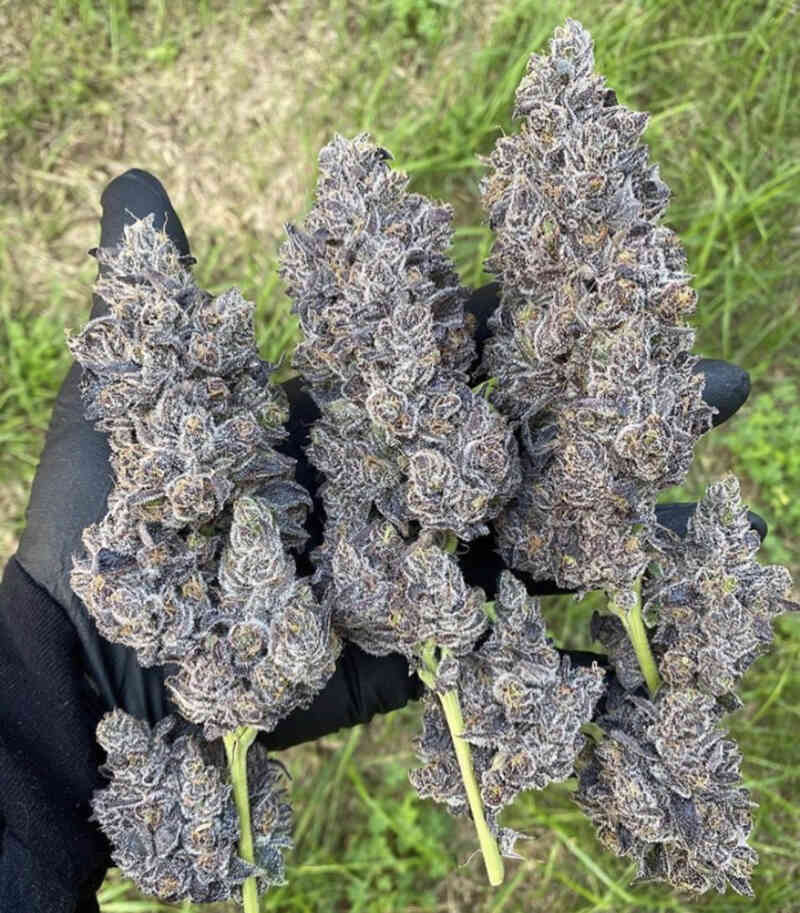
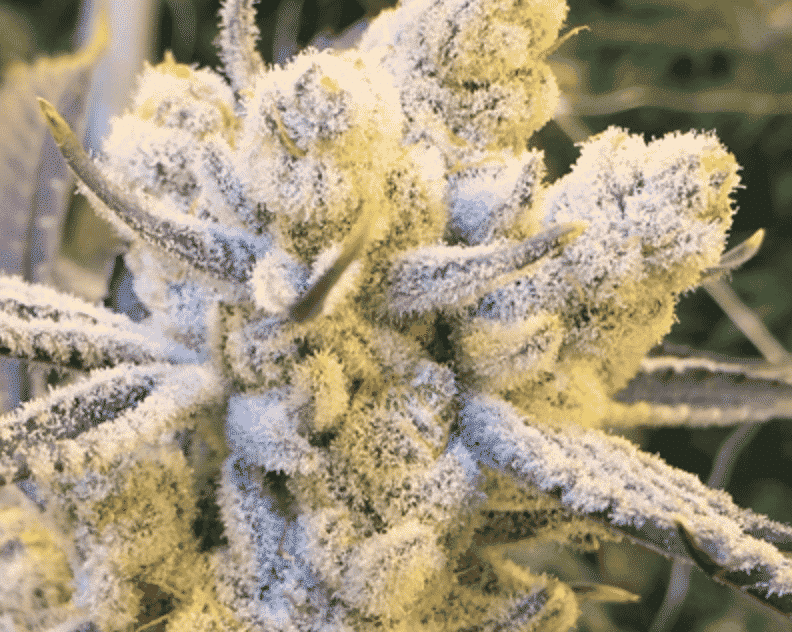
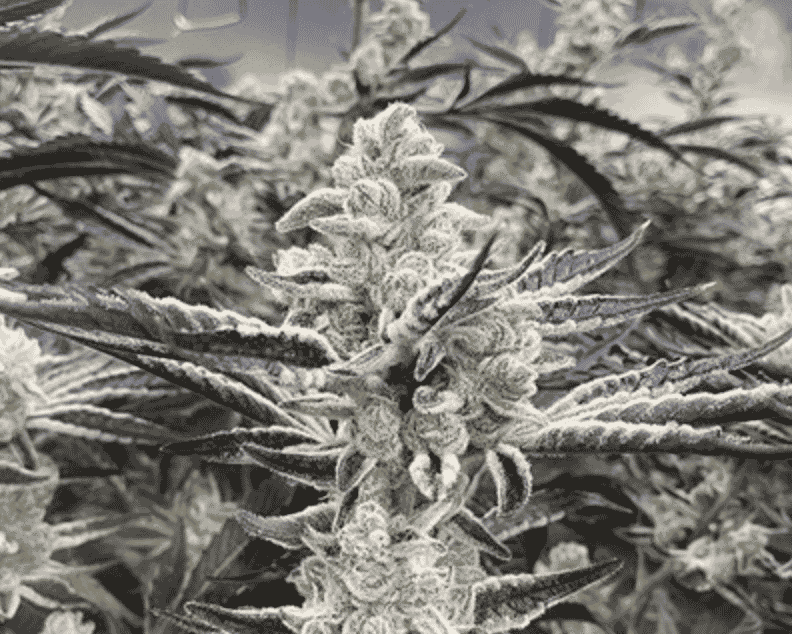
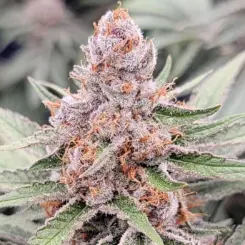
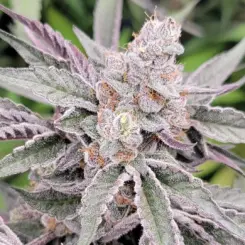
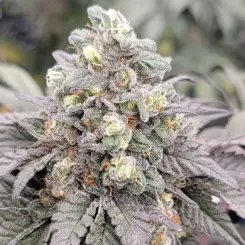
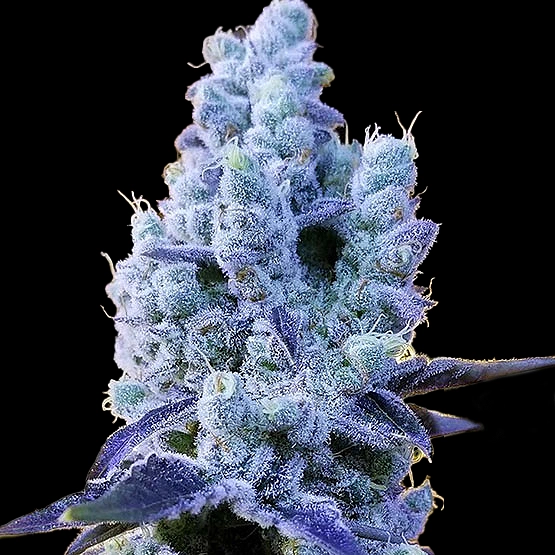
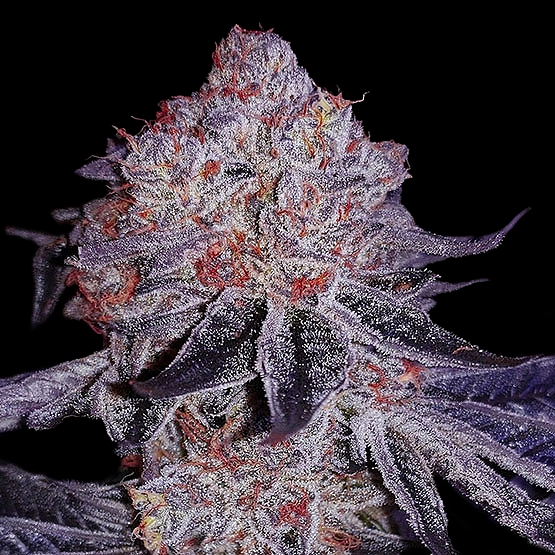
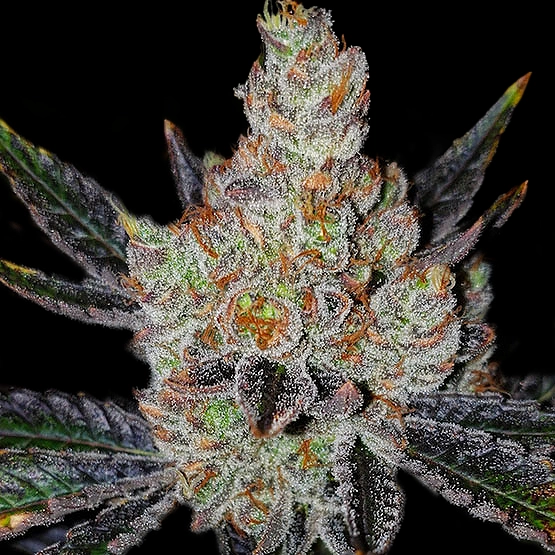
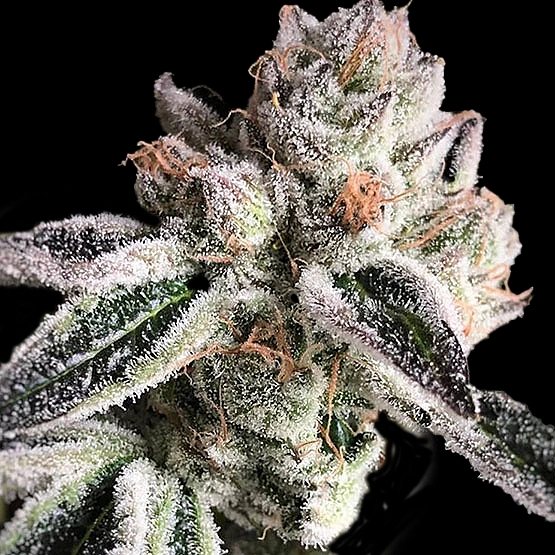
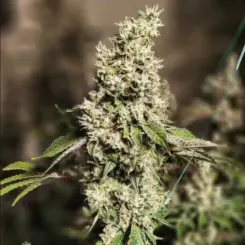
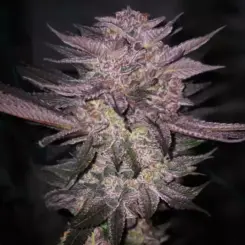
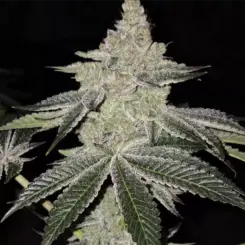
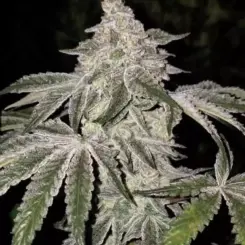
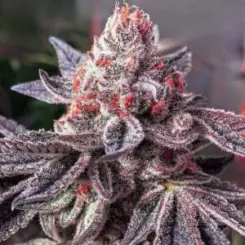
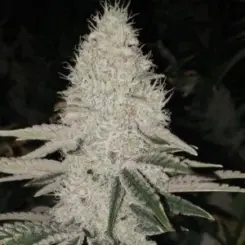
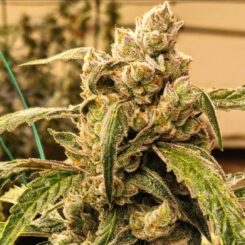
Our next sesh was with Candy Apple Kush, part of Volume 4 by Dirty Bird Genetics. She is a cross of Luna's Wrath x Bad Apple [Sugar Mill Cut]. Read on to learn about our experiences.
Right off the bat, there is splendid bag appeal with healthy nugs of greens and purple. I can smell and taste an apple-like sweetness with moments of citrus and an occasional musky funk. It was a smooth smoke overall. The start of the high had me feeling goofy and sharing laughs with my better half. After the peak silliness subsided, I started to fade. The comedown was very calming and soothing, but there was no room for activity. This one put me to sleep at a decent hour so I would definitely save this strain for the night-time wind down sesh. This one is for you if you prefer indicas or need a little help catching the Z’s.
- Crystal
Candy Apple Kush is perfect in the evening to unwind after a busy day. It really knocks you into a state of deep relaxation and makes you forget your troubles. It’s great for zoning out and watching a good movie before going to sleep. I would not smoke this early in the day since it does tend make you sleepy. Its name really suits it because when you open the bag, it actually smells like apples and candy. The buds are sugary and dense, and it grinds and burns really well. It definitely made me want to eat a snack and get cozy. I’d recommend for insomnia and anxiety as well!
- Mariah
Read more about the differences between Alpha Series, Limited Series, & Tester packs.
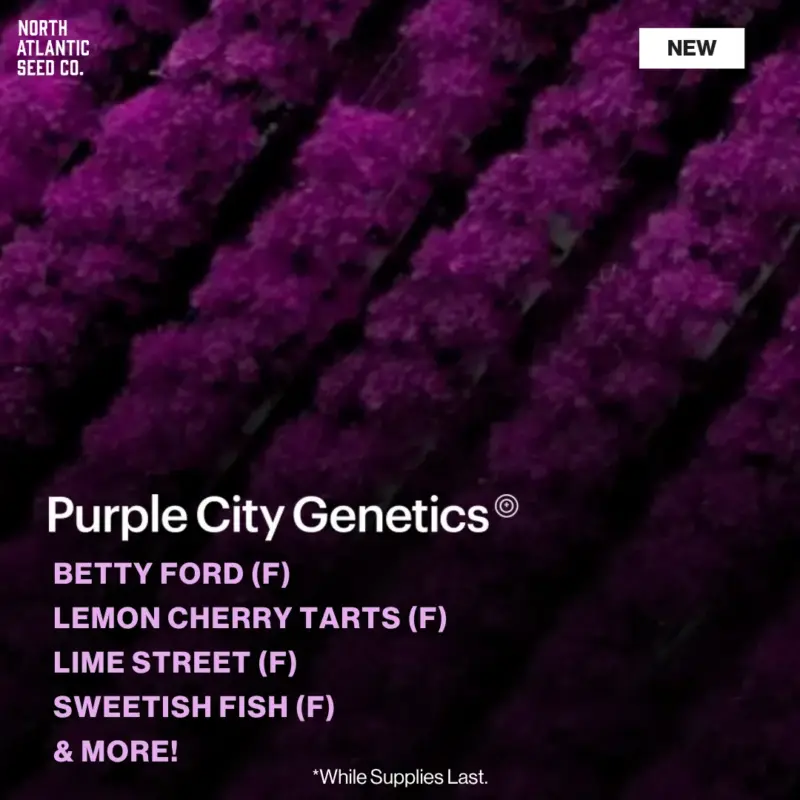
Purple City Genetics is one of the original cannabis nurseries in California—and the last one standing. We're the largest feminized seed producer in the state. We’ve also been on the ground in Barcelona since 2018.
We will always be guided by a few core beliefs: • We exist to match cultivators' dreams and ambitions. • The progression of cannabis requires audacious imagination. • One innovation can ultimately benefit the entire industry.
When it comes to serving cultivators, there's no problem too large or too small. We’re focused on amplifying farmers’ abilities, advancing the cannabis plant’s potential, and inviting everyone to experience growing cannabis for themselves.
Breeding at Purple City Genetics is both evolutionary and revolutionary. We are dedicated to continually improving demonstrated approaches as well as manifesting completely original ideas that force a reappraisal of what's possible. Every exploration serves the unrelenting pursuit of better cannabis. To that end, we are grateful to have been recognized with multiple collaborative State Fair and Emerald Cup wins. Our work is never over.
The NASC Cast Crew had the pleasure of sitting down with Auryn of Purple City Genetics. Listen to what he has to say below, and follow us on Vimeo for even more content!
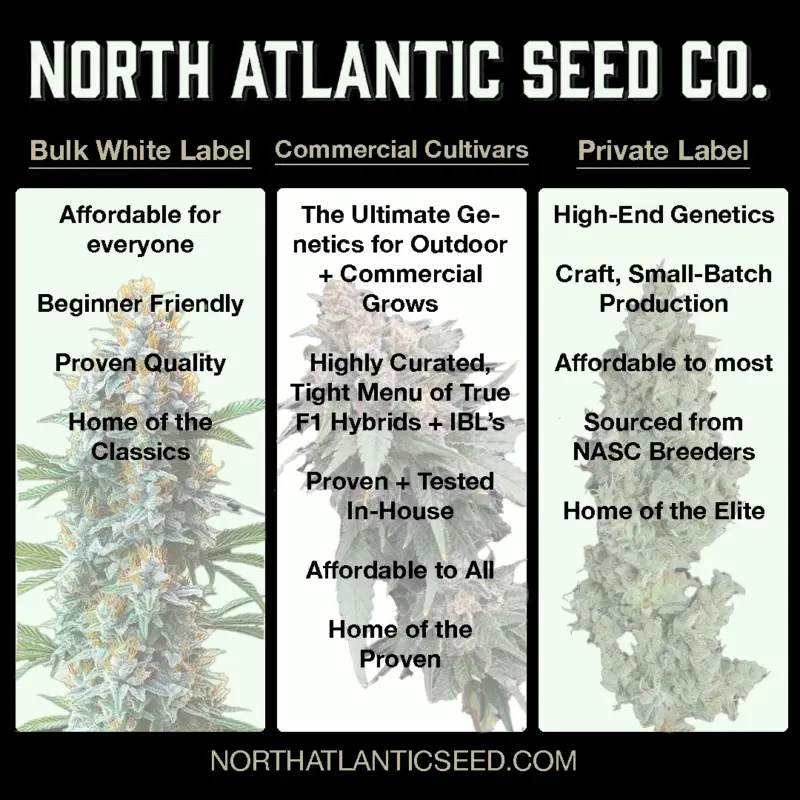
Ever wonder the difference between North Atlantic Seed’s BWL, Private Label and Commercial Cultivar lines? Beth is here to explain.
I swear, we didn’t make all of these “house” subcategories just to confuse you, but it is a bit confusing. For those of you who have been wondering, I’m here to set the record straight. Below, I will highlight how our team conceptualized each of the North Atlantic Seed “house” menus, and I will explain the meaningful differences of each.
The NASC BWL menu is the oldest menu that bears the North Atlantic Seed name. It predates both Private Label and Commercial Cultivars. Our vision with the BWL menu is to bring affordable, trusted seeds to our community that are sourced from farmers and breeders who we feel good about supporting. What does that mean? We are always working on making this menu better, whether that means growing these seeds ourselves, or carefully listening to your feedback. These genetics were bred by breeders you know and love, as well as by breeders you will never know but who deserve our support. The common denominator here is proven, trusted quality at a price point everyone can afford. We really try to load this menu with as many of the classics and high-demand strains as we can source
The NASC Private Label line was created with a specific purpose in mind: We wanted to fill this demand we were seeing for high-end, craft genetics, but we wanted to do so as affordably as possible. There is something unsavory about paying $10,000 for a cut, or $500 for a pack of seeds. No judgement. I understand very well the amount of work, time, and money that goes into being a small-batch breeder, but is there a way to make these really innovative, cool genetics available to the seed-lovers who are on a budget? Does it have to be this elite thing? As it turns out, there is. As we explored this concept, we found that many of the breeders we work with had seed lots they were willing to part with at a reduced price if we were willing to buy them out in larger quantities. Everyone wins! And thus, NASC Private Label was born.
The Ultimate Genetics for Outdoor + Commercial Grows
Highly Curated, Tight Menu of True F1 Hybrids + IBL’s
Proven + Tested In-House
Affordable to All
Home of the Proven
NASC Commercial Cultivars is the most recent house line that North Atlantic Seed has released, and it’s a line that we really took our time with. We needed to do our due diligence with these selections because it was very important that we get it really right on the first try. There is a lot of responsibility and trust that comes with telling a farmer that this is the seed they should plant acres of.
So, we started talking with farmers that had been breeding and making selections in-field alongside their commercial clients over the course of many years. We poured over the data, and we tested these genetics in-house because we wanted to see it with our own eyes. For all of these reasons, we feel incredibly confident in this tightly curated menu.
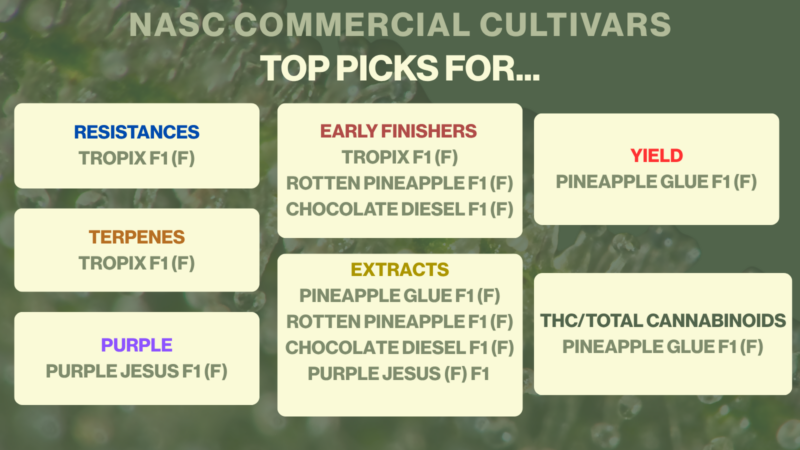
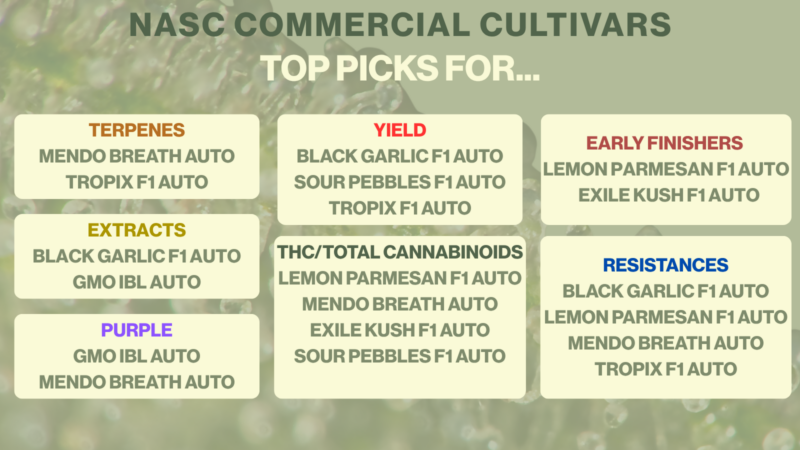
The genetics you will find in NASC’s Commercial Cultivars line have been carefully selected for their overall commercial crop viability. This includes outdoor resilience and resistances, early finishing times, complex terpene profiles, high performing test results, extract performance, overall bag appeal, overall plant and flower morphology, dependability and stability. These are genetics that have been proven to thrive in large commercial settings, and these are genetics that you can trust, at a price point that is reasonable.
Browse Bulk White Label, Commercial Cultivars, & Private Label:
Destigmatizing + Understanding White Label Seeds By Beth Mathieu
What is BWL Bulk/White Label?
BWL is an abbreviation that we use at North Atlantic Seed for Bulk/White Label, and it is how we source our own “house” seed menus: NASC BWL, Private Label, and Commercial Cultivars. White Label is a term that is commonly used among wholesalers, distributors and seedbanks within the cannabis seed industry and beyond, and all it really means is that the seeds were purchased from farmers under the pretense that we could sell them using our own brand and our own name: North Atlantic Seed Co.
Unfortunately, BWL has gotten quite the bad rep in forums and threads online, and that’s why we have always chosen to highlight “BWL” as transparently as we have: 1. We want growers to understand that we did not breed these seeds ourselves. Hopefully, this helps them make an educated decision about who they source their genetics from. 2. We want to destigmatize White Label seeds. Below, I am going to discuss why I think this topic is so important for every grower to understand.
Are BWL Seeds Bad?
Our perspective–as people who understand this industry quite well–is that BWL seeds can be just as great and just as terrible as any other seed. Shocking, right?
What matters is the intent and the breeding practices of the farmer who made the seeds. Like any industry, there are seed mills out there churning out millions of seeds a month purely for the profit; these businesses probably don’t have the grower’s best interests at heart. Conversely, there are craft operators that put a great deal of heart, care, time, and expertise into their breeds. Both types of farmer can supply BWL seeds, so sourcing is really what becomes important, and that is guided by our values as a business, and your values as a grower.
Agriculture and farming is an industry where it’s hard to make a good living nowadays. As farmers and breeders ourselves, we have lived this struggle, and we have no shame in supporting breeders who are creating and refining high-demand genetics for others to brand and sell.
There are many breeders in our community who are incredibly passionate and knowledgeable about genetics, but they have no interest in all of the other things that come along with running a front-facing business: They don’t want to sit behind a computer all day, or work on marketing campaigns, or become beholdent to social media. They want to be in their gardens. And yet that is the business of seeds; more and more, that is what it takes. For these types of breeders and farmers, White Labeling seeds gives them an opportunity to make a living doing what they love without having to be a great business-person at the same time. For this reason, we are not ashamed at all to source White Label genetics for our house brand, but in large part, that’s because we do our due diligence. We are intentional about the breeders we support and rely on in this way because we care about your experience as growers.
Where Does NASC Source BWL Seeds From?
At North Atlantic Seed, we are always trying to improve and refine the seed menus we are offering to our growers. And I’m not just saying that. We care so much about getting this right, and we recognize that this is what builds trust and integrity.
If you’ve been watching closely over the years, you might have noticed that the North Atlantic Seed BWL menu has undergone frequent changes. While we don’t have the ability to grow out every single strain ourselves, we try to grow out as many as we can, and we listen closely to what our customers are telling us about their experience with these seeds. We have turned our menus over many times, and we have tried the same strains from many different breeders. We are always whittling away, trying to make our BWL menu better. This is a process that will never stop because genetics will never stop evolving and getting better.
What we want you to know and hear is that NASC sources genetics from the breeders you already know and trust, as well as from other farmers who you might never know, but who deserve to have their genetics grown just as much as the next person. These are people who are doing good work and they are good people.
Ultimately, we understand that people are going to have opinions about breeders, genetics, White Label seeds, and virtually everything else. Have it. But we want to set the record straight as far as NASC’s relationship with White Label goes: A lot of the derogatory commentary we see tossed around online is so off the mark from the reality of the industry, and it gives people a bad taste about something that is very misunderstood. Yes, there are bad actors out there, but my hope is that our growing community is aware that there are a lot of good actors too, so let’s not stigmatize this category of seeds as a whole. That only serves to hurt the breeders and farmers who are doing hard work and trying to make an honest living just like you and I.
Moroccan Peaches and the Rise of the Sativa Hash Plant, story provided by Purple City Genetics
Hash has lived in a narrow lane for a long time. Heavy. Sedative. Indica-dominant. The plants that wash well are almost always the ones that put you down. Dense resin, strong returns, predictable results. And for years, that tradeoff was accepted. If you wanted yield, you gave up energy. If you wanted lift, you gave up washability. Two different worlds.
The Constraint
Sativa plants have always carried some of the most compelling terpene profiles in cannabis. Citrus, tropical fruit, bright, volatile expressions that jump out of the jar. They also tend to fail where hash begins. Loose trichome structure. Lower return. Poor mechanical separation. So they get pushed out of the category. Distillate inputs. Flavor contributors. Not centerpiece hash. Meanwhile, the hash world optimized around what worked. The result: technically strong, but creatively limited.
El Krem: A Different Objective
El Krem was built to break that constraint. Not by chasing THC. Not by chasing yield alone. By selecting for expression first. The goal was to create plants that could sit on a table with dozens of jars and still stand out. Lime, orange, peach. Layered terpene profiles that don’t flatten out after extraction. At the same time, every cultivar had to function in the real world. Flower or hash. Jar or wash. Because growers don’t get to specialize anymore. They need optionality. This is what defines the El Krem line: dual-use genetics built for both flavor and function
Moroccan Peaches
Moroccan Peaches didn’t arrive quietly. From the start, it stood out for combining two traits that rarely coexist: Effect and washability. A sativa-leaning hybrid with loud lemon, orange, and peach terpenes. Bright, expressive, immediately recognizable. But what made it different wasn’t just the flavor. It was how that flavor behaved. Across crosses, peach showed up consistently. It held its signal. It carried through different pairings without collapsing into sameness. More importantly, it didn’t flatten everything around it. It organized it. Part of what makes that possible is structural. The peach-leaning expressions we’ve selected tend to carry dense, uniform resin heads and a terpene profile that reads clearly even after processing. That combination matters. It means the signal doesn’t just. of stability is present, it stops behaving like a note and starts behaving like a framework. That’s when you can actually build around it. Peach became a baseline strong enough to pressure-test everything it touched. Traits paired with it had to hold their ground. The ones that did started to define the edges of the expression: citrus on one side, gas on another, candy and sour filling in between. The ones that didn’t got absorbed. That’s how the range sharpens instead of getting muddy. Underneath that, structure. Resin that actually separates. Trichomes that hold. A plant that returns when you wash it. That alone would have made it notable. The effect made it different. Upward. Energetic. Engaging. Not the slow descent most hash delivers. That combination changed how people thought about what hash could be.
Why It Stuck
Most hype strains fade. Moroccan Peaches didn’t. Because it solved a real problem. It gave extractors something new to work with. It gave smokers a different kind of experience. It gave growers a plant that could perform in both lanes. That’s rare. And when it shows up, you build around it.
The 2026 El Krem Peaches Collection
For 2026, Moroccan Peaches became a foundation. Not a single release. A breeding block. The goal was to expand its core traits across a wider spectrum without losing what made it work. Each cross explores a different edge of the same structure: ● Fez: peach nectarine layered with incense and citrus depth ● Habibi: peach and Z-driven structure with strong bag appeal ● Moroccan Zowah: extraction-forward with candy and sour gas undertones ● Saffron: shorter cycle while holding the peach-forward identity ● Cheri Granada: full-spectrum fruit expression with floral and wood notes Different directions. Same backbone.
Beyond the Pack
Seedlings and clone releases pushed the work further. Different pairings. Different environments. Different outcomes. Some leaned tropical. Some leaned gas. Some sharpened citrus. Others pulled deeper into kush structure. Not every expression needs to last. But every expression adds resolution. This is the same philosophy behind the seedling program: early looks into where the line is going, not just finished products
The Shift
El Krem represents a change in how hash is evaluated. From yield to experience. From output to expression. Moroccan Peaches sits at the center of that shift. Not because it’s louder. Because it expands the range without losing structure.
The Point
Cannabis isn’t supposed to exist in one lane. Not in flower. Not in hash. Not in experience. El Krem is built to preserve that range on the extraction side of the plant. Because once you start narrowing what works, you don’t just lose options. You lose entire categories of experience. Written by Eric Rosen, Purple City Genetics
Temperature, relative humidity (RH), and vapor pressure deficit (VPD) are three major variables that growers must monitor and control, if possible, to maximize their cannabis yields and keep their grows clean from mold. In this article we will discuss all three variables and how they relate to one another in the context of growing cannabis.
Temperature: This is a variable everyone is very familiar with. It is the measure of ‘hotness’ or ‘coldness’ (i.e. the average kinetic energy of particles in a substance) expressed in terms of one of many scales (e.g. Fahrenheit, Celsius, Kelvin, etc.). The scale most people in the U.S. are familiar with is the Fahrenheit scale. Outside of the U.S. the Celsius scale, based on the freezing and boiling points of water, is more commonly employed. Regardless of the scale you use, it is important to know that cannabis prefers certain temperature ranges to maximize growth and plant health.
Vegetative Stage: Cannabis, like many plants, enjoys moderately warm temperatures usually in the range of 70-850F (~21-300C). During the vegetative stage of cannabis’ life, it prefers the previously mentioned temperature range during the day (lights on) and 65-750F (~18-240C) during the night (lights off). This temperature range will promote fast and lush growth as well as efficient nutrient uptake. Temperatures above 850F can cause heat stress and may lead to leaf tips burning. Higher temps can also invite pests such as spider mites who reproduce faster in higher temperature ranges. Temperatures below 650F during the day, or during the period when grow lights are on, can limit cannabis growth and can reduce nutrient absorption.
Flowering Stage: During the flowering stage a slightly lower daytime (lights on) temperature range of 70-800F (~21-270C) is recommended, with 75-770F (~23.8-250C) being the optimal day time temperature range. The optimal nighttime temperature range for the flowering stage is 60-700F (~15.5-210C). A 10-150F drop in temperature at night (lights off) can stimulate resin production and can even bring out purple/pink hues in certain strains. The 70-800F temperature range during the day helps to promote vigorous growth without the risk of degrading and evaporating off a large percentage of the terpenes that makes your plant(s) so special. This temperature range also encourages dense flowers as high temps during flower can lead to airy, fluffy buds.
If using CO2 to enrich the grow area, it is possible to raise the daytime temperature range to 80-900F (27-320C), although we still recommend not exceeding ~820F to avoid any chance of buds becoming too airy or “fluffy.” The reason for the ability to raise the temperature when supplementing CO2 is due to the higher rate of plant metabolism caused by higher temps. This allows the plant to consume more light and nutrients as well as create sugars at a faster rate of photosynthesis due to excess carbon availability. If you are not treating your grow space with CO2 it is highly recommended to keep daytime temps as close to 75-770F as possible.
Temperatures under 550F (~130C) can stall growth and induce shock in your cannabis plants so avoid letting your grow get under this temperature.
In the last 2 weeks of flower, many growers have reported increased terpene retention, as well as increased resin production, when lowering the daytime grow room temps to a range of 65-700F (18-240C).
Relative Humidity: Humidity refers to the water vapor held in the air. Absolute Humidity is the total amount of water vapor held in the air regardless of the temperature. Relative Humidity (RH) is a measure of how much water vapor is held in the air as a percentage of the maximum amount of water vapor that could be held in the air at a given temperature.
Absolute humidity is not temperature dependent as it is simply a measure of the total amount of water vapor in a mass of air.
Relative humidity is temperature dependent as warmer air can hold more water than colder air can. This means that when the temperature drops at night, the air may feel “stickier” or “denser” despite having the same amount of total moisture as it contained during the day. As the air cools, the molecules that make up the air get closer to one another and this leaves less room for water vapor to be held. This doesn’t raise the absolute humidity but does raise the relative humidity of a mass of air. This is important to remember as it means the RH of your grow space will increase when the lights go off, even if no new moisture is added to the environment. Ensuring proper air flow in your grow space can help prevent micro-climates with excess moisture from building up.
Having the right relative humidity in your grow room is paramount for plant health and for suppressing pest and fungal infections. If RH is too high, it can invite mold that can ruin your crop before or during harvest. If RH is too low, it can create drought stress in the plant and invite pests such as spider mites that thrive in drier conditions.
Optimal RH ranges for cannabis vary depending on what stage of growth the plant is at.
Seedling/New Clone Stage: 60-80% RH to help plants absorb water as they grow their root system.
Vegetative Stage: 50-60% RH is usually a good range for the vegetative stage. Not so high that it invites quick mold infections but also not so low that it risks stressing your plant(s) out.
Some growers use a range of 55-65% RH for early veg and then a range of 45-55% for later veg.
Flowering Stage: 40-50% RH for early flower with a range of 35-40% RH for late flower (last 1-2 weeks before harvest). The plant has well established roots at this stage and doesn’t require as high a relative humidity for water absorption. The lower RH range also helps to prevent bud rot (botrytis) and other fungal infections in the flowers as they finish. Take care to balance low RH with appropriate temps to not evaporate or degrade the terpenes generated by your cannabis.
Vapor Pressure Deficit (VPD): In simple terms, Vapor Pressure Deficit (VPD) is a measure of how much “space” there is for water vapor in the air at a given temperature. This is different from relative humidity as RH is a % whereas VPD is measured with units of pressure, usually kPa or PSI (kilopascal or pounds per square inch). RH measures how much water vapor is in the air compared to the maximum amount of water vapor the air could hold at a given temperature. VPD is the difference between how much water vapor is currently in the air and how much moisture the air could hold at a given temperature, essentially measuring the remaining "space" for water vapor.
Why is this important? It is important to understand VPD as it is a primary driver of transpiration in plants which also means it is a primary driver of nutrient uptake. Plants pull water and minerals through their xylem cells from the roots to the leaves of the plant and the VPD of the surrounding environment drives this “pulling” (like sucking liquid through a straw). Too high a VPD can cause plants to dry out too quickly and can cause their stomata to stay closed, which does not allow for good CO2 intake from the leaf. It can also cause wilting on the leaves as well. Excessively high VPD can also cause potential nutrient burn from nutrients being pulled too quickly in too high a concentration to the leaves. Too low a VPD can decrease nutrient uptake and can lead to mold as there may be too much water vapor in the air. This can stunt a plant’s growth and diminish the final yield if not remedied. Low VPD can also cause calcium deficiencies which can further lead to stunted growth of your cannabis.
VPD is related to temperature and to relative humidity in the following ways:
As temperature increases, the air’s ability to hold water vapor increases exponentially. This means the potential for high VPD increases with heat (assuming RH stays constant).
As relative humidity increases, the air becomes more saturated with water vapor, reducing the deficit, and thus the potential for low VPD increases with increasing humidity (assuming temperature stays constant).
If temp increases and RH stays constant or decreases, VPD increases. (Hot/dry air)
If temp decreases and RH stays constant or increases, VPD decreases. (Cool/wet air)
If temp and RH increase, it can lead to moderate or to high VPD. This is because the air heating up allows more water vapor to be held but increased humidity decreases the space for water to evaporate from plants, thus keeping the VPD moderate to high. The resulting VPD will be most affected by whichever variable is increased to a greater degree. If temperature is raised much more than humidity, then a high VPD will be achieved due to more space in the air for water vapor. If humidity is increased much more than temperature, then a moderate, or even low, VPD can be achieved due to more water vapor being added to the air.
The same is true if temp and RH are both decreased. Depending on which variable is decreased to a greater extent, the VPD will respond accordingly. If temp is lowered much more than RH is lowered, VPD may decrease due to less space in the air for new water vapor to be held. If RH is lowered much more than temperature is, then a higher VPD may still be possible due to the removal of water vapor from the air.
Optimal VPD for cannabis changes as the plant matures. It generally increases from lower levels in the cloning/seedling stage (to inhibit dehydration and wilting) to higher levels in late flower to encourage transpiration and prevent mold. The generally accepted VPD range for the veg stage is 0.8–1.2 kPa. The generally accepted VPD range for the flowering stage is 1.0–1.5 kPa to promote flower health and resin production. These values can be achieved at a few different temperature/relative humidity combinations. That is another reason why VPD is such an important factor in the health of your plants. It is not always about having an exact temperature and/or RH but about having the right balance between the two. As an example, if you are having trouble with humidity throwing off the VPD in your grow space, and if dehumidifiers haven’t been effective in reducing said humidity, then raising the temperature of the space (as long as it isn’t above 82-850F) can still allow you to achieve an optimal VPD for your plants.
Pulse Grow, a company focusing on data-driven monitoring solutions for indoor and greenhouse cultivation, has an amazing reference article if you wish to delve deeper into the concept of VPD which can be found at https://pulsegrow.com/blogs/learn/vpd. On this site, there is a VPD calculator growers can use to determine if the temp and RH of their grow space is creating the optimal VPD for your plants. They also have pre-made charts that make determination of VPD very fast and easy and can be an essential tool in dialing in your grow space.
One last important tip to remember when determining the VPD of your room is to use the leaf surface temperature rather than the room temperature as the surface of your plant’s leaves will be 2-50F cooler than the surrounding environment. Even without a device to measure this quantity, it is easy for one to look at the room temp and simply subtract 2-50F from that value to be used when determining the temperature portion of the VPD equation.
Below is a chart summarizing the optimal temperature, relative humidity, and vapor pressure deficit ranges for cannabis at various stages of growth.
Our next toke is Nuclear True Blood by Dirty Bird Genetics. She is a cross of Nuclear Forest x Maui True Blood. Read on to learn about our experiences.
I'm reaching for the Nuclear True Blood when I am ready to unwind for the night. It brings on a very pleasant, mellow relaxation. I was still alert and able to engage, but I definitely didn't want to participate in anything that required hard concentration. It was perfect for a card game with my spouse, followed by an SNL rerun. There were also snacks involved because this one definitely brought on some munchies. Fans of pine and citrus will appreciate Nuclear True Blood's profile.
- Crystal
This strain from Dirty Bird is a fun one! The buds are sugary and dense and have little orange hairs. It has a lovely piney, citrusy aroma and grinds up well. It was fresh and spongy when I got it and burned nice in the bowl. I would consider this a hybrid for sure. It mellows you and calms your mind but doesn’t zap your energy. The effects are relaxing and motivating at the same time. If you smoke it, definitely have some snacks ready!
- Mariah
Read another smoke report featuring Dirty Bird Genetics!
Before their seed bank was created in 2007, RQS had long-time knowledge and passion for cannabis breeding. Following enormous interest in their strains, they opened our first shop in Amsterdam, the Damstraat location, in 2010. In 2011 they launched the Royal Queen Seeds website. In 2016 they welcomed first clients in our shop at Carrer dels Tallers in Barcelona, Spain. In 2022, they opened their newest location in Bangkok, Thailand. In 2023, they started operating in the United States and launched the first true F1 Hybrid Cannabis seeds in the market! Today, RQS operates in the US and in 28 countries in Europe and offers 100+ high-quality strains, growing equipment, growing advice, knowledge, tips and more!
The NASC Cast Crew had the pleasure of sitting down with Max of Royal Queen Seeds. Listen to what he has to say below, and follow us on Vimeo for even more content!
Breeding Cannabis from F1 to IBL with Dirty Bird Genetics
by: Beth Mathieu
First and foremost, I want to send a heartfelt Happy Mother’s Day to all of the mothers here at NASC + Dirty Bird Genetics, to our own mothers, grandmothers, and maternal figures, and to all of the beautiful mothers out there who have been a part of this community with us for the past 10+ years. We see you, we appreciate you, we LOVE you, and we want to acknowledge and celebrate how beautiful the maternal instinct is.
Last year for Mother’s Day, I sat down to write a blog about a plant mother that is near and dear to me personally, and to our NASC/Dirty Bird family: The Brunch. As someone whose career was built upon plant mothers, it seemed fitting on Mother’s Day. The article detailed the filial evolution of this flagship strain that the Dirty Bird Genetics team had created. It was the very first cultivar we bred that really shined, and it really propelled us into this new venture breeding. Looking back now, it’s fascinating to consider how much those first creations (like the Brunch) influenced the genetics to come, much like the generational connections that run through families. The Brunch now sits atop many Dirty Bird Genetics family trees; she’s a mother, a grandmother, and even a great grandmother to many.
This Mother’s Day 2026, I want to pick up where I left off one year ago today, filling in another year of progress as we work our way to the end goal of creating a Brunch IBL (In-Bred Line).
The Brunch F1
The original Brunch F1–a regular, male/female iteration of the F1 strain still found on our menu today–will unfortunately never be recreated because we lost the Peanut Butter Breath mother that was used in the original project back in the early 2020’s. It was a mother I had preserved for almost a decade prior, selected from a revered pack of seeds made by Thug Pug Genetics. These seeds were gold back in the day, and this cut was a favorite of many clone customers I worked with. She created incredibly dense, striking flowers with vibrant greens, dark purples, and bold oranges. Her bud was as top shelf as it comes–easy to manicure, high test, colorful and dense–but her morphology left a few things to be desired. While she wasn’t prohibitively tall, she did have very long internodal spacing, and she was definitely a plant that wanted to grow vertically. Her floral sites were spread out across long stems, meaning she wasn’t the best yielder. Her terpenes were self-referential: Nutty and earthy. We knew there was likely more to draw out here.
The Peanut Butter Breath cut #3 by Thug Pug used to create the Brunch F1
The Mimosa father, selected from a pack of Mimosa by Symbiotic, had beautiful morphology and strong, tangy terps that came through even on a stem rub of the vegetative male plant. He was vigorous, sturdy, and a well-suited, well-proportioned match to compensate for the Peanut Butter Breath’s shortcomings.
In our first test run of the Brunch (PBB x Mimosa) progeny, we selected two keeper phenotypes: the Brunch F1 #5 and the Brunch F1 #8. They weren’t perfect, but they stood out as special to us for several reasons. They were dripping in trichomes, testing between 25-30% THC / 1-3% CBG, they had insane, dark purple coloring with a gorgeous yellow fade, and to our surprise and delight, a unique apple terpene profile was seeming to emerge. We knew there was still work to do–we needed to bulk her flower up, and we needed to tighten her internodal spacing–but this was now a much stronger palette to work from than what we’d had previously.
The Brunch F1 #5
The Brunch F1 #8
The Brunch S1 (Feminized Iteration)
In order to create our first release, we knew it’d be beneficial to feminize our work, and that would also give us the opportunity to take the first step toward locking in some of the features we loved in the male/female test stock. To do this, we took the Brunch F1 #5 and the Brunch F1 #8 and we crossed them and selfed them across several different breeding projects, testing the progeny of each to determine who was the strongest, and which genetics we would move forward with. When all was said and done, and all of the seed lots were tested, we selected two cuts to mother in order to breed the Brunch lineage further. These cuts were named the Brunch - Dark Horse Cut (#8 x #8 - #3) and the Brunch - Lover’s Cut (#5 x #8 - #5) (aka the Arugula Cut).
The Brunch 88 #3 - Dark Horse Cut
The Brunch 58 #5 - Lover’s Cut aka “Arugula Cut”
Breeding and feminizing our favorite phenotypes of the Brunch F1 created some drop dead gorgeous feminized Brunch S1 genetics. The coloration had darkened from purple to almost black, and the yield and morphology was beginning to trend in the right direction: Less stretch and more flower. It was very hard to choose our keeper cuts from these seed lots, but we realized that was a good problem to have. It was at that time that we decided that the Brunch S1 would become our first Dirty Bird Genetics - Volume 1 release. Exciting! You’ll still find these seeds on the Dirty Bird Genetics Volume 1 menu today (although I’ll warn you guys, when they sell out, they will almost certainly be gone for good). You’ll also find this s1/f1 iteration of the Brunch in many of our genetic family trees, including staff favorites:
Dirty Mimosa: A Brunch backcross and outdoor champion that clocks in with a lightening fast 43-47 day flowering time
Dirty Mimosa pictured outdoors in a local Maine garden.
Bad Apple: Probably my personal favorite Brunch-related strain, and a cultivar that has only continued to impress me more as we’ve bred with it. The Bad Apple has pungent terpenes that range from rotten Apple to gym sock funk, and our keeper “Sugar Mill” cut is the single most trichome-laden plant I’ve grown in my 15 year career. In 2026, this Brunch-child created two of my favorite strains we’ve bred to-date: Apple Peelz and Candy Apple Kush.
Bad Apple - Sugar Mill Cut (Day 42)
Apple Peelz (Day 49)
Candy Apple Kush (Day 44)
The Brunch F2
We knew early on that the Brunch was a project that we wanted to fully realize the potential of by creating a stabilized Brunch IBL (in-bred line). Now that we’d created and tested several iterations of the Brunch genetics, we were able to formulate a set of goals for the project:
Preserve Apple Terpene Profile: It’s unique to the Brunch and we love it.
Morphology: Shorten internodal spacing, select for lateral growth, preserve high calyx-to-leaf ratio, and retain a foliage volume that is ideal for air flow, light penetration, and outdoor cultivation.
Yield: Improve yield by selecting cuts that stack well, have dense flower, and yield respectably.
Flowering Time: Ideally, under 56 days.
Color: Preserve the dark purples and maroons that are signature to the Brunch.
Effect: Retain the social, happy effect that is signature to the Brunch.
Using the Brunch F1 #5 and a Brunch F1 male that we labeled #12, we made the Brunch F2. In cannabis breeding, the F2 filial generation is known to contain the largest number of phenotypes and the most genetic diversity of any other generation. We found this to be true with the Brunch F2. We saw divergence in color (purple/green), terpenes (apple/earthy meh), and in both flower and plant morphology. Speaking generally though, these plants grew much more laterally than their F1 counterparts thanks to our parental selections. We were also able to eliminate the “scraggly” phenotype that appeared in about 10% of our F1 seed population. These F2 plants had stronger, more bushy structure as a whole, accompanied by a higher volume of foliage, more compact, golf ball shaped flowers, and tighter internodal spacing.
After carefully watching our F2s grow, we whittled our selection down to two winning cuts that we would use for our F3 breed: The Brunch F2 #7 and #13. They each had something we loved, but neither had everything. The #7 had the most incredible, vibrant, apple terpene profile; there was something that smelled distinctly more “appley” about this plant than any we’d smelled previously, and we were confident this was the direction we wanted to go with the terpene profile. The #7 plant wasn’t perfect though: it stayed vividly green way longer than we would have liked, purpling in the final week of flower, long after we’d written it off as a green pheno. This was something we felt cautious about because color was one of the goals we’d set for the project. The #13, on the other hand, took on a beautiful, deep purple color early in flower–something we loved–but it lacked an exciting terpene profile, leaning more towards the subdued, nutty, earthy profile of the Peanutbutter Breath.
The Brunch F3
Brunch f3
V79 have better floral mass . Long intermodal spacing and classic brunch nugs, small leaves
139 #1 - Apple terps.
**V79 #1 - stacking the most - best floral mass. Striped maroon and purple and yellow leaves.
V79 _#2 - shorter but similar burgundy and purple and sugar/ apple terps
V79 #5- Apple gas Peanutbutter - very purple but not a great yield
Brunch 139
Biggest nugs yet. long and skinny and tie together up the stem
*3- Apple cheese. Tall. Long stacked buds. Very impressive stacking and yield - double floral mass of what we normally see, and very high calyx to leaf ratio
4- more arugula look. Apple smell.
When it came time to make our Brunch F3 seeds, we had a choice to make: We had to decide whether to breed our F2 #9 male with the wonderfully appley #7, or the spectacularly purple #13. This choice proved to be an impossible one, so we decided we would take the more intensive path and breed in both directions. Over the course of the next year, two Brunch F3 seed lots were created: The Brunch F3 v79 (made with our #9 male and our purple F2 #7 cut) and the Brunch F3 v139 (made with our #9 male the wonderfully appley F2 #13 mom).
In testing these two Brunch F3 lines we’d created, we saw the genetics take the most marked strides forward to-date. Most notably, the plants were stacking better than ever before, yields were improving, colors were popping (though continuing to diverge a bit between green, maroon and purple), and we were really starting to hone in on a consistent terpene profile. While the apple terpenes were predictably more dominant in the v79 seed population, we ultimately chose a cut from the v139 population to move the line forward to F4 (see pictured below). The Brunch F3 v139 #3 boasted the biggest colas we’d seen in a Brunch to-date. They were long, dense, and they tied together beautifully up the central stalk creating a long, beautiful arm of purple, funky, apple Brunch. The #3 cut had close to double the floral mass of any Brunch we’d seen before. It had an incredibly high calyx-to-leaf ratio, purple flowers, and its terpene profile was pungent and unmistakably apple. It checked all of the boxes, so the choice was a remarkably straight forward one.
Brunch F3 v139 #3
Brunch F3 v139 #3
The Brunch F4
In early 2026, we were able to test the Brunch F4s that we had made using only the F3 v139 #3 cut. This was the first time we had chosen to advance the Brunch line through a process called selfing (crossing a plant with itself through reversal). The v139 mother cut had so much to offer, and we were curious to see how this choice would evolve the line, so we created and tested our first population of feminized F4 seeds.
It has only been a month since we harvested our Brunch F4 test plants, and the project is still fresh in my mind. The F4s were easily the most exciting yet. The diversity we saw in the F4 generation was markedly different from what we’d seen previously. To use an analogy, imagine crossing a black lab with a poodle. The Brunch F2 + F3s were what I’ll call Bloodles; they were mutts. Their traits were messy and indistinguishable, resembling their parents in some ways while also blending together to form strange iterations of curly, black-and-white Bloodle soup. We saw countless combinations of traits–some that we liked and some that we didn’t–all unpredictably smooshed together. The F4 population was different. The traits we were selecting for were finally segregated in an easily observable way. Phenotypes were so much more identifiable. To circle back to our genius analogy: The Golden Doodle was born, alongside pups that looked remarkably black lab, and pups that looked remarkably Poodle.
While we did observe a little bit of inbreeding depression in our F4s–which is to be expected–overall the plants had several consistent qualities: They had an extremely short 50-day flowering time, a remarkably high calyx-to-leaf ratio, very compact, long, conical flowers, medium internodal spacing, 1.5x stretch, ideal foliage volume for air flow and light penetration, high trichome density, balanced vertical and lateral growth, and overall they were healthy, self-supporting, easy-to-grow plants.
One of the most interesting things about the Brunch F4 was that we finally saw a purely green phenotype emerge in 20% of the population. The 80% majority were purple: 50% solid, dark purple in both foliage and flower, and 30% predominantly purple with a little green fade. The terpenes were consistently apple-dominant–exactly what we wanted–and we were so excited to find that the apple smells were only deepening further, evolving into more of a complex, warm-yet-tart apple pie. For the first time, we did note some sour gas smells coming through on a slim minority of plants, with one plant exhibiting sour gas only; no apple.
The biggest obstacle we’ve faced in choosing our winning cut(s) of the Brunch F4s has been deciding what to do with the visual feast that is the green phenotype. We’d been very intentionally selecting for purple coloring from the outset of this multi-year project, and yet these green plants were hard to turn away from.
Thank you so much for reading about the journey we’ve gone on to create the Brunch, one of our most beloved plant-mothers. I’d like to wish all the mothers out there a very Happy Mother’s Day. Know that you are seen, loved, and celebrated every day!
by Ben Morris, Head Breeder of Dirty Bird Genetics
Introduction:
There is a plethora of pests that plague our gardens, green houses, and grow spaces but few can compete with the rapidity and malignancy of the two-spotted spider mite (Tetranychus urticae). Two-spotted spider mites are small, herbivorous arachnids that feed on plant sap and chlorophyll by puncturing the underside of leaves with their tiny, piercing mouth parts called ‘chelicerae’.1 This feeding mechanism causes damage to the leaf which hinders the overall photosynthetic ability of the infested plant. These pests can reproduce rapidly and, if left untreated, can quickly lead to the deterioration, and ultimately, the death of an infected plant. The damage caused by two-spotted spider mites can lead to lower flower yields, seed abortion, and improper seed fill. This is a huge detriment for flower producers as well as for breeders and seed producers. These voracious little creatures are tiny (between 1/80th and 1/50th of an inch)2 and can be very difficult to detect before moderate to heavy infestation occurs. In the following sections, we will go through some of the visual signs growers can use to determine if they have a spider mite infestation and what approximate level that infestation is likely at (low, moderate, high).
Identification/Plant Signs:
As previously stated, two-spotted spider mites (TSM) are very small. Fully grown adult spider mites will appear as whitish to grayish-green specks with eight tiny legs and two dark spots on either side of their body. They are easy to mistake for small pieces of dirt of other, non-living debris but if you watch them long enough you will see them scurry about. They are largely found on the abaxial (underside) surface of leaves where they take advantage of any nooks and crannies they can find to hide and feed in. Having a hand magnifying glass or a jeweler’s loupe will make identifying these pests much easier than trying to observe them with your naked eye.
Early into infestation there are few signs of the two-spotted spider mite, the main indicator being the observation of the mites themselves. One can inspect a plant or clone they are obtaining using a jeweler’s loupe, or other hand magnification tool, to check under the leaves and on the stems for small whitish, gray/green bodies that often exhibit two large dark spots on both sides of the idiosoma3 (the main part of the body). One single female TSM can cause an infestation due to their rapid reproduction cycle and their ability to reproduce asexually. Thoroughly inspecting any incoming plants to your grow space is paramount in detecting pest issues. If there is a spider mite, or if there are multiple, inhabiting the plant’s aerial parts without any signs of insect feeding damage on the leaf and without webbing present, the plant is in the early stages of infestation.
As they feed, they pierce and damage leaf cells which ultimately leads to the desiccation and the eventual death of the cells they feed upon. This can eventually lead to the death of the entire leaf which obviously harms the plant. A sign of their feeding includes tiny, lightly colored dots that are observable on the adaxial surface (upper side) of leaves. These dots can appear whitish, yellow, or silver and give the leaf a mottled appearance. These damaged leaves can take on a yellow/gray or even bronze appearance as the damage spreads. If you see small, dotted patterns (also known as stippling) occurring on your leaves, check the underside of those leaves for the small, oval bodies of two-spotted spider mites.4
If the spider mites are left alone, they will continue to work their way up the plant, leaving visual indications via stippling/mottling on more leaves higher and higher into the canopy of the plant. Lower leaves, or leaves first infested, will begin to turn yellow and may start falling off. Eventually, when they reach a certain population size they will begin to make webs. These webs look just like spider webs and help the mites to protect themselves from predators as well as act as highways between plants for easier access to new feeding grounds.
Two-spotted spider mites focus on feeding and reproduction before they focus on making webs.5 This is good to know as it can help a grower determine what level of infestation they are dealing with. Below is a rough guide to determining the level of infestation and what action may be necessary. This rating scale was adapted from the work of Bruce Potter and Ken Ostlie6 (University of Minnestoa)
No Infestation: No spider mites nor plant injury observed.
Low Infestation: Minor stippling or mottling on lower leaves, no premature leaf yellowing observed
Low-Moderate Infestation: Stippling or mottling common on lower leaves; some premature yellowing observed
Moderate Infestation: Heavy stippling/mottling on lower leaves progressing into middle canopy; leaf yellowing and leaf loss observed; mites observed in middle and top canopy
Moderate-High Infestation: Lower leaf yellowing very apparent and leaf loss common; stippling/mottling, webbing, and mites common in middle canopy; mites and minor stippling/mottling in upper canopy
High Infestation: Lower leaf loss common and yellowing into middle canopy; stippling/mottling and distortion of upper leaves common; mites in upper canopy; webbing in upper canopy
Treatment:
The damage caused to leaves by two-spotted spider mites is not reversible2 so prevention, early detection, and treatment are of the utmost importance in ensuring your crop’s health and productive capacity.
There are many options available for treating spider mite infestations that largely reside within three categories: Physical, Chemical, and Biological.
Physical Controls:
Earlier into infestation a grower can use a hose or other means of spraying water with adequate pressure on the undersides of the leaves of their plant to physically knock the spider mites off of the undersides of the leaves. This method is not appropriate to use if mold is an issue in your grow space but can work for some growers in initially removing the mites. The drawback to this approach, besides a potential in increased mold presence, would be that mites not killed by being sprayed off could climb back up the plant and re-infest.
Some growers have had success in wiping their leaves down physically with a cloth and a small amount of insecticidal soap or oil. This can physically remove and crush mites and mite eggs but is time consuming and can lead to leaf damage if not done with care.
In early stages of infestation, removing heavily infested leaves and disposing of them immediately outside of your grow space can help to reduce the mite’s numbers as well.
Chemical Controls:
If the infestation becomes moderate or high, then chemical controls may have to be employed. Pyrethrins can be effective in killing mites but should be avoided due to the natural mite predators they also kill, which can lead to a TSM population resurgence.7 Pyrethrin should not be used during the mid to late flower stage of the cannabis growth cycle as it can be hard, if not impossible, to wash these chemicals from the flower/plant.8 Earlier in the flowering stage and/or during the vegetative stage pyrethrins can be somewhat effective in suppressing mite populations. Take care not to employ pyrethrins if you have adequate mite predators in and around your plants as these chemicals can also kill the beneficial insects, as previously stated.
Neem oil can also be used in a spray to knock adult mites off of leaves and the residue from the neem oil will suffocate the mite eggs, interrupting their life cycle and denying much of the next generation from being able to colonize and feed on your plants.4
There are organic chemical treatments that often employ some mixture of rosemary, clove, and mint oils to deter and repel mites. Many products are offered with these ingredients and can be used in foliar sprays as well as in the water the plants are fed to increase the amount of these substances in the soil and plant to further deter mites.9,10
Some growers have reported success with using a mix of isopropyl alcohol and water at a 1:9 ratio. This mixture can be used as a foliar spray to knock mites off the leaves and to also kill them. Isopropyl alcohol will also kill the mite eggs as well, attacking multiple generations of the mites at once. There are precautions to be taken if employing this method as isopropyl alcohol, if not diluted enough, can damage plant tissue as well. It also can dry leaves out if the temperature is high (80 degrees F and above). If employing this method it is best to test the spray on a few leaves first to see how the plant will respond before spraying the entire plant. It is recommended to spray near the end of the day to avoid the isopropyl alcohol sitting on the leaves and causing burning damage. While this method can be effective we do not recommend it unless no other options are available due to the risk of further plant damage but we wanted to include it as an option due to some positive reports from other growers.11
Insecticidal soaps can also be employed to kill and remove mites from plants. As with any insecticide, read the label that comes with the product and apply according to the manufacturer’s instructions to avoid any unnecessary plant damage.
Sucrose octonoate esters have been proven to be very effective in killing two-spotted spider mites, as well as other mite species and even aphids.12 One such product, Organishield, is made with these substances and, when applied as a foliar spray to the undersides of plant leaves, can kill juvenile and adult mites on contact by drying the waxy, protective cuticle that envelops them. Once this waxy cuticle is dried out it can lead to rapid dehydration and desiccation of the mites which leads to their death. Sucrose octonoate ester treatments are very environmentally friendly as they are non-toxic to humans, other animals such as pets, and they do not harm pollinators such as bees. Sucrose octonoate esters also have very low toxicity to aquatic life making them a very safe option for treatment. Sucrose octonoate esters also degrade rapidly (usually within 5 days) and only leave behind water, CO2, fatty acids, and sucrose so there is no lasting environmental impact such as with other, more toxic chemical treatments.
For light to moderate infestations a mix of 60ml Organishield per gallon of water, when applied in a foliar spray to the undersides of leaves, can be very effective in reducing the level of infestation and killing large numbers of mites. For heavier infestations a mix of 80ml Organishield per gallon of water is recommended by the manufacturer to lead to a faster kill on contact. After years of use we can personally vouch for this method of treatment as we have seen it to be very effective in reducing mite infestations while not harming our plants nor exposing our workers or the environment to toxic substances. As with any foliar spray treatment, remember to turn off grow lights during spraying to not potentially burn plants due to the magnification of light through water droplets.
Many of the substances discussed above will only act upon TSM nymphs and adults, not their eggs. We recommend applying another spray 3-7 days after the initial treatment to ensure the removal of newly hatched spider mites. For severe infestations, a treatment every 3-5 days (depending on insecticidal substance used; consult the manufacturer’s label) can be beneficial in continuously killing newly hatched two-spotted spider mites.
Biological Controls:
There are many biological and environmental (cultural) controls that can be employed in lieu of or in addition to physical and chemical treatments.
One common route is to employ predators of the two-spotted spider mite in your grow space. There are many species of insects and arachnids that predate on two-spotted spider mites and utilizing these species can be immensely helpful in combating mite infestation without the need for chemical treatment.
One such species, Phytoseiulus persimilis, is another kind of mite and a specialized hunter of two-spotted spider mites. P. persimilis can eat many adults and even more young two-spotted spider mites in a day. These can be purchased from several suppliers and then spread onto the infested plants. P. persimilis only eats two-spotted spider mites so they can be very effective in decimating TSM populations but will die off once their food source is depleted. These predatory mites are generally seen as good for rapid treatment when infestation levels are moderate to high.13
Neoseiulus californicus is another predator mite that has shown a decent effectiveness towards reducing spider mite populations. N.californicus has been reported to be hardier and able to survive hotter and drier temperatures than P. persimilis making it a good choice for growers with hot, dry grow area conditions. N. californicus can be used as a preventative measure as they have a wider range of prey they hunt and consume than just the two-spotted spider mite and thus may survive longer eating other pests in addition to TSM’s.13
Neoseiulus fallacis is a predatory mite that is more effective in cooler (50 – 800F), temperate climates and for outdoor grows as it has the ability to overwinter if enough food is present. By avoiding spraying chemical treatments and keeping N. fallacis populations alive and undisturbed some growers have been able to see this predator return the next year to continue hunting and eating two-spotted spider mites as well as other mite species and even some small arthropods.13
Ladybugs (of the family Coccinellidae and also known as lady-beetles) can also be used for mite control but aren’t the most effective at such a task due to their penchant for spreading out and away from grow areas as well as their preference for larger prey like aphids as opposed to two-spotted spider mites. However, there is a species of lady-beetle that is known as the “spider mite destroyer” scientifically named Stethorus punctillum that does hunt smaller insects and arachnids such as the two-spotted spider mite. These lady-beetles can also be applied to infested plants to hunt and reduce not only two-spotted spider mites, but a range of different mite species and even aphids. S. punctillum prefers spider mites for its diet but will eat aphids and mite eggs if juvenile/adult spider mites are not present making S. punctillum a good potential predator for integrated pest management. Unlike other, larger ladybug species, S. punctillum will not immediately disperse from the area as long as their food source is present making them good candidates for long term protection against plant pests, especially in green houses.14
The green lacewing (of the family Chrysopidae) is another species of insect that can be used effectively to treat spider mite and aphid infestations. While normally used more for aphid control, green lacewing larvae are voracious predators of smaller herbivorous insects and arachnids. Green lacewing larvae can be spread on the soil as well as on the leaves of a plant and left alone to hunt and eat many pests that threaten the health of your garden. If conditions are right (e.g. 68-900F temperatures, adequate pests for larvae to feed on, adequate flowering plants that produce nectar for adults to feed on) then a green lacewing population can be maintained throughout several growing seasons for lasting pest protection. Although the adult green lacewing is an herbivore it will not feed directly on cannabis plants and prefers nectars and pollen from flowering plants such as coriander, dill, or fennel, among others. Having any of these species as companion plants in your grow area can help to encourage lacewing population growth and can maintain their presence in your grow area.15
With any pest predators a grower should be careful about applying broad-spectrum insecticides as these can kill the beneficial insects you spent time and money on attracting and/or introducing to your grow space.
TSM Life Cycle/Prevention:
Two-spotted spider mites have 5 essential parts of their life cycle: Egg – Larvae- Protonymph- Deutonymph-Adult. Adult TSM’s usually live for 2-4 weeks and feed continuously on plant sap and chlorophyll from punctured leaf surfaces. Female TSM’s can lay anywhere from 2 – 20 eggs a day, with a rough average of 10-15 eggs laid a day in favorable conditions. Females will lay eggs regardless of whether male mites are present or not. Any unfertilized eggs will hatch as males, which will then fertilize the next batch of eggs to create more females.2,5 With this knowledge in mind, it is easy to see how even a single female TSM can start an outbreak that can take over your garden or grow space in very little time.
Two-spotted spider mites thrive in environmental conditions where it is hot, dusty, and dry. Between 68-860F, the spider mite life cycle can be completed in as little as 7-8 days, which means eggs have been laid-larva hatched-two nymph phases completed-and adult maturation achieved with another round of egg laying and fertilization occurring in about a week’s time. TSM’s optimal breeding and life cycle occurs also when relative humidity is less than 50%. 16
These temperature and humidity parameters can make environmental conditions difficult to balance as the low RH discourages mold and fungal growth but invites the presence of mites. The temperature range for optimal mite population growth also encompasses the temperature range for optimal cannabis growth (70-850F).
There are cultural controls that can be employed to reduce mite populations and breeding rates:
Make sure your plants are adequately watered. Drought stress invites mites to feed upon your plant so making sure it has enough water will aid in not attracting TSM’s to it. 4, 16
Raise the RH of your grow space to 60%. This will still allow for reduction and suppression of mold growth while slowing the breeding rates of mites at the same time.
Avoid over-fertilization with nitrogen, which can encourage the soft, succulent growth that attracts mites.17
Limit the amount of dust around your plants as dust can protect mites from predators. Using mulch to suppress dust in outdoor grows can be helpful. Sprinkler systems in outside grows can also help to reduce the amount of dust present on and around plants.
Keep your grow-spaces CLEAN. Remove leaf litter and other biological debris that could act as vectors for mold and hiding places for mites. Remove heavily infested leaves and discard them far from the grow area as soon as possible.
Reduce plant stress in any way you can. Stressed plants are much more susceptible to attack from mites, as well as many other pests. By keeping your plants healthy and happy you give them a better chance at not attracting mites in the first place.18
Feeding plants with potassium silicate can help to strengthen the cell walls of the plant, making it more difficult for mites, and other piercing insects, to puncture leaf and stem surfaces.19
Disclaimer:
This publication may contain pesticide recommendations that are subject to change at any time. These recommendations are provided only as a guide. It is always the pesticide applicator's responsibility, by law, to read and follow all current label directions for the specific pesticide being used. Due to ever-changing labels and product registrations, some of the recommendations given in this writing may no longer be legal by the time you read them. If any information in these recommendations disagrees with the label, the recommendation must be disregarded. No criticism is intended for products not mentioned. The author(s), Dirty Bird Genetics, and North Atlantic Seed Company assume no liability resulting from the use of these recommendations.
References:
1 Owens, D., Stubbs, C. (10/2024). Two Spotted Spider Mite. University of Delaware.
Our next toke is the Alpha Series' Apple Peelz by Dirty Bird Genetics. She is a cross of Sex Melon x Bad Apple. Read on to learn about our experiences.
The unique smell took me back to a stroll down a row at an apple orchard during a New England Fall. It has the fragrant and sweet aroma of a discarded apple core that has been sitting in the sun. I love the sweetness of this strain. It brings on a very functional and smooth high, which I found to be a great afternoon pick-me-up. This one will not lock you down or make you feel heavy. She would be a great companion for a walk on a beach or in the woods.
- Crystal
Apple Peelz (Sex Melon x Bad Apple) by Dirty Bird Genetics is a fast favorite! This plant is beautiful, smells sweet like apples, and has stunning deep purple leaves. The buds are dense and covered in crystals. It’s a great sativa-dominant hybrid that provides a lovely daytime high. It will calm your nerves and melt away your worries but won’t deplete your energy. I smoked this in the morning and then spontaneously deep cleaned and rearranged my dining room and kitchen. I would highly recommend this strain for when you want to take the edge off but still feel energetic and functional.
- Mariah
Read more about the differences between Alpha Series, Limited Series, & Tester packs.
A Comprehensive Shopping Guide By Growers, For Growers
Looking for recommendations that you can trust this 4/20? Look no further. At North Atlantic Seed, not only do we have the unique opportunity to work closely with our breeders and our customers, but we also love to grow as many genetics as we can each year. This year, we’ve taken all of this anecdotal breeder and grower experience and we’ve combined it with NASC Here are the standouts we’ve identified this 4/20:
BEST SELLERS 2026
Below are NASC’s Best Selling Autoflowers + Photoperiods of 2026 pulled directly from our Q1 2026 sales data.
NASC Best Sellers: Top 3 Autoflowers
Purple Lemonade Auto by 420 Fast Buds
Blue Dream Auto by 420 Fast Buds
Acapulco Gold Auto by Auto Seeds
NASC Best Sellers: Top 3 Photoperiods
Acapulco Gold (F) by Barney’s Farm
Mandarin Cookies V2 (F) by Ethos Genetics
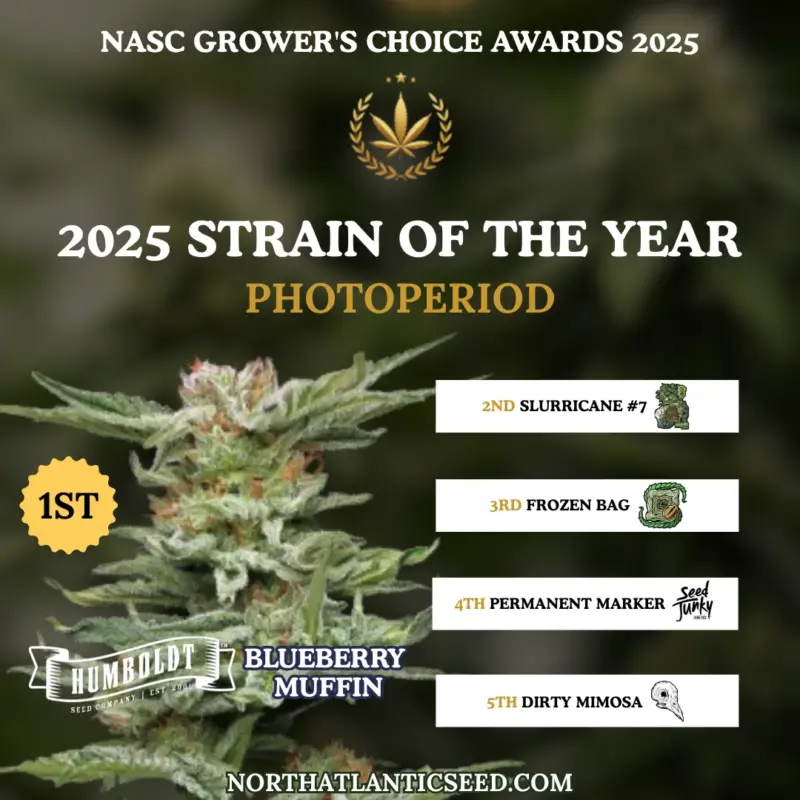
Blueberry Muffin (F) by Humboldt Seed Company
BEST OUTDOOR STRAINS 2026
This year NASC set out to curate a line of genetics that commercial farmers and outdoor home growers could rely on for uniformity, resilience, quality and performance. We are asked for outdoor recommendations every day, and because we live in one of the harshest climates in the US for growing, we know the struggle it can be to find reliable genetics. The NASC Commercial Cultivars series was sourced from US breeders and tested and bred on a commercial scale to meet the needs of the home grower and the commercial grower alike. For that reason, this line of True F1 Hybrids and IBLs are our picks for outdoor 2026:
NASC GROWERS CHOICE - COMMUNITY-VOTED FAVORITES:
The strains below are YOUR favorite strains of 2025. These results came directly from the Grower’s Choice survey that NASC conducted in Jan 2026.
Strain of the Year - Autoflower:
Gorilla Cookies by Fast Buds
Banana Purple Punch Auto by Fast Buds
Banana Jealousy Auto by Ethos Genetics
Frostbanger Auto by 420 Fast Buds
Gorilla Zkittlez by 420 Fast Buds
Purple Lemonade Auto by 420 Fast Buds
Strawberry Milk and Qookies by Night Owl Seeds
Grape Gas by Twenty20 Mendocino
Double Grape Auto by Mephisto Genetics
Guava Auto by 420 Fast Buds
Strain of the Year - Photoperiod:
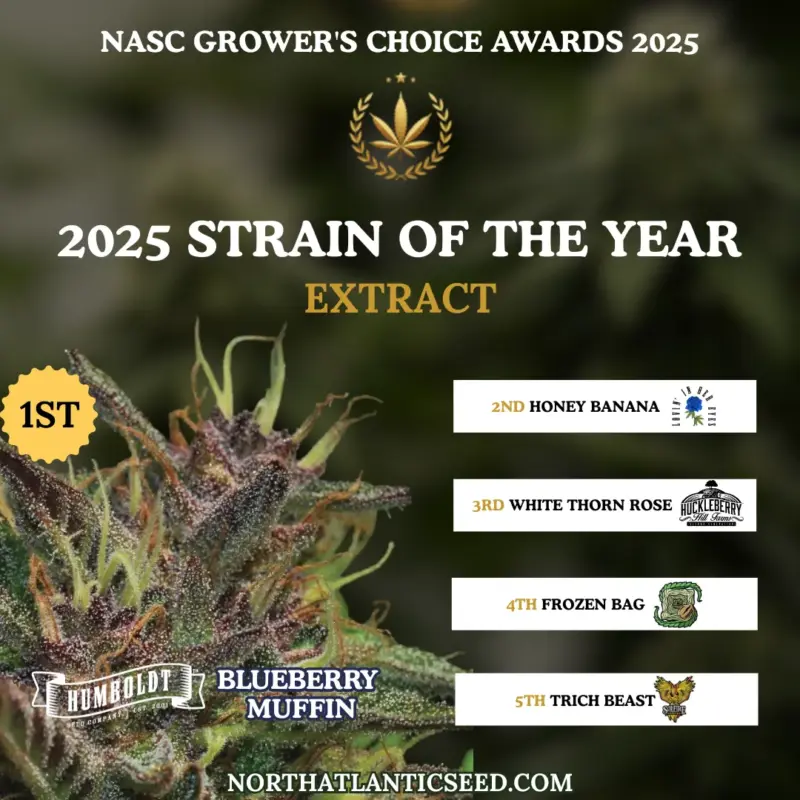
Blueberry Muffin by Humboldt Seed Co.
Slurricane #7 by In House Genetics
Dirty Mimosa by Dirty Bird Genetics
Mandarin Cookies V2 by Ethos Genetics
Orange Cream Pop by Humboldt Seed Co.
Bubba Whip by Twenty20 Mendocino
Chem Funk by Ethos Genetics
Chicken N’ Wafflez by Humboldt Seed Co.
FX3 by Solfire Gardens
Irie Maiden by Romulan Genetics
Strain of the Year - Extract:
Blueberry Muffin by Humboldt Seed Co.
Honey Banana by Lovin In Her Eyes
Trich Beast by Solfire Gardens
Orange Cream Pop by Humboldt Seed Co
Golden Sands by Humboldt Seed Co.
Irie Maiden by Romulan Genetics
Maui Wowie Squared by Dirty Bird Genetics
GENETICS FOR A CAUSE:
This year, we have been hard at work behind the scenes trying to educate lawmakers and influence positive policy changes for cannabis seeds and genetics in DC. We’ve recently started a campaign called Keep Seeds Legal! When you purchase the strains on this menu, 100% of proceeds go towards fighting the “hemp ban” set to take effect this Nov 2026.
We are a family-run farm in southern Virginia just east of the Blue Ridge Mountains. We use natural farming practices that go beyond organic methods and we strive for a closed-loop regenerative agriculture system utilizing what is available on our property and foraged from local surrounding areas to benefit the soil and plants we grow. -Jolly Pond Farm
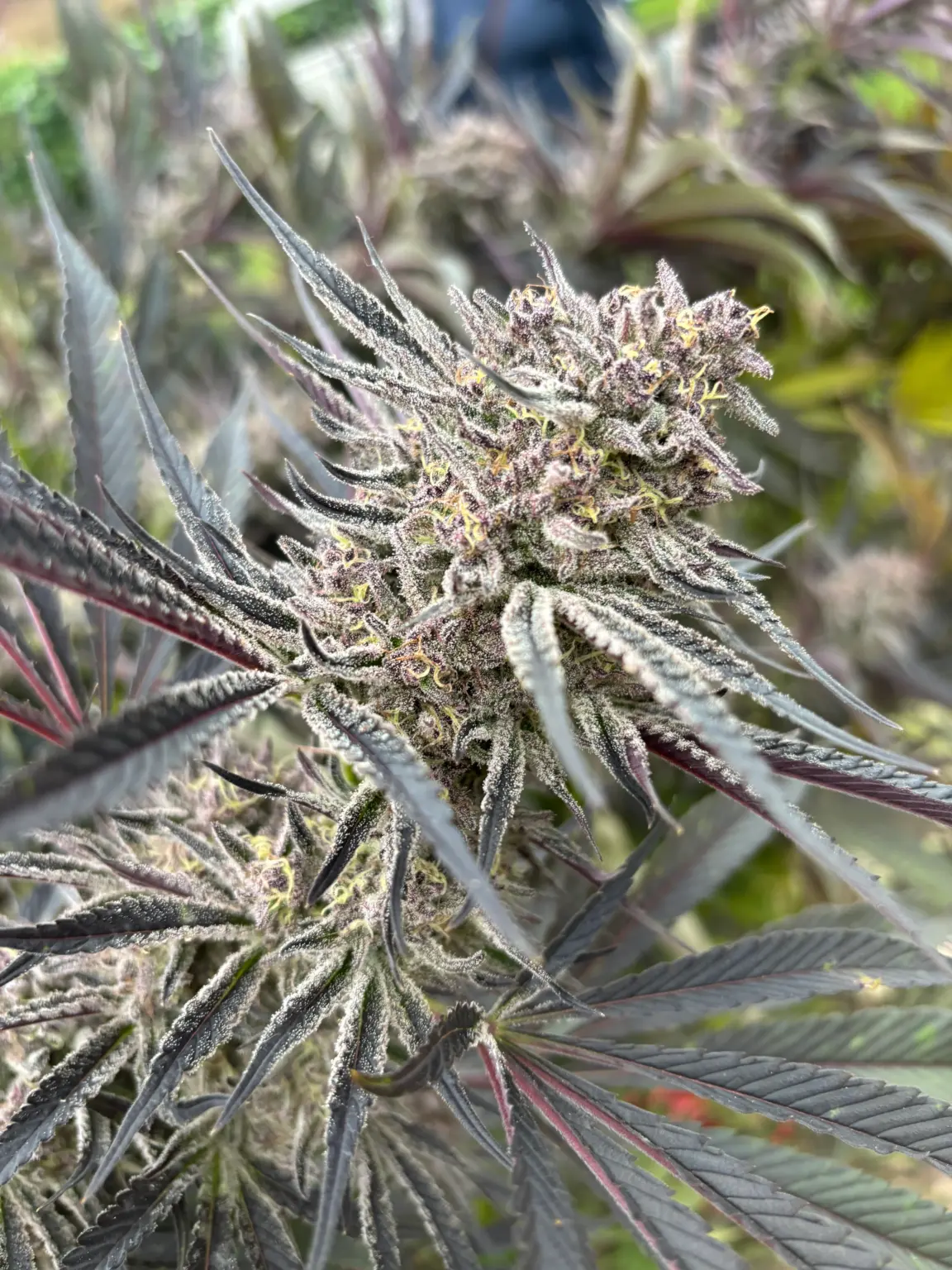
We are very excited for this new addition to the NASC menu, Jolly Pond Farm. For this smoke report, I smoked Tropighani, which is (Trop Cherry x White Afghani F3). Mariah tried Trop Cherry x Garlic Grove. Read on to learn about our experiences.
White Afghani S1 (parent strain to Tropighani)
Tropighani She can definitely be your partner in crime if you're looking for a fun and goofy time. The intense euphoria that immediately started was great! I felt like I was put into a spacey and giddy trance. I became so forgetful that my dogs were almost fed second-dinner by mistake. Overall, I'd say this strain is balanced, but because of the intense head-lift, I didn't want to move far from my couch or be active. With causing such heightened senses, I think this would be great for watching a movie or listening to music. It could also assist with bouts of laughter in a laid-back social setting. The taste and smell toggled between a representation of both parent strains. It had this sweet and earthy flavor from the Trop Cherry side, but a strong note of herbal spice from the Afghani lineage. I would absolutely smoke this again and I look forward to trying more from Jolly Pond Farm! - Crystal
Trop Cherry x Garlic Grove I enjoyed this strain from Jolly Pond Farm! It really does smell like cherries with some peppery undertones. It’s definitely grown with care; the buds are dense and frosty with flecks of purple. I felt immediately relaxed as soon as I smoked it. It tastes great, and the high is super mellow and uplifting. The stress of the day melted away, and I was able to get out of my head and just chill. I tend to smoke in the evening before bed and this strain definitely helped me to relax before falling asleep, however I think it would provide a great daytime high as well if you had the day off. 10/10! - Mariah
Read further for advice about strain selection for your outdoor garden, including the new NASC Commercial Cultivars line.
Considerations For Outdoor Strain Selection
Flowering Time: A cannabis plant will likely not last through multiple frosts, so keep the flowering time in mind if you live somewhere that starts to experience colder temperatures in October. Late September-early October is a sweet spot for Northern and New England climates.
Resistance: Considering a strain's resistance could narrow down your options. Keep an eye out for strains that are resistant to common outdoor problems such as mold, mildew, septoria, and pests.
Seed Type: For the beginner grower, I would caution against putting regular seeds in your garden without sex testing. A burst pollen sack outside is infinitely more detrimental to other plants in stages of flower than a similar situation inside, simply due to natural winds and air movement. Check the sex sites of feminized plants as well.
For more details On preparing your outdoor garden, check out this post!
The genetics you will find in NASC’s Commercial Cultivars line have been carefully selected by industry veterans for their overall commercial crop viability. This includes outdoor resilience and resistances, early finishing times, complex terpene profiles, high performing test results, extract performance, overall bag appeal, overall plant and flower morphology, dependability and stability. These are genetics that have been bred and tested in large commercial settings with the utmost integrity, and these are genetics that you can trust, at a price point that is reasonable.
Click the images below to learn more about each of these strains!
With 20+ years of cultivation experience and over 250 unique varieties created SinCity Seeds is among the worlds most respected cannabis breeders. They stand behind their work and always offer a full satisfaction guarantee on all their products.
The NASC Cast Crew had the pleasure of sitting down with Don of Sin City Seeds. Listen to what he has to say below, and follow us on Vimeo for even more content!
Sticky Finger Seeds is a Cannabis genetic collective that specializes (takes pride) in growing and breeding heirloom and landrace cannabis genetics. Now closing in on five decades of cannabis farming and breeding cannabis enthusiast Will Grinnell has been seeking, trading, purchasing and collecting a variety of the best cannabis genetics possible, along with the Sticky Finger Seeds collective of heritage craft farmers and their seed collections.
The NASC Cast Crew had the pleasure of sitting down with Will of Sticky Finger Seeds. Listen to what he has to say below, and follow us on Vimeo for even more content!
Let's agree: the Dirty Bird Genetics family are nerds (in the most endearing way...obviously), so of course we would overthink things like pricing when it comes to assigning value to our genetics. Because we recently threw a new menu at you with the launch of our Alpha Series, we wanted to take a moment to explain where our heads are at when we are deciding which of the menu tiers a strain gets released into:
ALL STRAINS ARE:
Highly promising and exciting on multiple levels.
Tested by a lab for cannabinoids and terpenes
Grown out and tested indoors by yours truly.
Herm-free unless specifically noted in the profile (which would be tremendously rare).
VOLUME SERIES: Volume releases are reserved for the best of the best. What that means is very personal and it evolves with time as we learn and grow, and as our genetics become more and more refined. If a cultivar is released in the Volume series, then you know that strain is some of our best work to-date. We have a very high level of confidence in these genetics, and that standard only grows month-to-month and year-over-year. At present, a strain released into the Volume series meets the following criteria:
Test results for cannabinoids + terpenes came back very favorably.
Morphologically stable and vigorous - We are looking for homogeneity here and will always speak to phenotypic variation within the strain descriptions.
Expressed desirable traits such as well-proportioned internodal spacing and high calyx to leaf ratio.
Terpene profile is ON POINT - complex, pungent, in your face. We are big fans of unique terpene profiles.
Quality observed is consistently high-level in all of the seeds we tested.
Yield is moderate-to-high
Overall bag appeal and trichome coverage is high
ALPHA SERIES: The ALPHA Series is the newest addition to the Dirty Bird Genetics menu. As we’ve grown and evolved as breeders, our standards– like our genetics– have grown and evolved, too. We set a very high bar for our Volume series, and it’s a bar that is increasingly rising. Many of our favorite projects may miss that bar ever so slightly, for one silly reason or another, while still being truly phenomenal overall. The ALPHA Series is home to these genetics. It offers budget-friendly, high-end cultivars that go well above and beyond the genetics you can source at similar price points.
Alpha Series strains meet all of the same criteria as the Volume series, but one thing likely gave us pause. For example, the Apple Peelz (Sex Melon x Bad Apple) is one of our favorite boutique strains to-date, but 10 days into flowering we threw out two plants in the test run that had really serrated, arugula-like foliage (like the Brunch “arugula cut”) because we needed to save space. The project finished phenomenally, but because we weren’t able to see how that phenotype finished, we felt we couldn’t release it into the Volume series. This series will definitely be maximum bang for your buck!
TESTERS: Let me first say, it was probably unwise to name the Tester series, “Testers.” One might assume we haven’t grown these out when in fact we have. The Tester series is home to the projects that we see a lot of potential in and think people would enjoy, but that missed the mark in a meaningful-enough way that we cannot justify releasing it as an Alpha or a Volume release. This might include long internodal spacing, too much phenotypic variation, or foliage that is denser than we prefer. Many of these projects are good enough to continue breeding forward, or working into other projects. Testers are released at a price point that is super affordable for any grower, but the quality is good enough that we think even the connoisseurs would find loads of keepers here. Some of our favorite cuts ever have come from Tester series genetics.
Solfire Gardens, a Pacific Northwest seed company where passion meets biology, innovation intertwines with tradition, and selection creates the extraordinary. Their genesis dates back to 2015, when their founder, a dedicated University of Washington biology student from Seattle, decided to cultivate an institution out of his sheer fascination for pheno hunting and the world of seeds.
The NASC Cast Crew had the pleasure of sitting down with Sol of Solfire Gardens. Listen to what he has to say below, and follow us on Vimeo for even more content!
Twenty20 Mendocino has always taken the difficult path, the right path, the path less traveled. Their objective will never be to sell the most seeds, but to create the finest product. This is not a race and their goal isn’t to win; their goal is to stand the test of time and maintain pride and craftsmanship in everything they do. As sure as the sun will rise, they pledge to never release seeds to the public that have not been grown, tested, and approved by us. In a world of rapid-fire releases, social media hype and whimsical market demands, they promise to create our own path, march to the beat of their own drum, and always put quality over quantity.
The NASC Cast Crew had the pleasure of sitting down with Aaron of Twenty20 Mendocino. Listen to what he has to say below, and follow us on Vimeo for even more content!
In House Genetics specializes in micro-breeding cannabis seeds, offering a variety of high-quality strains that cater to all types of growers, including those looking for outdoor cannabis seeds. With new strains released every month, In House Genetics consistently leads the way in innovative crossbreeds and exclusive limited runs. The team’s years of experience and in-depth knowledge of genetics have allowed them to produce some of the most potent and sought-after seeds in the industry. Passionate about their craft, they continue to push the boundaries of cannabis research and development, securing their position at the forefront of the cannabis seed industry.
In 2025, In House Genetics dropped some new strains like Electracane, Purple Rush, Dripzilla, Midnight Zushi, Jamz, and many more! They offered a variety of freebies and constant discounts as well! Below, you'll find the top five strains by In House Genetics at NASC.
JELLY BREATH S1
Jelly Breath S1 is a hybrid strain that is a producer of very dense frosty flowers ranging from grape to cookie flavors.
BANANACANE
Bananacane grows vigorous, resinous heavy buds. Her aroma and flavor profile include ripe banana, berry/sherbet, caramel and earth. This strong indica-leaner can cause sedation and is excellent for sleep. She is a great option for extracts, too!
SUGAR CANE
Sugar Cane is an absolute eye-stopper. She is a mood-booster that will help you focus. You can expect a flavor and aroma profile of sweetness with floral and grape notes.
SLURRICANE #7 S1
The buds of Slurricane #7 S1 become large and resinous. She brings on heavy, sedative effects. You can expect a profile of loud, grape gas with creamy undertones.
PLATINUM KUSH BREATH REMIX
Both of the parental strains of Platinum Kush Breath Remix are very heavy duty so this is not one for the inexperienced smokers out there. She has a lovely, pure-gassy flavour and aroma which will have all the Kush lovers out there going crazy.
Changing the ethos of cannabis, with commercial boutique innovations, game-changing genetics, mind-opening insights and the best possible products, Ethos uses science and data to apply the best practices, make the most effective combinations and produce winners time and again. Offering the most elite, most efficient cultivars – from F1s to IBLs and Alpha Fems to autoflowers – Ethos Genetics, founded by Colin Gordon, is based in Colorado, USA. Colin and his team work to produce quality in their products as well as their contributions to the greater community. ETHOS is raising expectations.
Mandarin Cookies V2 grows like a champion and can put out very colorful and flavorful flowers. The V2 version has added even more citrus along with the always-welcome gasoline by moving away from the Forum Cut into a much chunkier, OG-Kush-heavy version named Ethos Cookie #12.
PLANET OF THE GRAPES RBX
Planet of the Grapes is made to produce and is extremely high in both cannabinoid and terpene percentages. Heavy flower yields are easy to get on this low-maintenance, medium-height, strong, lateral plant. She tests and extracts huge in usable oils! Her aroma is only outdone by her flavor: sharp grapes, sweet citrus and the signature musky, greasy flavor of Chem D. Acrid aromas like propane and "hooch" accompany the more citrusy pheno. You can expect intense, heavy, classic “Indica” effects.
CHERRY GAR-SEE-YA R1
This is not your typical compact, leafy cherry variety. Cherry Gar-See-Ya R1 stacks chunky, baseball-sized nugs from top to bottom. She is easily trained, beginner friendly, and loves growing outdoors
10TH PLANET R1
10TH Planet R1 leans to the heavy side, with intense, classic “hybrid” effects. Journey into an otherworldly blend of grape, citrus, gasoline and thick, skunky spice. Chunky, large and dense flowers give phenomenal yields in any system or space.
CRESCENDO RBX1
Crescendo RBx1 is medium-tall with some stretch. Sour, gassy and citrus flowers are crushingly strong! She is beginner friendly and is a high yielder!
Before their seed bank was created in 2007, RQS had long-time knowledge and passion for cannabis breeding. Following enormous interest in their strains, they opened our first shop in Amsterdam, the Damstraat location, in 2010. In 2011, they launched the Royal Queen Seeds website. In 2016, they welcomed first clients to their shop at Carrer dels Tallers in Barcelona, Spain. In 2022, they opened their newest location in Bangkok, Thailand. In 2023, they started operating in the United States and launched the first true F1 Hybrid Cannabis seeds in the market! Today, RQS operates in the US and in 28 countries in Europe and offers 100+ high-quality strains, growing equipment, growing advice, knowledge, tips and more!
In 2025, Royal Queen Seeds dropped some new strains like Sticky Queen, Sticky Queen Auto, Mexican Rush, and Mexican Rush Auto. They offered freebies and BOGOS as well! Below, you'll find the top five strains by Royal Queen Seeds at NASC.
SPECIAL QUEEN #1 AUTO
Special Queen #1 Auto offers tantalising flavors and a deeply stoning experience. Perfect for quiet evenings, this cultivar will melt your body into the couch while keeping your mind alert and switched on. You can expect a bountiful yield in a matter of weeks.
NORTHERN LIGHT (F)
Northern Light has been the basis for many of the award-winning classics in the history of cannabis. It is simply one of those knockout smokes that guarantees a couchlock session for the next few minutes. The Afghan heritage really shines through in the smoke and anyone looking for that strong stone need seek no further than this beautiful strain.
SPECIAL KUSH #1 (F)
Special Kush #1 likes to grow wild as if in the mountains of Afghanistan; this means it will fill up any space it can. Indoors, care should be taken that it doesn’t overgrow its space, but given enough space, like outdoors, it can grow to over 3 meters tall. The smoke carries a very hash-like taste with a full body stone present from its Indica background.
NORTHERN LIGHT AUTO
Northern Light Auto is a versatile strain that is as perfect for discreet indoor growers as it is for high-volume, home-growers outdoors. After a brief vegetative phase, this strain begins producing an abundance of flowers, finishing its entire life cycle in 10–12 weeks after planting the seed. She provides a generous harvest and might be one of the highest-yielding autoflowering strains available.
SPECIAL QUEEN #1 (F)
Perfect for a first-time grower who doesn't want to invest too much in his experimental growing, this Special Queen is a classic skunk that grows with ease, doesn't stretch too much and can be harvested in 8-9 weeks. The smoke is that of a classic skunk stone. It is mostly mental and provides smokers with an uplifting high that will relax even the most anxious stoners.
Disclaimer: Cannabis seeds are sold as souvenirs, and collectibles only. They contain 0% THC. It is imperative that you check your state and local laws before attempting to purchase seeds, and we are not liable for what you do with seeds after receiving them. The statements on this website and its products have not been evaluated by the Food and Drug Administration. These products are not intended to diagnose, treat, cure or prevent any disease. Consult your doctor before use. North Atlantic Seed Company assumes no legal responsibility for your actions once the product is in your possession and is not liable for any resulting issues, legal or otherwise, that may arise.
Are you 21 or older?
You must be 21+ to enter this site.
Sorry, you must be 21 or older to enter this site.