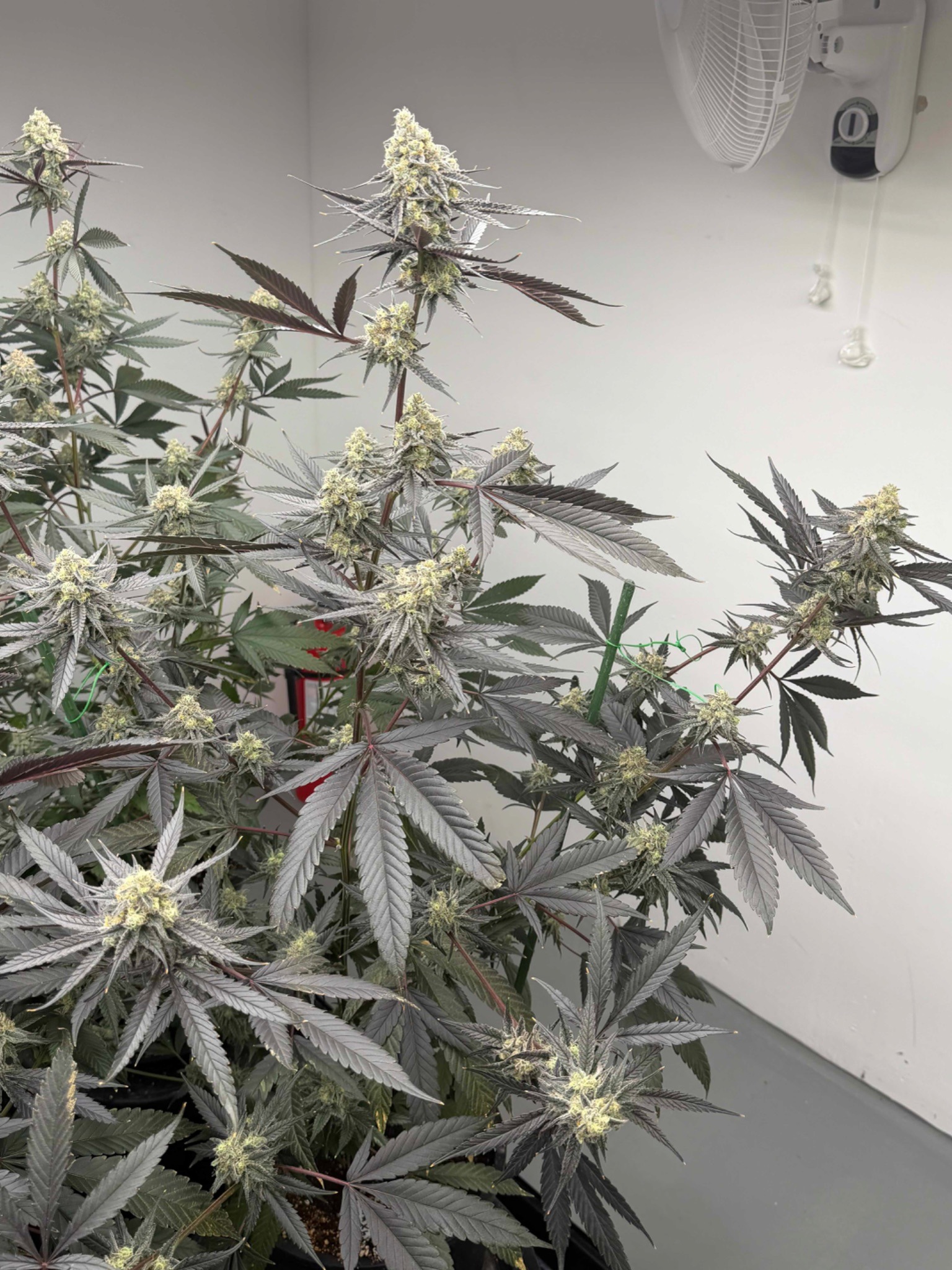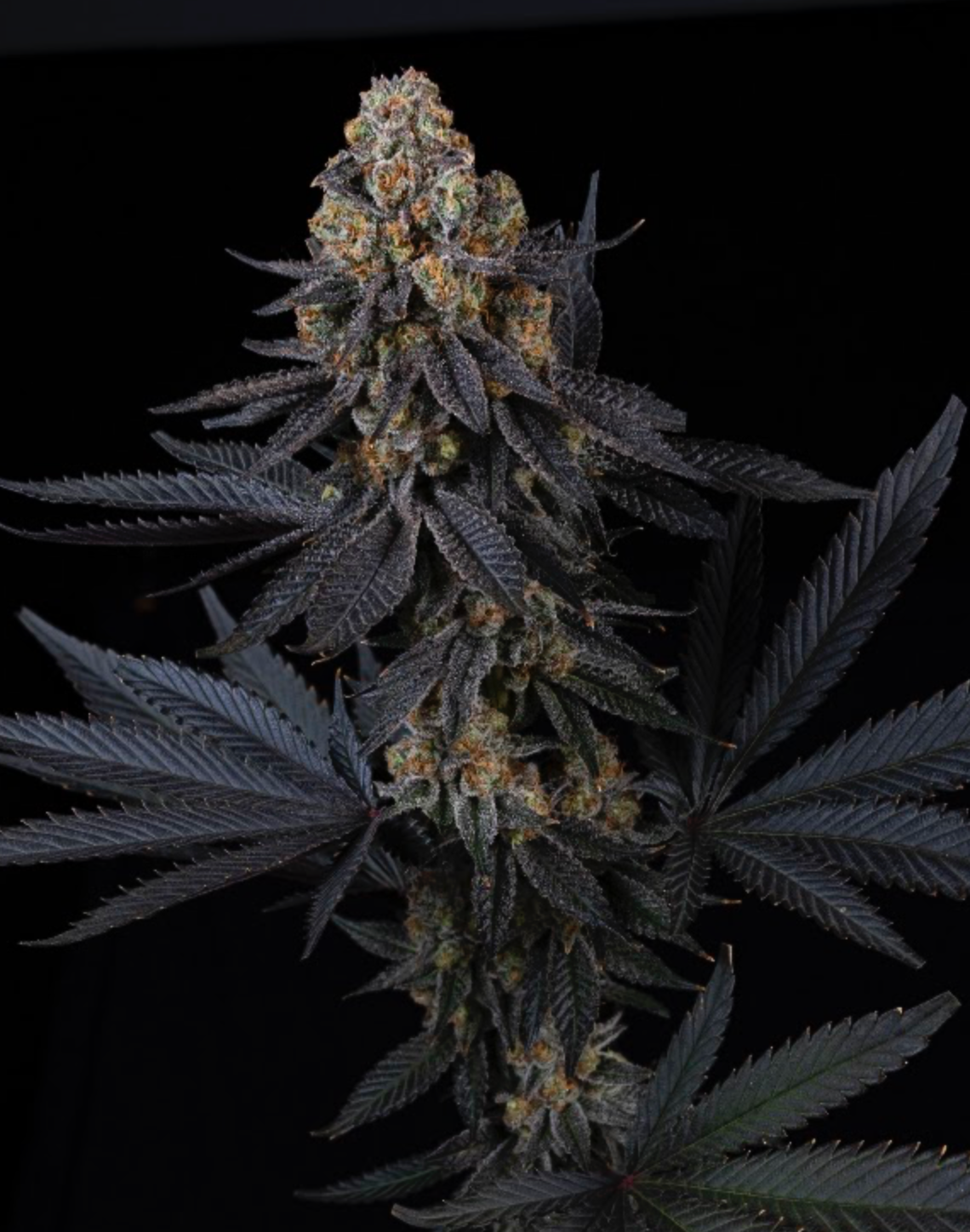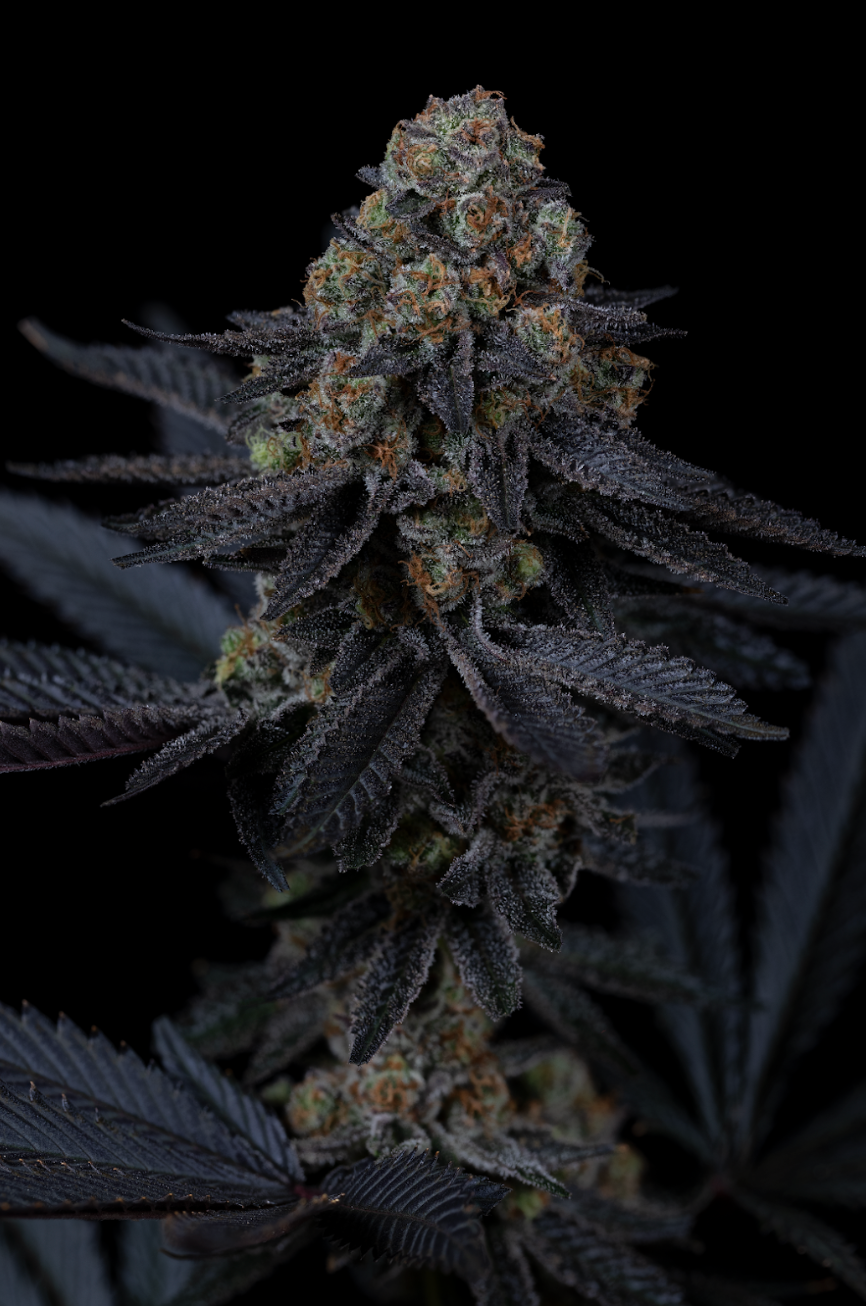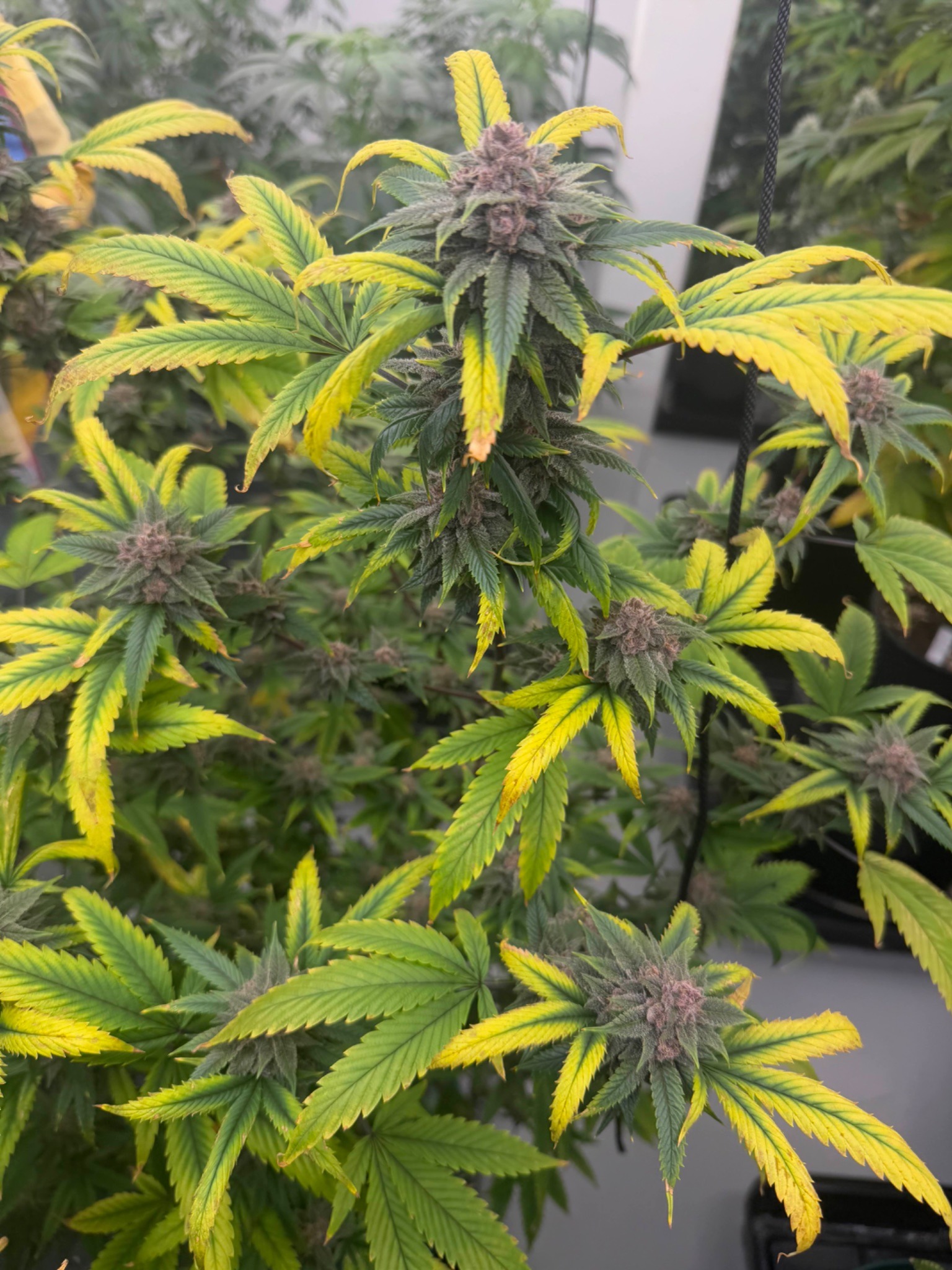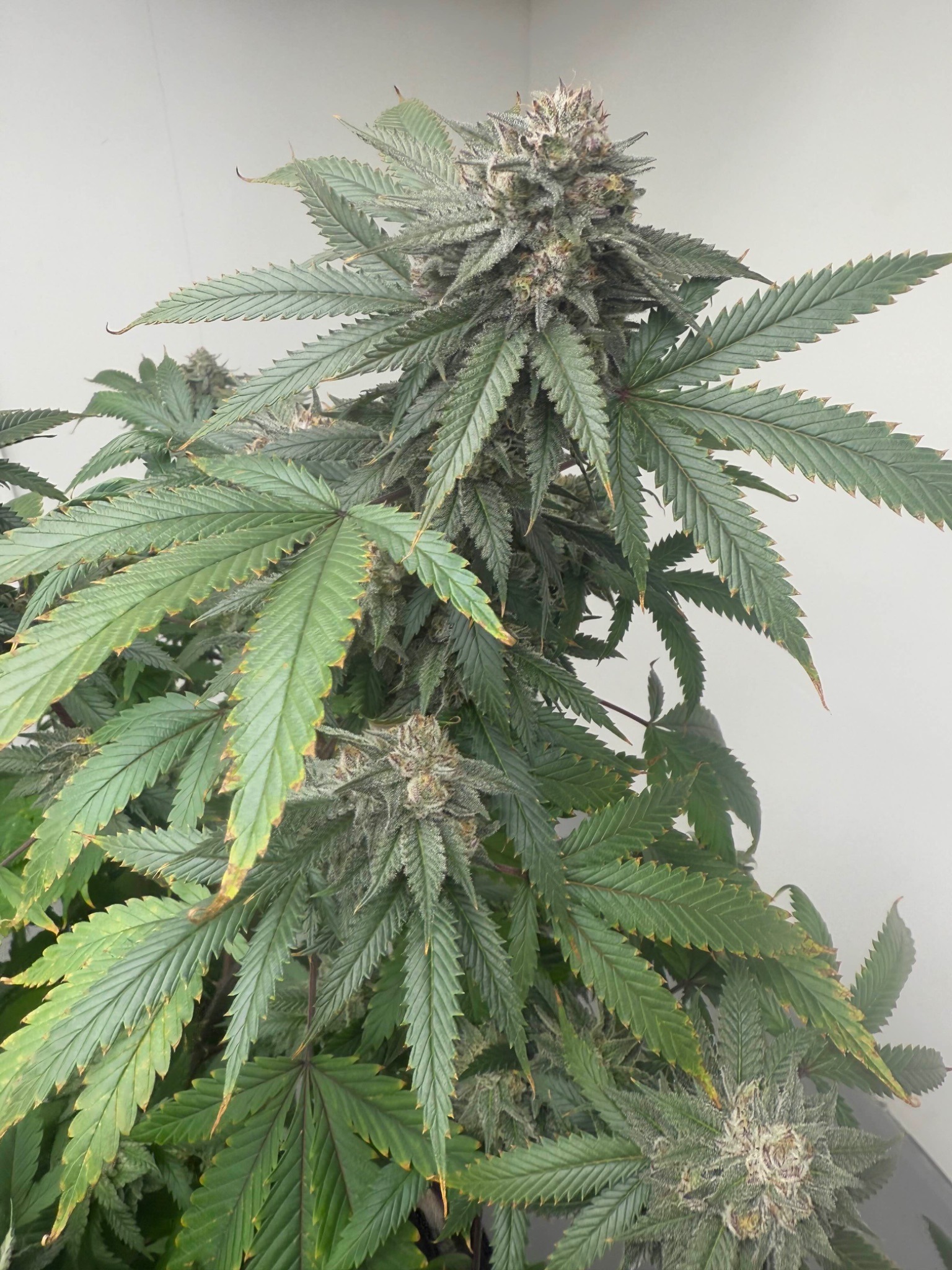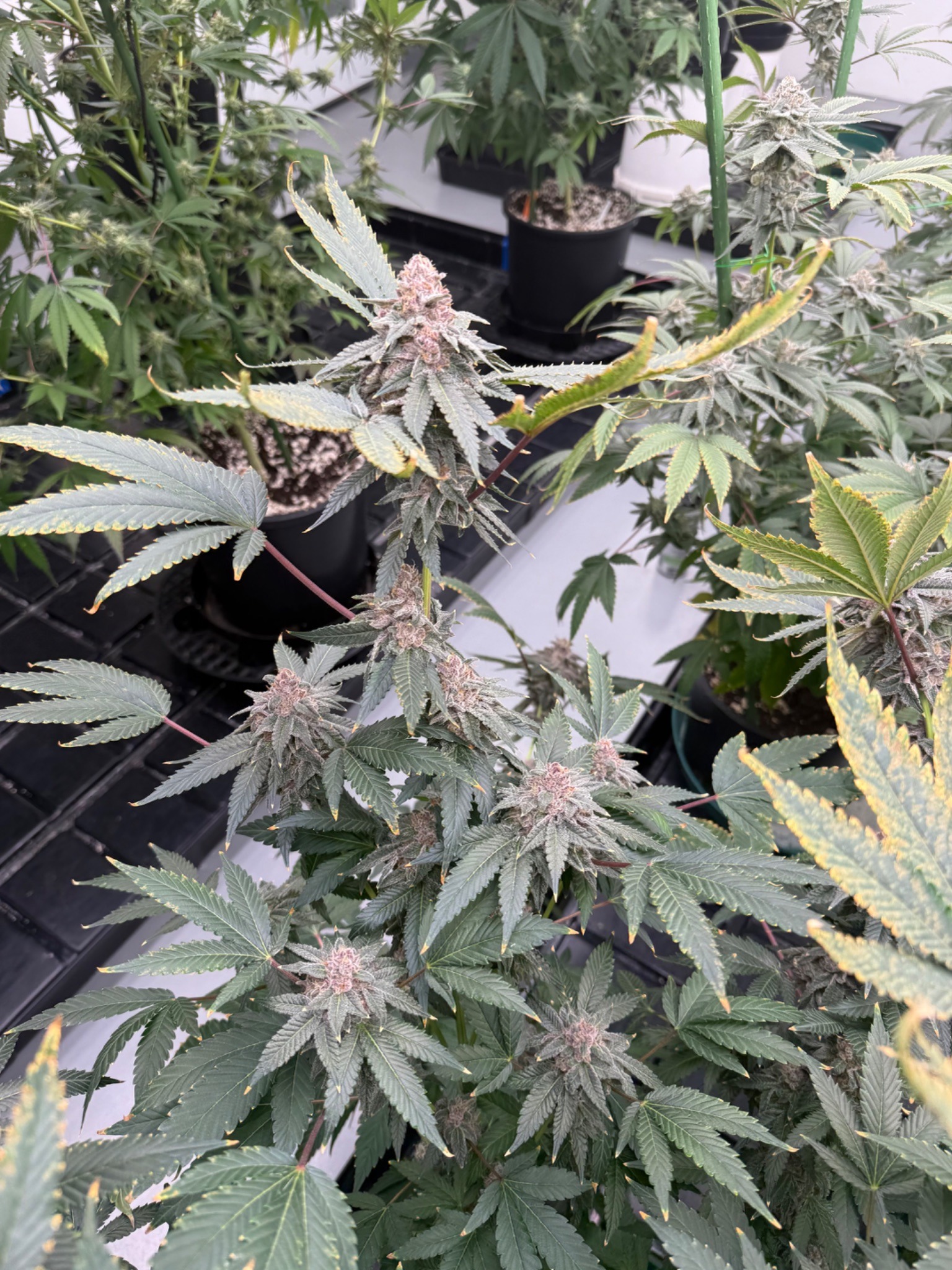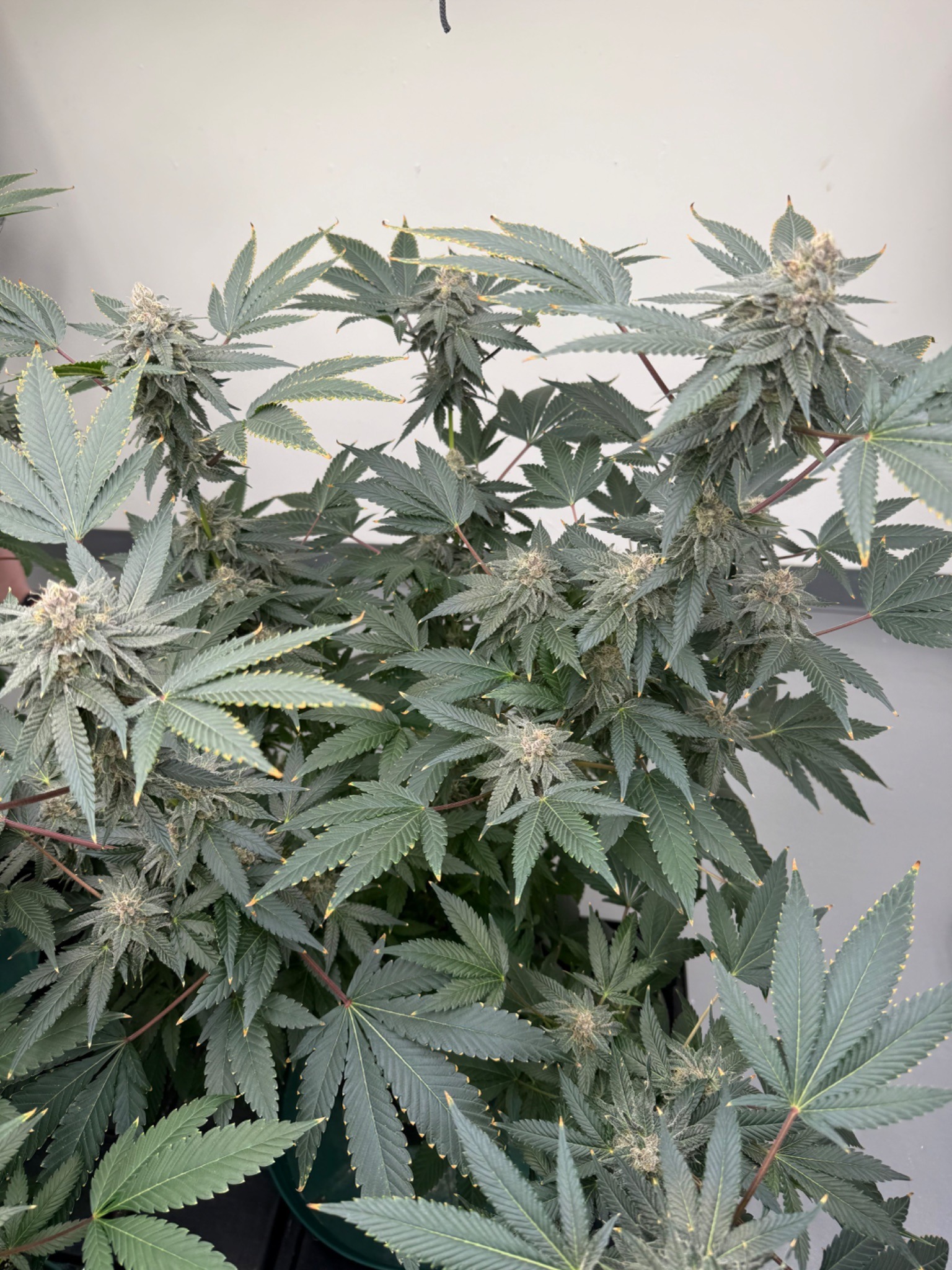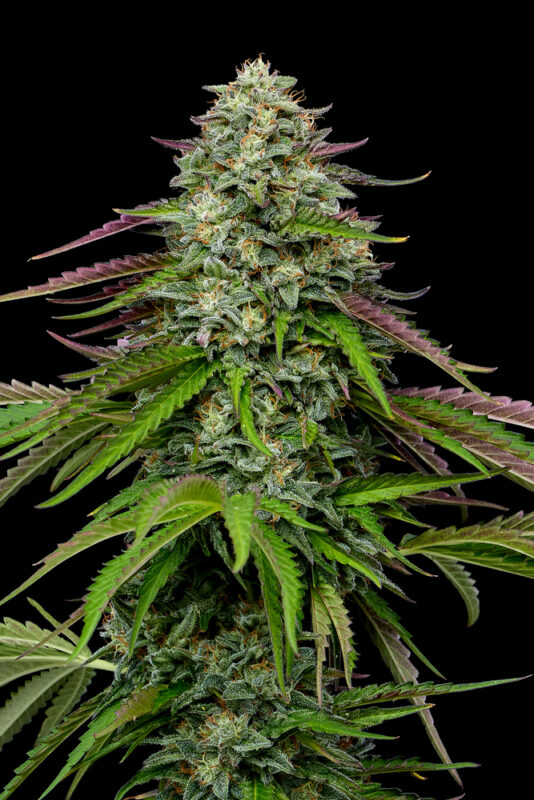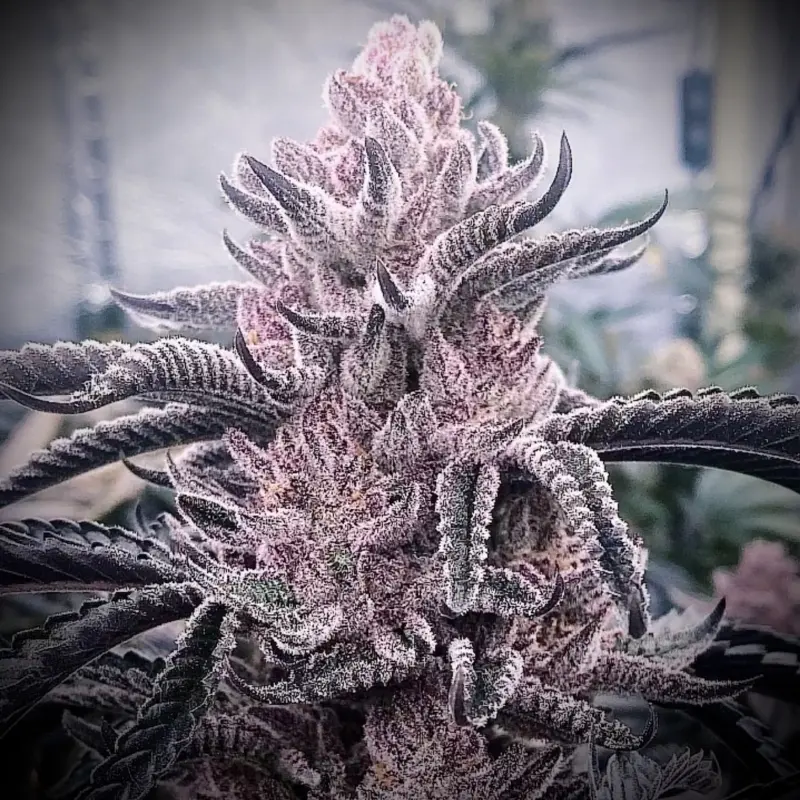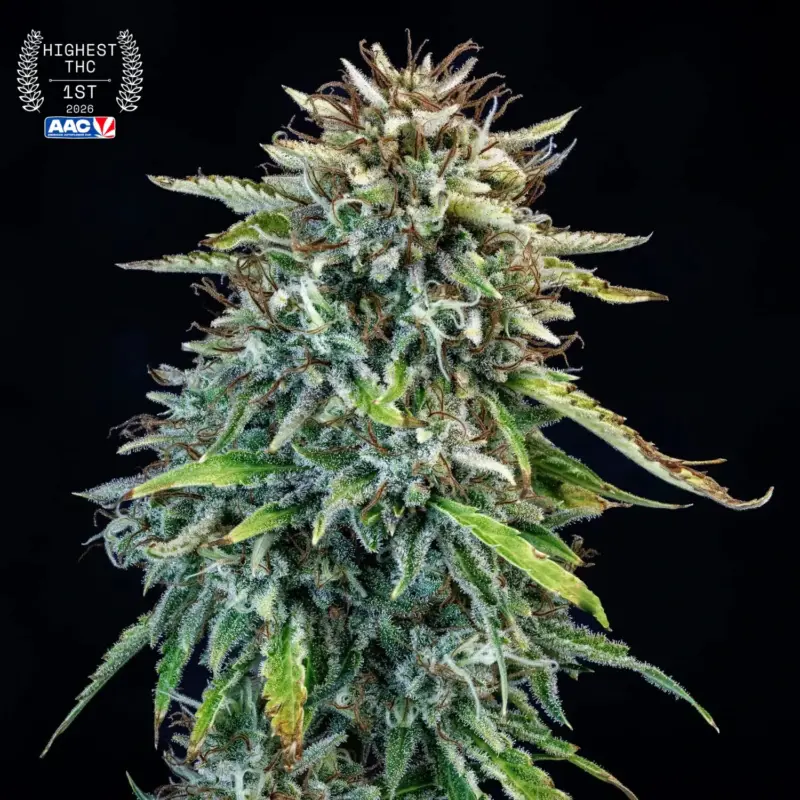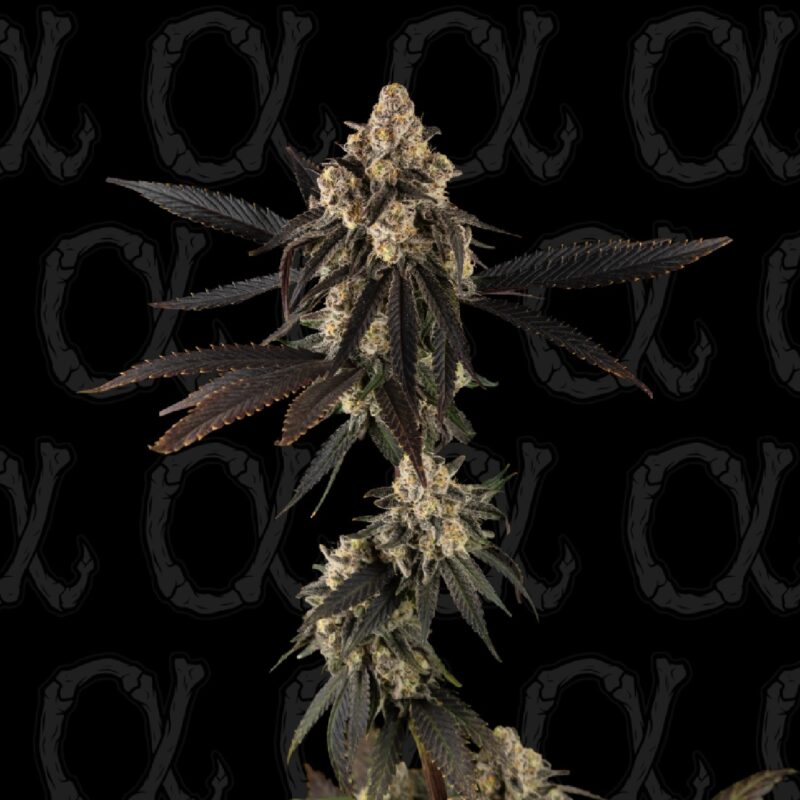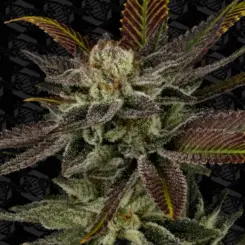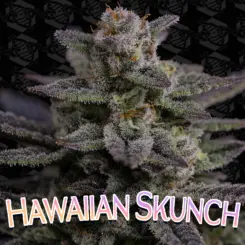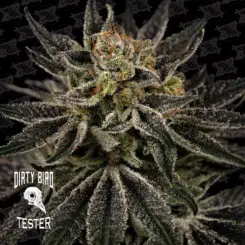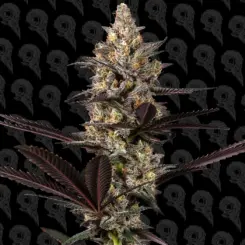
Letโ€™s Talk About Mothers: The Brunch

Breeding Cannabis from F1 to IBL with Dirty Bird Genetics

by: Beth Mathieu

First and foremost, I want to send a heartfelt Happy Motherโ€™s Day to all of the mothers here at NASC + Dirty Bird Genetics, to our own mothers, grandmothers, and maternal figures, and to all of the beautiful mothers out there who have been a part of this community with us for the past 10+ years. We see you, we appreciate you, we LOVE you, and we want to acknowledge and celebrate how beautiful the maternal instinct is. 

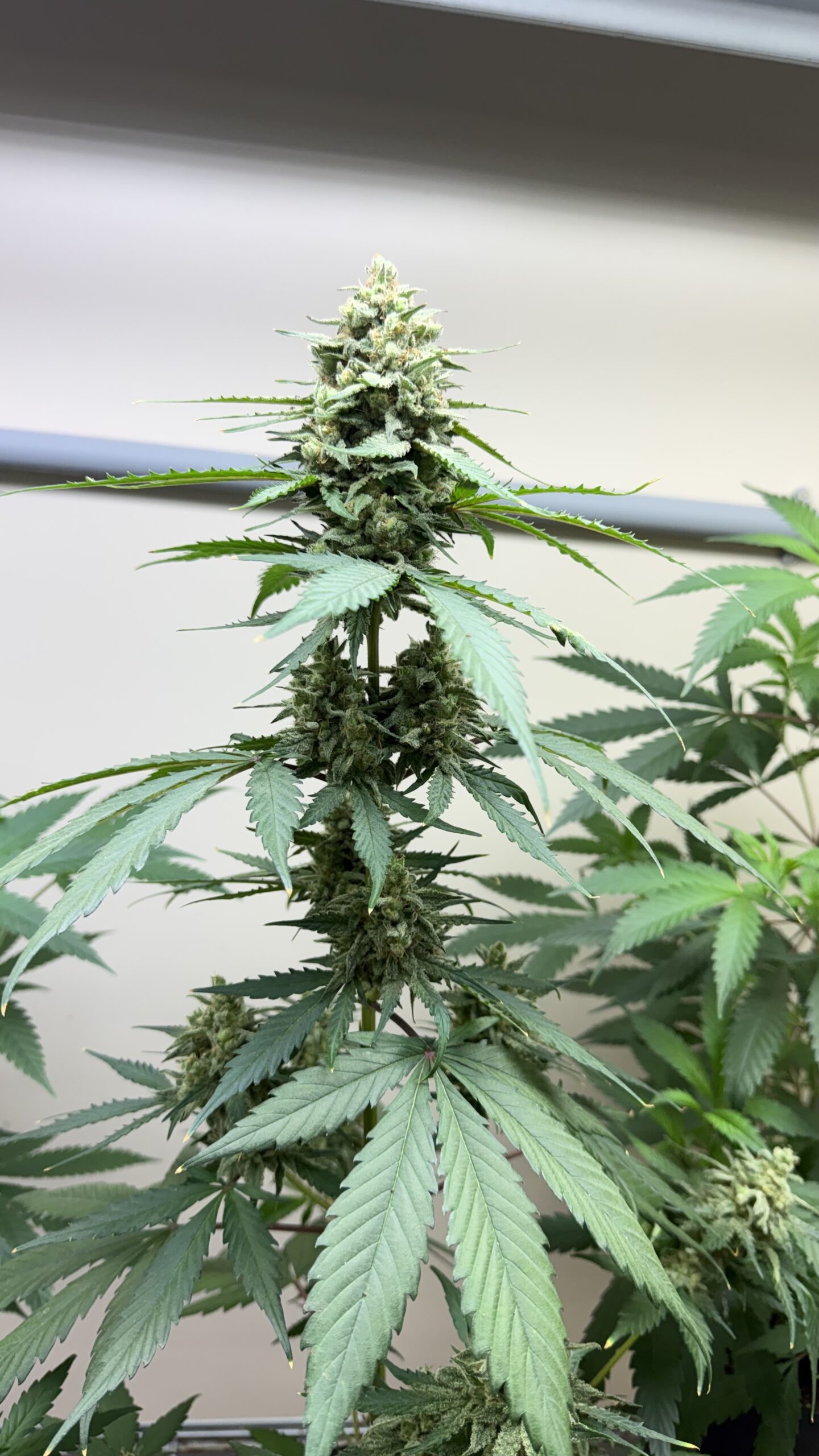
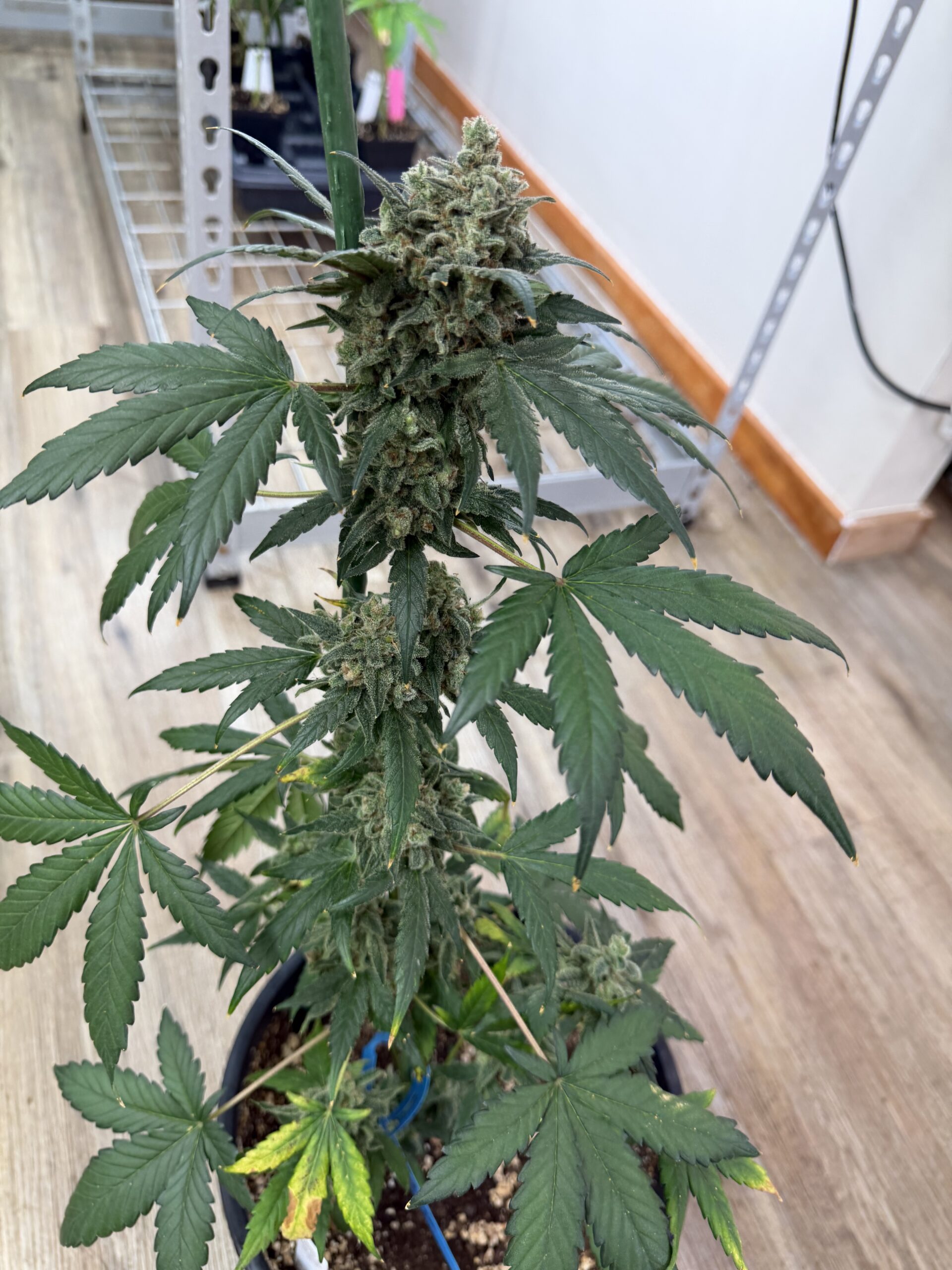
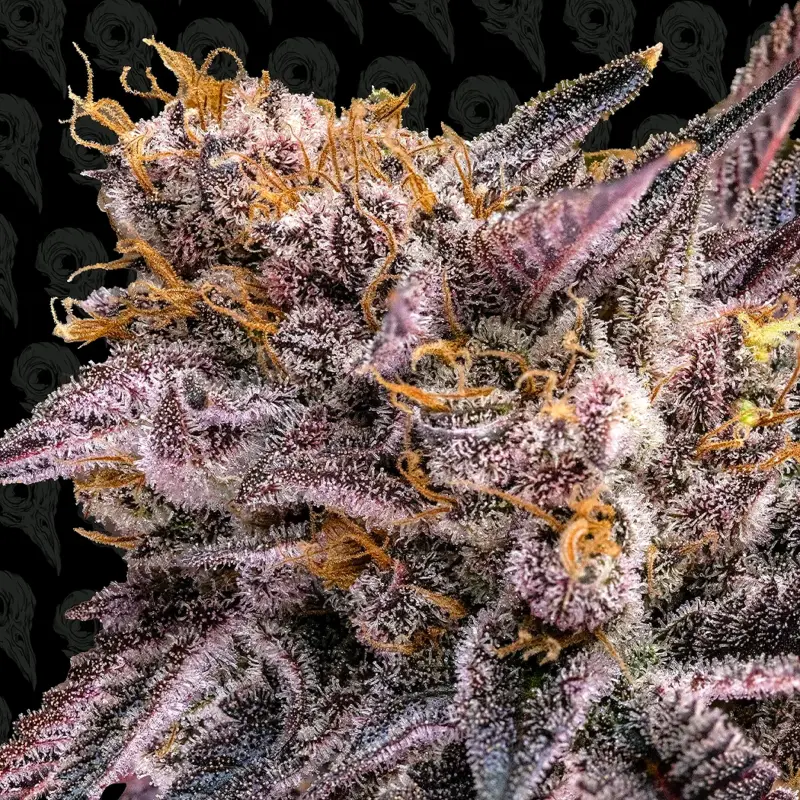
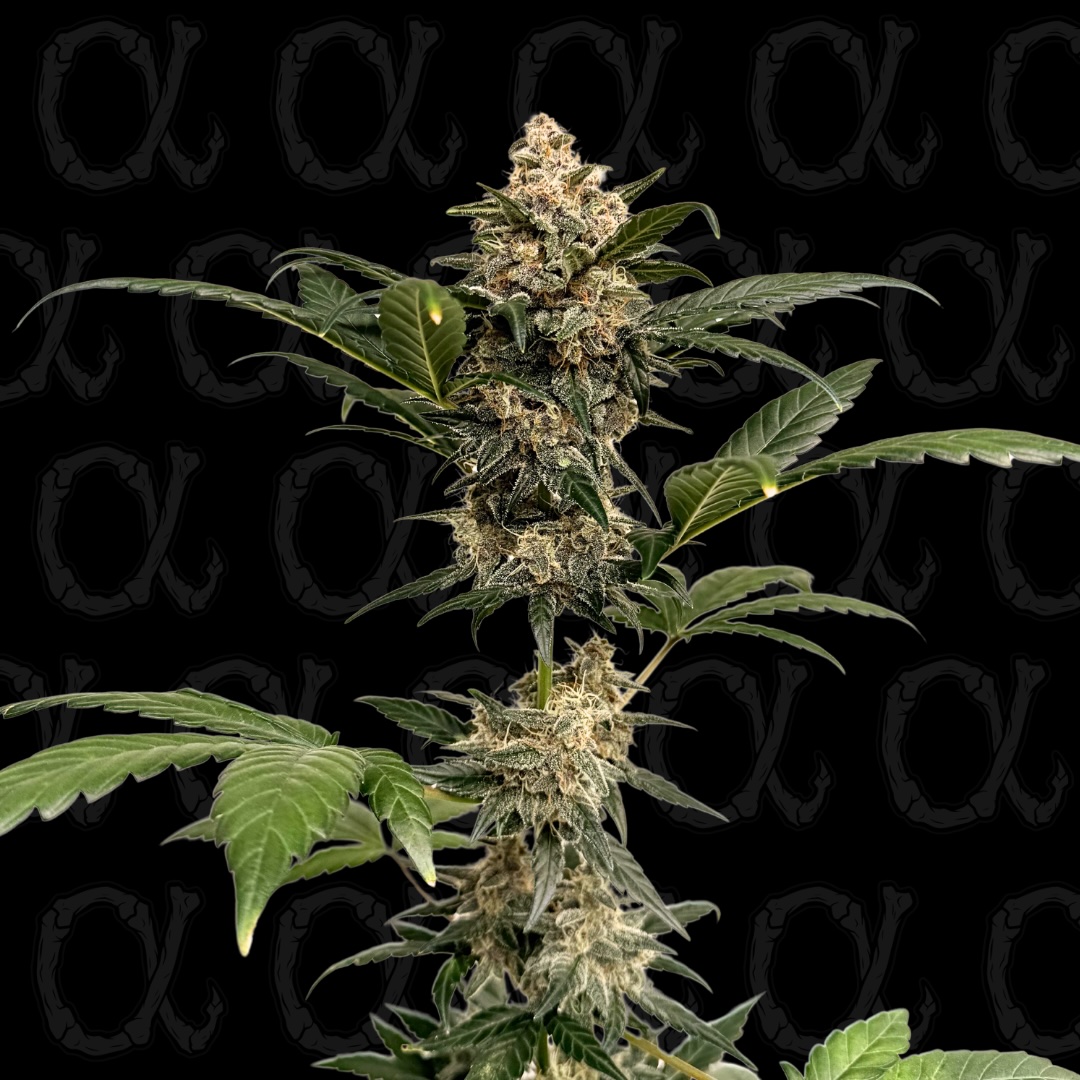
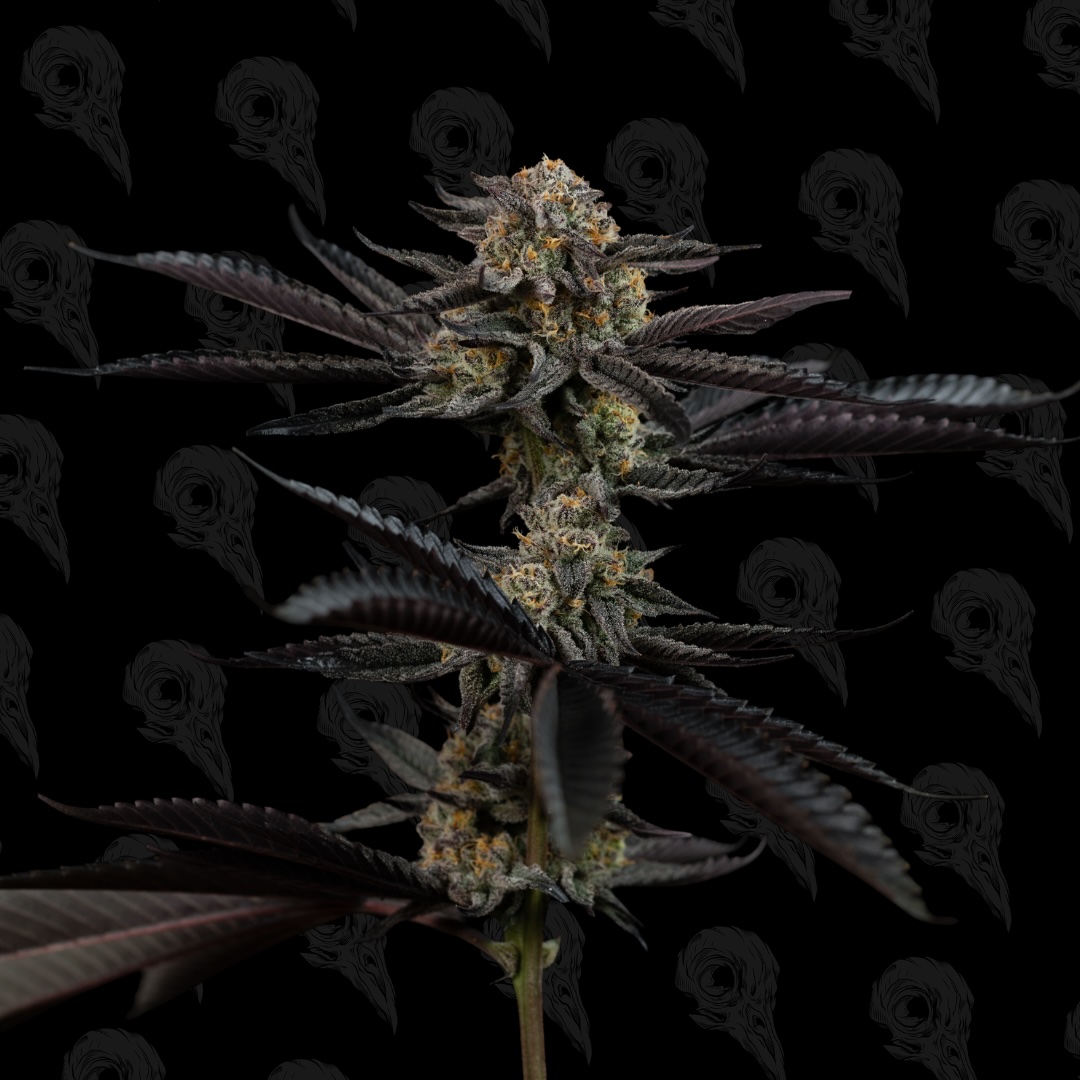
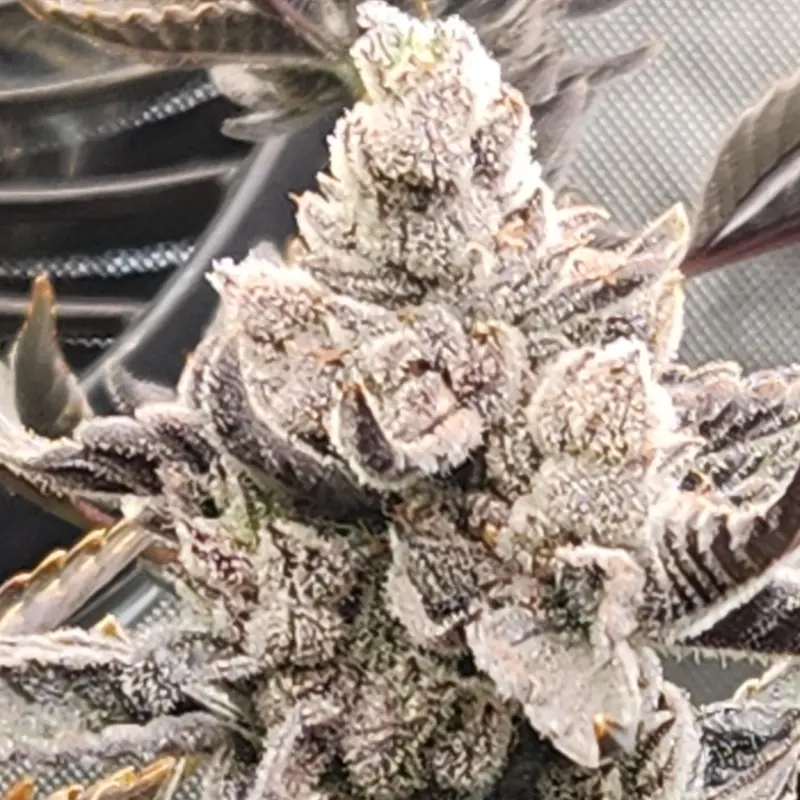
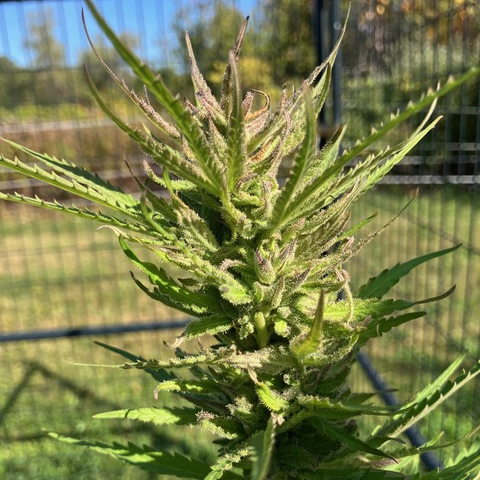
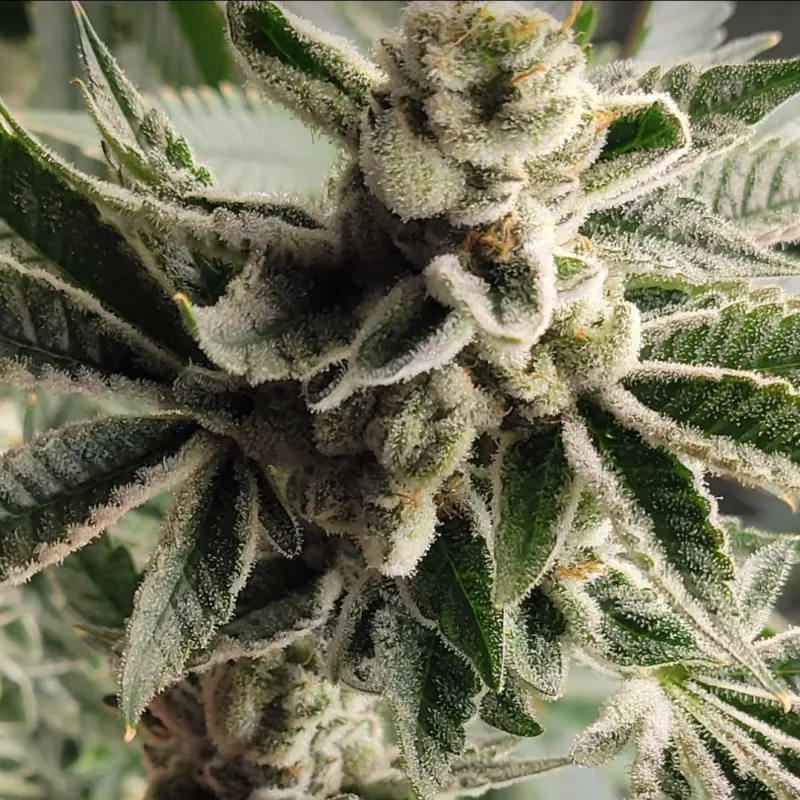
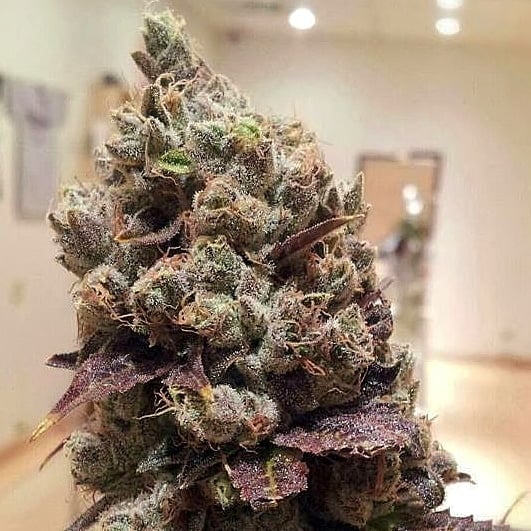
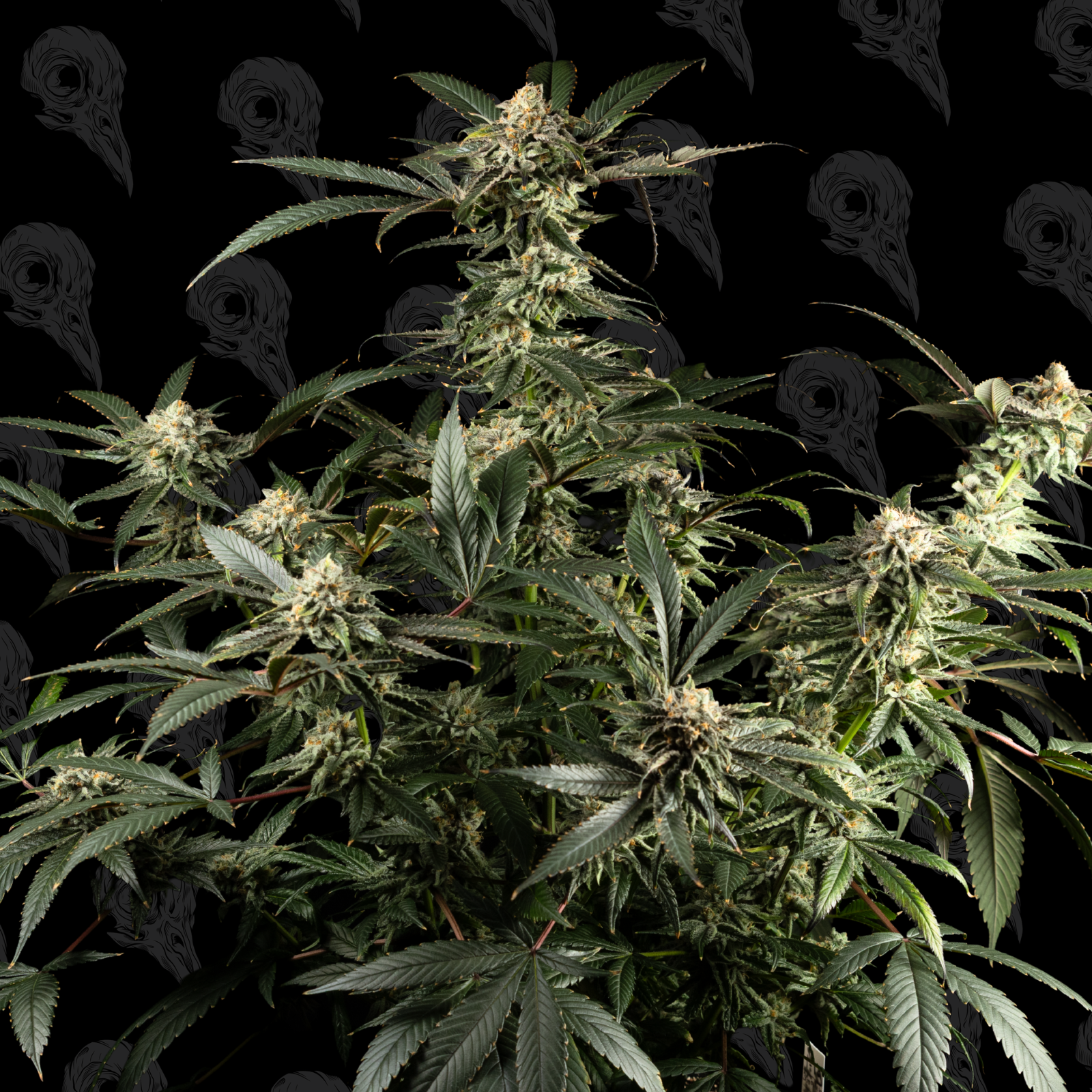
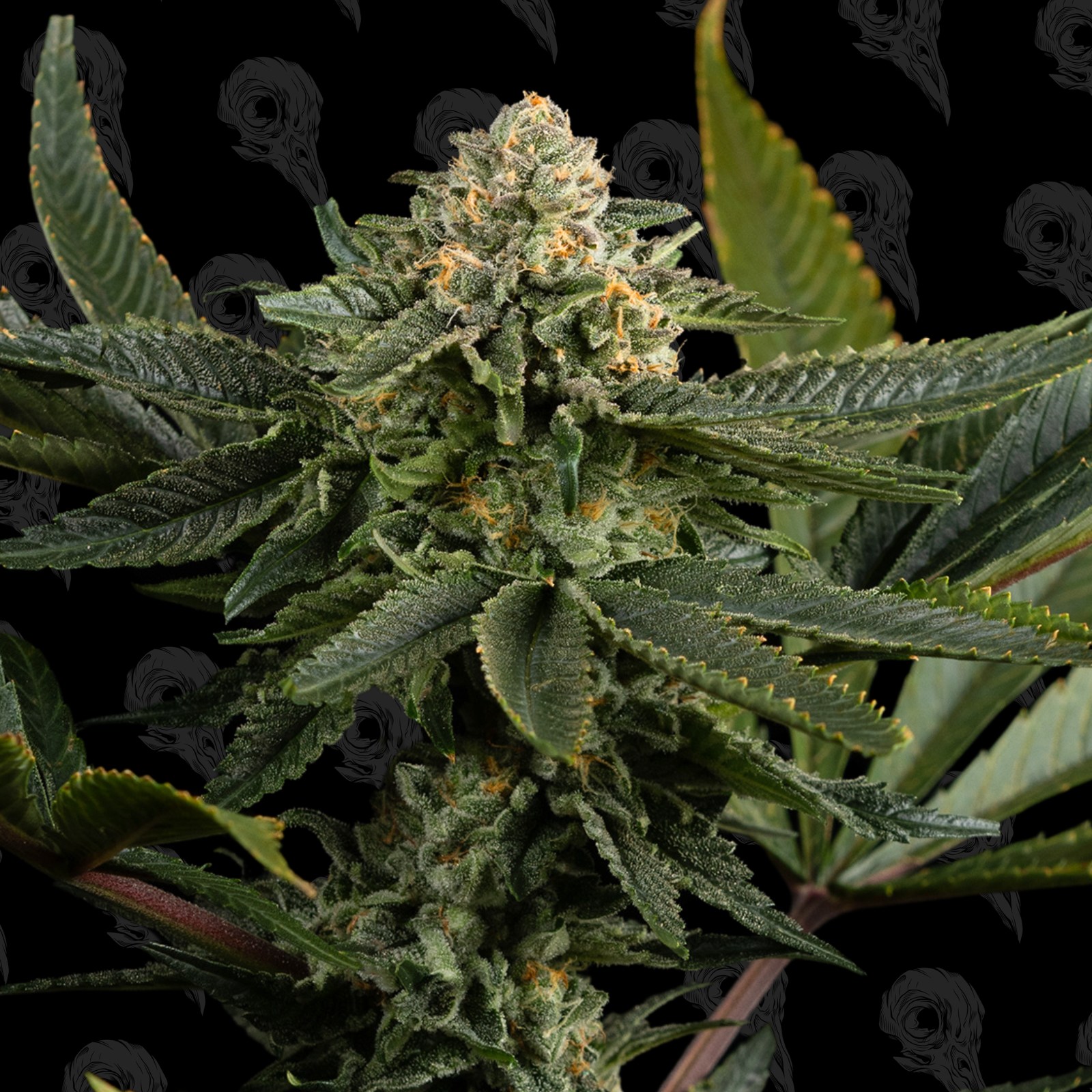
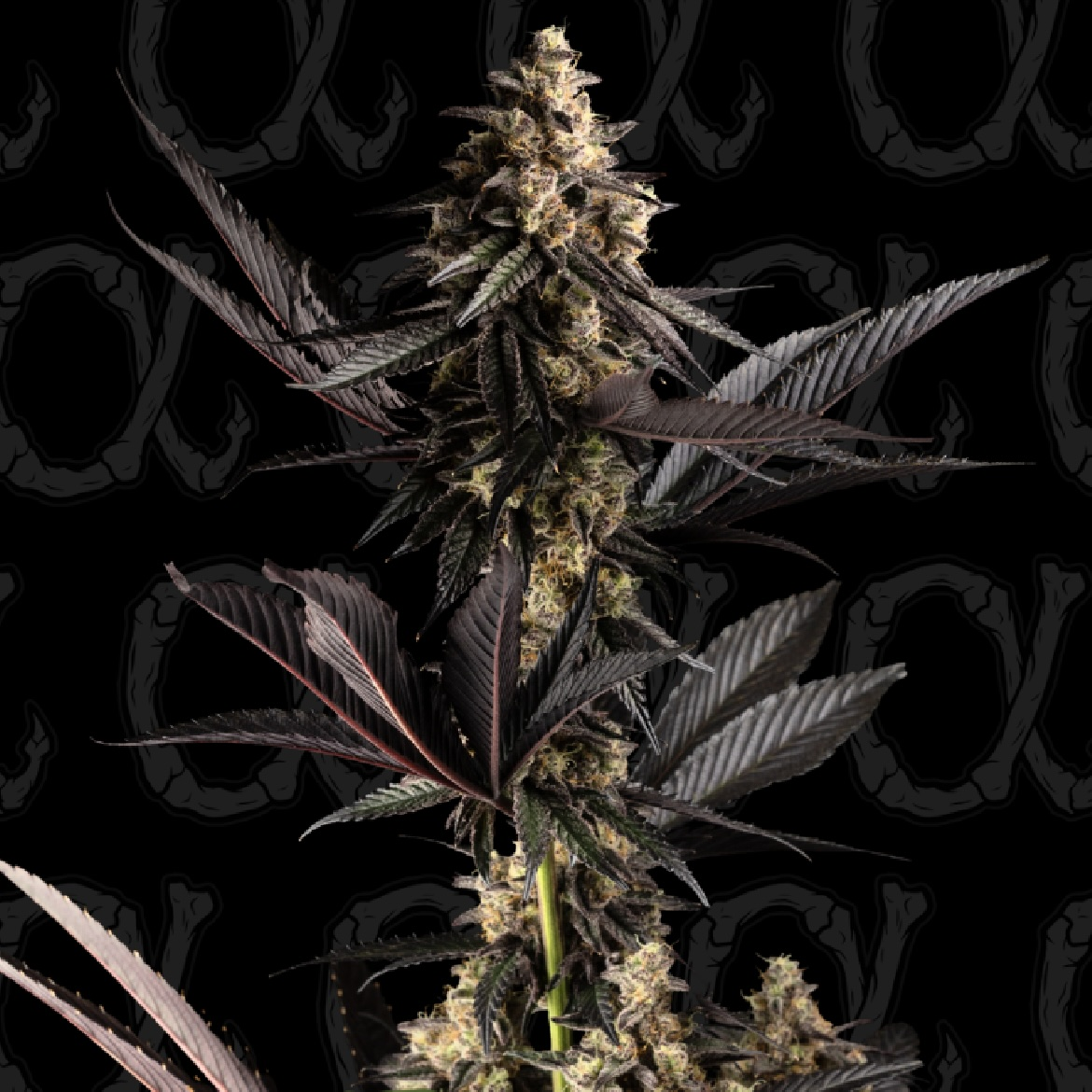
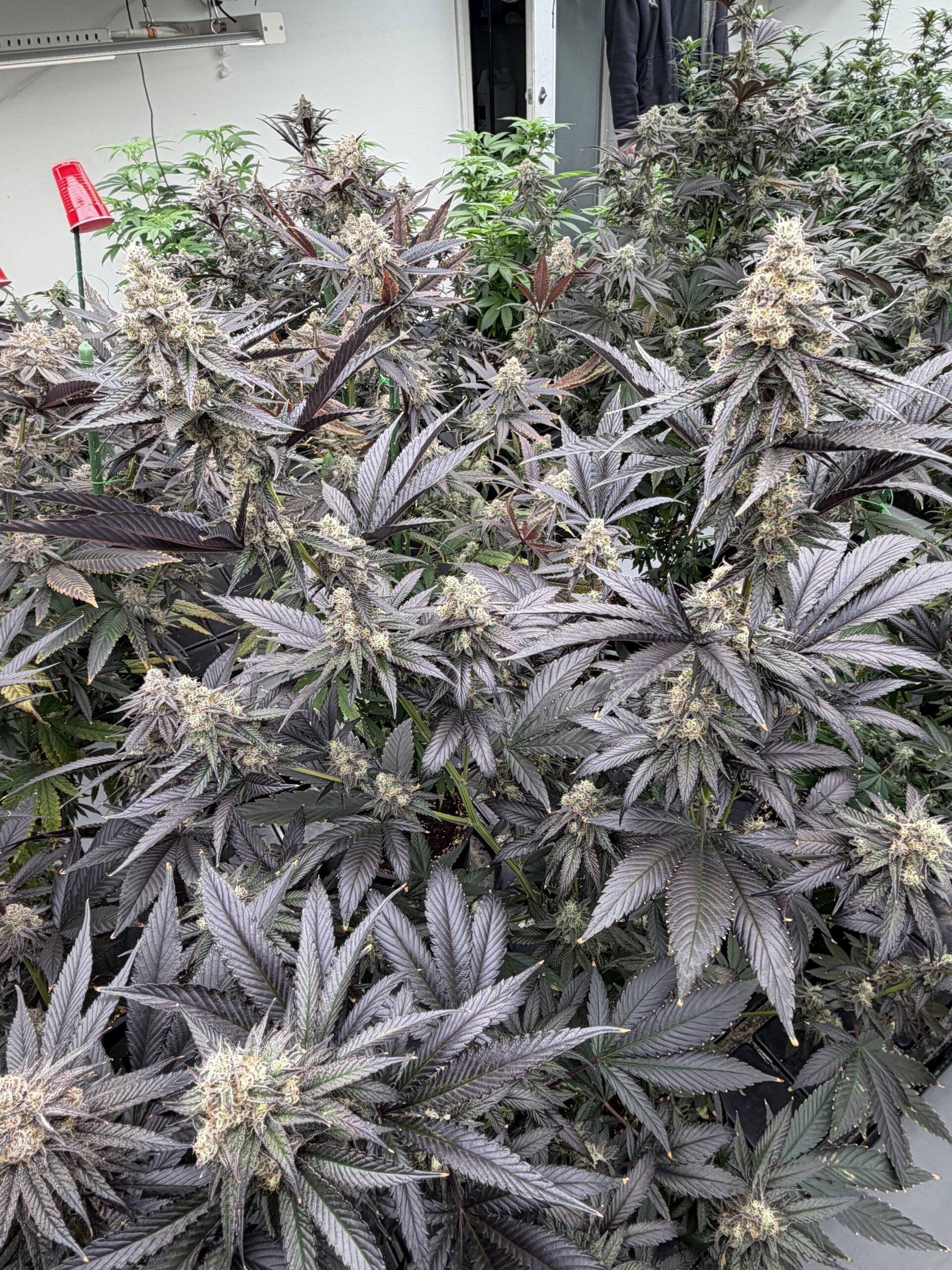
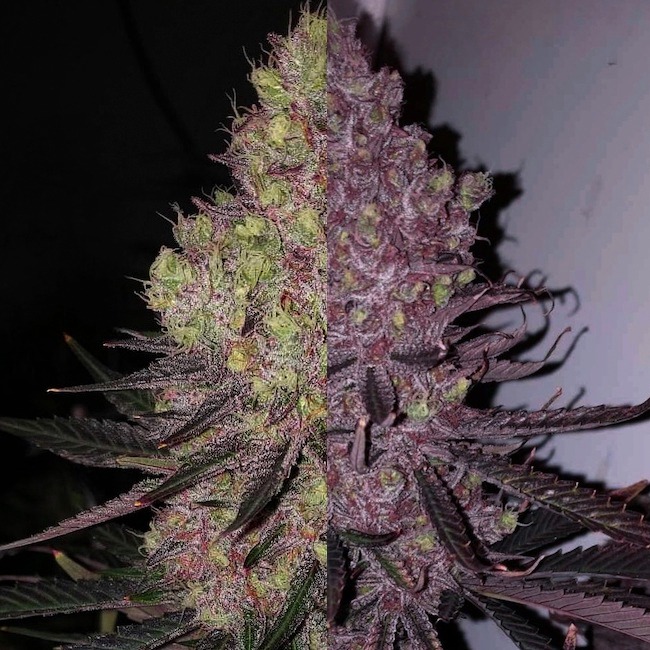
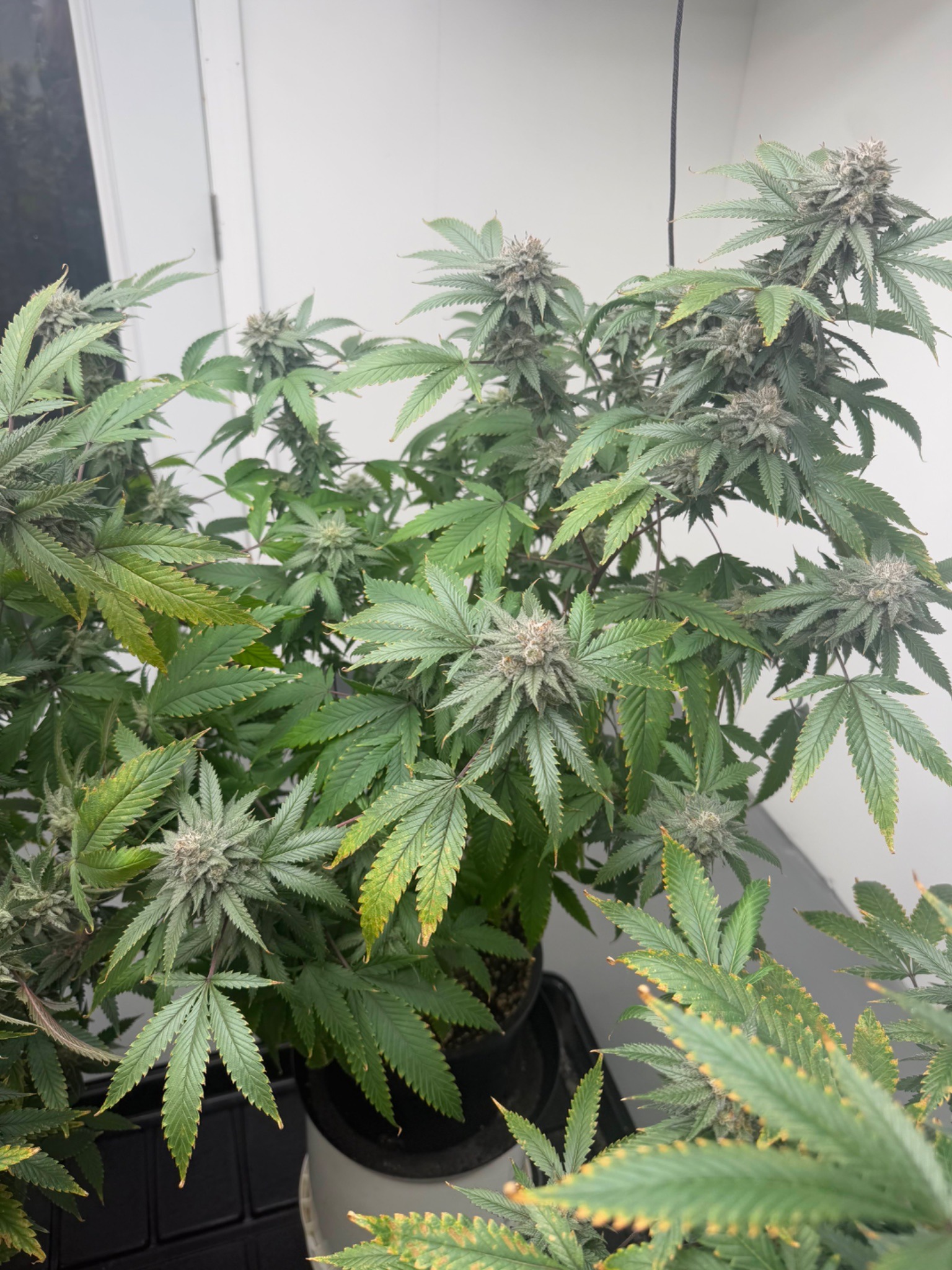
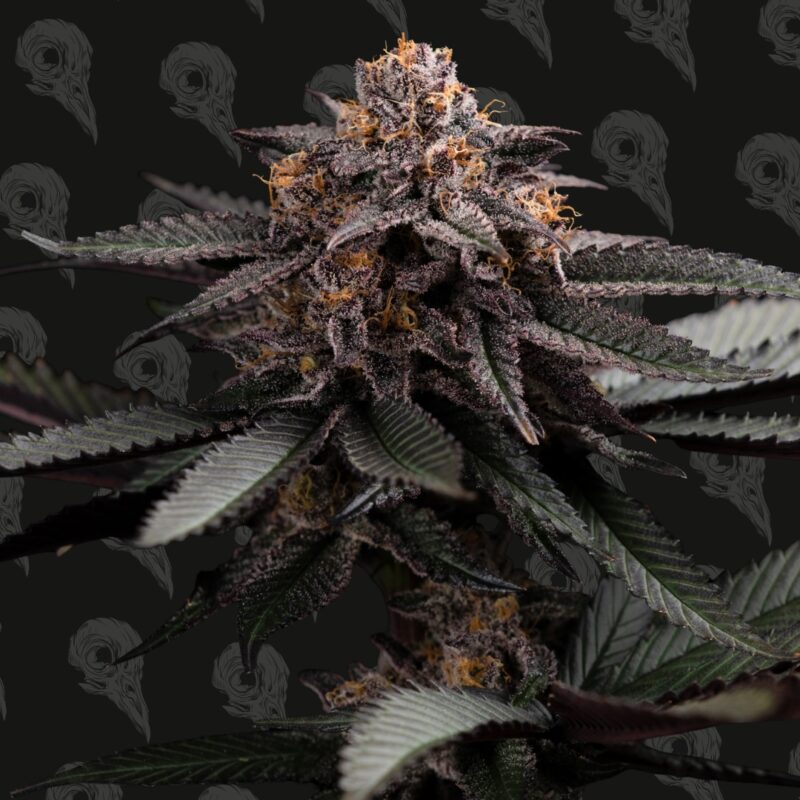
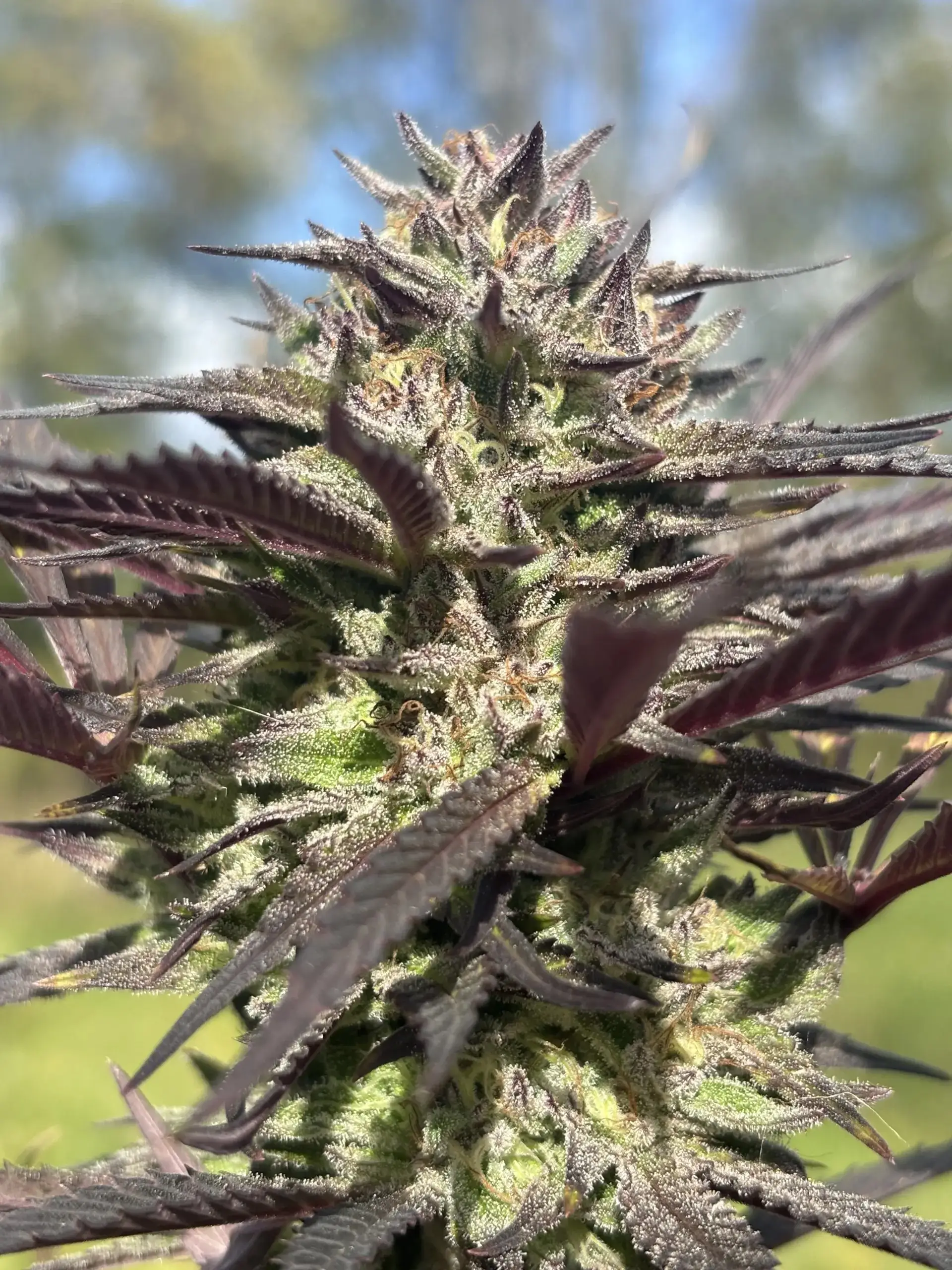
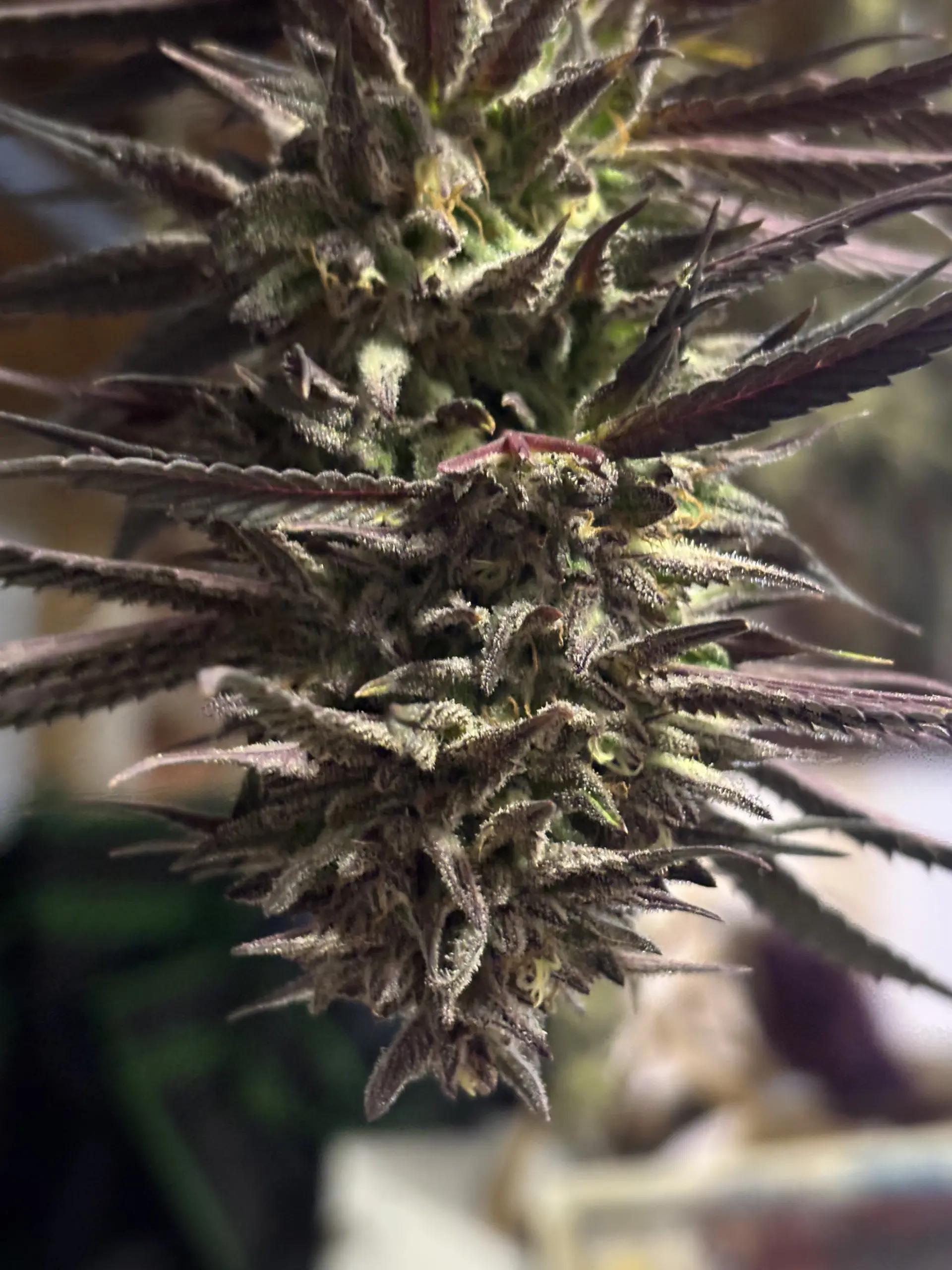
Last year for Motherโ€™s Day, I sat down to write a blog about a plant mother that is near and dear to me personally, and to our NASC/Dirty Bird family: The Brunch. As someone whose career was built upon plant mothers, it seemed fitting on Motherโ€™s Day. The article detailed the filial evolution of this flagship strain that the Dirty Bird Genetics team had created. It was the very first cultivar we bred that really shined, and it really propelled us into this new venture breeding. Looking back now, itโ€™s fascinating to consider how much those first creations (like the Brunch) influenced the genetics to come, much like the generational connections that run through families. The Brunch now sits atop many Dirty Bird Genetics family trees; sheโ€™s a mother, a grandmother, and even a great grandmother to many.  

This Motherโ€™s Day 2026, I want to pick up where I left off one year ago today, filling in another year of progress as we work our way to the end goal of creating a Brunch IBL (In-Bred Line). 


The Brunch F1 

The original Brunch F1โ€“a regular, male/female iteration of the F1 strain still found on our menu todayโ€“will unfortunately never be recreated because we lost the Peanut Butter Breath mother that was used in the original project back in the early 2020โ€™s. It was a mother I had preserved for almost a decade prior, selected from a revered pack of seeds made by Thug Pug Genetics. These seeds were gold back in the day, and this cut was a favorite of many clone customers I worked with. She created incredibly dense, striking flowers with vibrant greens, dark purples, and bold oranges. Her bud was as top shelf as it comesโ€“easy to manicure, high test, colorful and denseโ€“but her morphology left a few things to be desired. While she wasnโ€™t prohibitively tall, she did have very long internodal spacing, and she was definitely a plant that wanted to grow vertically. Her floral sites were spread out across long stems, meaning she wasnโ€™t the best yielder. Her terpenes were self-referential: Nutty and earthy. We knew there was likely more to draw out here.

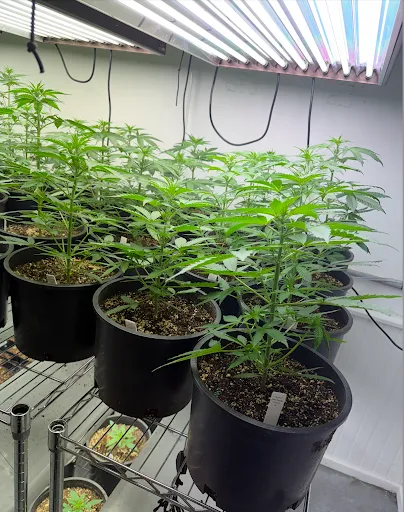
The Peanut Butter Breath cut #3 by Thug Pug used to create the Brunch F1

The Mimosa father, selected from a pack of Mimosa by Symbiotic, had beautiful morphology and strong, tangy terps that came through even on a stem rub of the vegetative male plant. He was vigorous, sturdy, and a well-suited, well-proportioned match to compensate for the Peanut Butter Breathโ€™s shortcomings. 

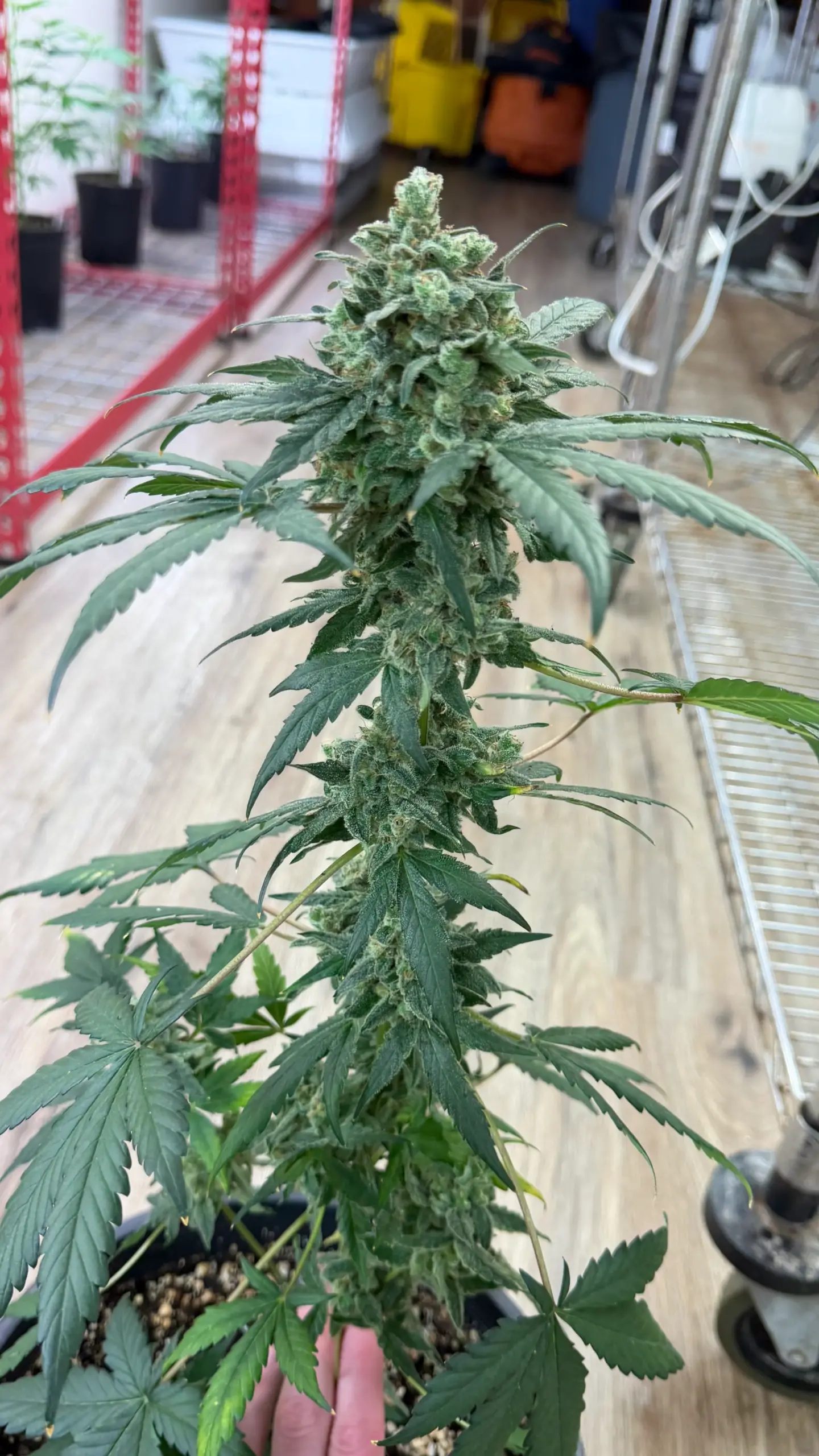
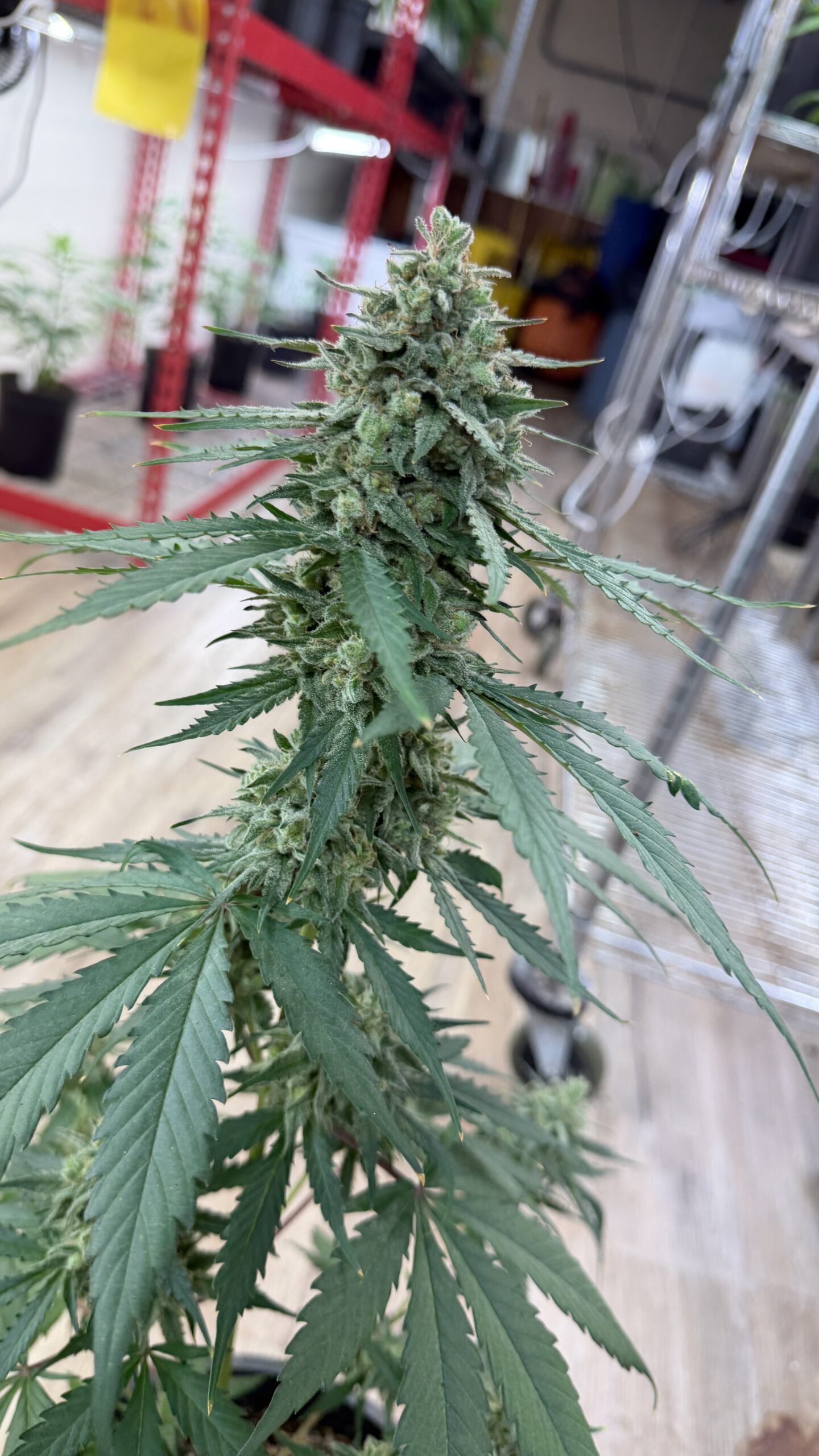
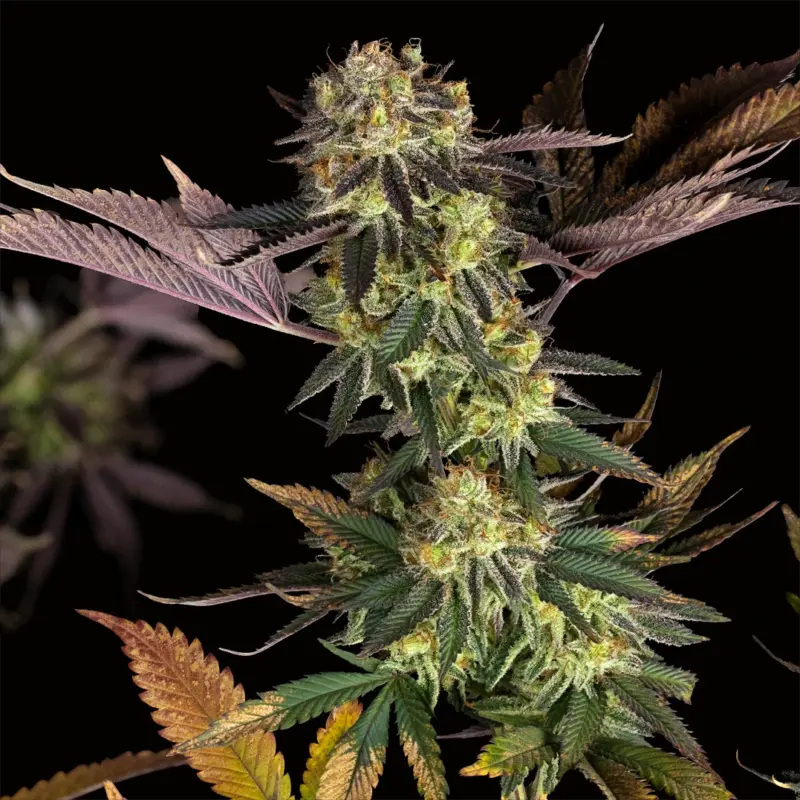
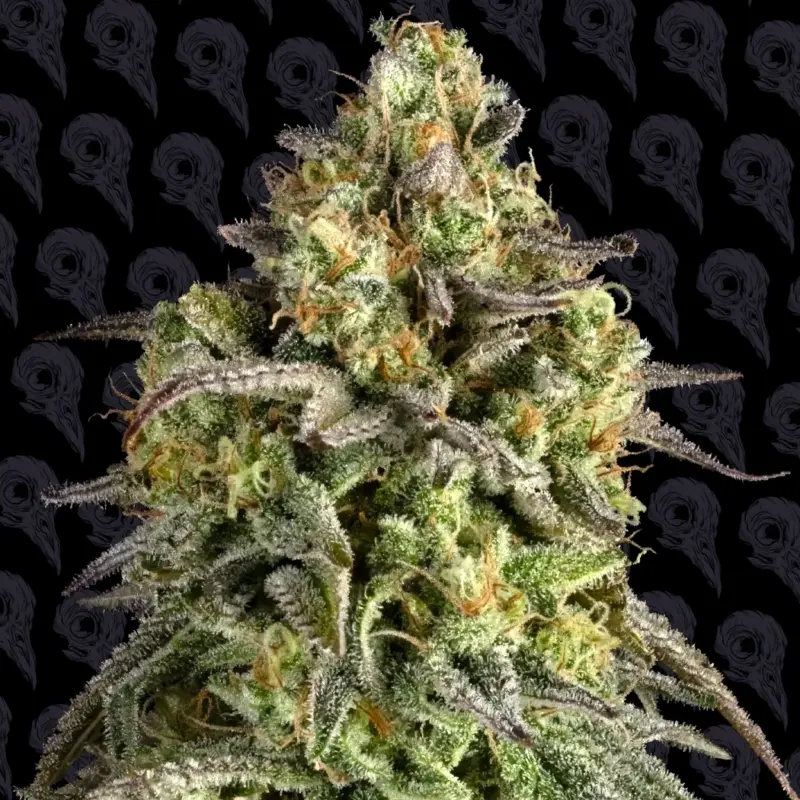
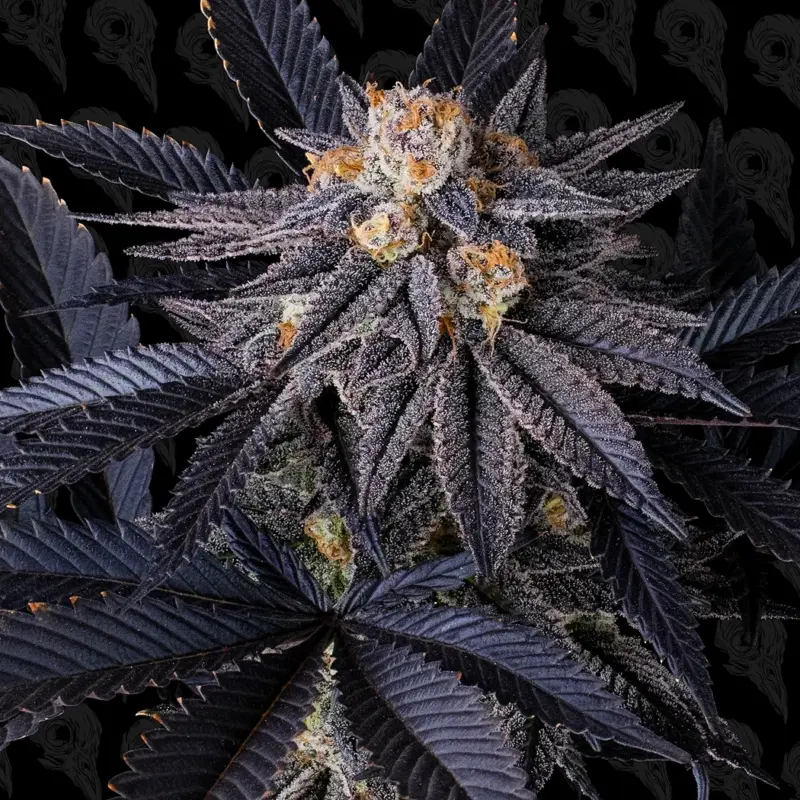
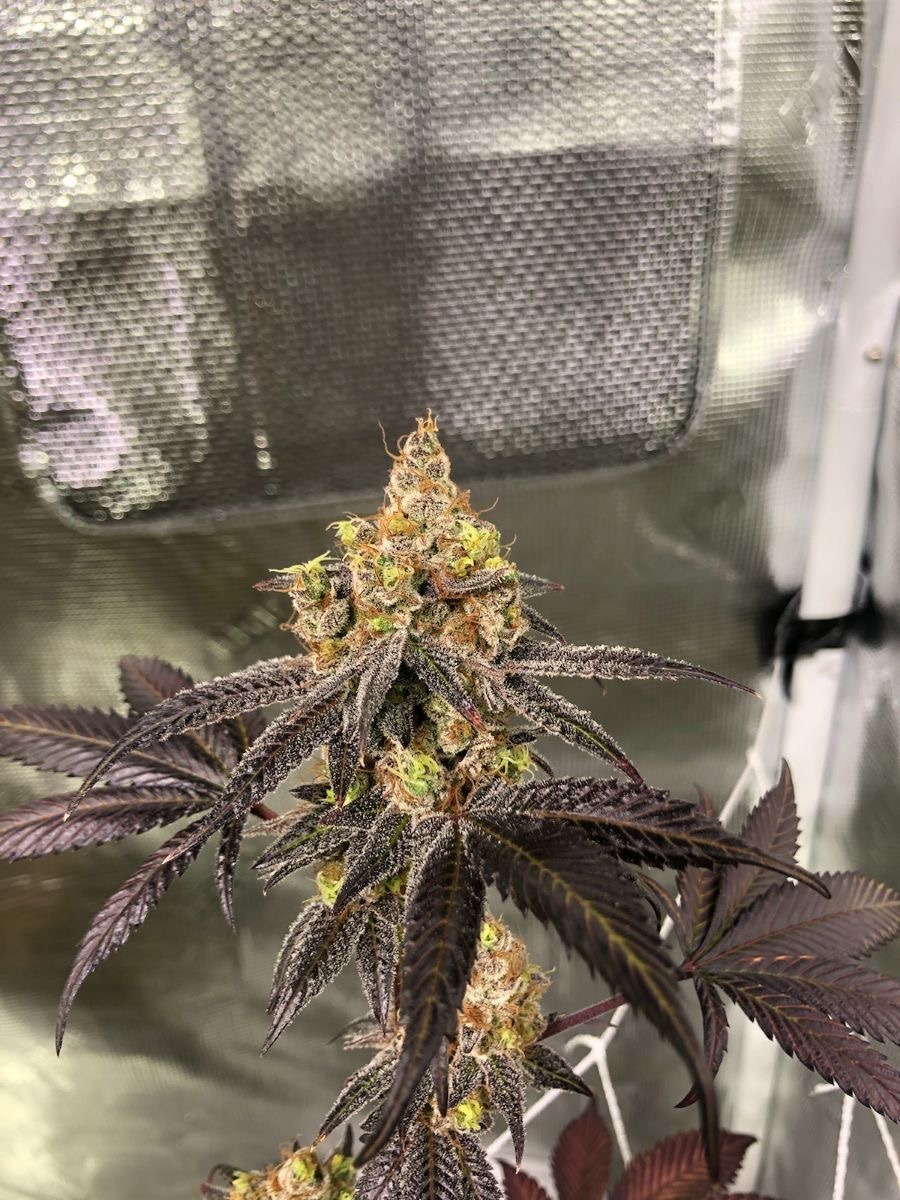
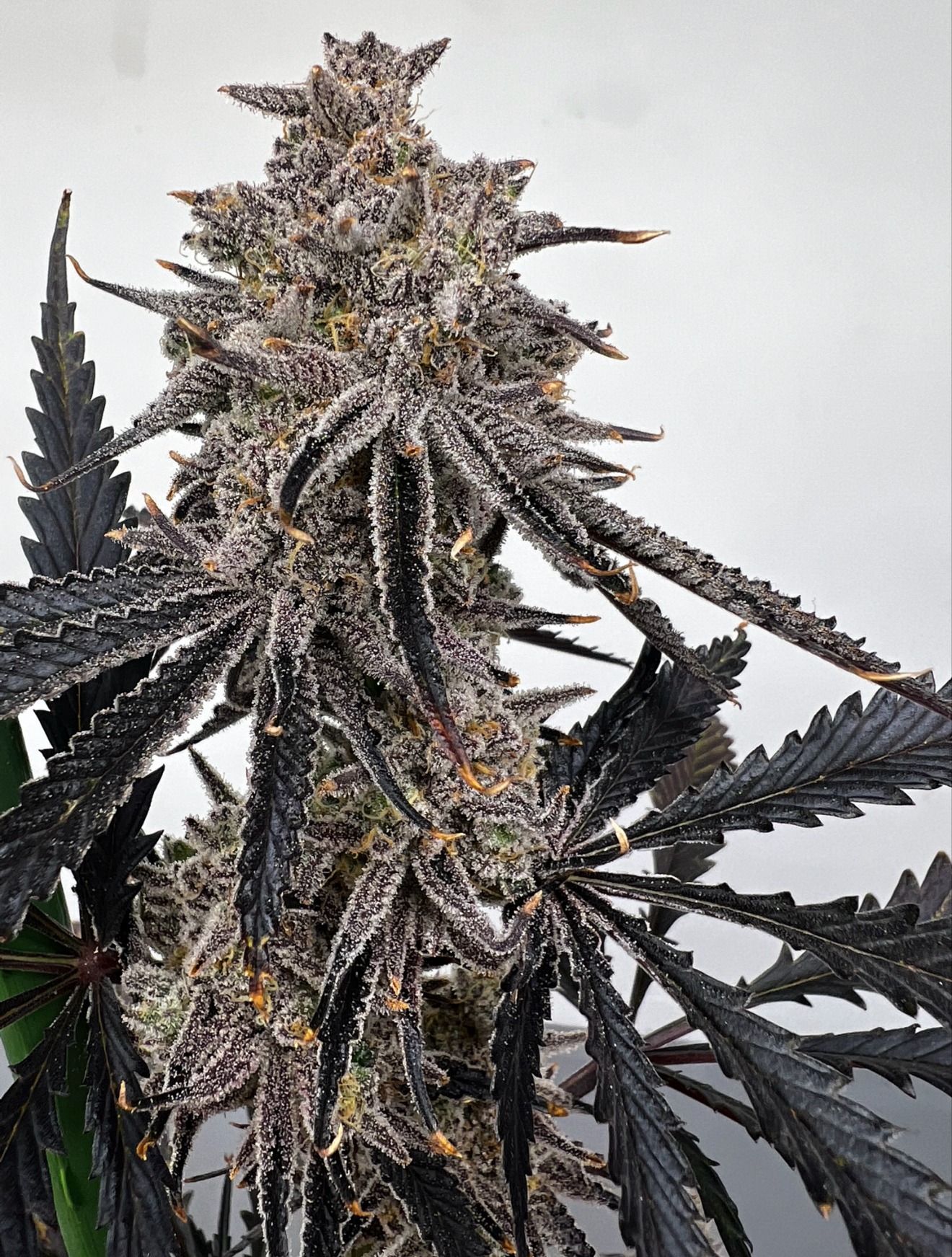
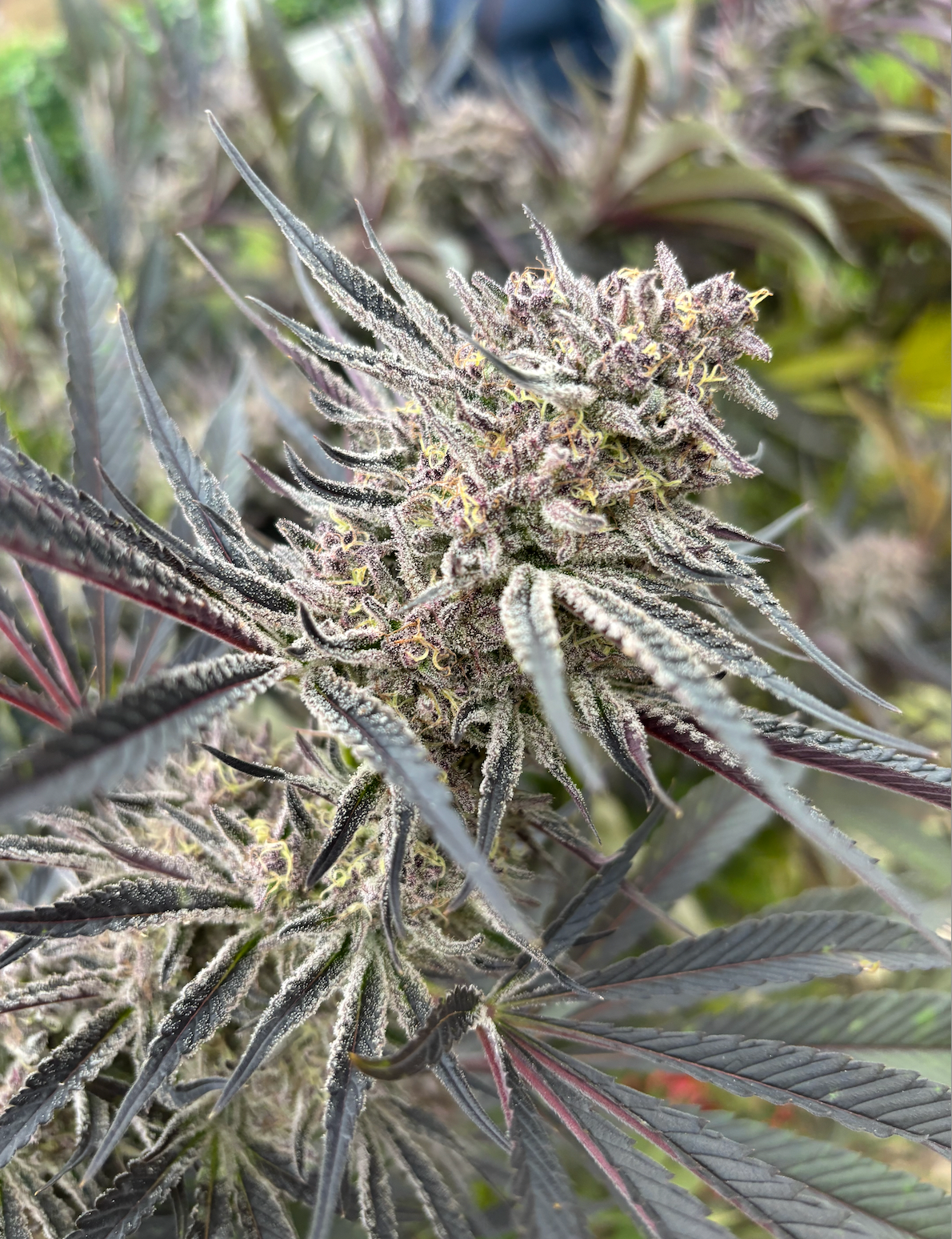
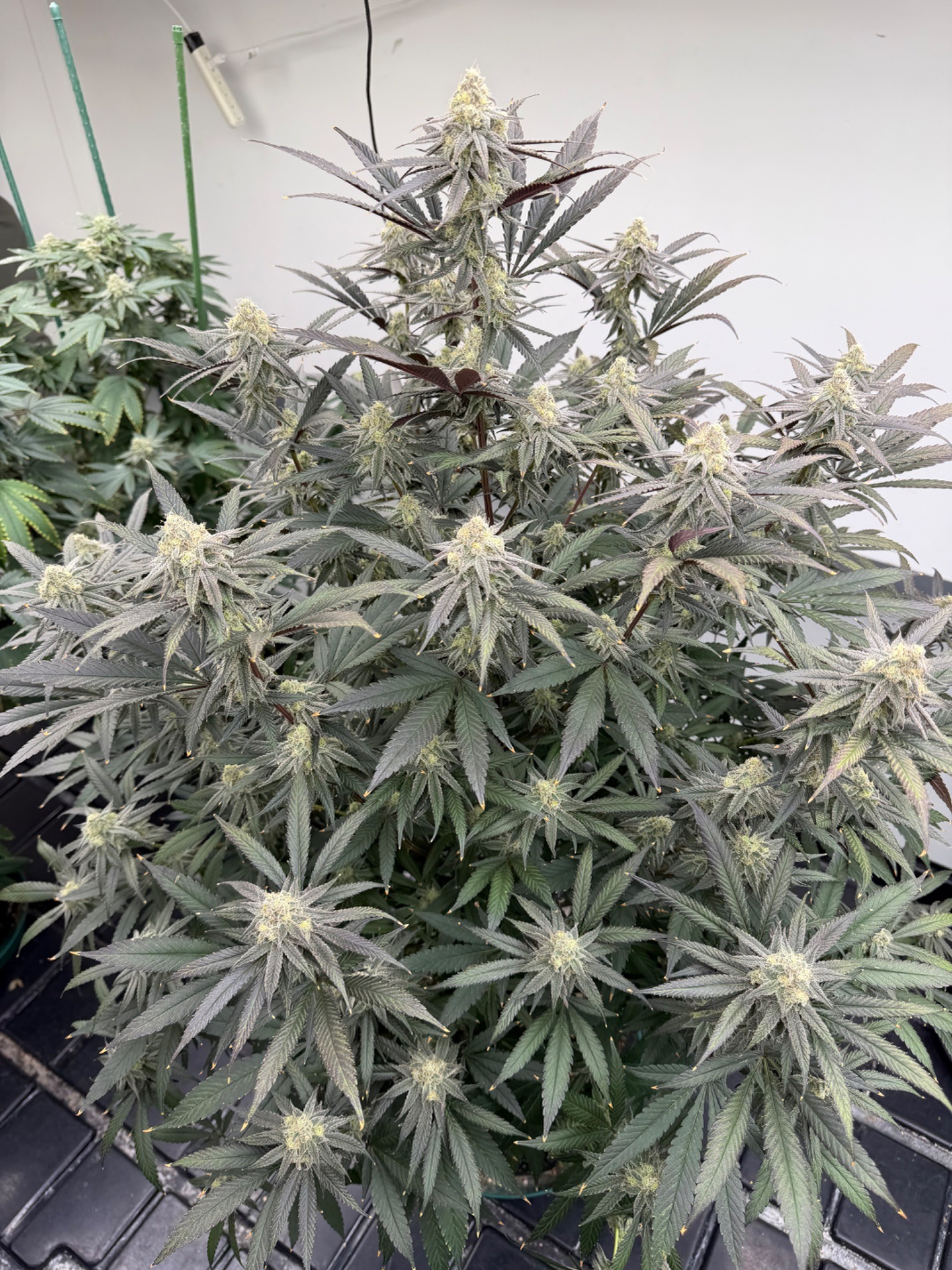
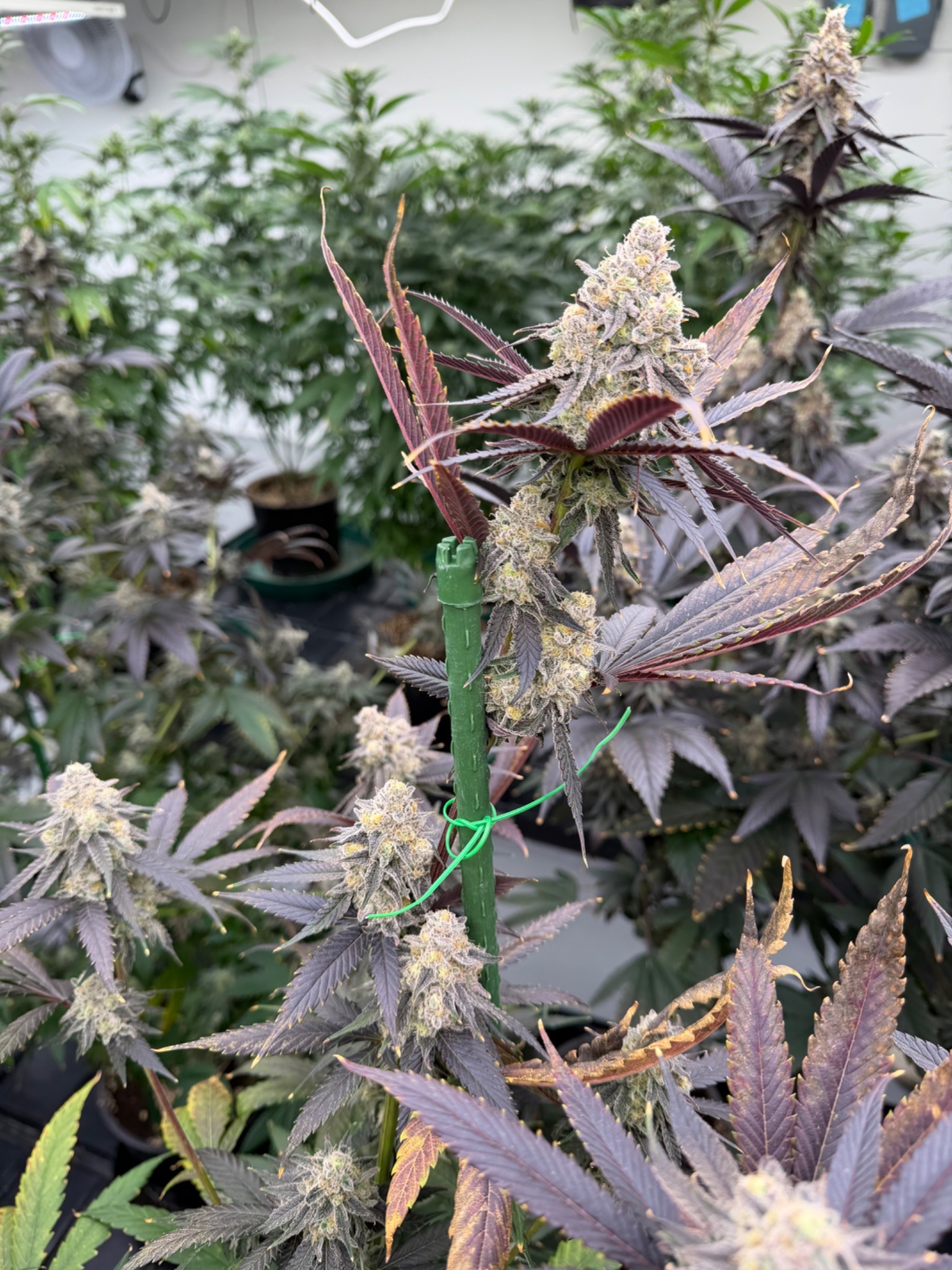
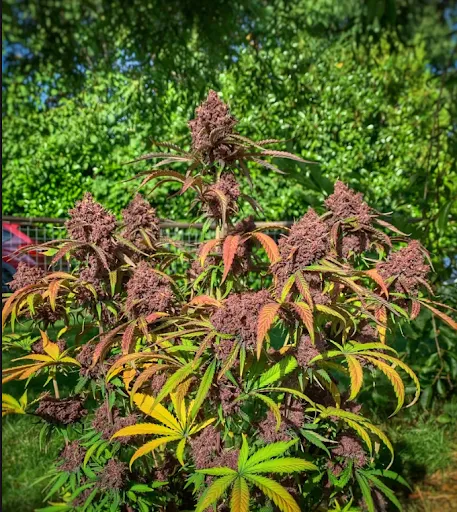
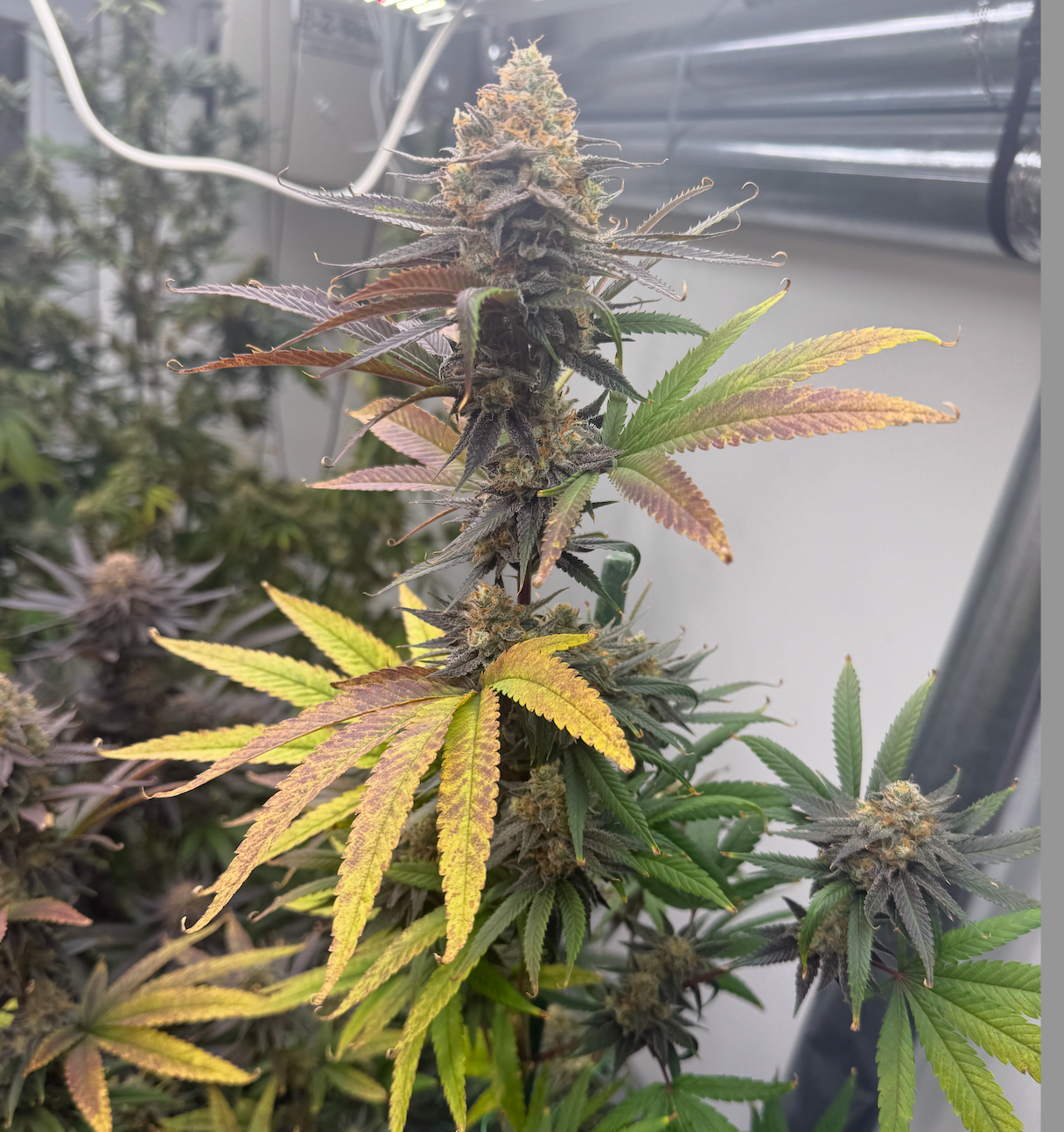
In our first test run of the Brunch (PBB x Mimosa) progeny, we selected two keeper phenotypes: the Brunch F1 #5 and the Brunch F1 #8. They werenโ€™t perfect, but they stood out as special to us for several reasons. They were dripping in trichomes, testing between 25-30% THC / 1-3% CBG, they had insane, dark purple coloring with a gorgeous yellow fade, and to our surprise and delight, a unique apple terpene profile was seeming to emerge. We knew there was still work to doโ€“we needed to bulk her flower up, and we needed to tighten her internodal spacingโ€“but this was now a much stronger palette to work from than what weโ€™d had previously. 

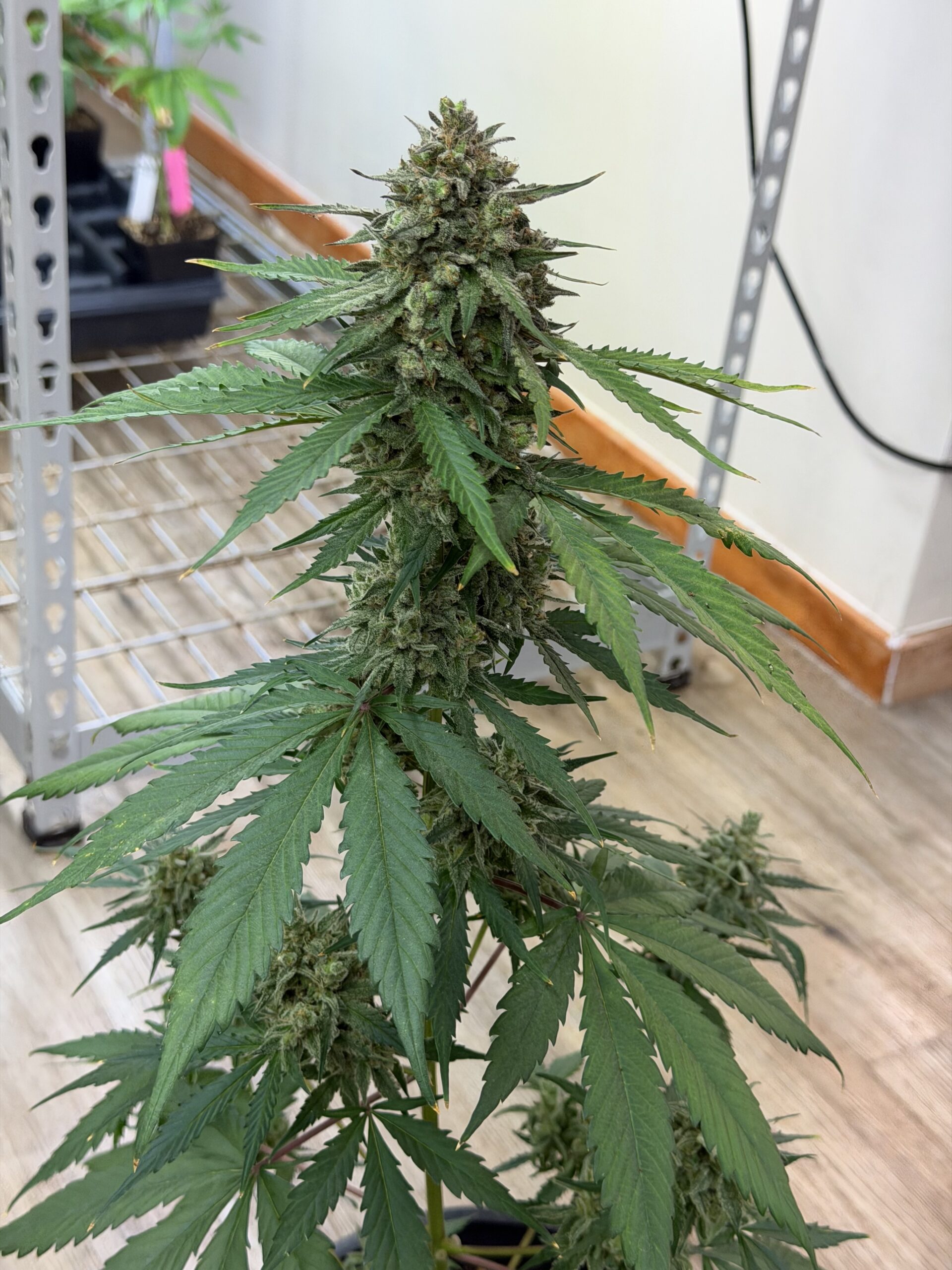
The Brunch F1 #5
The Brunch F1 #8

The Brunch S1 (Feminized Iteration)

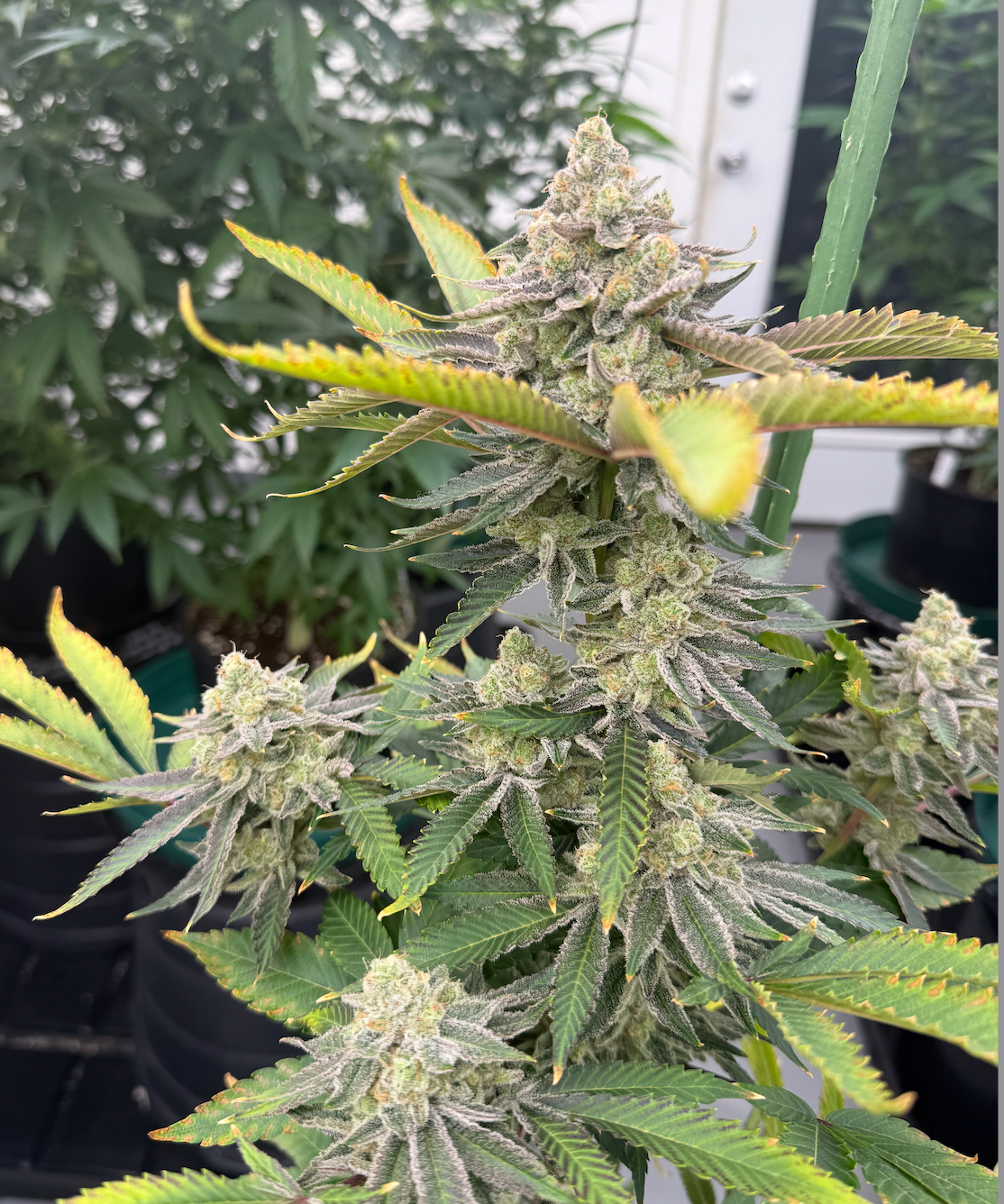
In order to create our first release, we knew itโ€™d be beneficial to feminize our work, and that would also give us the opportunity to take the first step toward locking in some of the features  we loved in the male/female test stock. To do this, we took the Brunch F1 #5 and the Brunch F1 #8 and we crossed them and selfed them across several different breeding projects, testing the progeny of each to determine who was the strongest, and which genetics we would move forward with. When all was said and done, and all of the seed lots were tested, we selected two cuts to mother in order to breed the Brunch lineage further. These cuts were named the Brunch - Dark Horse Cut (#8 x #8 - #3) and the Brunch - Loverโ€™s Cut (#5 x #8 - #5) (aka the Arugula Cut).

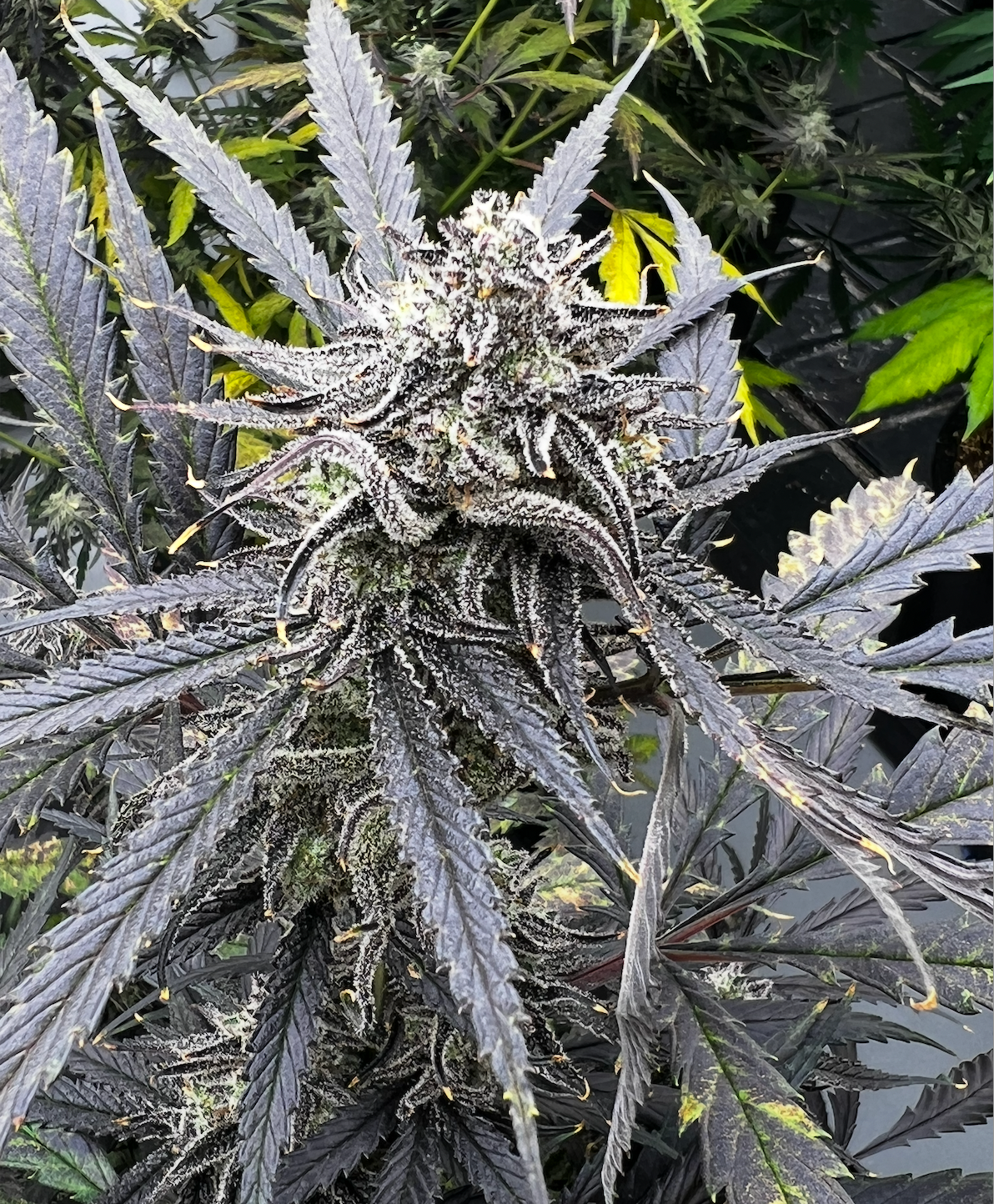
The Brunch 88 #3 - Dark Horse Cut
The Brunch 58 #5 - Loverโ€™s Cutย 
ย ย ย aka โ€œArugula Cutโ€

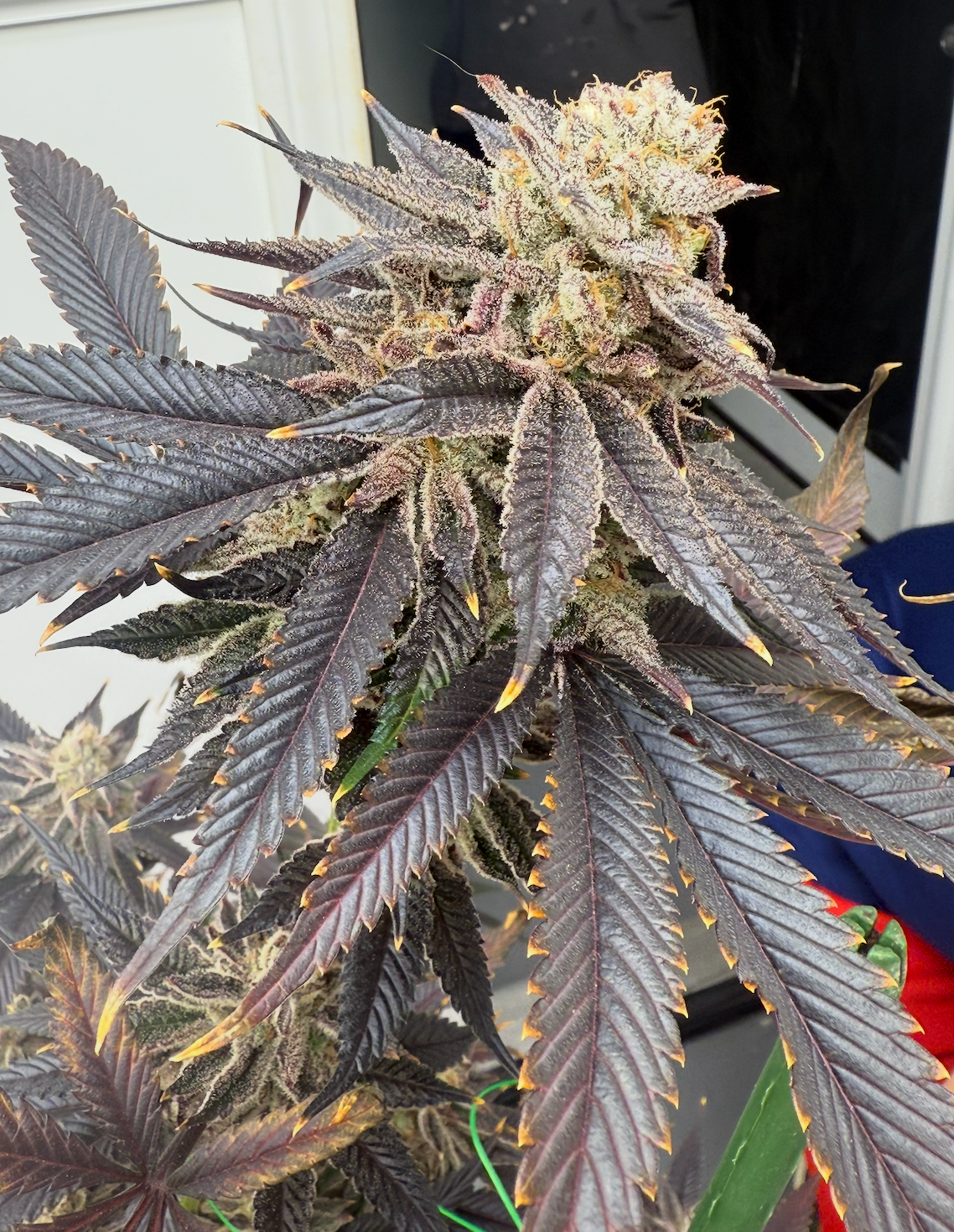
Breeding and feminizing our favorite phenotypes of the Brunch F1 created some drop dead gorgeous feminized Brunch S1 genetics. The coloration had darkened from purple to almost black, and the yield and morphology was beginning to trend in the right direction: Less stretch and more flower. It was very hard to choose our keeper cuts from these seed lots, but we realized that was a good problem to have. It was at that time that we decided that the Brunch S1 would become our first Dirty Bird Genetics - Volume 1 release. Exciting! Youโ€™ll still find these seeds on the Dirty Bird Genetics Volume 1 menu today (although Iโ€™ll warn you guys, when they sell out, they will almost certainly be gone for good). Youโ€™ll also find this s1/f1 iteration of the Brunch in many of our genetic family trees, including staff favorites:ย 

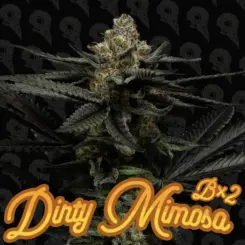
Dirty Mimosa: A Brunch backcross and outdoor champion that clocks in with a lightening fast 43-47 day flowering time

Dirty Mimosa pictured outdoors in a local Maine garden.

Bad Apple: Probably my personal favorite Brunch-related strain, and a cultivar that has only continued to impress me more as weโ€™ve bred with it. The Bad Apple has pungent terpenes that range from rotten Apple to gym sock funk, and our keeper โ€œSugar Millโ€ cut is the single most trichome-laden plant Iโ€™ve grown in my 15 year career. In 2026, this Brunch-child created two of my favorite strains weโ€™ve bred to-date: Apple Peelz and Candy Apple Kush.

Bad Apple - Sugar Mill Cut (Day 42)
Apple Peelz (Day 49)
Candy Apple Kush (Day 44)

The Brunch F2 

We knew early on that the Brunch was a project that we wanted to fully realize the potential of by creating a stabilized Brunch IBL (in-bred line). Now that weโ€™d created and tested several iterations of the Brunch genetics, we were able to formulate a set of goals for the project: 

  1. Preserve Apple Terpene Profile: Itโ€™s unique to the Brunch and we love it.ย 
  2. Morphology: Shorten internodal spacing, select for lateral growth, preserve high calyx-to-leaf ratio, and retain a foliage volume that is ideal for air flow, light penetration, and outdoor cultivation.ย 
  3. Yield: Improve yield by selecting cuts that stack well, have dense flower, and yield respectably.ย 
  4. Flowering Time: Ideally, under 56 days.ย 
  5. Color: Preserve the dark purples and maroons that are signature to the Brunch.ย 
  6. Effect: Retain the social, happy effect that is signature to the Brunch.ย 

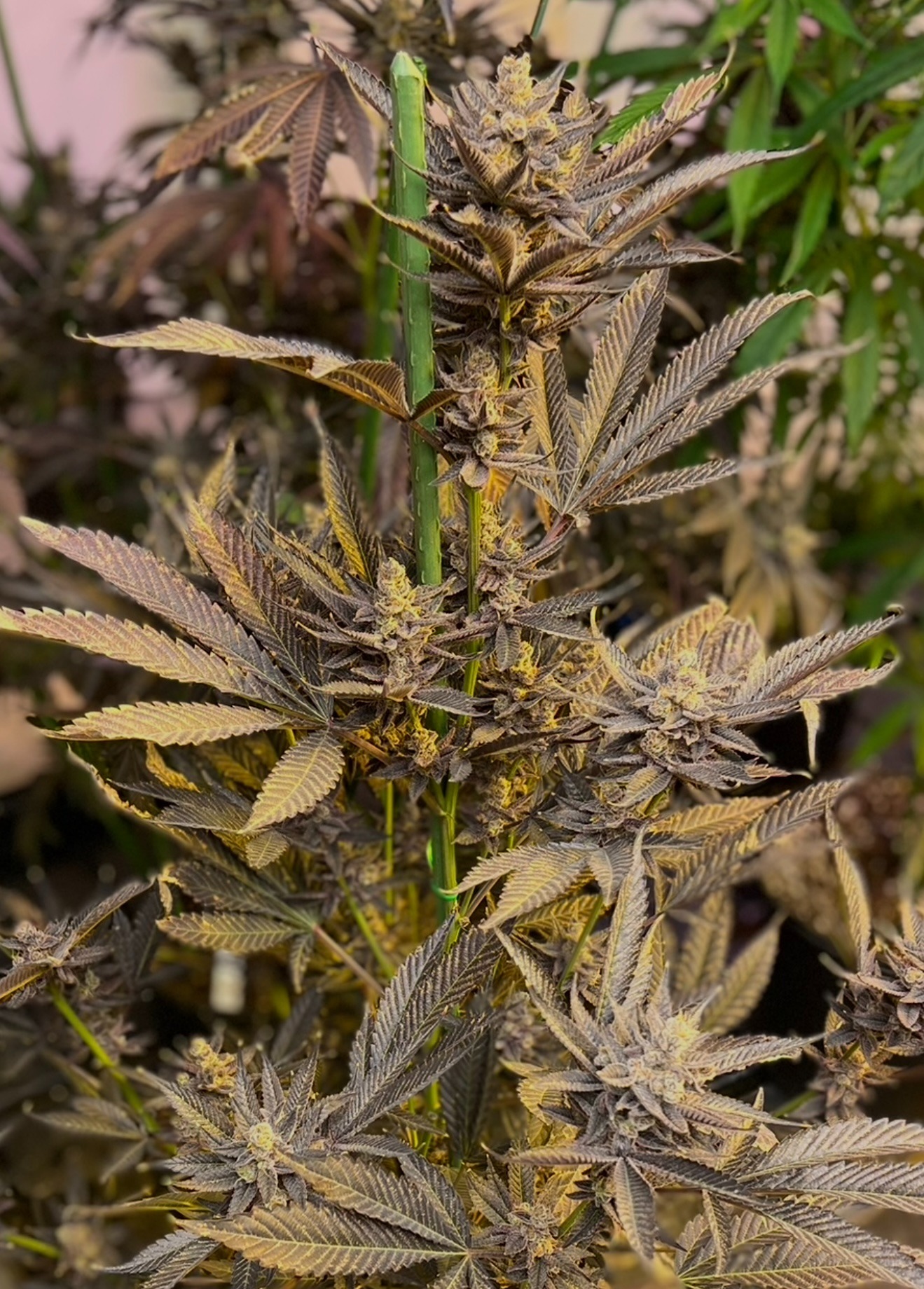
Using the Brunch F1 #5 and a Brunch F1 male that we labeled #12, we made the Brunch F2. In cannabis breeding, the F2 filial generation is known to contain the largest number of phenotypes and the most genetic diversity of any other generation. We found this to be true with the Brunch F2. We saw divergence in color (purple/green), terpenes (apple/earthy meh), and in both flower and plant morphology. Speaking generally though, these plants grew much more laterally than their F1 counterparts thanks to our parental selections. We were also able to eliminate the โ€œscragglyโ€ phenotype that appeared in about 10% of our F1 seed population. These F2 plants had stronger, more bushy structure as a whole, accompanied by a higher volume of foliage, more compact, golf ball shaped flowers, and tighter internodal spacing.

After carefully watching our F2s grow, we whittled our selection down to two winning cuts that we would use for our F3 breed: The Brunch F2 #7 and #13. They each had something we loved, but neither had everything. The #7 had the most incredible, vibrant, apple terpene profile; there was something that smelled distinctly more โ€œappleyโ€ about this plant than any weโ€™d smelled previously, and we were confident this was the direction we wanted to go with the terpene profile. The #7 plant wasnโ€™t perfect though: it stayed vividly green way longer than we would have liked, purpling in the final week of flower, long after weโ€™d written it off as a green pheno. This was something we felt cautious about because color was one of the goals weโ€™d set for the project. The #13, on the other hand, took on a beautiful, deep purple color early in flowerโ€“something we lovedโ€“but it lacked an exciting terpene profile, leaning more towards the subdued, nutty, earthy profile of the Peanutbutter Breath. 

The Brunch F3 

Brunch f3 

V79 have better floral mass . Long intermodal spacing and classic brunch nugs, small leaves  

139 #1 - Apple terps.

**V79 #1 - stacking the most - best floral mass. Striped maroon and purple and yellow leaves. 

V79 _#2 - shorter but similar burgundy and purple and sugar/ apple terps 

V79 #5- Apple gas Peanutbutter - very purple but not a great yield 

Brunch 139

Biggest nugs yet. long and skinny and tie together up the stem 

*3- Apple cheese. Tall. Long stacked buds. Very impressive stacking and yield - double floral mass of what we normally see, and very high calyx to leaf ratio 

4- more arugula look. Apple smell.

When it came time to make our Brunch F3 seeds, we had a choice to make: We had to decide whether to breed our F2 #9 male with the wonderfully appley #7, or the spectacularly purple #13. This choice proved to be an impossible one, so we decided we would take the more intensive path and breed in both directions. Over the course of the next year, two Brunch F3 seed lots were created: The Brunch F3 v79 (made with our #9 male and our purple F2 #7 cut) and the Brunch F3 v139 (made with our #9 male the wonderfully appley F2 #13 mom). 

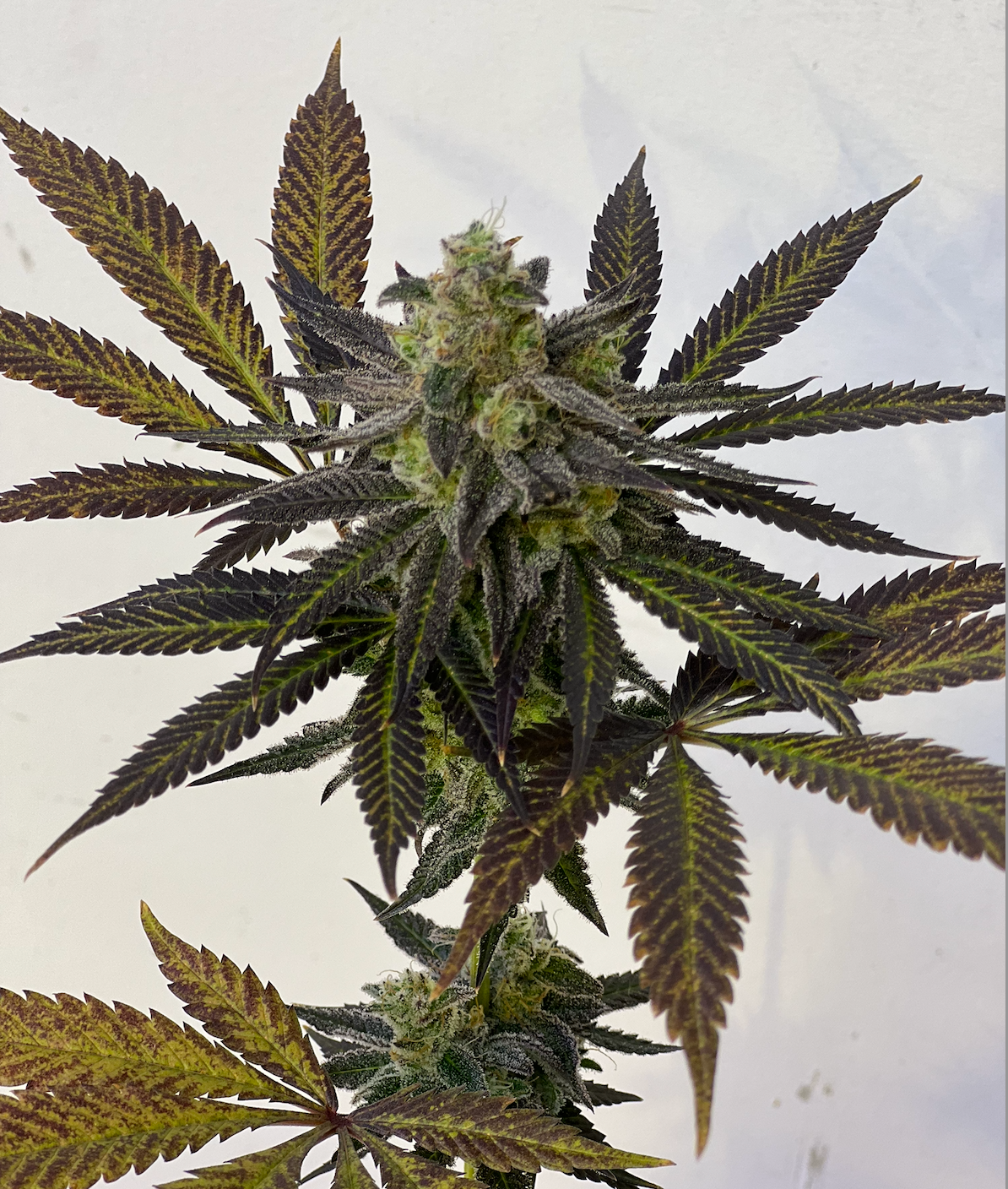
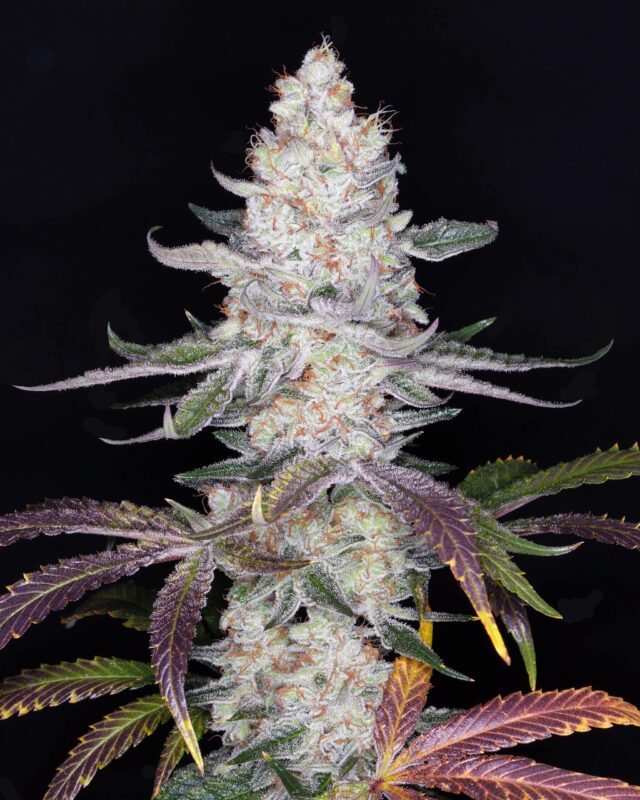
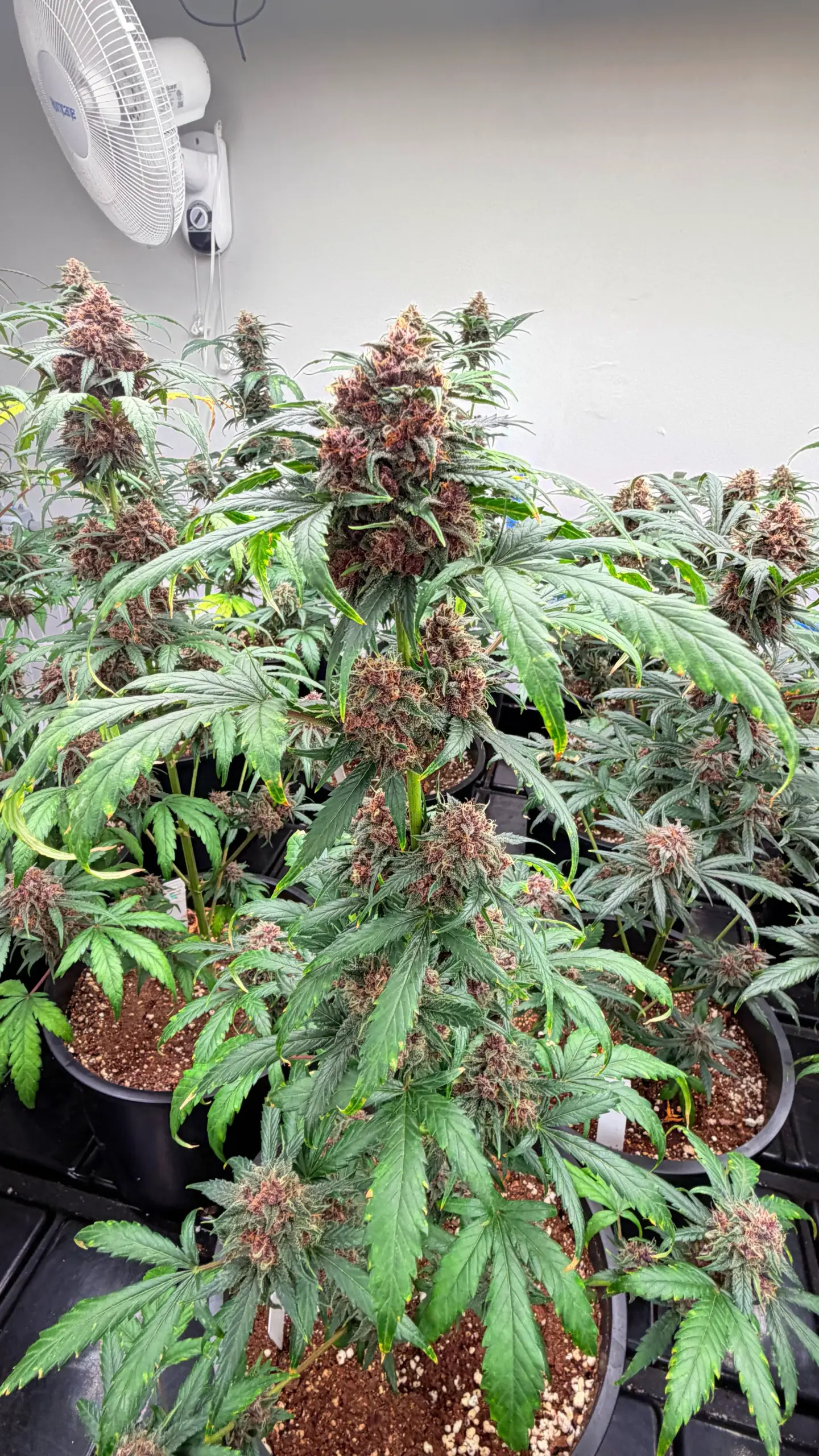
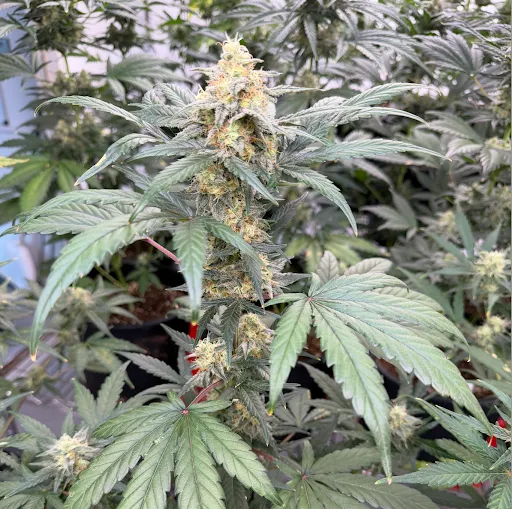
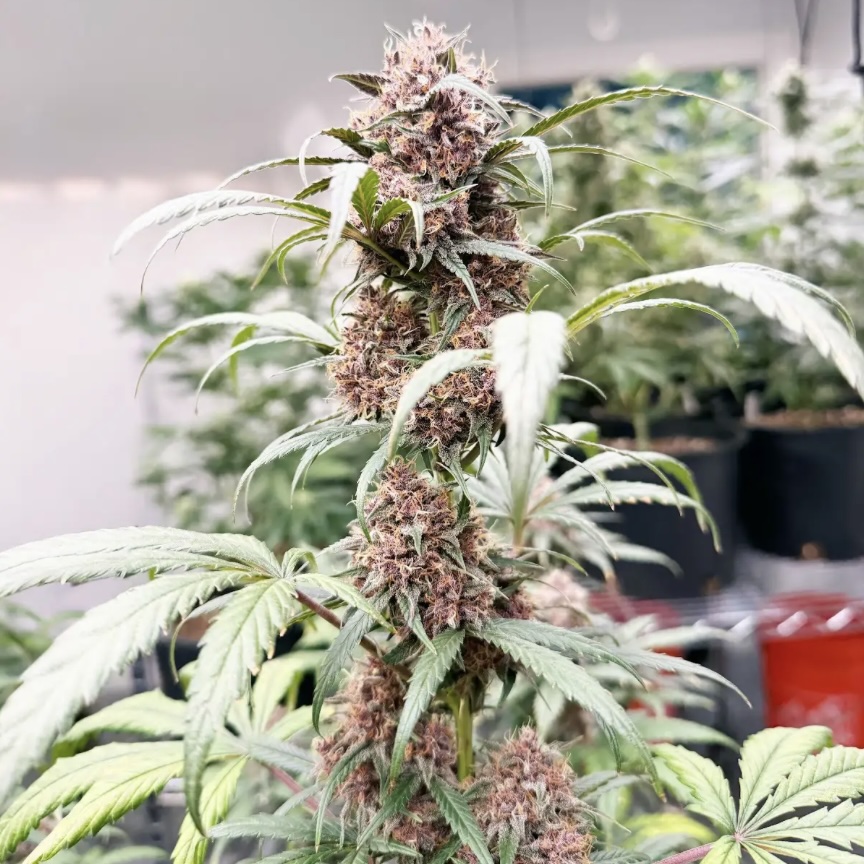
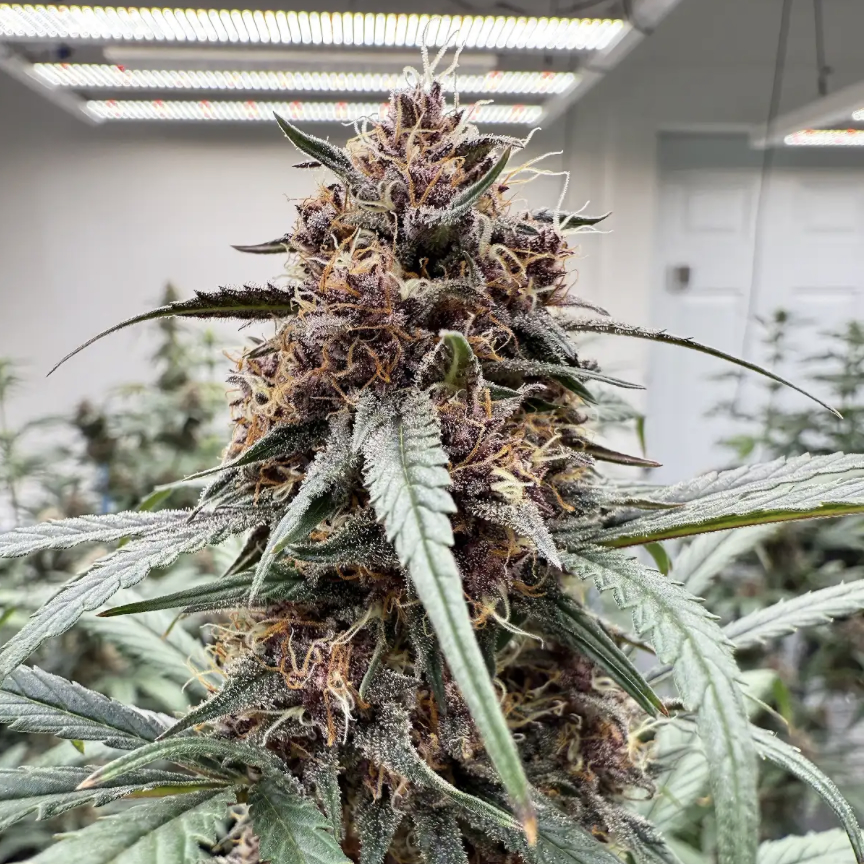
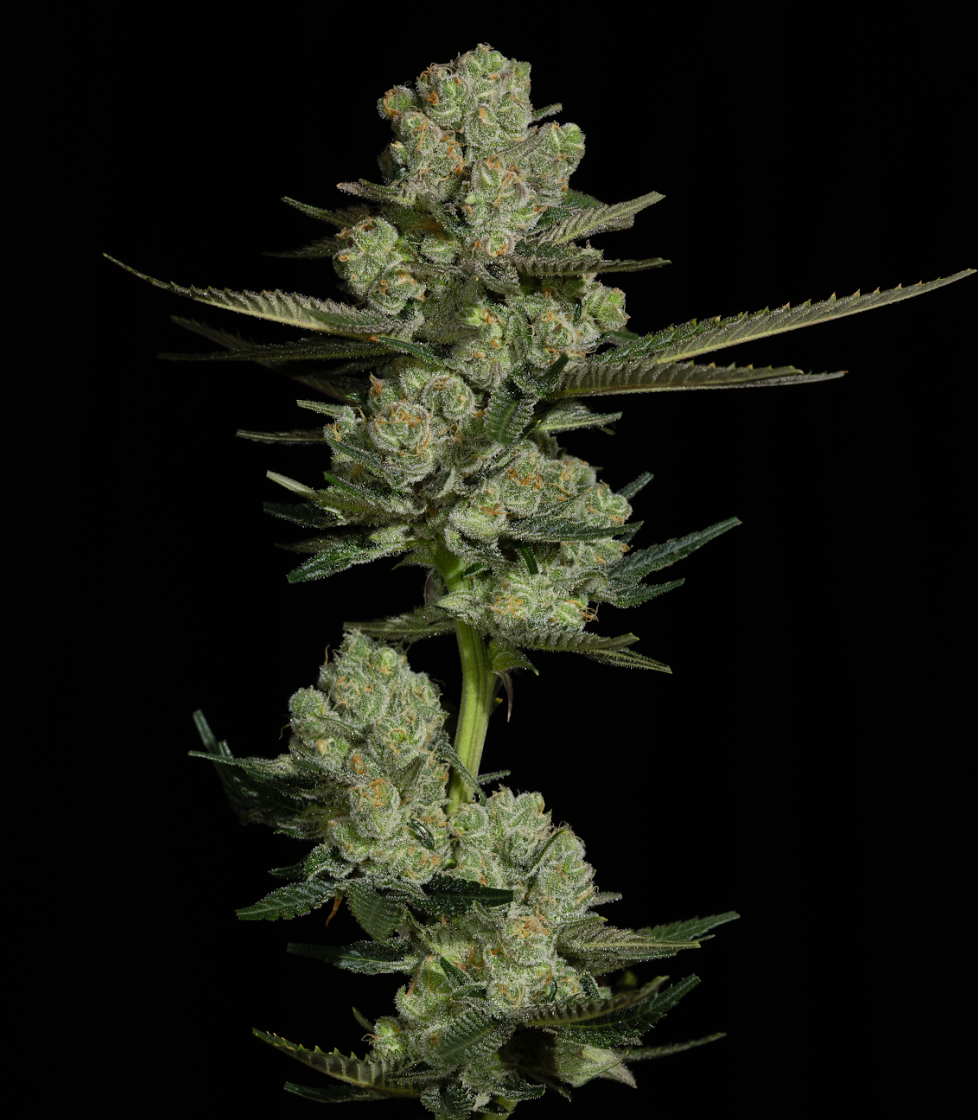
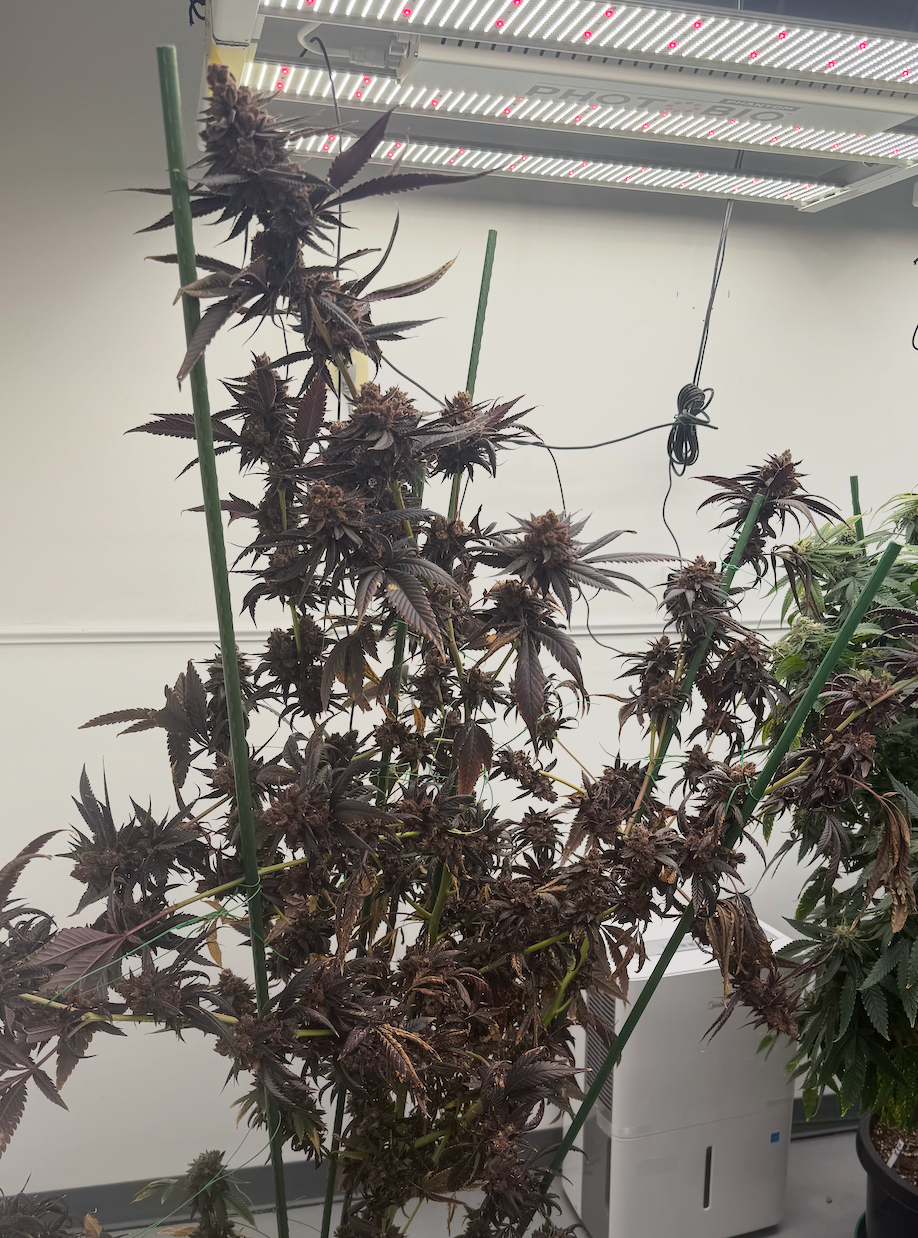
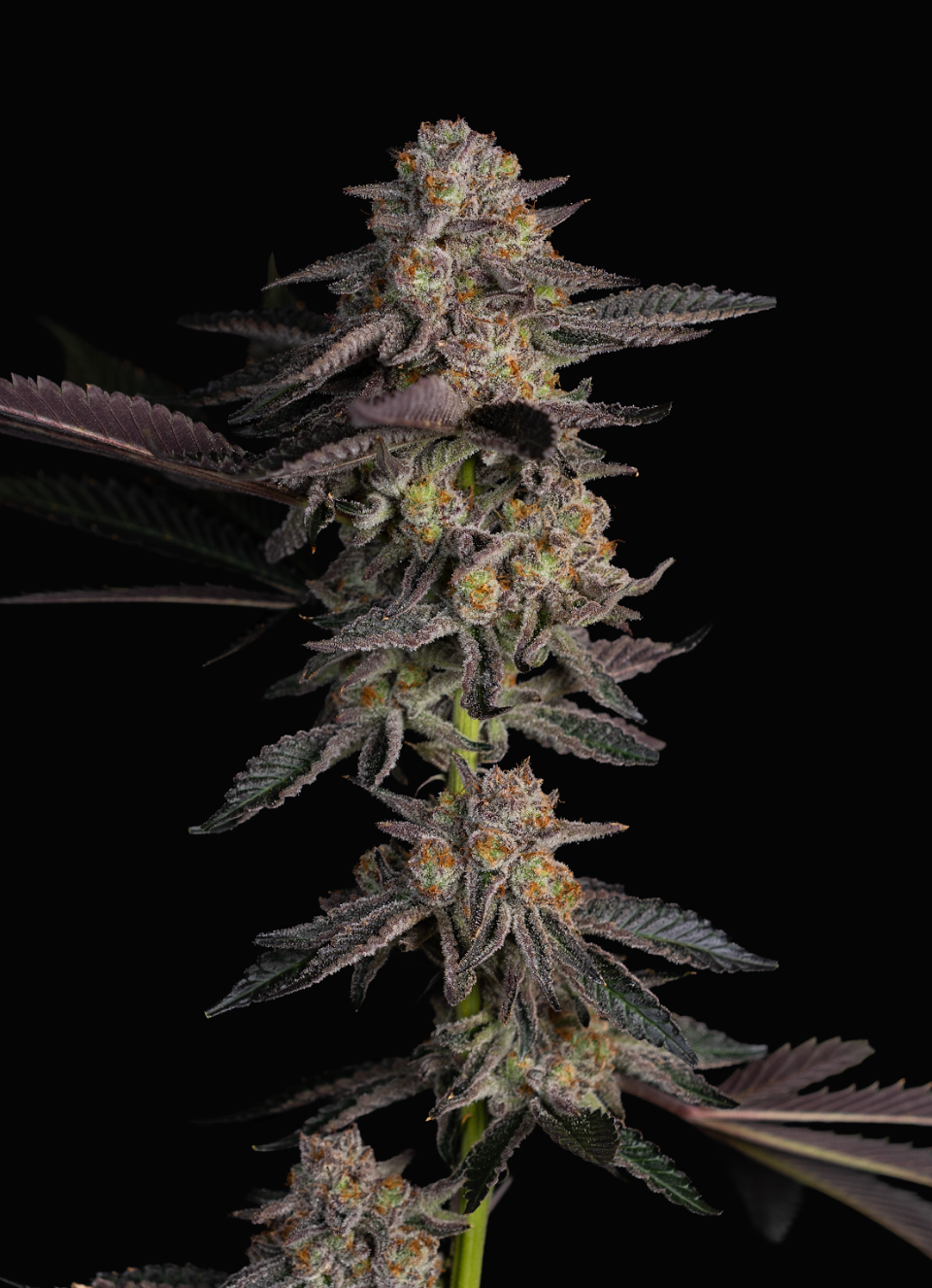
In testing these two Brunch F3 lines weโ€™d created, we saw the genetics take the most marked strides forward to-date. Most notably, the plants were stacking better than ever before, yields were improving, colors were popping (though continuing to diverge a bit between green, maroon and purple), and we were really starting to hone in on a consistent terpene profile.  While the apple terpenes were predictably more dominant in the v79 seed population, we ultimately chose a cut from the v139 population to move the line forward to F4 (see pictured below). The Brunch F3 v139 #3 boasted the biggest colas weโ€™d seen in a Brunch to-date. They were long, dense, and they tied together beautifully up the central stalk creating a long, beautiful arm of purple, funky, apple Brunch. The #3 cut had close to double the floral mass of any Brunch weโ€™d seen before. It had an incredibly high calyx-to-leaf ratio, purple flowers, and its terpene profile was pungent and unmistakably apple. It checked all of the boxes, so the choice was a remarkably straight forward one.

Brunch F3 v139 #3
Brunch F3 v139 #3


The Brunch F4

In early 2026, we were able to test the Brunch F4s that we had made using only the F3 v139 #3 cut. This was the first time we had chosen to advance the Brunch line through a process called selfing (crossing a plant with itself through reversal). The v139 mother cut had so much to offer, and we were curious to see how this choice would evolve the line, so we created and tested our first population of feminized F4 seeds. 

It has only been a month since we harvested our Brunch F4 test plants, and the project is still fresh in my mind. The F4s were easily the most exciting yet. The diversity we saw in the F4 generation was markedly different from what weโ€™d seen previously. To use an analogy, imagine crossing a black lab with a poodle. The Brunch F2 + F3s were what Iโ€™ll call Bloodles; they were mutts. Their traits were messy and indistinguishable, resembling their parents in some ways while also blending together to form strange iterations of curly, black-and-white Bloodle soup. We saw countless combinations of traitsโ€“some that we liked and some that we didnโ€™tโ€“all unpredictably smooshed together. The F4 population was different. The traits we were selecting for were finally segregated in an easily observable way. Phenotypes were so much more identifiable. To circle back to our genius analogy: The Golden Doodle was born, alongside pups that looked remarkably black lab, and pups that looked remarkably Poodle. 

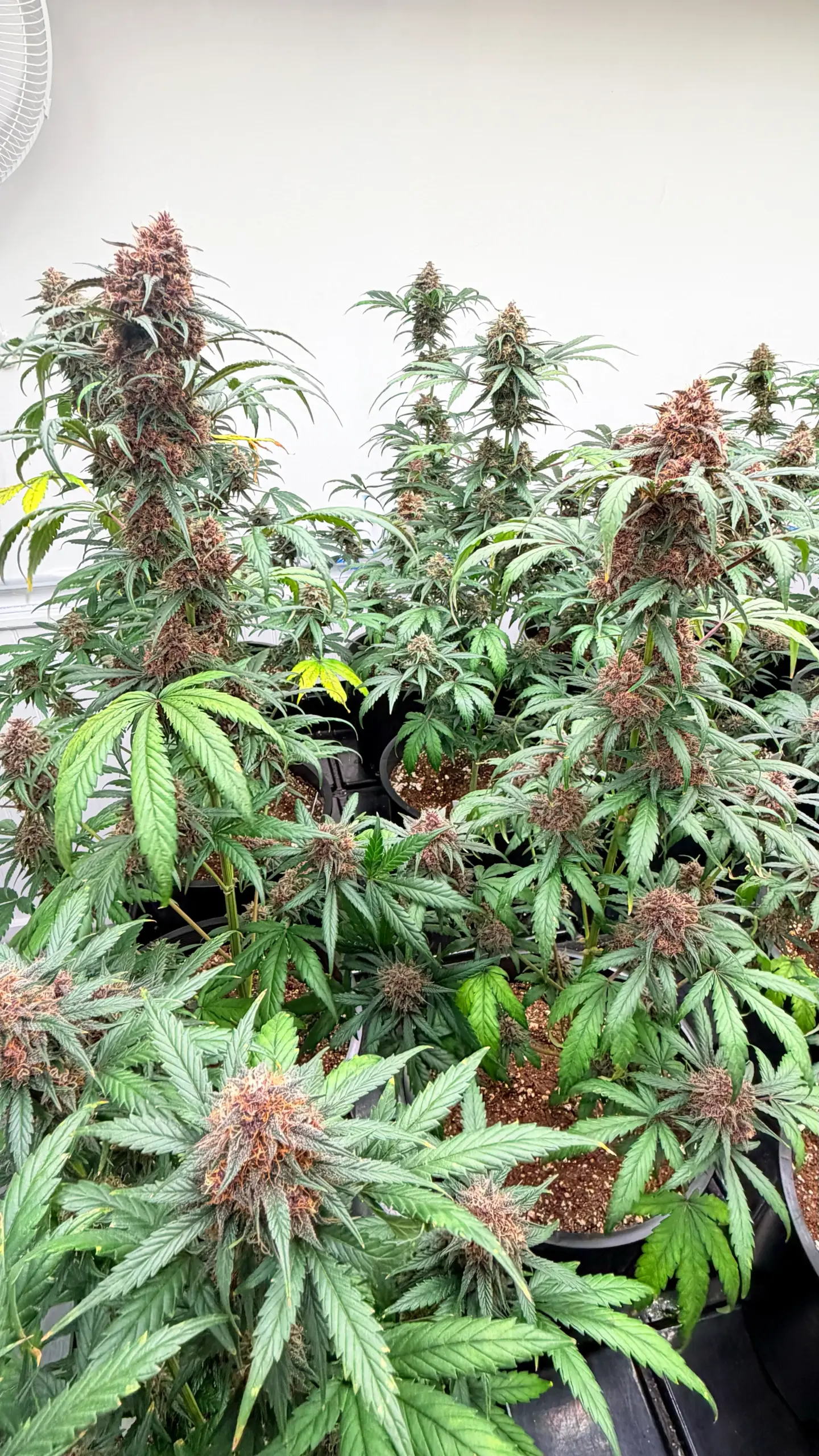
While we did observe a little bit of inbreeding depression in our F4sโ€“which is to be expectedโ€“overall the plants had several consistent qualities: They had an extremely short 50-day flowering time, a remarkably high calyx-to-leaf ratio, very compact, long, conical flowers, medium internodal spacing, 1.5x stretch, ideal foliage volume for air flow and light penetration, high trichome density, balanced vertical and lateral growth, and overall they were healthy, self-supporting, easy-to-grow plants. 

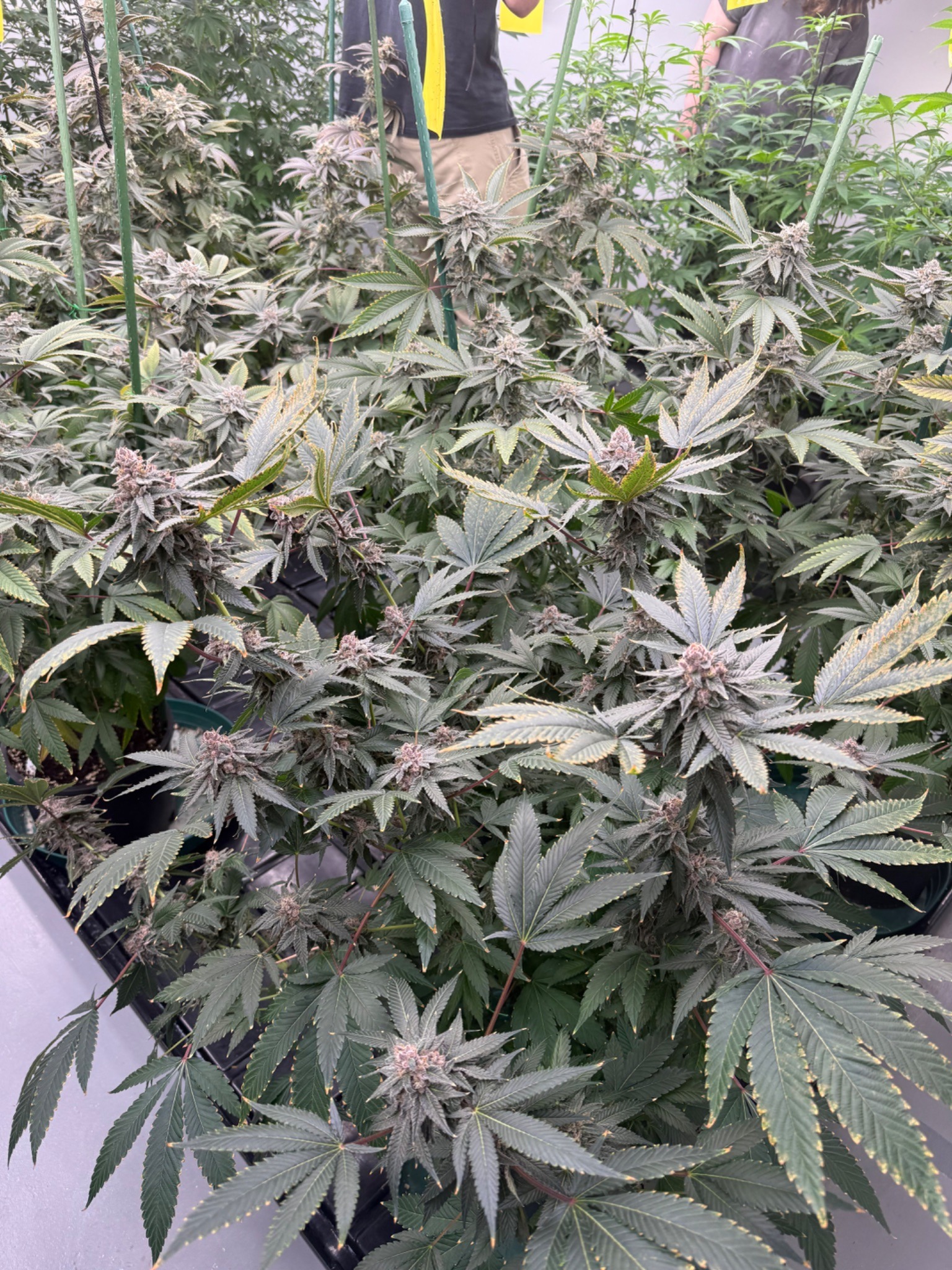
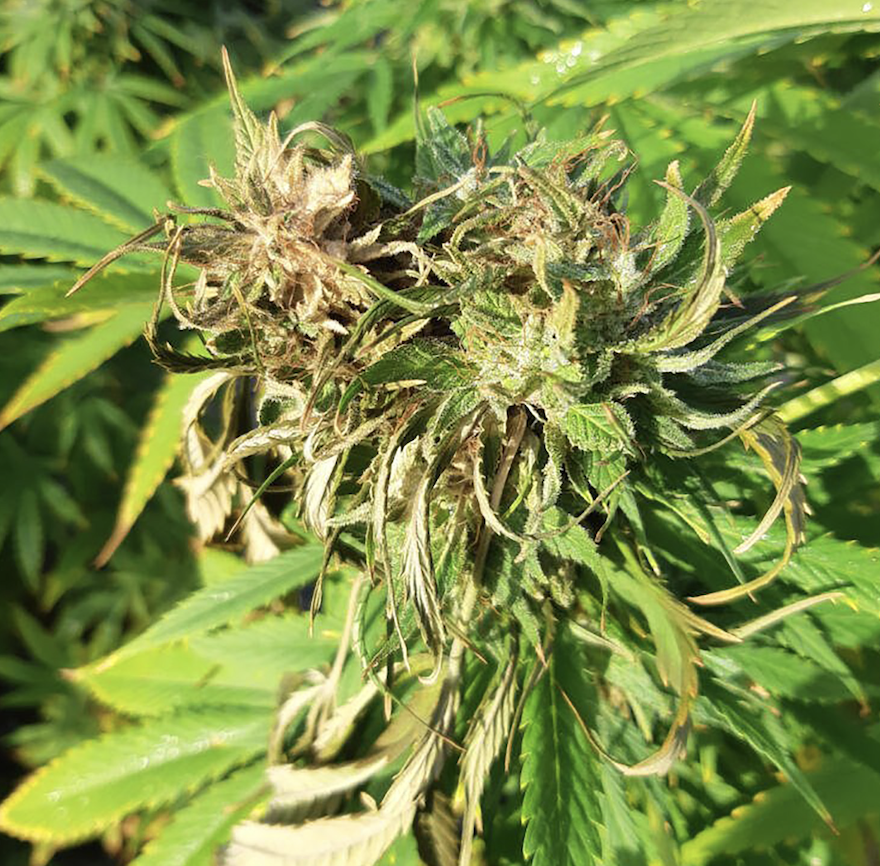
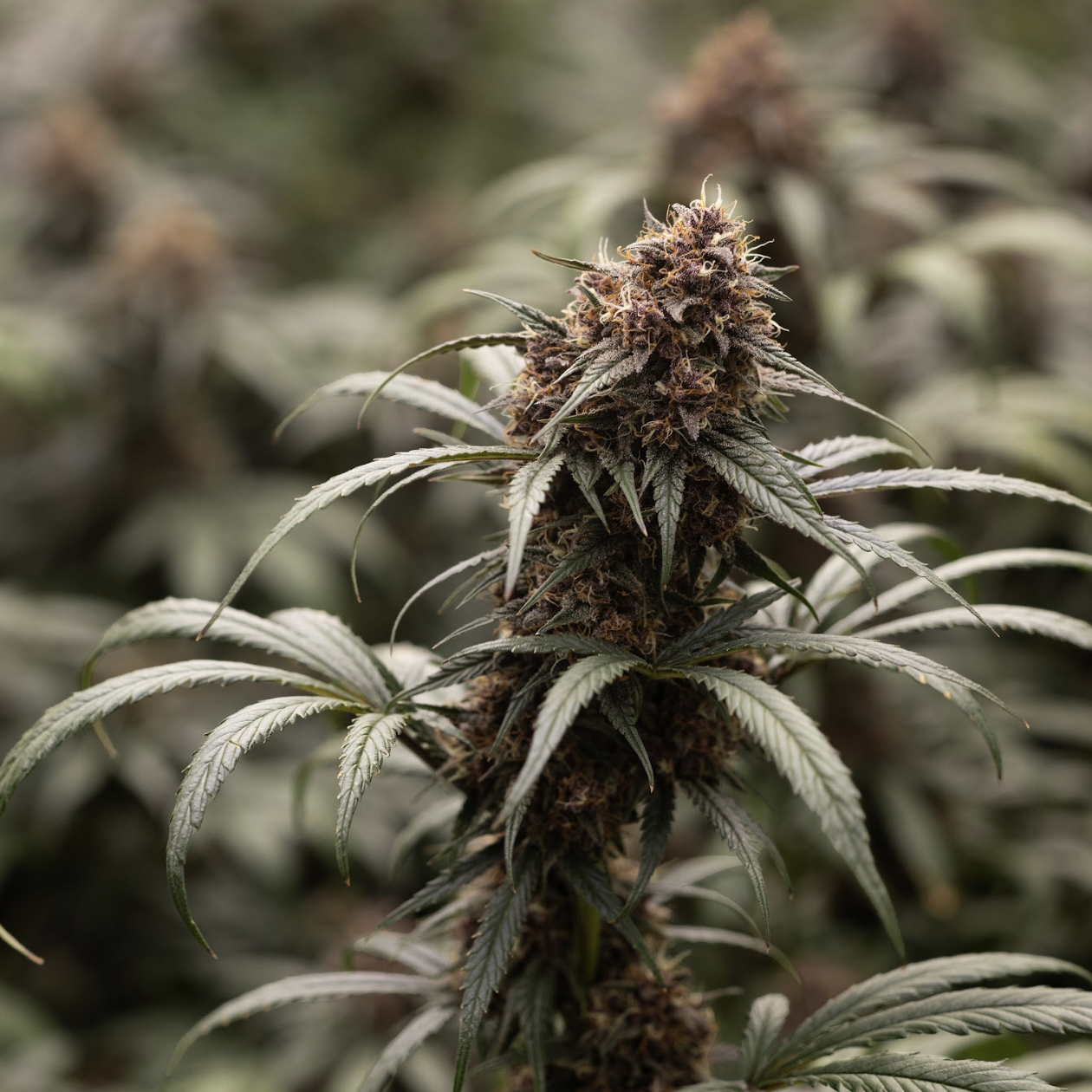
One of the most interesting things about the Brunch F4 was that we finally saw a purely green phenotype emerge in 20% of the population. The 80% majority were purple: 50% solid, dark purple in both foliage and flower, and 30% predominantly purple with a little green fade. The terpenes were consistently apple-dominantโ€“exactly what we wantedโ€“and we were so excited to find that the apple smells were only deepening further, evolving into more of a complex, warm-yet-tart apple pie. For the first time, we did note some sour gas smells coming through on a slim minority of plants, with one plant exhibiting sour gas only; no apple. 

The biggest obstacle weโ€™ve faced in choosing our winning cut(s) of the Brunch F4s has been deciding what to do with the visual feast that is the green phenotype. Weโ€™d been very intentionally selecting for purple coloring from the outset of this multi-year project, and yet these green plants were hard to turn away from. 

Thank you so much for reading about the journey weโ€™ve gone on to create the Brunch, one of our most beloved plant-mothers. Iโ€™d like to wish all the mothers out there a very Happy Motherโ€™s Day. Know that you are seen, loved, and celebrated every day! 

-Bethย 


HAPPY GROWING!

Two-Spotted Spider Mites Guide

by Ben Morris, Head Breeder of Dirty Bird Genetics

Introduction:

There is a plethora of pests that plague our gardens, green houses, and grow spaces but few can compete with the rapidity and malignancy of the two-spotted spider mite (Tetranychus urticae). Two-spotted spider mites are small, herbivorous arachnids that feed on plant sap and chlorophyll by puncturing the underside of leaves with their tiny, piercing mouth parts called โ€˜cheliceraeโ€™.1  This feeding mechanism causes damage to the leaf which hinders the overall photosynthetic ability of the infested plant. These pests can reproduce rapidly and, if left untreated, can quickly lead to the deterioration, and ultimately, the death of an infected plant. The damage caused by two-spotted spider mites can lead to lower flower yields, seed abortion, and improper seed fill. This is a huge detriment for flower producers as well as for breeders and seed producers. These voracious little creatures are tiny (between 1/80th and 1/50th of an inch)2 and can be very difficult to detect before moderate to heavy infestation occurs. In the following sections, we will go through some of the visual signs growers can use to determine if they have a spider mite infestation and what approximate level that infestation is likely at (low, moderate, high).

Identification/Plant Signs:

As previously stated, two-spotted spider mites (TSM) are very small. Fully grown adult spider mites will appear as whitish to grayish-green specks with eight tiny legs and two dark spots on either side of their body. They are easy to mistake for small pieces of dirt of other, non-living debris but if you watch them long enough you will see them scurry about. They are largely found on the abaxial (underside) surface of leaves where they take advantage of any nooks and crannies they can find to hide and feed in. Having a hand magnifying glass or a jewelerโ€™s loupe will make identifying these pests much easier than trying to observe them with your naked eye. 

Early into infestation there are few signs of the two-spotted spider mite, the main indicator being the observation of the mites themselves. One can inspect a plant or clone they are obtaining using a jewelerโ€™s loupe, or other hand magnification tool, to check under the leaves and on the stems for small whitish, gray/green bodies that often exhibit two large dark spots on both sides of the idiosoma3 (the main part of the body).  One single female TSM can cause an infestation due to their rapid reproduction cycle and their ability to reproduce asexually. Thoroughly inspecting any incoming plants to your grow space is paramount in detecting pest issues. If there is a spider mite, or if there are multiple, inhabiting the plantโ€™s aerial parts without any signs of insect feeding damage on the leaf and without webbing present, the plant is in the early stages of infestation. 

As they feed, they pierce and damage leaf cells which ultimately leads to the desiccation and the eventual death of the cells they feed upon. This can eventually lead to the death of the entire leaf which obviously harms the plant. A sign of their feeding includes tiny, lightly colored dots that are observable on the adaxial surface (upper side) of leaves. These dots can appear whitish, yellow, or silver and give the leaf a mottled appearance. These damaged leaves can take on a yellow/gray or even bronze appearance as the damage spreads. If you see small, dotted patterns (also known as stippling) occurring on your leaves, check the underside of those leaves for the small, oval bodies of two-spotted spider mites.4
If the spider mites are left alone, they will continue to work their way up the plant, leaving visual indications via stippling/mottling on more leaves higher and higher into the canopy of the plant. Lower leaves, or leaves first infested, will begin to turn yellow and may start falling off. Eventually, when they reach a certain population size they will begin to make webs. These webs look just like spider webs and help the mites to protect themselves from predators as well as act as highways between plants for easier access to new feeding grounds.

Two-spotted spider mites focus on feeding and reproduction before they focus on making webs.5 This is good to know as it can help a grower determine what level of infestation they are dealing with. Below is a rough guide to determining the level of infestation and what action may be necessary. This rating scale was adapted from the work of Bruce Potter and Ken Ostlie6 (University of Minnestoa

No Infestation: No spider mites nor plant injury observed.

Low Infestation: Minor stippling or mottling on lower leaves, no premature leaf yellowing observed

Low-Moderate Infestation: Stippling or mottling common on lower leaves; some premature yellowing observed

Moderate Infestation: Heavy stippling/mottling on lower leaves progressing into middle canopy; leaf yellowing and leaf loss observed; mites observed in middle and top canopy

Moderate-High Infestation: Lower leaf yellowing very apparent and leaf loss common; stippling/mottling, webbing, and mites common in middle canopy; mites and minor stippling/mottling in upper canopy

High Infestation: Lower leaf loss common and yellowing into middle canopy; stippling/mottling and distortion of upper leaves common; mites in upper canopy; webbing in upper canopy

Treatment:

The damage caused to leaves by two-spotted spider mites is not reversible2 so prevention, early detection, and treatment are of the utmost importance in ensuring your cropโ€™s health and productive capacity.

There are many options available for treating spider mite infestations that largely reside within three categories: Physical, Chemical, and Biological.

Physical Controls:

Earlier into infestation a grower can use a hose or other means of spraying water with adequate pressure on the undersides of the leaves of their plant to physically knock the spider mites off of the undersides of the leaves. This method is not appropriate to use if mold is an issue in your grow space but can work for some growers in initially removing the mites. The drawback to this approach, besides a potential in increased mold presence, would be that mites not killed by being sprayed off could climb back up the plant and re-infest.

Some growers have had success in wiping their leaves down physically with a cloth and a small amount of insecticidal soap or oil. This can physically remove and crush mites and mite eggs but is time consuming and can lead to leaf damage if not done with care. 

In early stages of infestation, removing heavily infested leaves and disposing of them immediately outside of your grow space can help to reduce the miteโ€™s numbers as well.

Chemical Controls:

If the infestation becomes moderate or high, then chemical controls may have to be employed. Pyrethrins can be effective in killing mites but should be avoided due to the natural mite predators they also kill, which can lead to a TSM population resurgence.7 Pyrethrin should not be used during the mid to late flower stage of the cannabis growth cycle as it can be hard, if not impossible, to wash these chemicals from the flower/plant.8 Earlier in the flowering stage and/or during the vegetative stage pyrethrins can be somewhat effective in suppressing mite populations. Take care not to employ pyrethrins if you have adequate mite predators in and around your plants as these chemicals can also kill the beneficial insects, as previously stated.

Neem oil can also be used in a spray to knock adult mites off of leaves and the residue from the neem oil will suffocate the mite eggs, interrupting their life cycle and denying much of the next generation from being able to colonize and feed on your plants.4

There are organic chemical treatments that often employ some mixture of rosemary, clove, and mint oils to deter and repel mites. Many products are offered with these ingredients and can be used in foliar sprays as well as in the water the plants are fed to increase the amount of these substances in the soil and plant to further deter mites.9,10

Some growers have reported success with using a mix of isopropyl alcohol and water at a 1:9 ratio. This mixture can be used as a foliar spray to knock mites off the leaves and to also kill them. Isopropyl alcohol will also kill the mite eggs as well, attacking multiple generations of the mites at once. There are precautions to be taken if employing this method as isopropyl alcohol, if not diluted enough, can damage plant tissue as well. It also can dry leaves out if the temperature is high (80 degrees F and above). If employing this method it is best to test the spray on a few leaves first to see how the plant will respond before spraying the entire plant. It is recommended to spray near the end of the day to avoid the isopropyl alcohol sitting on the leaves and causing burning damage. While this method can be effective we do not recommend it unless no other options are available due to the risk of further plant damage but we wanted to include it as an option due to some positive reports from other growers.11

Insecticidal soaps can also be employed to kill and remove mites from plants. As with any insecticide, read the label that comes with the product and apply according to the manufacturerโ€™s instructions to avoid any unnecessary plant damage. 

Sucrose octonoate esters have been proven to be very effective in killing two-spotted spider mites, as well as other mite species and even aphids.12 One such product, Organishield, is made with these substances and, when applied as a foliar spray to the undersides of plant leaves, can kill juvenile and adult mites on contact by drying the waxy, protective cuticle that envelops them. Once this waxy cuticle is dried out it can lead to rapid dehydration and desiccation of the mites which leads to their death. Sucrose octonoate ester treatments are very environmentally friendly as they are non-toxic to humans, other animals such as pets, and they do not harm pollinators such as bees. Sucrose octonoate esters also have very low toxicity to aquatic life making them a very safe option for treatment. Sucrose octonoate esters also degrade rapidly (usually within 5 days) and only leave behind water, CO2, fatty acids, and sucrose so there is no lasting environmental impact such as with other, more toxic chemical treatments.ย 

For light to moderate infestations a mix of 60ml Organishield per gallon of water, when applied in a foliar spray to the undersides of leaves, can be very effective in reducing the level of infestation and killing large numbers of mites. For heavier infestations a mix of 80ml Organishield per gallon of water is recommended by the manufacturer to lead to a faster kill on contact. After years of use we can personally vouch for this method of treatment as we have seen it to be very effective in reducing mite infestations while not harming our plants nor exposing our workers or the environment to toxic substances. As with any foliar spray treatment, remember to turn off grow lights during spraying to not potentially burn plants due to the magnification of light through water droplets. 

Many of the substances discussed above will only act upon TSM nymphs and adults, not their eggs. We recommend applying another spray 3-7 days after the initial treatment to ensure the removal of newly hatched spider mites. For severe infestations, a treatment every 3-5 days (depending on insecticidal substance used; consult the manufacturerโ€™s label) can be beneficial in continuously killing newly hatched two-spotted spider mites.

Biological Controls:

There are many biological and environmental (cultural) controls that can be employed in lieu of or in addition to physical and chemical treatments.

One common route is to employ predators of the two-spotted spider mite in your grow space. There are many species of insects and arachnids that predate on two-spotted spider mites and utilizing these species can be immensely helpful in combating mite infestation without the need for chemical treatment. 

One such species, Phytoseiulus persimilis, is another kind of mite and a specialized hunter of two-spotted spider mites. P. persimilis can eat many adults and even more young two-spotted spider mites in a day. These can be purchased from several suppliers and then spread onto the infested plants. P. persimilis only eats two-spotted spider mites so they can be very effective in decimating TSM populations but will die off once their food source is depleted. These predatory mites are generally seen as good for rapid treatment when infestation levels are moderate to high.13

Neoseiulus californicus is another predator mite that has shown a decent effectiveness towards reducing spider mite populations. N. californicus has been reported to be hardier and able to survive hotter and drier temperatures than P. persimilis making it a good choice for growers with hot, dry grow area conditions. N. californicus can be used as a preventative measure as they have a wider range of prey they hunt and consume than just the two-spotted spider mite and thus may survive longer eating other pests in addition to TSMโ€™s.13

Neoseiulus fallacis is a predatory mite that is more effective in cooler (50 โ€“ 800F), temperate climates and for outdoor grows as it has the ability to overwinter if enough food is present. By avoiding spraying chemical treatments and keeping N. fallacis populations alive and undisturbed some growers have been able to see this predator return the next year to continue hunting and eating two-spotted spider mites as well as other mite species and even some small arthropods.13

Ladybugs (of the family Coccinellidae and also known as lady-beetles) can also be used for mite control but arenโ€™t the most effective at such a task due to their penchant for spreading out and away from grow areas as well as their preference for larger prey like aphids as opposed to two-spotted spider mites. However, there is a species of lady-beetle that is known as the โ€œspider mite destroyerโ€ scientifically named Stethorus punctillum that does hunt smaller insects and arachnids such as the two-spotted spider mite. These lady-beetles can also be applied to infested plants to hunt and reduce not only two-spotted spider mites, but a range of different mite species and even aphids. S. punctillum prefers spider mites for its diet but will eat aphids and mite eggs if juvenile/adult spider mites are not present making S. punctillum a good potential predator for integrated pest management. Unlike other, larger ladybug species, S. punctillum will not immediately disperse from the area as long as their food source is present making them good candidates for long term protection against plant pests, especially in green houses.14

The green lacewing (of the family Chrysopidae) is another species of insect that  can be used effectively to treat spider mite and aphid infestations. While normally used more for aphid control, green lacewing larvae are voracious predators of smaller herbivorous insects and arachnids. Green lacewing larvae can be spread on the soil as well as on the leaves of a plant and left alone to hunt and eat many pests that threaten the health of your garden. If conditions are right (e.g. 68-900F temperatures, adequate pests for larvae to feed on, adequate flowering plants that produce nectar for adults to feed on) then a green lacewing population can be maintained throughout several growing seasons for lasting pest protection. Although the adult green lacewing is an herbivore it will not feed directly on cannabis plants and prefers nectars and pollen from flowering plants such as coriander, dill, or fennel, among others. Having any of these species as companion plants in your grow area can help to encourage lacewing population growth and can maintain their presence in your grow area.15

With any pest predators a grower should be careful about applying broad-spectrum insecticides as these can kill the beneficial insects you spent time and money on attracting and/or introducing to your grow space.

TSM Life Cycle/Prevention:

Two-spotted spider mites have 5 essential parts of their life cycle: Egg โ€“ Larvae- Protonymph- Deutonymph-Adult. Adult TSMโ€™s usually live for 2-4 weeks and feed continuously on plant sap and chlorophyll from punctured leaf surfaces. Female TSMโ€™s can lay anywhere from 2 โ€“ 20 eggs a day, with a rough average of 10-15 eggs laid a day in favorable conditions. Females will lay eggs regardless of whether male mites are present or not. Any unfertilized eggs will hatch as males, which will then fertilize the next batch of eggs to create more females.2,5 With this knowledge in mind, it is easy to see how even a single female TSM can start an outbreak that can take over your garden or grow space in very little time. 

Two-spotted spider mites thrive in environmental conditions where it is hot, dusty, and dry. Between 68-860F, the spider mite life cycle can be completed in as little as 7-8 days, which means eggs have been laid-larva hatched-two nymph phases completed-and adult maturation achieved with another round of egg laying and fertilization occurring in about a weekโ€™s time. TSMโ€™s optimal breeding and life cycle occurs also when relative humidity is less than 50%. 16

These temperature and humidity parameters can make environmental conditions difficult to balance as the low RH discourages mold and fungal growth but invites the presence of mites. The temperature range for optimal mite population growth also encompasses the temperature range for optimal cannabis growth (70-850F).

There are cultural controls that can be employed to reduce mite populations and breeding rates:

  1. Make sure your plants are adequately watered. Drought stress invites mites to feed upon your plant so making sure it has enough water will aid in not attracting TSMโ€™s to it. 4, 16
  2. Raise the RH of your grow space to 60%. This will still allow for reduction and suppression of mold growth while slowing the breeding rates of mites at the same time.
  3. Avoid over-fertilization with nitrogen, which can encourage the soft, succulent growth that attracts mites.17
  4. Limit the amount of dust around your plants as dust can protect mites from predators. Using mulch to suppress dust in outdoor grows can be helpful. Sprinkler systems in outside grows can also help to reduce the amount of dust present on and around plants.
  5. Keep your grow-spaces CLEAN. Remove leaf litter and other biological debris that could act as vectors for mold and hiding places for mites. Remove heavily infested leaves and discard them far from the grow area as soon as possible.ย 
  6. Reduce plant stress in any way you can. Stressed plants are much more susceptible to attack from mites, as well as many other pests. By keeping your plants healthy and happy you give them a better chance at not attracting mites in the first place.18
  7. Feeding plants with potassium silicate can help to strengthen the cell walls of the plant, making it more difficult for mites, and other piercing insects, to puncture leaf and stem surfaces.19

Disclaimer:ย 

This publication may contain pesticide recommendations that are subject to change at any time. These recommendations are provided only as a guide. It is always the pesticide applicator's responsibility, by law, to read and follow all current label directions for the specific pesticide being used. Due to ever-changing labels and product registrations, some of the recommendations given in this writing may no longer be legal by the time you read them. If any information in these recommendations disagrees with the label, the recommendation must be disregarded. No criticism is intended for products not mentioned. The author(s), Dirty Bird Genetics, and North Atlantic Seed Company assume no liability resulting from the use of these recommendations.

References:

1 Owens, D., Stubbs, C. (10/2024). Two Spotted Spider Mite. University of Delaware.

"https://www.udel.edu/academics/colleges/canr/cooperative-extension/fact-sheets/two-spotted-spider-mites/

2 Two-spotted Spider Mites (Soybean) Tetranychus urticae Koch. (n.d.). Purdue University. Retrieved 02/2026

https://ag.purdue.edu/department/entm/extension/field-crops-ipm/soybean/two-spotted-spider-mites.html

3 Fasulo, T.R., Denmark, H.A. (n.d.). Twospotted Spider Mite, Tetranychus urticae Koch (Arachnida: Acari: Tetranychidae). Askifas. Retrieved 02/2026.

https://ask.ifas.ufl.edu/publication/IN307

4 Hahn, J., Wold-Burkness, S. (n.d.). Twospotted spider mites in home gardens. University of Minnesota. Retrieved 02/2026.

https://extension.umn.edu/yard-and-garden-insects/spider-mites

5 Godfrey, L.D. (12/2011). Spider Mites: Integrated Pest Management for Home Gardeners and Landscape Professionals. University of California.

https://ipm.ucanr.edu/legacy_assets/PDF/PESTNOTES/pnspidermites.pdf

6 Potter, B., Ostlie, K. (n.d.) Managing spider mite on soybean. University of Minnesota Extension. Retrieved 02/2026.

https://extension.umn.edu/soybean-pest-management/managing-spider-mite-soybean

7 Agriculture: Cotton Pest Management Guidelines: Webspinning Spider Mites. (n.d.). UC IPM. Retrieved 02/2026.

https://ipm.ucanr.edu/agriculture/cotton/webspinning-spider-mites

8 Harmful Effects of Pesticide Residue in Cannabis. (July 15, 2024). Encore Labs. 

9 Mossa, A.T.H., Afia, S.I., Mohafrash, S.M.M., Abou-Awad, B. (01/2019). Rosemary essential oil nanoemulsion, formulation, characterization and acaricidal activity against the two-spotted spider mite Tetranychus urticae Koch (Acari: Tetranychidae). Research Gate.

https://www.researchgate.net/publication/333261406_Rosemary_essential_oil_nanoemulsion_formulation_characterization_and_acaricidal_activity_against_the_two-spotted_spider_mite_Tetranychus_urticae_Koch_Acari_Tetranychidae

10 Mahmoud, R.H., Kassem, E.M.K. (02/2022). Laboratory and Semi - Field Evaluation and Effect of Clove Essential - Oil against Two - Spotted Spider - Mite Tetranychus urticae, Koch. (Acari:Tetranychidae) Journal of Plant Protection and Pathology, Vol 13 (Issue 2) Pgs 59-61

 11 Loughrey, J. (n.d.). How to Identify and Control Spider Mites on Plants. Garden Design. Retrieved 02/2026.

https://www.gardendesign.com/how-to/spider-mites.html

12 Puterka, G. (09/2010). Sugar Ester Compounds for Arthropod Control. U.S. Dept. of Agriculture. Retrieved 02/2026.

Click below and use code for 10% off organishield.com:


HAPPY GROWING!

What is Hop Latent Viroid?

by Ben Morris, Head Breeder of Dirty Bird Genetics

Hop Latent Viroid (HLVd) is a highly infectious pathogen that consists of a single stranded loop of RNA.1 It is many times smaller than a typical virus and is actually a โ€œViroid.โ€ It is also known as โ€œduddingโ€ or the โ€œdudding disease.โ€ HLVd was first discovered in Hops in 19872 and has since then been discovered in Cannabis.3 One study has shown that up to 90% of grow facilities in California have tested positive for HLVd at some point and that the infection has spread across cannabis in the US.8 Other sources have stated that up to 40% of flower from retailers and dispensaries in Canada have also had positive test results for the pathogen.6

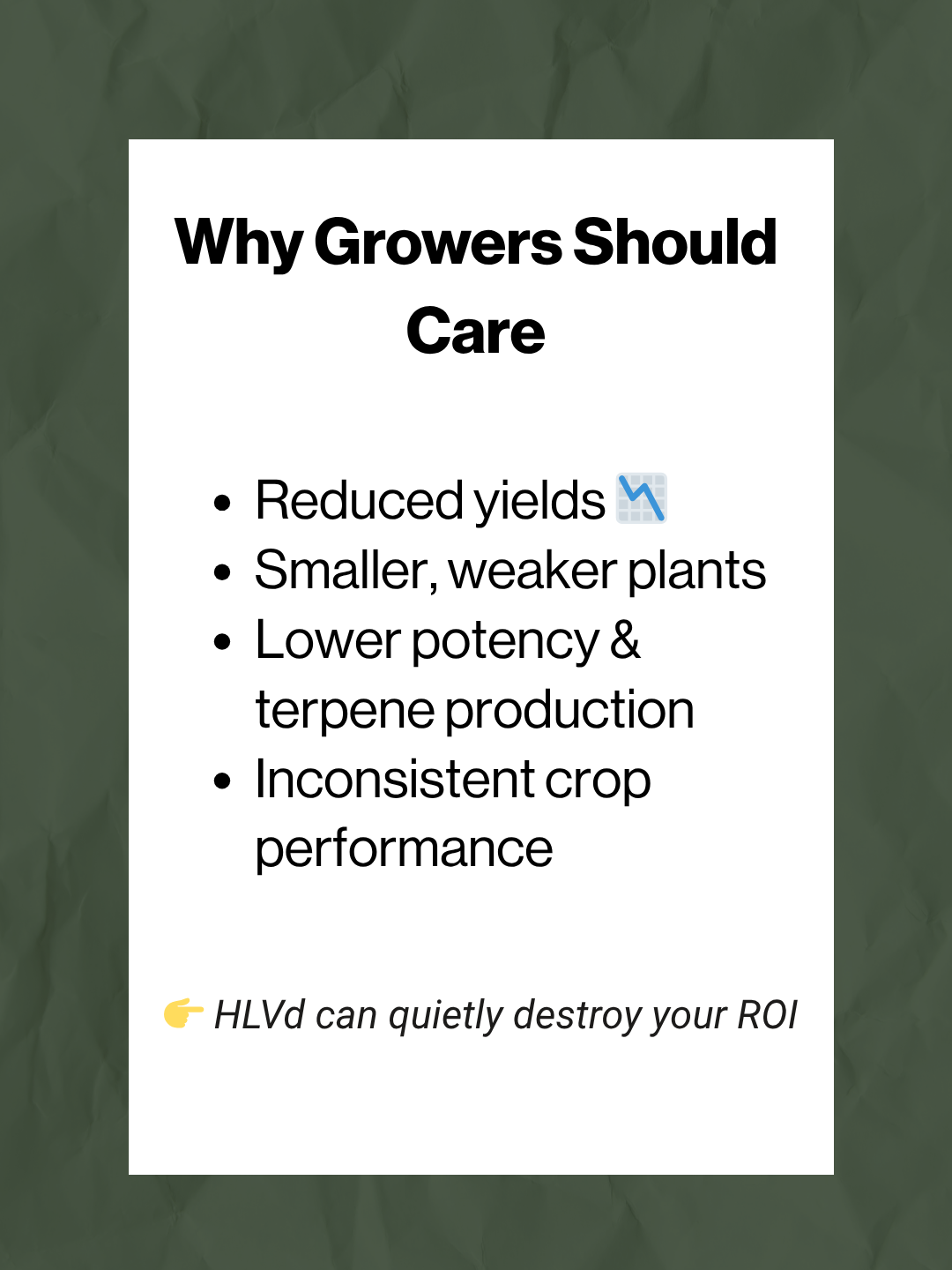
HLVd has caused significant crop loss for Cannabis farmers in the form of lower yields (translating to a possible 33% loss financially across some state markets),8 lower trichome content, and reduced terpene profiles.3 

HLVd is not only highly infectious but it remains hidden or dormant (latent) to observation until the cannabis plant experiences a secondary stress such as heat, over watering, pest infestation etc. that causes visual symptoms to occur.4 

Sometimes HLVd can start showing symptoms during the flowering stage, even if not visually detectable during the entirety of the vegetative growth. It can cause the plant to develop small, abnormal (sometimes spiky), and less potent buds all over resulting in loss of yield and potency.3,8

Some infected cannabis plants never show symptoms throughout their entire lives and this is another reason why HLVd can be spread so easily as growers may sell or trade cuttings or clones with others and not have any suspicion that those pieces of plant material may be harboring the viroid.4 Improper sterilization of cutting tools and the reuse of gloves across different plants can quickly spread the viroid throughout your grow room as well.3,5

HLVd can exist in most of a plantโ€™s tissues (stems, leaves, roots, etc.) but largely resides in the roots of cannabis plants. This does not mean leaves, stems, and buds are unaffected. The Viroid can take time to migrate through the entire plant as it enters the phloem (the vascular tissue responsible for conducting sugars and other metabolic products downward from the leaves) through a cut or tear in a stem or leaf, travels to the roots, and then spreads throughout the rest of the plant.6

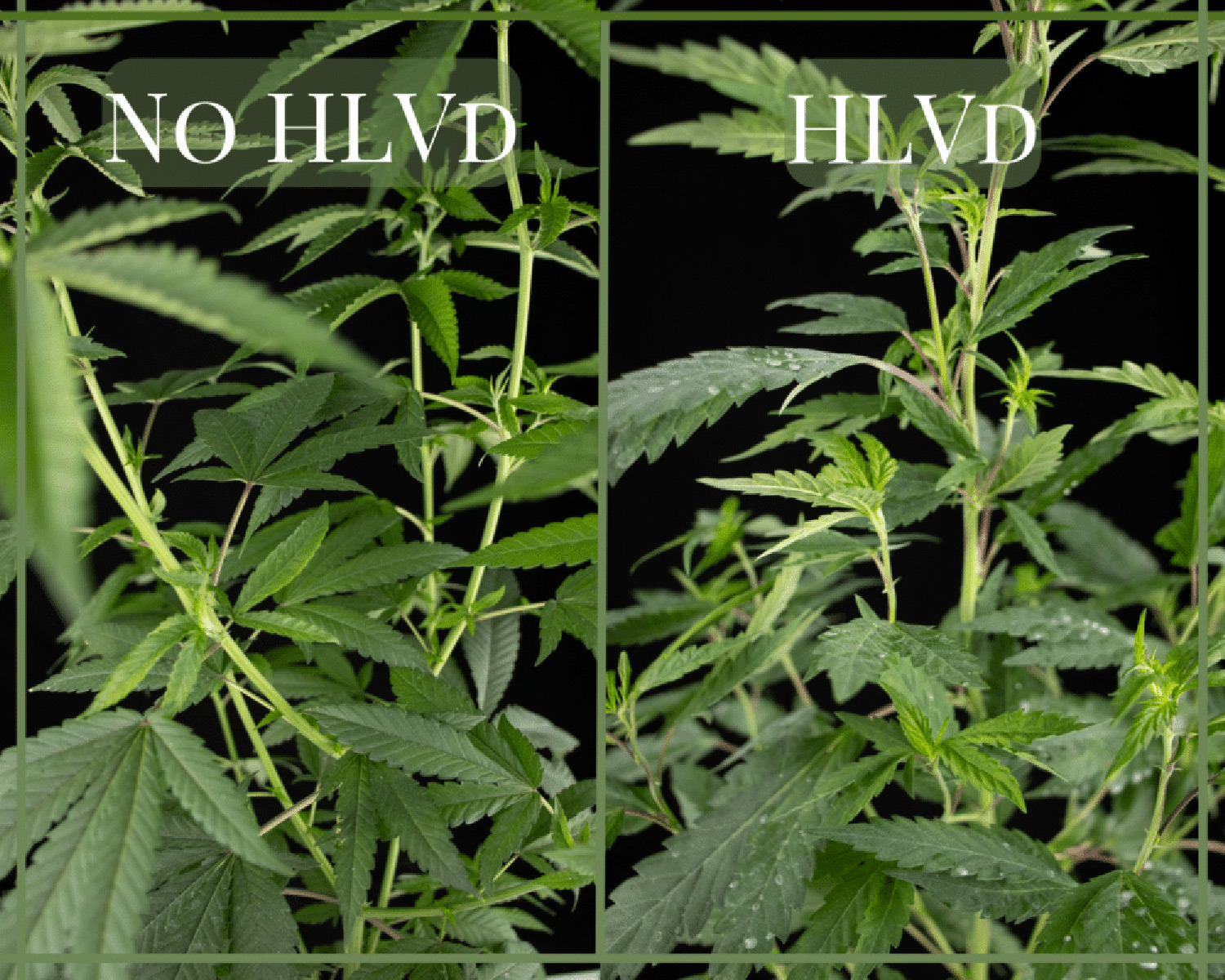
Left: a young veg plant showing normal leaf distribution with common morphology.
Right: An HLVd positive plant early in its vegging stage, showing clustering of new leaf growth and aberrant leaf morphology.

Symptoms

  • Shorter internodal spacing
  • Smaller leaves (sometimes with higher rates of chlorosis)
  • Stunting of bud size and morphology
  • Reduction of trichomes
  • Reduction of terpenes
  • Reduced overall plant vigor (weaker apical/main and lateral stalks)

How to Identify

As previously stated, visual observations of HLVd can include smaller buds with reduced trichome and terpene content during flower as well as abnormal leaf formation and stunted growth during all stages of a cannabis plantโ€™s life. However, visual observations can occur too late after a grow has already invested significant time and money into flowering many plants which results in loss of crop and profit.

The most accurate way to assess the status of cannabis plants is through one of two processes known as Reverse Transcription PCR (RT-PCR) and Quantitative PCR (qPCr) which can be performed by many commercial labs across the US.3,9 

Routine testing of mother plants, as well as any new clones or mothers introduced from outside your facility, is highly recommended. A schedule of up to 4 tests per nursery plant over a period of a month and a half has been suggested by one source.8 Another source has suggested isolating new plants for 30 days and testing on the third week of isolation.3 Regardless, testing is critical to ensuring the prevention and/or spread of existing HLVd in your grow facility.3,6

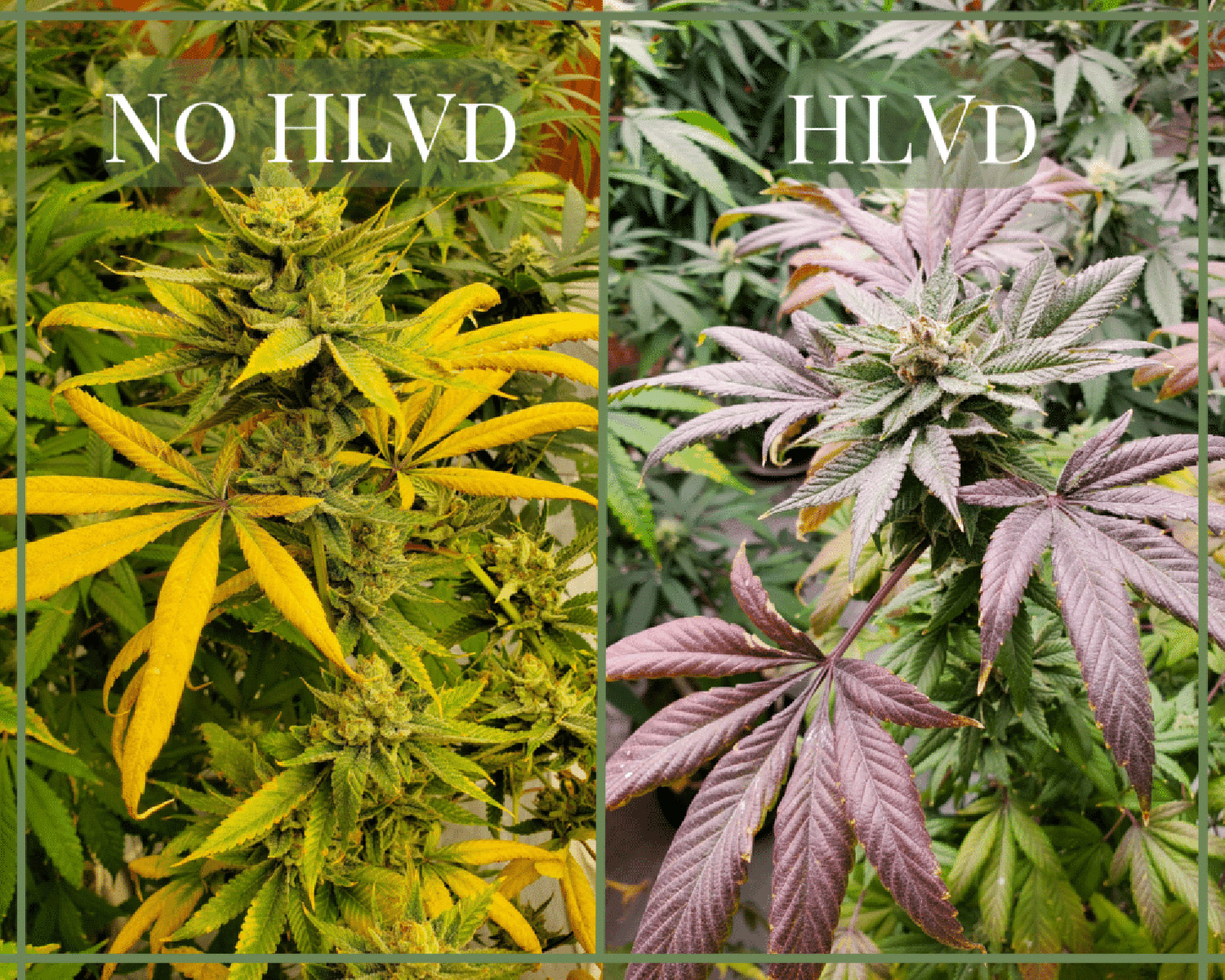
Left: A plant from the same pack of seeds at the same time in flower (week 7). Note the greater yield and more normal spacing on the leaves. This is closer to the normal presentation for this strain when uninfected by HLVd.
Right: ย A plant late in flower (week 7) showing greatly reduced yield from the norm. Note the small bud size and the tight spacing on the clusters of leaves. Reduced yield and leaf bunching are two of the most common observable effects of HLVd or the โ€˜dudding virus.โ€™ย 

Transmission

HLVd is mainly spread by mechanical transmission.5,6 This refers to dirty cutting tools, unwashed hands, dirty gloves, and any other contaminated objects coming in contact with a plantโ€™s tissue. 

HLVd can also be spread through aqueous transmission (through water). For example, a non-infected clone can become infected if it is in the same cloner as an infected clone. Even if the two clones never have root-root contact, HLVd can move through the water from one infected plant to the roots of all the other clones in the same cloner. This also means plants that share drip trays or saucers could potentially end up infecting healthy plants when water run off from the bottom of an infected plantโ€™s pot can mix with the roots and soil of the healthy plant.5,6

There are no published reports currently that show insect transmission of hop latent viroid in cannabis. However, many other viroids are spread by insects, making insect transmission of HLVd a high possibility. It is good practice to limit your cannabis plants exposure to bugs (best pest management practices, healthy plants, good environmental controls, etc.) as many other viruses and pathogens are spread by insects.7

Best Practices for Prevention

Isolate any new cuttings or established plants coming from outside of your facility. Make sure to test these plants before integrating them with the rest of your grow. 

Change gloves when working with multiple plants. One pair of gloves per plant.

Clean cutting tools with at least a 10% solution of bleach that contains 5.25% sodium hypochlorite for at least 10 seconds in between taking cuttings from one plant to the next. Also clean any work surfaces that come in contact with plant material. 3,4,5 Isopropyl alcohol will not kill the viroid so bleach is required for efficient removal of HLVd from cutting/workstation surfaces.10

Avoid having plants share drip trays/saucers if possible (due to aqueous transmission).5,6

Destroy any plants that are infected or remove them from your grow to be treated for HLVd through tissue culture (only recommended if the cultivar is critical to your business due to time and financial cost of tissue culture).

Summary

HLVd can be a devastating issue for any grower whether itโ€™s the home or commercial cultivator. HLVd can remain dormant for a long time and may never show symptoms while it spreads throughout a grow. Mechanical transmission through dirty/used cutting tools and gloves is the number one method of transmission of the viroid. Through routine testing, via RT-PCR or qPCR methods, and employing best practices in cleanliness all growers can limit the spread of this pernicious pathogen and get the quality flower we all love.

References

1: Puchta H, Ramm K, Sanger, H L. The molecular structure of hop latent viroid (HLV), a new viroid occurring worldwide in hops. Nucleic Acids Res. 1988 May 25; 16(10): 4197โ€“4216.
doi: 10.1093/nar/16.10.4197. PMID: 2454454. https://www.ncbi.nlm.nih.gov/pmc/articles/PMC336624/#:~:text=The%20viroid%20nature%20of%20HLV,%2C%20rod%2Dlike%20secondary%20structure.

2: Pallas V., Navarro A., Flores R. Isolation of a viroid-like RNA from hop different from hop stunt viroid. J. Gen. Virol. 1987;68:3201โ€“3205. doi: 10.1099/0022-1317-68-12-3201. https://www.microbiologyresearch.org/content/journal/jgv/10.1099/0022-1317-68-12-3201

3: Adkar-Purushothama C.R., Sano T, Perreault J.P. (04 March 2023). Hop Latent Viroid: A Hidden Threat to the Cannabis Industry. MDPI. doi: 10.3390/v15030681. PMID: 36992390.https://www.ncbi.nlm.nih.gov/pmc/articles/PMC10053334/

4: Encore Labs (2023). What is Hop Latent Viroid?. Web page accessed 06/2023. https://www.encore-labs.com/what-is-hop-latent-viroid

5: Hadidi A, Sun L, Randles J W. Modes of viroid transmission. Cells. 2022 Feb; 11(4): 719. Published online 2022 Feb 18. doi: 10.3390/cells11040719. PMID: 35203368. https://www.ncbi.nlm.nih.gov/pmc/articles/PMC8870041/

6: MedicinalGenomics (2023). Hop Latent Viroid in Cannabis. Web page accessed 06/2023.
https://medicinalgenomics.com/hop-latent-viroid-in-cannabis/#:~:text=Since%20HLVd%20is%20highly%20concentrated,root%2Dto%2Droot%20contact.

7: Tumi genomics (2022). Hop Latent Viroid. web page accessed 06/2023. https://tumigenomics.com/hop-latent-viroid-information

8: Sandy, E. (2021). Dark Heart Nursery Research Finds 90% of California Facilities Test Positive for Hop Latent Viroid. Cannabis Business Times. https://www.cannabisbusinesstimes.com/article/cannabis-hop-latent-viroid-infections-dark-heart-nursery-crop-loss/

9: Punja, Z K (2021). Emerging diseases of Cannabis sativa and sustainable management. Pest Management Science 01 February 2021. https://doi.org/10.1002/ps.6307

10: Oaksterdam University (2021). Plant Talk: Hop Latent Viroid. First published 5 November 2021. Web page accessed 06/2023. https://oaksterdamuniversity.com/plant-talk-hop-latent-viroid/


HAPPY GROWING!

Smoke Report: Apple Peelz by Dirty Bird Genetics

Our next toke is the Alpha Series' Apple Peelz by Dirty Bird Genetics. She is a cross of Sex Melon x Bad Apple. Read on to learn about our experiences.


The unique smell took me back to a stroll down a row at an apple orchard during a New England Fall. It has the fragrant and sweet aroma of a discarded apple core that has been sitting in the sun. I love the sweetness of this strain. It brings on a very functional and smooth high, which I found to be a great afternoon pick-me-up. This one will not lock you down or make you feel heavy. She would be a great companion for a walk on a beach or in the woods.

- Crystal


Apple Peelz (Sex Melon x Bad Apple) by Dirty Bird Genetics is a fast favorite! This plant is beautiful, smells sweet like apples, and has stunning deep purple leaves. The buds are dense and covered in crystals. Itโ€™s a great sativa-dominant hybrid that provides a lovely daytime high. It will calm your nerves and melt away your worries but wonโ€™t deplete your energy. I smoked this in the morning and then spontaneously deep cleaned and rearranged my dining room and kitchen. I would highly recommend this strain for when you want to take the edge off but still feel energetic and functional.

- Mariah


Read more about the differences between Alpha Series, Limited Series, & Tester packs.


Products by Category


And As Always, Happy Growing!

Grow Report: Trop Cherry Duet by Ethos

The Battle of the Trop Cherry OG and the Double Cherry Pie

By Beth Mathieu

Owner of North Atlantic Seed + Dirty Bird Genetics

Iโ€™ve been a long time fangirl of Ethosโ€™ work. They were one of the first breeders I had the privilege of working with when North Atlantic Seed was in its infancy, and up until 2023, I had personally grown virtually their entire menu strain-by-strain as it was released. When NASC had its 1st annual Discord Photo Contest last fall, I was struck by one plant in particular that I had yet to grow. The Trop Cherry submissions were striking, and interestingly, we received several submissions which told me there was likely something special here. The knuckly, dense, large purple colas in the photos were a great example of ideal flower structure as far as Iโ€™m concerned, and I was impressed by the size of the flowers. Itโ€™s not often that you see colas as large as these with such minimal leaf and such high quality. I wasted no time. I immediately sent a text over to Benโ€“our head Breeder at Dirty Bird Geneticsโ€“ and we added Ethosโ€™ Trop Cherry Duet to our 2025 โ€œpop list.โ€

Within the Trop Cherry Duet pack, the Trop Cherry OG came paired with another eyecatching selection: The Double Cherry Pie. Both strains featured the Trop Cherry genetics in their lineage, so we decided we would germinate them both and do a โ€œgrow offโ€ to find out which of the two strains captured the deep purple coloring, chunky flower structure, and the cherry chapstick terpene profile we were after.

While both the Trop Cherry OG and the Double Cherry Pie had their strengths, there could be only one winner. Continue reading to find out which of the Trop Cherry crosses we decided to keep a cut of for the Dirty Bird Genetics library...dun dun dun.

The Line Up: 

6x Double Cherry Pie R1: (Trop Cherry x Cherry Pie)

5x Trop Cherry OG R1: (Trop Cherry x SFV OG)

TROP CHERRY OG by ETHOS

Of the five Trop Cherry OG seeds we grew, we observed three phenotypes, making for a relatively high PVI. This cohort showed divergence in color, terpenes, and flower structure: 

  • Color: Three of 5 were green and 2 of 5 had purple flower
  • Terpenes: The purple plants had no observable terpenes, whereas the green plants had mild orange/cherry/gas smells come through.ย 
  • Flower Structure: Flower structure was spear shaped with granular bracts versus stella form and more dome-shaped.
  • Herms: One of the five plants showed signs of hermaphrodism in the first three weeks of flower so we had to toss it.ย 

All of the plants had medium internodal spacing, great lateral branching, and grew as rounded bushes with moderate foliage and moderate calyx-to-leaf ratio. Morphologically, they were well proportioned plants with self-supporting stalks; we did not have to stake the plants at all. One plant in particular had notably heavy flowers. Yields and stacking were moderate overall. One of the purple plants was a bit finicky and yellowed dramatically toward the end of flower, which can be normal, but the majority were easy to grow and remained healthy through harvest. All of the plants turned out well, but none were show-stoppers for us, so we did not choose to keep a mother plant from this lot. That said, I have seen some photos of truly beautiful plants that have come from these seeds, so I wouldnโ€™t dissuade anyone from trying them or hunting them. If I were to re-hunt these myself, I would be looking for a pheno that has the beautiful purple coloring paired with a stronger terpene profile.ย 

The finicky Trop Cherry OG purple plant.
Trop Cherry OG with dome/stelliform flowers

DOUBLE CHERRY PIE by ETHOS


Similar to the Trop Cherry OG, the Double Cherry Pie showed divergence in color, terpenes, and flower structure; however, as a whole they appeared more uniform, and the terpenes we observed in this grow were stronger and more consistent. These factors really tipped the scales in the Double Cherry Pieโ€™s favor. 

  • Color: One out of six of the DCP plants we grew had purple flowers and green foliage and the remainder were deep green.
  • Terpenes: Mandarin orange/cherry chapstick terpenes were pungent on the purple pheno that became our keeper cut. As a whole, the rest of the cohort leaned more cherry than citrus/orange/tangie.ย 
  • Flower Structure: The majority of plants had spear-shaped flowers that came to a point at the apex of the cola. One out of six had rounder, dome-shaped flowers.ย 
  • Herms: 0/6ย 

Overall, I would rate the terpenes in the Double Cherry Pie as moderate with the one purple pheno being a stand out both in color and smell. Moderate-high yield was consistent across the board on the Double Cherry Pie, as well as strong, self-supporting stalks. Morphologically, the plants were quite similar to the Trop Cherry: They grew as bushes with great lateral branching making for a beautiful, even canopy. The Double Cherry Pieโ€™s foliage was slightly less dense than the Trop Cherry OGโ€™s was with more room for air flow, and the calyx-to-leaf ratio was notably higher. On top of these factors, we didnโ€™t observe any signs of hermaphrodism in the DCP, and the trichome production was observably superior. 

The Double Cherry Pie was the clear winner here for the Dirty Bird team. This seed cohort was where we found our keeper cut. If you couldnโ€™t guess, it was the sole purple Double Cherry Pie plant that exhibited fantastic tangie and cherry chapstick terpenes. This cut will be appearing in an upcoming Cherry AK breeding project that we have maturing behind the scenes as of this writing. Overall though, I think both of these strains are worth your time; thank goodness since theyโ€™re sold together! Both exhibited beautiful purple flowers in at least 20% of the plants we tested (for those of you who love purple like us Mainerโ€™s do), and both had great internodal spacing and that classic-bushy morphology thatโ€™s hard not to love. We didnโ€™t find any duds. All of the plants yielded well and produced high quality flowers. Feel free to send us some pics if you find any fun keepers in your own hunts!

Stay tuned for more Grow Reports as Dirty Bird continues hunting great genetics from the NASC breeder family!


HAPPY GROWING!

4/20 Thank You from the NASC Team!

To our customers and the breeders, thank you for the continued support and Happy 4/20!

-NASC Team

NASC 10%-50% OFF for 4/20
NASC 420 Breeder Freebie Bundle
Purple Caper Sitewide Freebies

March Drops You May Have Missed

  • Dirty Bird Sour Strudel Auto Tester
  • Barney's Farm AK47
  • Elev8 Seeds Glues Brothers
  • NASC Private Label Unicorn Poop F3
  • Gnome Automatics New Strains
  • Eternal Cultivars New Drop
  • Tastebudz New Drop
  • Tastebudz Pick and Mix
  • Supernatural Seeds New Drop
  • Supernatural Seeds Pick and Mix
  • New North Atlantic Seed BWL Strains
  • NASC Commercial Cultivars Line
  • Humboldt Seed Co Garlic Budder Auto
  • Dirty Bird Glitterdoom
  • Romulan Genetics Dark Passenger F1
  • Keep Seeds Legal packs
  • Purple Caper x Skunk Magazine Collab Drop
  • Mosca Seeds New Strains
  • Sin City Seeds Sticky AF Line
  • & MORE
Glitterdoom (F) by Dirty Bird Genetics
Dark Passenger F1 (F) by Romulan Genetics
Garlic Budder Auto (F) by Humboldt Seed Co.

April Drops

  • Dirty Bird Alpha Series (Apple Peelz Fem Photo and Gas Berry Auto Fem)
  • Offensive Selections New Breeder
  • HUGE Mephisto Genetics Drop (40+ New Strains)
  • Barney's Farm New Strains
  • Cannarado Grape Pie Drop
  • Brother's Grimm x Montel Dream Fuel
  • Purple Caper x Ed Rosenthal Drop
  • Jolly Pond Farm New Breeder
  • Ethos Genetics New Drop
  • Private Label Durban Poison Auto
  • Fastbuds New Strains
  • Dirty Bird Nuclear True Blood Volume Drop (4/17)
  • Romulan Genetics Garlic Fever F1 (4/17)
  • Solfire Gardens New Drop (4/17)
  • Compound Genetics Black Amber Drop (4/20)
  • Offensive Selections Exclusive Atlantica Drop (4/20)
  • In House Genetics Midori Zushi Drop (4/20)
  • Twenty20 New Drop (4/20)
  • Lamb's Breath New Drop TBD
  • Ace Seeds New Drop TBD
  • Royal Queen Seeds New Drop TBD
  • & MORE!
Angel's Rest (F) by Offensive Selections
505 Headbanger Auto (F) by Mephisto Genetics
Apple Peelz (F) by Dirty Bird Genetics

420 Discounts

  • Private Label 25% OFF (4/17-4/30)
  • NASC Commercial Cultivars 25% OFF (4/17-4/30)
  • North Atlantic Seed BWL 25% OFF (4/17-4/30)
  • Ethos 10% OFF (thru 4/21)
  • Sin City Seeds 33% OFF (4/17-5/3)
  • Purple Caper 15% OFF (4/17-4/20)
  • Royal Queen 40% OFF (4/17-4/26)
  • Brother's Grimm 15% OFF (4/19-4/20)
  • In House Genetics 50% OFF (4/19-4/20)
  • NASC Sitewide Discount 10% OFF (4/19-4/20)
  • & MORE!

420 BOGOs

  • Barney's Farm BOGO (Cont.)
  • Dirty Bird Buy 2, Get 1 FREE
  • In House Genetics BOGO (Sugar Pie)
  • Thug Pug Buy 2, Get PB Wuu Reg 10pk FREE (Starts 4/17)
  • Atlas Seed BOGO (Starts 4/17)
  • Lamb's Breath BOGO Select Strains (4/17-4/20)
  • Sticky Finger BOGO (4/17-4/20)

420 Freebies

  • Keep Seeds Legal Donation Freebies at Checkout
  • Purple Caper Freebies Updated to 7 FREE per pack
  • Rare Dankness Double Freebies
  • Sin City Seeds Sticky AF Drop Freebies
  • Purple Caper x Skunk Magazine Collab Freebies
  • Romulan Genetics Freebies (Spiced Sugar F1)
  • Offensive Selections Freebies
  • Romulan Genetics New Drop Freebies (Turning Point)
  • Ethos Double Freebies (thru 4/21)
  • Mosca Creme Cartel Freebies (Starts 4/17)
  • Bomb Seeds Freebies (Starts 4/17)
  • Auto Seeds Freebies (Starts 4/17)
  • Blimburn Double Freebies (Starts 4/17)
  • DNA Freebies (Starts 4/17)
  • Sin City Seeds Double Freebies (Starts 4/17)
  • Dirty Bird Double Freebies (4/17-4/20)
  • Lit Farms Hats (Starts 4/17)
  • 420 Breeder Freebie Bundles (4/19-4/20)
  • & MORE!

420 Giveaways

NASC 4/20 Giveaway Banner
Bomb Seeds 420 Giveaway
Gnome Automatics 420 Giveaway

HAPPY 4/20!

BEST OF 4/20: 2026 EDITION

A Comprehensive Shopping Guide By Growers, For Growers

Looking for recommendations that you can trust this 4/20? Look no further. At North Atlantic Seed, not only do we have the unique opportunity to work closely with our breeders and our customers, but we also love to grow as many genetics as we can each year. This year, weโ€™ve taken all of this anecdotal breeder and grower experience and weโ€™ve combined it with NASC Here are the standouts weโ€™ve identified this 4/20: 


BEST SELLERS 2026

Below are NASCโ€™s Best Selling Autoflowers + Photoperiods of 2026 pulled directly from our Q1 2026 sales data.

NASC Best Sellers: Top 3 Autoflowers

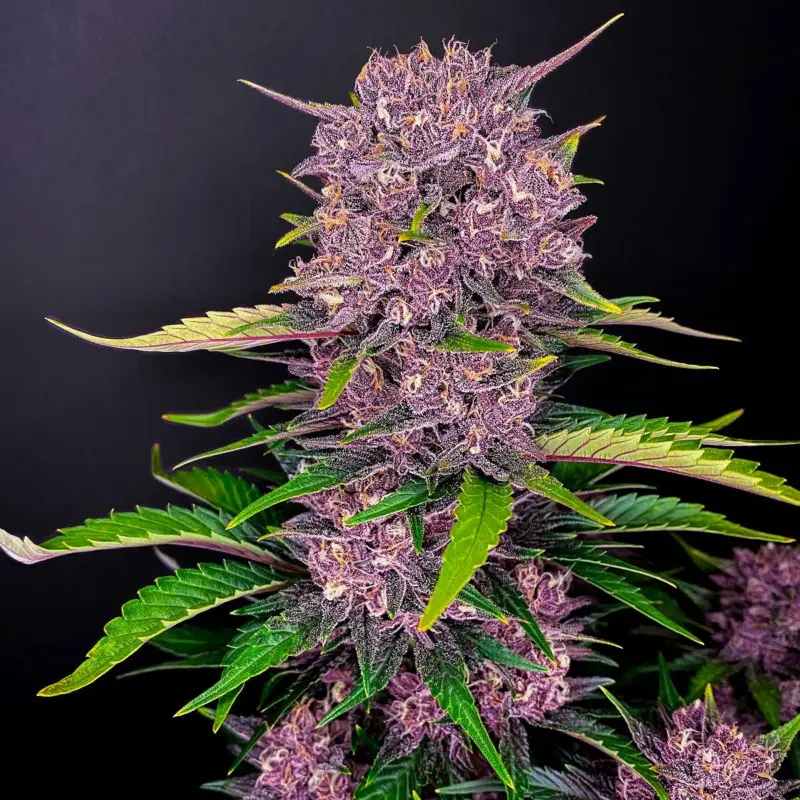
Purple Lemonade Auto by 420 Fast Buds
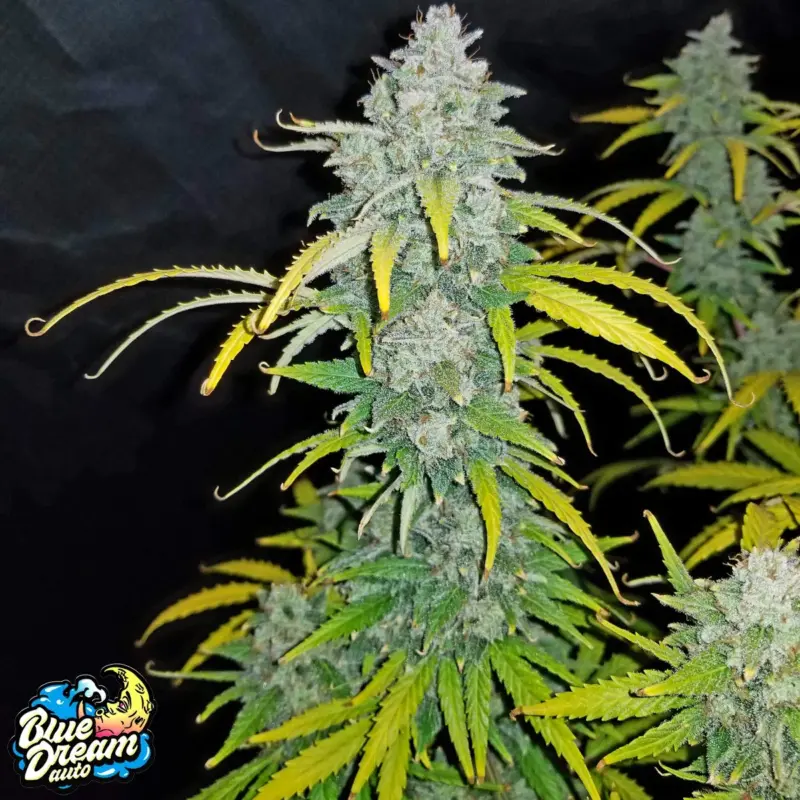
Blue Dream Auto by 420 Fast Buds
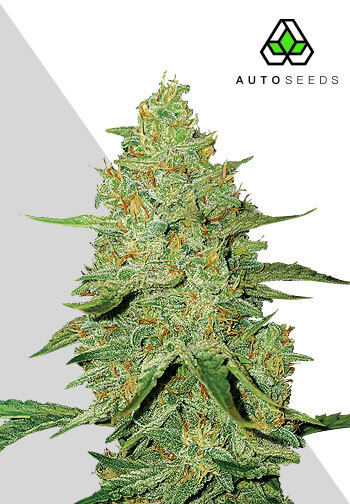
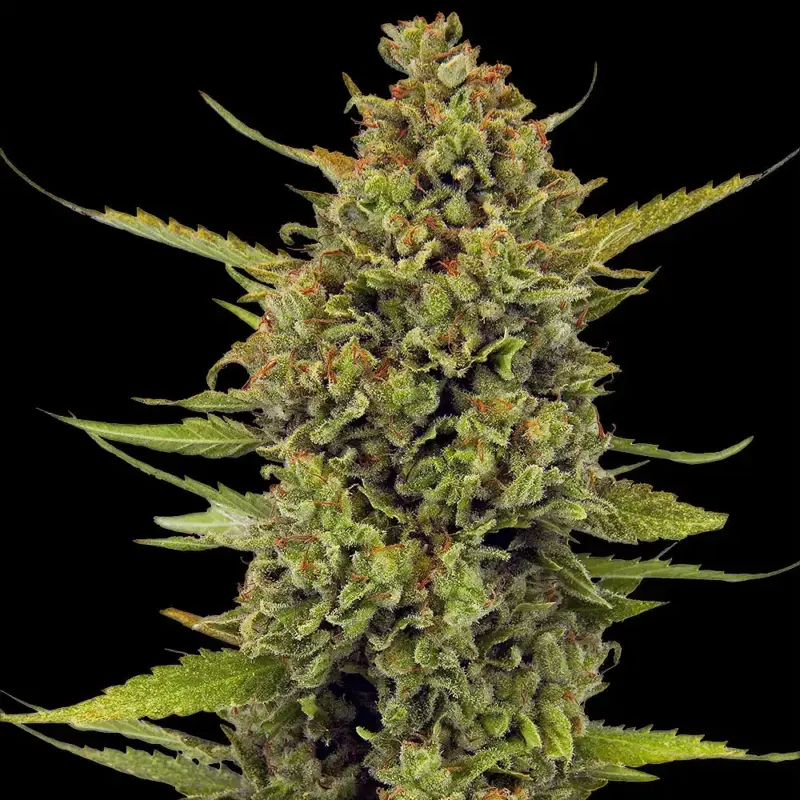
Acapulco Gold Auto by Auto Seeds

NASC Best Sellers: Top 3 Photoperiods 

Acapulco Gold (F) by Barneyโ€™s Farm
Mandarin Cookies V2 (F) by Ethos Genetics
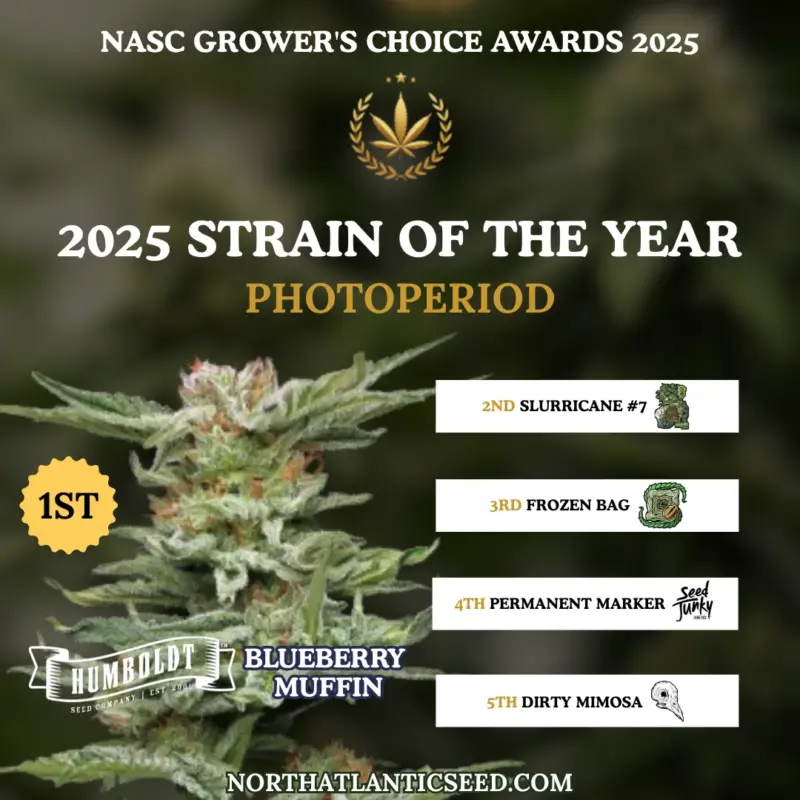
Blueberry Muffin (F) by Humboldt Seed Company

BEST OUTDOOR STRAINS 2026

This year NASC set out to curate a line of genetics that commercial farmers and outdoor home growers could rely on for uniformity, resilience, quality and performance. We are asked for outdoor recommendations every day, and because we live in one of the harshest climates in the US for growing, we know the struggle it can be to find reliable genetics. The NASC Commercial Cultivars series was sourced from US breeders and tested and bred on a commercial scale to meet the needs of the home grower and the commercial grower alike. For that reason, this line of True F1 Hybrids and IBLs are our picks for outdoor 2026: 

NASC GROWERS CHOICE - COMMUNITY-VOTED FAVORITES:  

The strains below are YOUR favorite strains of 2025. These results came directly from the Growerโ€™s Choice survey that NASC conducted in Jan 2026. 

Strain of the Year - Autoflower: 

  • Gorilla Cookies by Fast Buds
  • Banana Purple Punch Auto by Fast Buds 
  • Banana Jealousy Auto by Ethos Genetics 
  • Frostbanger Auto by 420 Fast Buds 
  • Gorilla Zkittlez by 420 Fast Buds 
  • Purple Lemonade Auto by 420 Fast Buds
  • Strawberry Milk and Qookies by Night Owl Seeds
  • Grape Gas by Twenty20 Mendocinoย 
  • Double Grape Auto by Mephisto Geneticsย 
  • Guava Auto by 420 Fast Buds

Strain of the Year - Photoperiod:

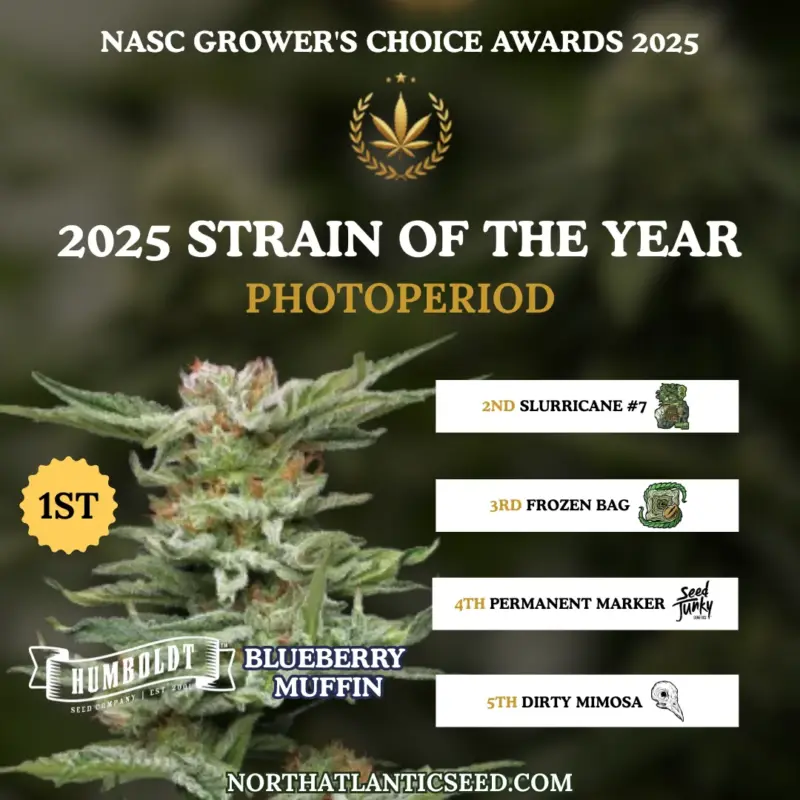
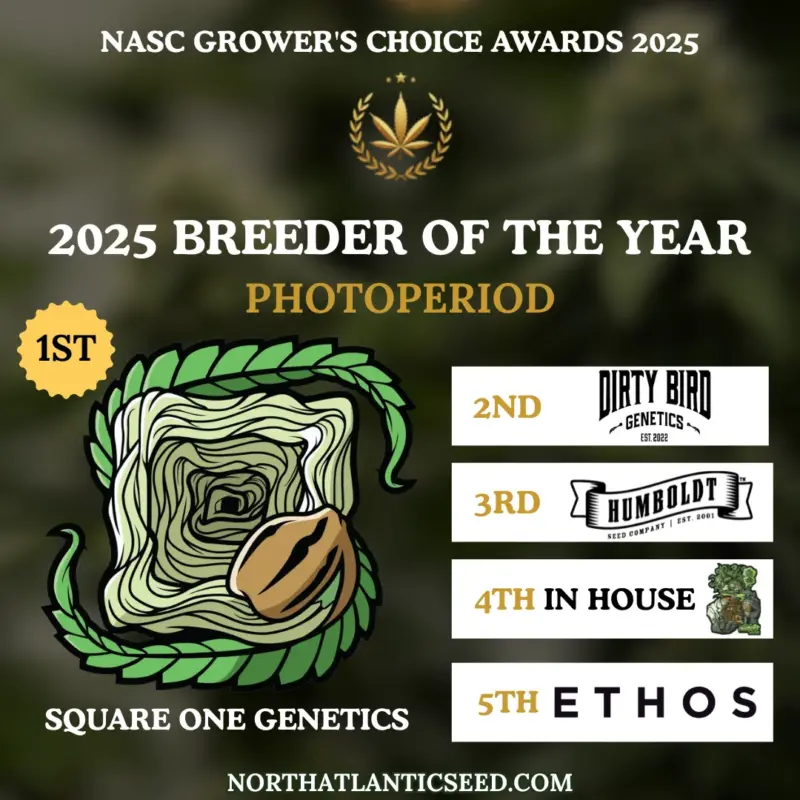
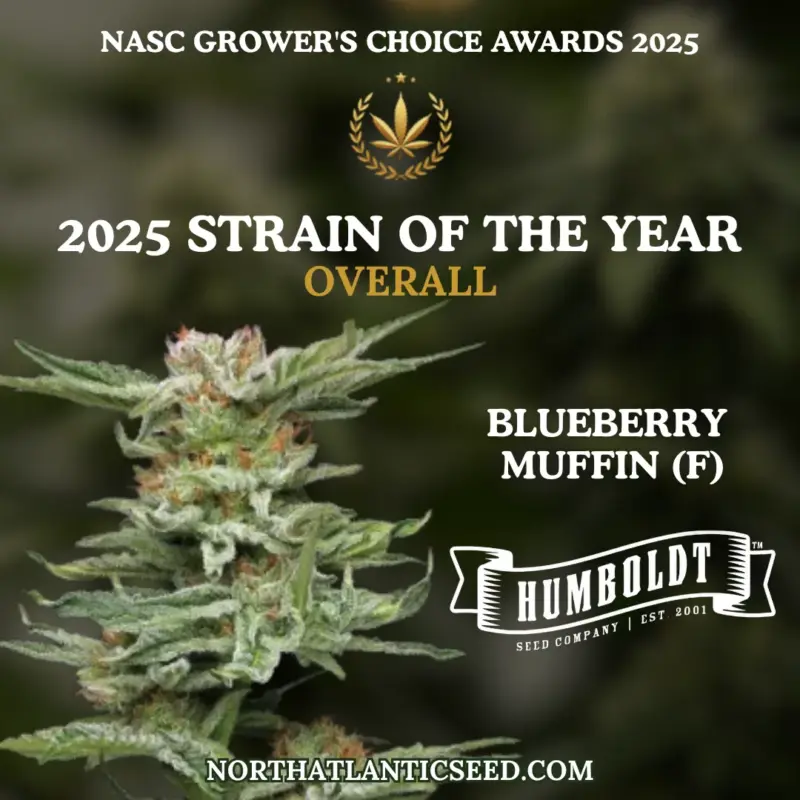
  • Blueberry Muffin by Humboldt Seed Co.ย 
  • Slurricane #7 by In House Genetics 
  • Dirty Mimosa by Dirty Bird Genetics 
  • Mandarin Cookies V2 by Ethos Genetics 
  • Orange Cream Pop by Humboldt Seed Co.
  • Bubba Whip by Twenty20 Mendocino 
  • Chem Funk by Ethos Genetics 
  • Chicken Nโ€™ Wafflez by Humboldt Seed Co.
  • FX3 by Solfire Gardens  
  • Irie Maiden by Romulan Genetics

Strain of the Year - Extract:

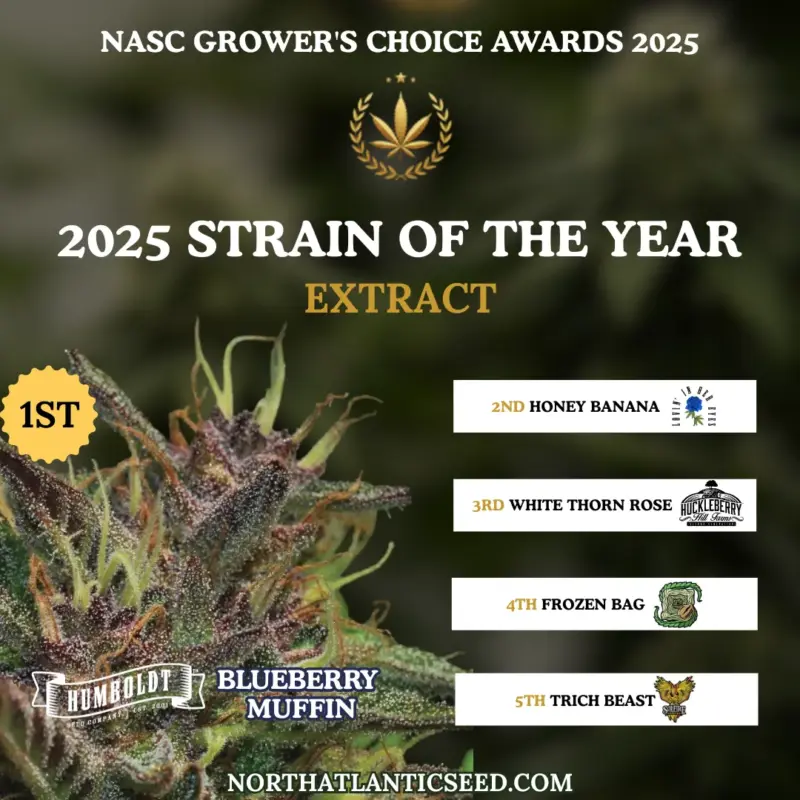
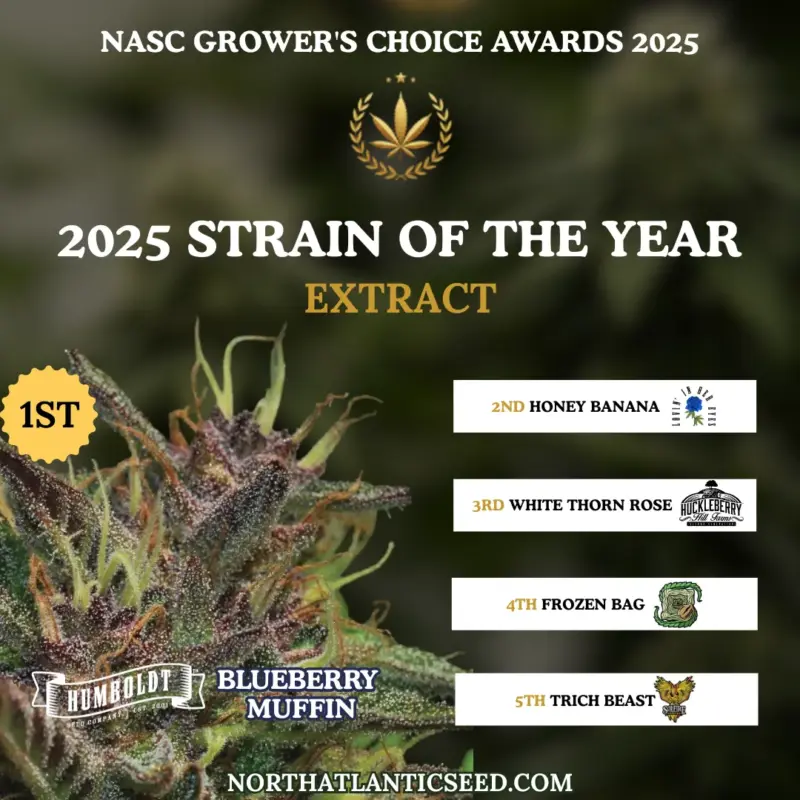
  • Blueberry Muffin by Humboldt Seed Co.
  • Honey Banana by Lovin In Her Eyes 
  • Trich Beast by Solfire Gardens
  • Orange Cream Pop by Humboldt Seed Co 
  • Golden Sands by Humboldt Seed Co.
  • Irie Maiden by Romulan Genetics
  • Maui Wowie Squared by Dirty Bird Genetics

GENETICS FOR A CAUSE:

This year, we have been hard at work behind the scenes trying to educate lawmakers and influence positive policy changes for cannabis seeds and genetics in DC. Weโ€™ve recently started a campaign called Keep Seeds Legal! When you purchase the strains on this menu, 100% of proceeds go towards fighting the โ€œhemp banโ€ set to take effect this Nov 2026. 


HAPPY GROWING!

4/20 Preview, April Drops, & More!

March Drops You May Have Missed

  • Dirty Bird Sour Strudel Auto Tester
  • Barney's Farm AK47
  • Elev8 Seeds Glues Brothers
  • NASC Private Label Unicorn Poop F3
  • Gnome Automatics New Strains
  • Eternal Cultivars New Drop
  • Tastebudz New Drop
  • Tastebudz Pick and Mix
  • Supernatural Seeds New Drop
  • Supernatural Seeds Pick and Mix
  • New North Atlantic Seed BWL Strains
  • NASC Commercial Cultivars Line
  • Humboldt Seed Co Garlic Budder Auto
  • Dirty Bird Glitterdoom
  • Romulan Genetics Dark Passenger F1
  • Keep Seeds Legal packs
  • Purple Caper x Skunk Magazine Collab Drop
  • Mosca Seeds New Strains
  • Sin City Seeds Sticky AF Line
  • & MORE
Glitterdoom (F) by Dirty Bird Genetics
Dark Passenger F1 (F) by Romulan Genetics
Garlic Budder Auto (F) by Humboldt Seed Co.

April Drops

  • Dirty Bird Alpha Series (Apple Peelz Fem Photo and Gas Berry Auto Fem)
  • Offensive Selections New Breeder
  • HUGE Mephisto Genetics Drop (40+ New Strains)
  • Barney's Farm New Strains
  • Cannarado Grape Pie Drop (4/10)
  • Romulan Genetics Garlic Fever F1 (4/17)
  • Dirty Bird Nuclear True Blood Volume Drop (4/17)
  • , Compound Genetics Black Amber Drop (4/20)
  • Offensive Selections Exclusive Atlantica Drop (4/20)
  • In House Genetics Drop TBD
  • Purple Caper x Ed Rosenthal Drop TBD
  • Royal Queen Seeds New Drop
  • & MANY MORE!
Angel's Rest (F) by Offensive Selections
505 Headbanger Auto (F) by Mephisto Genetics
Apple Peelz (F) by Dirty Bird Genetics

Discounts

  • Private Label 10% OFF
  • & MORE coming later this month!

BOGOs

  • Barney's Farm BOGO (Cont.)
  • Dirty Bird Buy 2, Get 1,
  • In House Genetics BOGO (Sugar Pie)
  • , Mosca Seeds New Drop BOGO (Creme Cartel)
  • & MORE coming later this month!

FREEBIES

  • Keep Seeds Legal Donation Freebies at Checkout
  • Purple Caper Freebies Updated to 7 FREE per pack
  • Rare Dankness Double Freebies
  • Sin City Seeds Sticky AF Drop Freebies
  • Mosca Seeds Drop Freebies (Creme Cartel 6pk)
  • Purple Caper x Skunk Magazine Collab Freebies
  • Romulan Genetics Freebies (Spiced Sugar F1)
  • Offensive Selections Freebies
  • Romulan Genetics New Drop Freebies
  • & MORE coming later this month!

BOTW

  • Ethos Genetics (Double Freebies / 10% OFF / Giveaway)
  • Barney's Farm (10% OFF / BOGO)
  • James Loud Genetics (Double Freebies / 10% OFF)

4/20 Preview

  • HUGE Breeder Freebie Bundle Starts 4/19 (Barney's Farm, Brother's Grimm and In House Genetics OR Fastbuds, Mephisto and Twenty20 Mendocino)
  • Purple Caper Sitewide Freebies
  • Lamb's Breath BOGO
  • Atlas Seed BOGO & MORE
  • Giveaways from Gnome Automatics Vault, Bomb Seeds and a HUGE 4/20 NASC Giveaway
  • Discounts on North Atlantic Seed Co BWL, NASC Private Label, NASC Commercial Cultivars, Sin City Seeds, Royal Queen Seeds, Purple Caper, Brother's Grimm, In House Genetics & MANY MORE!

HAPPY GROWING!

Powdery Mildew & Botrytis by Ben Morris

Mold and mildew negatively affect many kinds of wild and cultivated plants. Powdery mildew (PM) and Botrytis (Bud rot) are two of the most common fungi that damage and, sometimes, destroy cultivated crops.

Powdery Mildew

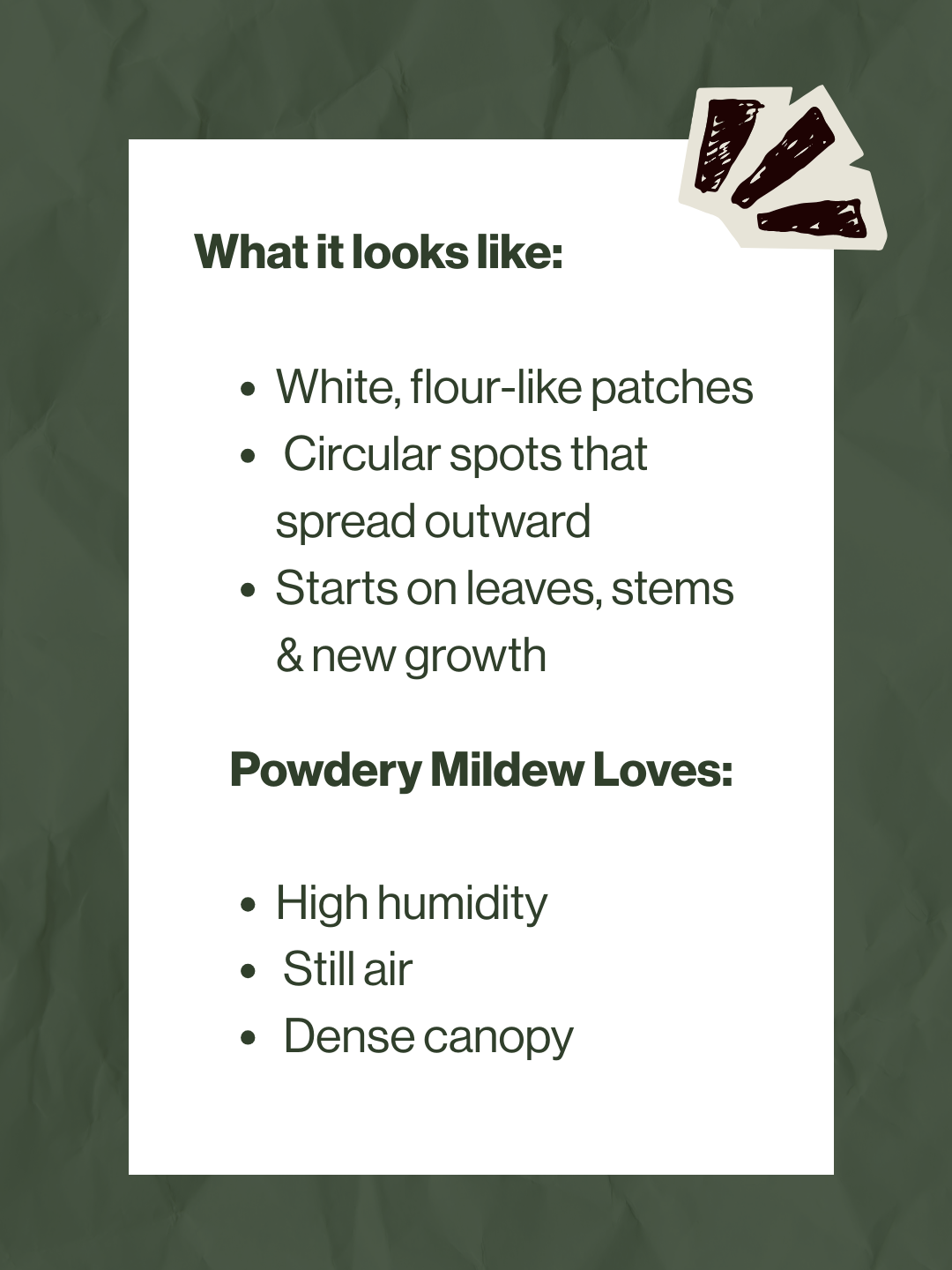
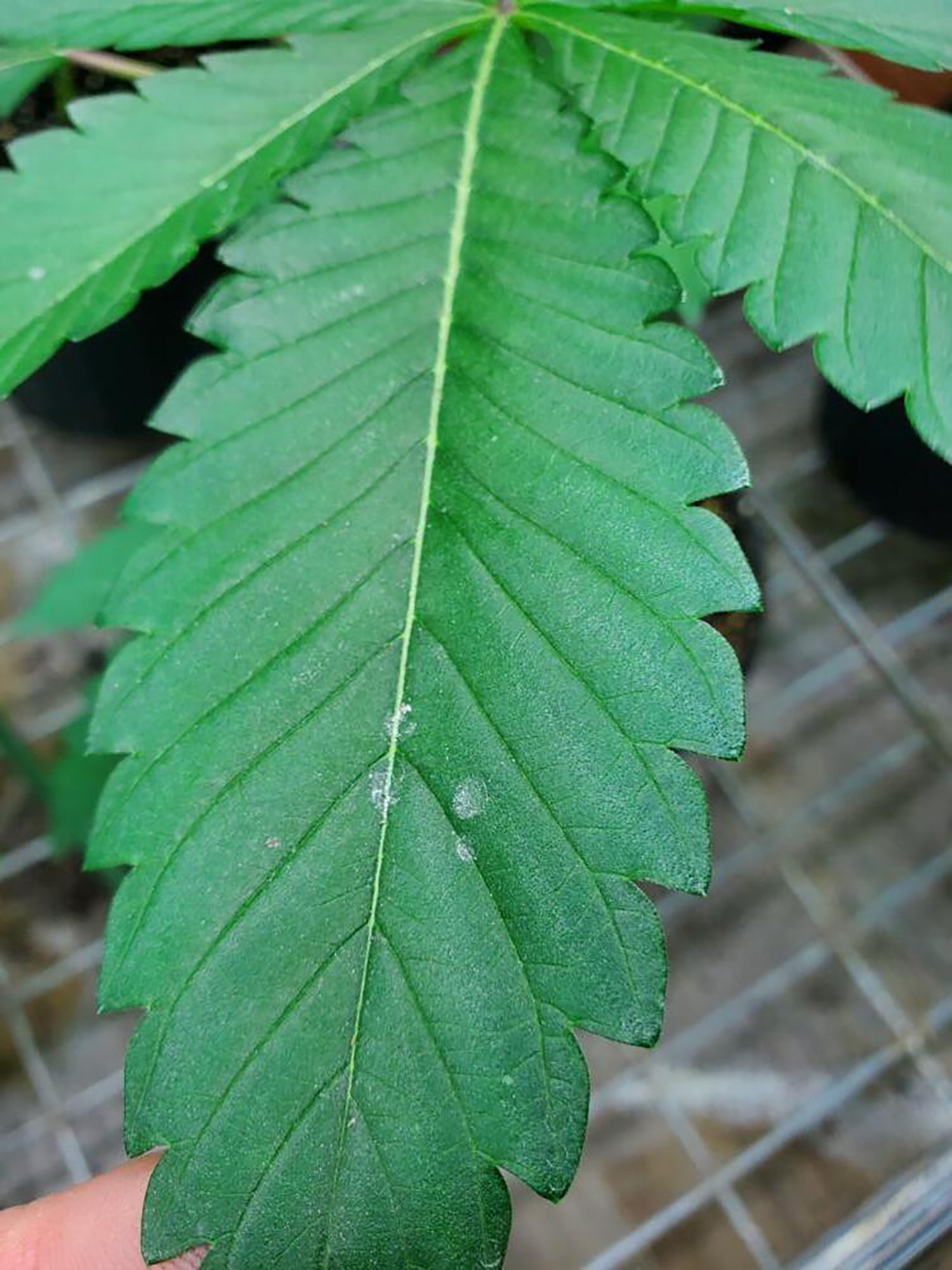
Powdery mildew is the collective term for several species of fungi that have similar presentation and cause similar negative health effects in plants. It usually presents as distinctive white, fuzzy or โ€˜powderyโ€™ patches on any above ground part of the plant (stems, leaves, stalks, petioles, buds, etc.). Sometimes it can appear like little spots of โ€œflourโ€ on leaves or any other above-ground parts of the plant. 

New shoots and lower/central leaves are commonly the initial sites of PM infection. Old leaves also have a high probability of getting initial PM infection due to their age and, most often, their position within the plantโ€™s branches and other leaves.

Plants with a thick layer of leaf cover are also high risk for PM due to the density of plant material in a given volume which can cause a lack of proper air flow and create breeding grounds for powdery mildew deeper within the plantโ€™s leaves and branches.

Often PM begins as a circular or oval patch that spreads quickly if not dealt with. If left untreated, PM will spread all over the plant and render the crop unfit for human consumption. PM can cause leaves to yellow and fall prematurely which negatively impacts the plantโ€™s ability to photosynthesize the sugars it needs to live. If not dealt with quickly, PM can ruin whole crops as it spreads from plant to plant in your field, greenhouse, indoor facility/grow room, etc. which can take a serious emotional and financial toll on growers.

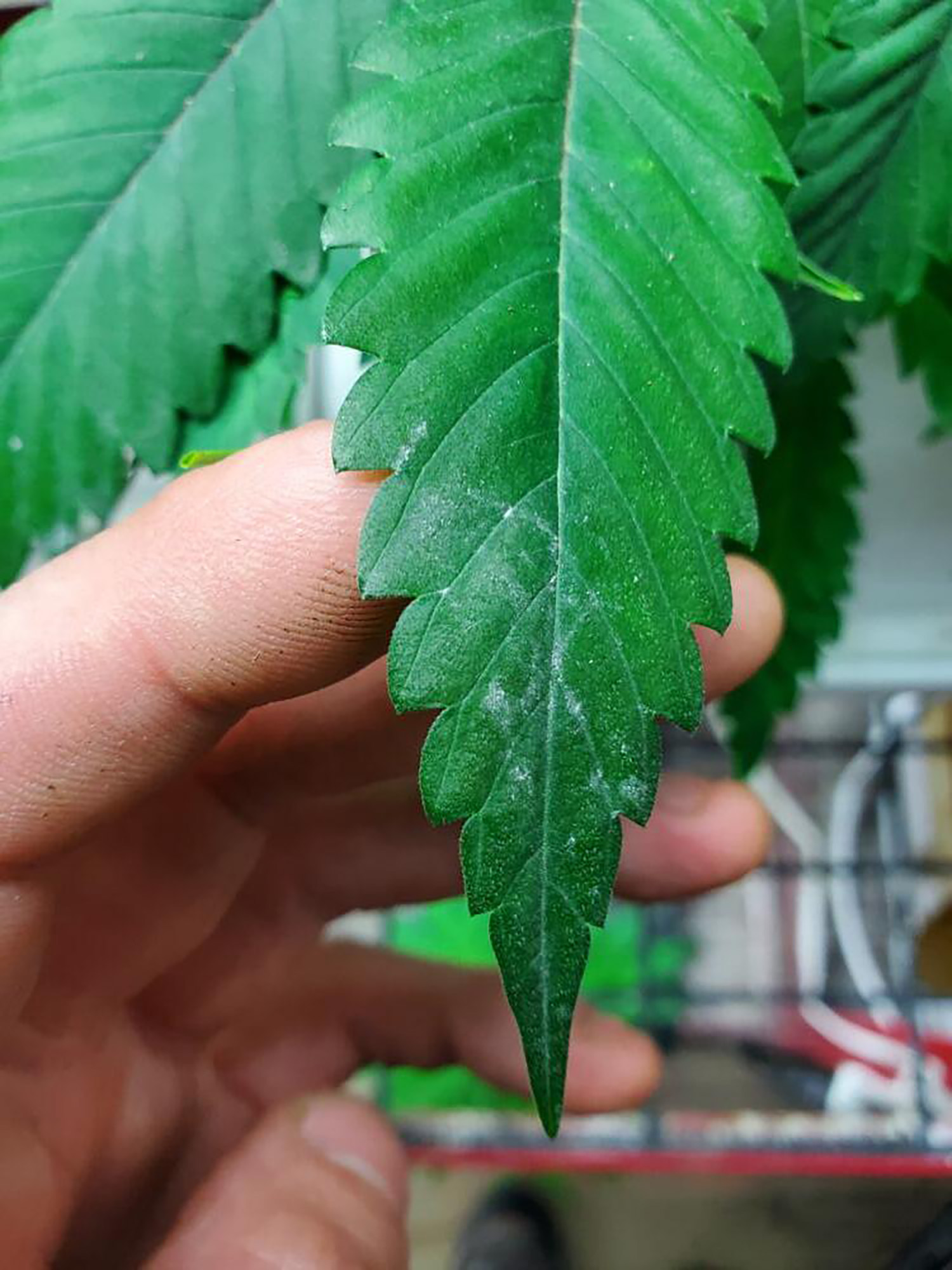
Powdery Mildew sites beginning near the center of a fan leaf. Note their circular shape and almost powdery appearance.
Another fan leaf showing powdery mildew sites, this time near the blade tips.

Botrytis/Bud Rot

Botrytis is another common pathogenic fungus found virtually everywhere plants are grown. Like Powdery mildew, Botrytis first appears as a white growth but quickly becomes brown or gray and can make buds and leaves appear โ€œcrispyโ€ or over-dried. It can also sometimes make buds look webbed and slimy depending on the stage of infection. Botrytis is dangerous for humans and plant product containing this fungus should be considered toxic and unusable. 

Botrytis can affect ANY part of the plant including the roots which makes it a very pervasive and difficult issue to treat. Botrytis will often affect new shoots as well as areas of the plant that do not get proper aeration such as dense buds or areas of high leaf coverage. Thick leaf layers and high relative humidities combined can make breeding grounds for this fungus just like they can for powdery mildew. Damaged plant stalks and leaves are also highly susceptible to PM and Botrytis infection. It is recommended to remove any petioles (leaf stems) still attached to stalks when defoliating plants during normal pruning. Petioles left over are highly susceptible to fungal infection and should be removed entirely from the plant if the leaf it was attached to is pruned.

Photo: Pong Pong/Shutterstock

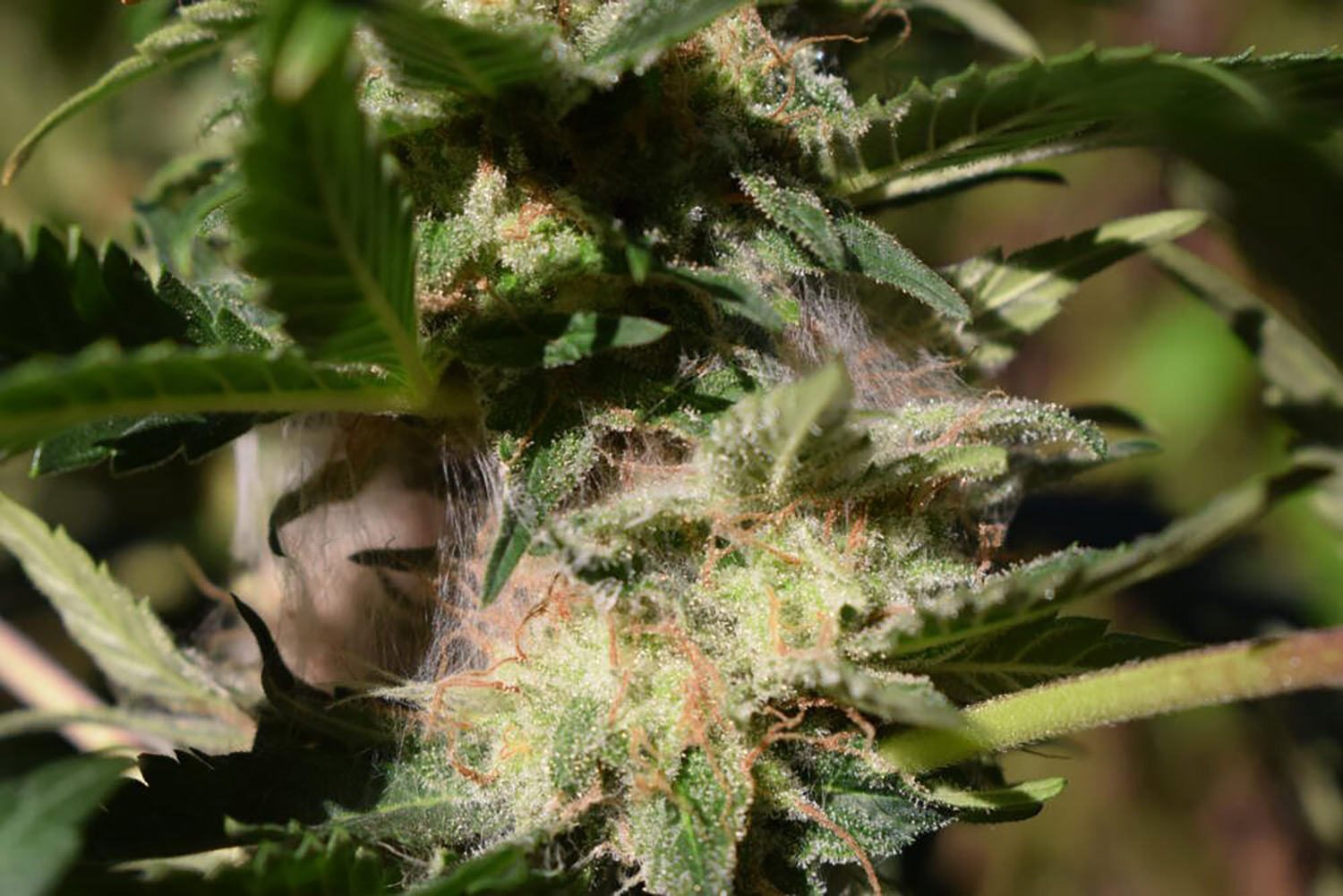
White bud rot taking hold within the bud. Note the spider web-like texture.
Photo: Pong Pong/Shutterstock

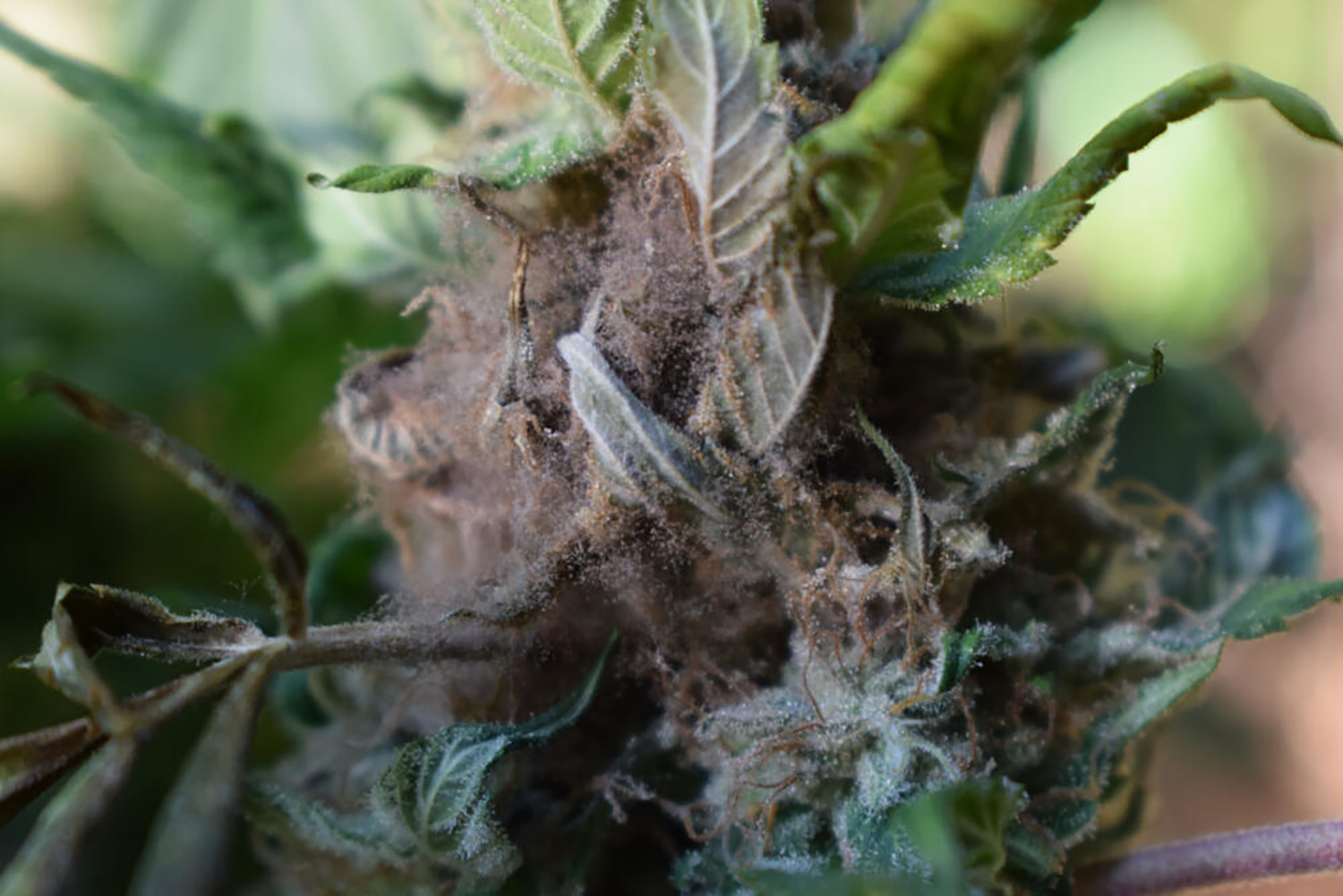
A severely infected bud. Note the webbed texture and brown color of the bud rot. This bud will have to be removed before the infection spreads too far.
Photo: Pong Pong/Shutterstock

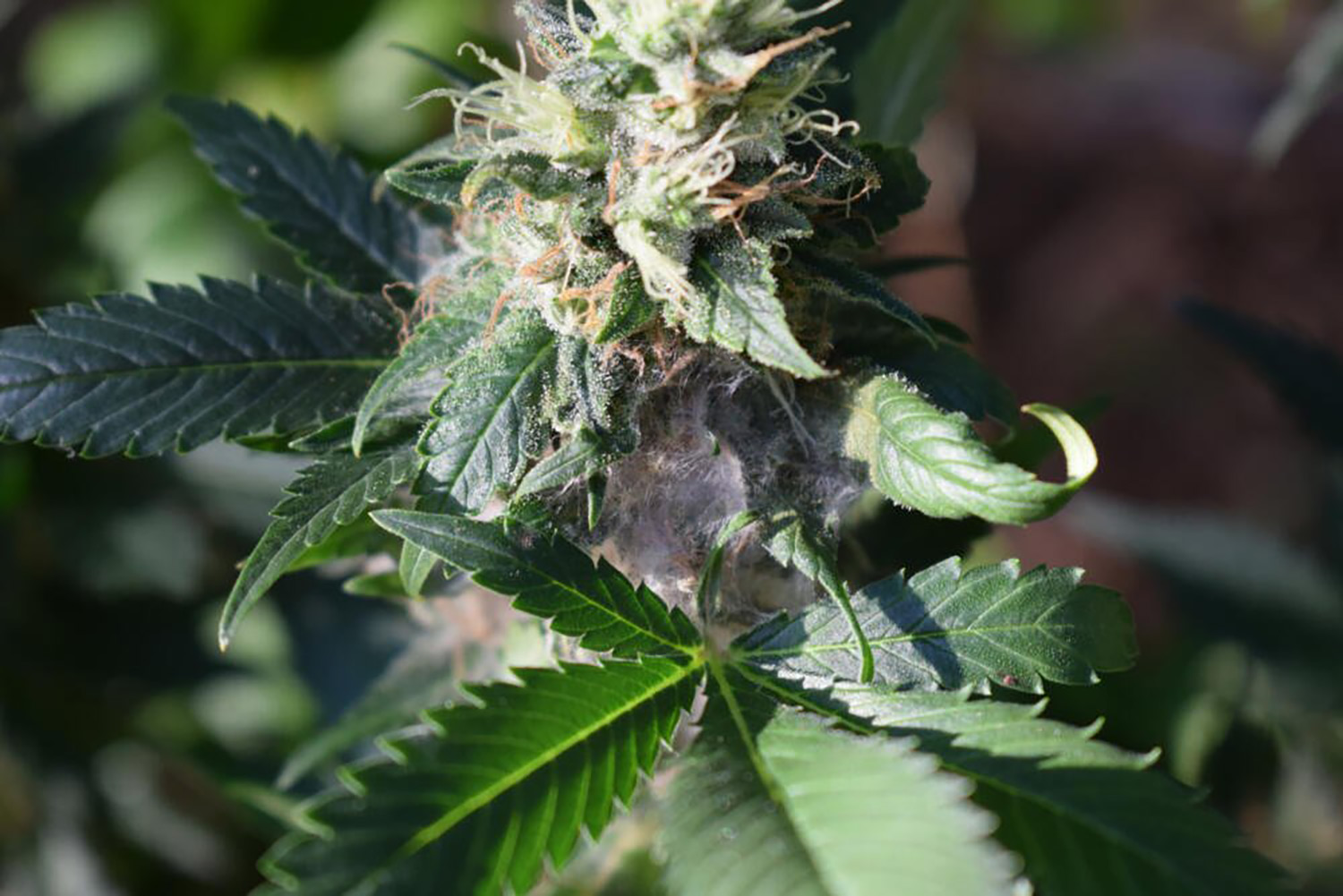
More exposed botrytis working its way up the young bud.
Photo: KilnKam/Shutterstock

Sometimes botrytis will make the bud look caky and dry. This bud will need to be removed from the area to prevent further spread of the mold to other plants.
BotrytisPowdery Mildew
Dry or webbed texture

Begins white but quickly turns brown or gray

Affects ALL parts of plant (above and below ground)

Geometric pattern not similar across plants
Powdery or โ€˜flourโ€™ like texture

White

Affects above ground parts of plant

Generally circular or ovoid (oval) patterning that spreads outward from center

Prevention & Treatment

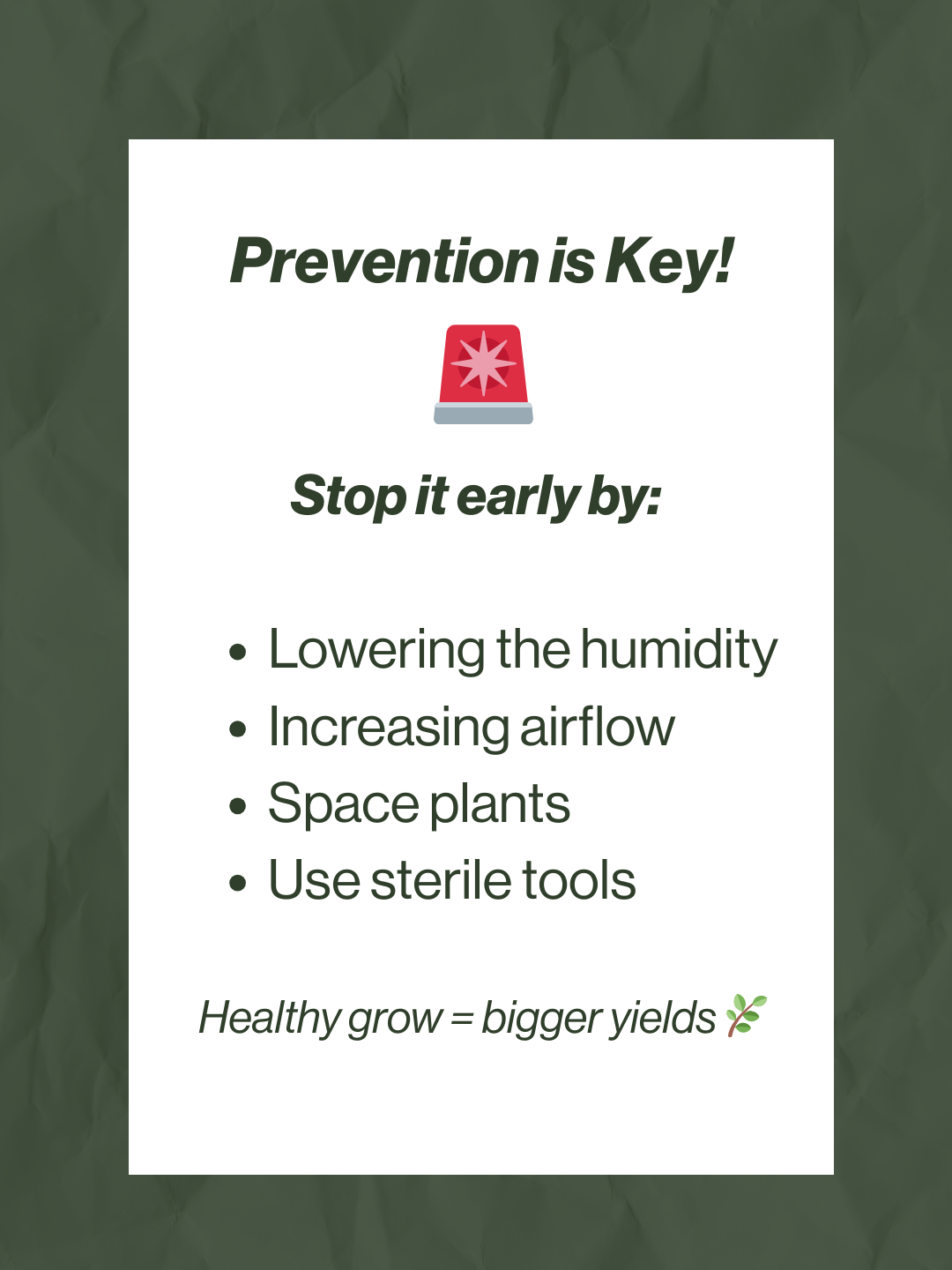
It may sound obvious but the best way to protect your crop is to prevent mold outbreaks before they happen. Below are some tips on preventing powdery mildew and Botrytis in your grow space.

PreventionTreatment
Keep Plants Healthy (Correct feeding)
Good light penetration

Good air flow/ventilation

Targeted defoliation

Clean/Sterilized cutting tools and work surfaces

Appropriate crop density

Monitor plants and room often to spot issues as they arise
Remove affected areas of plant

Increase ventilation to room

Discard all affected plant material outside of grow space ASAP

Destroy/Remove entire plant if mold infection is too wide spread

Change gloves or wash hands after removing affected plant material

Keep Plants Healthy

Avoid over or under feeding your plants as nutrient imbalances can cause serious stress which diminishes the plantโ€™s ability to naturally fight off pests and fungal infections. When a plant is taking up the appropriate amount of nutrients and water, and when it produces healthy levels of sugars within itself, it is able to resist disease and infestation to a much higher degree, if not entirely. The healthier your plant is, the less work you have to do for a better yield.

Appropriate Light Penetration

Make sure your plants are getting good light penetration to decrease moldโ€™s ability to infect lower bud sites, branches, and leaves. Mold does well in wet, dark conditions so increasing the light coverage on your plant will decrease moldโ€™s ability to harm your crop. Be careful not to place your lights too close to the top of your plants or leaves as this can cause light burn which can stress the plant out. 

There are various heights above the plant canopy that are optimal depending on type of light used (e.g. LED, MH, HPS, T5, etc.) and the technical specifications of any individual light. Keeping lights approximately 18 โ€“ 24 inches above your plant canopy is usually a safe bet but again consult the manual or manufacturer website for the unique specifications and any recommendations that may be found for the specific light(s) youโ€™re using. 
Air Flow:

It is critical to have proper air flow in your grow to prevent pockets of stale air and humidity from building up within the foliage or on stems or soil. In indoor grow spaces, wall and floor fans can be used to create air flow. Be cautious with the power setting and how close the fans are to the plants. The air movement is critical to preventing mold but too much force from air on the leaves will damage their structure and can lead to deformation and eventual premature death of the leaves.

Some indoor grow rooms and many commercial facilities also use HVAC systems to help recycle air in their grow space. These systems help to prevent accumulation of stale air, pathogens, mold spores, and excess humidity as well as introduce fresh air and CO2. If you can keep your grow areaโ€™s relative humidity below 60% (45% โ€“ 55% RH is optimal for flowering) you will greatly decrease the chances of mold outbreak. Many detrimental fungi and bacteria have a harder time establishing in an area that has less than 60% RH. Mold outbreaks can still occur at below 60% RH if grow area cleanliness is not maintained but will be less severe and will grow more slowly than at higher RH levels. Keeping a lower RH can help growers have more time to spot and treat any fungal infections that occur. 

In grow tents, intake and outtake fans are usually employed to help keep fresh air recycling into the tent and stale air/excess moisture out of the tent. Small, clip-on fans can often be placed on tent poles to help with air motion if you find the air in the tent is still too thick, humid, or stationary. Again, be cautious at what setting you put the fan(s) at and how close it is to the foliage. Again a relative humidity of less than 60% is preferable to reduce the potential of fungal infection

If growing outdoors, make sure your crop is planted in an area that gets good wind flowing through it. Check on the foliage, stems, buds (if in flower) and surrounding soil daily, or as often as you can, to monitor those areas of your plants for white, gray, or brown spots forming. Itโ€™s also helpful to monitor for any pest damage/infestations and treat these appropriately as soon as possible. 

Targeted Defoliation

Defoliation can improve air flow around your plant and can reduce the chance of mold outbreaks. It can also help the plant increase yields and potency by re-allocating energy from leaves that are older and/or may be shading out flower sites to flowers and newer leaves that are more efficient in photosynthesis (greener, more chlorophyll).

Defoliation requires some experience to get the hang of and must be approached with caution. Too much leaf removal can cause your plants stress which can harm yields and potency as well as lower the plantโ€™s ability to fight off pests and fungal infections. 

Defoliation is much more common in indoor grow spaces as leaves may not be receiving light evenly and thus some leaves may not contribute their maximum potential for photosynthesis. It still can sometimes be helpful when growing outdoors if your plant has a high leaf density thatโ€™s preventing good air flow but isnโ€™t as big of a concern usually as it may be for the indoor grower.

Many small leaves on the underside of the plant and within the plant structure on lower branches can be removed to improve air flow while removing less efficient leaves. Be cautious not to defoliate too many leaves at once or in one day. It can be helpful to remove some leaves every 3-7 days during later stages of vegetative growth and/or within the first 3 weeks of the flowering phase.  Try to not remove more than a total of 10-20% of a single plantโ€™s foliage to avoid stressing it out. 

ALWAYS USE CLEAN/STERILIZED TOOLS WHEN REMOVING LEAVES!

This fact cannot be stressed enough as dirty cutting tools (scissors, razor, scalpel,) can lead to greater chances of infection from bacteria, mold, and plant viruses/viroids. 70% isopropyl alcohol is recommended for sterilizing cutting tools against bacteria, but a 10% solution of bleach is recommended for sterilizing cutting tools against mold spores, plant viruses and viroids as isopropyl will not kill viroids. 

Try to fully remove petioles (leaf stem) when defoliating to avoid creating sites that are optimal for fungal infection. We recommend removing the leaf, cut at the base of the petiole where it connects to the plant stalk. Try not to twist, rip, pull, or otherwise tear at the leaves as this can cause wounds in the stem and leave behind pieces of leaf and petiole debris that act as sites for initial fungal infection.

Check out our defoliation guide for more precise information regarding defoliation techniques.

Plan Healthy Crop Density

It is important not to plant or place individual plants too close to one another. Appropriate spacing in your tent, grow room, facility, or outdoor field improves air flow and decreases the chances of fungal infection. It also helps to avoid moisture/humidity build up within and between plants.

Before stocking your grow area, plan ahead to choose the number of plants and the desired size of those plants appropriate for the space youโ€™ll be growing in. This will help prevent overcrowding and allow better air flow and light penetration to all of your plants.

Clean Grow Spaces in Between Harvests

Keeping your grow space clean and as plant debris free as you can is immensely helpful in preventing fungal infections. Clean floors, walls, and ceilings as well as any objects in the room in between harvests to eliminate any mold spores growing and keep new ones from gaining a foothold. There are many products that can be used to eliminate mold spores. A solution of 10% household bleach and 90% water is very effective in removing most mold spores. Distilled white or cleaning vinegar is also another easily obtainable option for cleaning grow spaces as it has a high acetic acid content which has antifungal properties. Vinegar is effective against many but not all types of mold spores.

If You Have PM or Bud Rot

 Prune the affected parts of the plant if possible. If there is mold growth on leaves, remove the entire leaf and petiole (leaf stem) and put these gently into a plastic bag or other container. If removed with too much force you may inadvertently knock spores into the air which will travel to other parts of your plant or to other plants in the grow area. After youโ€™re done removing affected leaves, quickly remove moldy leaf debris and throw away outside of the grow area, and outside of your home or facility if possible. 

If mold is growing throughout a stalk or bud, removal of infected areas is necessary. A good rule of thumb is to prune a few inches below the infected site and remove all affected plant material. 

There are some products available that are advertised as being able to clean finished bud from mold with little to no residual chemicals left in your flower after treatment. Due diligence to do your research on specific products that claim this is vital to ensure effective and non-toxic methods of cleaning bud if this is a strategy you wish to employ.

There are also many fungicides available commercially that work for vegging plants but many have potentially long lasting health effects so once again, do your research before introducing any new chemicals to your grow. 

Neem Oil

A natural fungicide that has been used for many years is neem oil. Neem oil is a naturally occurring oil that  comes from the seeds of the neem tree. Neem has been proven to have antifungal as well as anti-insecticidal properties and is not harmful to humans or pets. However, if you grow outdoors, be sure to not spray neem oil on plants bees may visit (flowers, vegetables, other pollen sources, etc.) as it can be harmful to them.

Copper Based Fungicides

Copper based fungicides are another non-systemic option for mold prevention and treatment. They are non-harmful to pets and humans and can be applied (if mixed in the appropriate ratio) without burning your cannabis plants. Copper based fungicides have shown great efficacy in killing mold spores and preventing their growth if applied correctly.

We do not recommend using any copper based fungicidal sprays outdoors as this can be harmful to earthworms and beneficial bacteria which are vital to soil health. However, if growing indoors without using living soil then copper fungicides can be a very effective treatment and preventative option for PM and botrytis. Copper fungicides are non-systemic and wonโ€™t harm your cannabis plants if applied in the appropriate ratios which can be found in the product manual that comes with the fungicide.

Baking Soda

Baking soda is another way to organically deal with powdery mildew and mold. Mix half a teaspoon of baking soda per quarter of a gallon of water, put this solution into a sprayer and spray the affected leaves and stems of your plant. Baking soda is another non-systemic fungicide which means it will potentially need to be re-applied if the issue reoccurs but it also means your plant wonโ€™t take it up within itself which is a very good thing when it comes time to enjoy your dried flower. 

Do Your Research

No one wants to ingest fungicide when enjoying their bud so avoid using synthetic chemicals that are systemic and stay within the plant. Some fungicides wonโ€™t flush out after the normal flushing period at the end of flower so be careful not to employ these chemicals as they are largely for ornamental crops and lawns that are not intended for ingestion by humans or animals. Always read the labels and warnings with any new product you introduce to your grow to keep yourself, others, and the environment safe.

Fungicide/Defoliation Not Working

We do recommend removing and destroying heavily affected plants in situations where defoliation and/or pruning are unable to appropriately remove fungal infection sites. Sometimes the spread of mold and mildew is so vast over the plantโ€™s surface that it is safer to remove the plant entirely before the issue spreads to the rest of the room. Be sure to wear gloves while removing infected areas of plants or while removing whole plants and throw those gloves away before touching clean surfaces or other plants. This practice will limit the spread of mold spores which can destroy your crop quickly.  If gloves arenโ€™t available, wash your hands thoroughly as soon as possible to avoid further spread of any fungi.

Make sure to increase the ventilation to the grow space to keep mold from coming back and establishing a foothold. 

Fungus and mildew are huge concerns for any grower whether they are a home or commercial grower. If left untreated it can destroy whole crops by negatively affecting plant health, diminishing yields, and rendering infected, untreated plant material hazardous for human consumption.  With proper environmental conditions and adherence to best growing practices you can avoid the catastrophe of diminished yields and the loss of an entire crop. Always be cautious if utilizing any fungicidal treatment. Always read the labels and warnings on the product and do your research before applying anything new to your grow room or garden.  We hope this introductory guide has been helpful and that you enjoy many great, mold-free harvests in the seasons to come!


Happy Growing!

Dirty Bird Genetics Presents: VOLUME SERIES vs ALPHA SERIES vs TESTER by Beth Mathieu

blog featured image

Let's agree: the Dirty Bird Genetics family are nerds (in the most endearing way...obviously), so of course we would overthink things like pricing when it comes to assigning value to our genetics. Because we recently threw a new menu at you with the launch of our Alpha Series, we wanted to take a moment to explain where our heads are at when we are deciding which of the menu tiers a strain gets released into: 

ALL STRAINS ARE: 

  • Highly promising and exciting on multiple levels.ย 
  • Tested by a lab for cannabinoids and terpenesย 
  • Grown out and tested indoors by yours truly.ย 
  • Herm-free unless specifically noted in the profile (which would be tremendously rare).ย 

VOLUME SERIES: Volume releases are reserved for the best of the best. What that means is very personal and it evolves with time as we learn and grow, and as our genetics become more and more refined.  If a cultivar is released in the Volume series, then you know that strain is some of our best work to-date. We have a very high level of confidence in these genetics, and that standard only grows month-to-month and year-over-year. At present, a strain released into the Volume series meets the following criteria: 

Test results for cannabinoids + terpenes came back very favorably. 

Morphologically stable and vigorous - We are looking for homogeneity here and will always speak to phenotypic variation within the strain descriptions. 

Expressed desirable traits such as well-proportioned internodal spacing and high calyx to leaf ratio. 

Terpene profile is ON POINT - complex, pungent, in your face. We are big fans of unique terpene profiles. 

Quality observed is consistently high-level in all of the seeds we tested. 

Yield is moderate-to-high 

Overall bag appeal and trichome coverage is high


ALPHA SERIES: The ALPHA Series is the newest addition to the Dirty Bird Genetics menu. As weโ€™ve grown and evolved as breeders, our standardsโ€“ like our geneticsโ€“ have grown and evolved, too. We set a very high bar for our Volume series, and itโ€™s a bar that is increasingly rising. Many of our favorite projects may miss that bar ever so slightly, for one silly reason or another, while still being truly phenomenal overall. The ALPHA Series is home to these genetics. It offers budget-friendly, high-end cultivars that go well above and beyond the genetics you can source at similar price points.

 Alpha Series strains meet all of the same criteria as the Volume series, but one thing likely gave us pause. For example, the Apple Peelz (Sex Melon x Bad Apple) is one of our favorite boutique strains to-date, but 10 days into flowering we threw out two plants in the test run that had really serrated, arugula-like foliage (like the Brunch โ€œarugula cutโ€) because we needed to save space. The project finished phenomenally, but because we werenโ€™t able to see how that phenotype finished, we felt we couldnโ€™t release it into the Volume series. This series will definitely be maximum bang for your buck! 


TESTERS: Let me first say, it was probably unwise to name the Tester series, โ€œTesters.โ€ One might assume we havenโ€™t grown these out when in fact we have. The Tester series is home to the projects that we see a lot of potential in and think people would enjoy, but that missed the mark in a meaningful-enough way that we cannot justify releasing it as an Alpha or a Volume release. This might include long internodal spacing, too much phenotypic variation, or foliage that is denser than we prefer. Many of these projects are good enough to continue breeding forward, or working into other projects. Testers are released at a price point that is super affordable for any grower, but the quality is good enough that we think even the connoisseurs would find loads of keepers here. Some of our favorite cuts ever have come from Tester series genetics. 


Shop Dirty Bird Genetics here!


As Always, Happy Growing!

The Making of the Black Goliath Auto

Dirty Bird Genetics Celebrates the Launch of their first Autoflower 

By: Beth Mathieu, owner of Dirty Bird Genetics

Dirty Bird Genetics Alpha Series - Black Goliath Auto Fem is available Friday, February 13th! This release is limited to 100 packs so don't miss out!

Black Goliath Alpha Series Cannabis Seeds by Dirty Bird Genetics

Dirty Birdโ€™s release of the Black Goliath Auto marks a very special occasion for our team as the proud launch of our first-ever autoflower strain. At the time of this drop (Feb 2026), our autoflower program is 18 months in the making, and itโ€™s still in its infancy all things considered. We anticipated that we would work most strains for several generations before achieving the stability we were looking for in order to release them. But out of the 100 auto breeding projects weโ€™ve done over the past 18 months at Dirty Bird, the Black Goliath Auto (Anvil F7 x Sour Gorilla) genetics stood out enough to become not just a tester drop, but an elevated Alpha Series drop. In deciding to release these, we tested three cohorts of the F1 seeds, and we were able to observe about 75 plants total. We wanted to be sure of these genetics before letting them out into the wild, and at this time, we feel the strain has more than proven itself.ย 

The Black Goliath is one of those strains that will stand out in any garden due to its dark purple flower (the photos do not do it justice), incredible, dense yields, and a terpene profile that ranges from pine to skunk to cherry chapstick. For an F1, the stability and homogeneity of the Black Goliath is quite remarkable. We credit this, in large part, to the Anvil F7 powerhouse mother we selected to breed with (a heartfelt shout out to Gnome!). The Anvil F7, a wildly stable IBL by all accounts, is your classic indica: itโ€™s short and stout with a strong central cola, solid purple flower, and bright green foliage. The Anvil definitely brought its A-game to this cross, lending to the low PVI, the dark purple (almost black) flowers, the high density, above-average yields, and the elongated central cola.ย 

Black Goliath Auto on day 31 looking super consistent
Anvil Auto - photo credit to Gnomeย 

The Sour Gorilla, on the other hand, brought the sugar and the terps to the cross, and it helped stretch out the otherwise super-compact structure of the Anvil. The Sour Gorilla mother that we used in this creation is our own cross of Humboldtโ€™s Sour Apple Auto x Fastbudโ€™s Strawberry Gorilla Auto. The Sour Gorilla Auto is wonderfully sugary and appley, and it grows like a typical hybrid of medium height and density.ย 

Sour Gorilla Auto (Sour Apple x Strawberry Gorilla) by Dirty Bird Genetics

Combined, the Black Goliathโ€™s Anvil F7 x Sour Gorilla lineage came together wonderfully. In looking at the pictures below, youโ€™ll see that this is strain with very strong central colas. In the spirit of experimentation, we topped 10 plants just to see, but the untopped plants definitely outshined them. I will note that we test all of our autos exclusively in three gallon pots, and I do expect that in a larger pot size, this strain would have done very well topped because the plants do create a very even canopy. Play around with topping if youโ€™re into that, and if youโ€™re not, this is going to be a great set-it-and-forget-it morphology. 

Overall, we are really proud of this creation and excited for you to grow it at home and give us your feedback. These seeds are very limited. We were only able to release 100 (3) packs. That said, we will be continuing to work these genetics forward,  and we are really looking forward to bringing you more in the near future as we continue to perfect this great cultivar. 

As always, Happy Growing! 

Beth + Team Dirty Birdย 


More Dirty Bird Genetics Articles


Shop Dirty Bird Genetics

NASC Grower’s Choice Awards 2025 Results

Congratulations to all the winners and thank you to all who voted in the NASC Grower's Choice Awards 2025!

2025 Strain of the Year - Autoflower:

Gorilla Cookies Auto by Fastbuds

Banana Purple Punch Auto by Fastbuds

Banana Jealousy Auto by Ethos

Frostbanger Auto by Fastbuds

Gorilla Z by Fastbuds

2025 Breeder of the Year - Autoflower:

Fastbuds

Mephisto Genetics

Night Owl

Ethos Genetics

Twenty20 Mendocino

2025 Strain of the Year - Photoperiod:

Blueberry Muffin by Humboldt Seed Co.

Slurricane #7 by In House Genetics

Frozen Bag by Square One Genetics

Permanent Marker by Seed Junky Genetics

Dirty Mimosa by Dirty Bird Genetics

2025 Breeder of the Year - Photoperiod:

Square One Genetics

Dirty Bird Genetics

Humboldt Seed Co

In House Genetics

Ethos Genetics

2025 Strain of the Year - Smoke:

Slurricane #7 by In House Genetics

Blueberry Muffin by Humboldt Seed Co.

Irie Maiden by Romulan Genetics

Chicken N Wafflez by Humboldt Seed Co.

FX3 by Solfire Genetics

2025 Strain of the Year - Extract:

Blueberry Muffin by Humboldt Seed Co.

Honey Banana by Lovin In Her Eyes

White Thorn Rose by Huckleberry Hill Farms

Frozen Bag by Square One Genetics

Trich Beast by Solfire Gardens

2025 U.S. Craft Breeder of the Year:

Dirty Bird Genetics

Ethos Genetics

In House Genetics

Square One Genetics

Humboldt Seed Co.

2025 Strain of the Year:

Blueberry Muffin by Humboldt Seed Co.

2025 Breeder of the Year:

Fastbuds

How Do Color, Shape, + Size Affect Seed Germination?

Results: Seed Color/Shape Viability Test

By Ben Morris / Head Breeder, Dirty Bird Genetics

To test whether a seedโ€™s size, color and/or shape influences its ability to germinate, we tested 50 seeds of various sizes, colors, and shapes. All seeds were placed in distilled water and separated into five solocup shot glasses based on their size, shape, and color. We germ-tested 10 seeds in each of the following five categories: Large-Dark, Small-Dark, Large-White, Small-White, and Dark-Odd Shaped (meaning not elliptic as most cannabis seeds are). All seeds were stored in their respective shot glasses, placed in a box together, and left in an environment with low to no light, minimal air flow, approximately 60% ambient relative humidity, and at a temperature of approximately 75 degrees Fahrenheit. The seeds were observed on day 3, day 5, and day 8 to determine germination rates and progress.

Disclaimer: As a disclaimer, I would like to state that this was a preliminary test of seed viability with a very small population size. For conclusions that are statistically significant, more testing will need to occur with larger population sizes. This is by no means a definitive test of seed viability but rather a preliminary inquiry into this issue. This test was mainly to show that seeds with lighter colored to white seed coats, as well as abnormally shaped seeds, and smaller seeds can still be viable.

Day 1:

The 10 seeds of each category are laid out before being placed in germinating cups.

From Left to Right: Odd Shaped, Small-White, Large-White, Small-Dark, Large-Dark.

The 10 seeds of each category in the germinating cups as seen from above.


Day 3 Germination Results:

After 3 days the seeds were laid out on a background for observation of germination progress. The images below show the results found. The white seeds from both the small and the large categories turned a darker color after 3 days in the water in the cups, but these are the same seeds of those categories as shown in the first image of all the seeds in this study.

The Large-Dark seeds showed 8/10 seeds with the radicle exposed after 3 days.

The Small-Dark seeds showed 10/10 seeds with the radicle exposed after 3 days. The lesser amount of seed coat on the Small-Dark seeds may have allowed faster imbibition (taking up of water by the seed).

The Large-White seeds showed 7/10 with exposed radicles after 3 days.

The Small-White seeds showed 2/10 with exposed radicles after 3 days.

The Odd-Shaped seeds showed all 10/10 radicles exposed after 3 days. One seed appears to have 2 radicles coming from a single seed coat. This is most likely due to 2 zygotes forming within the plant ovary very shortly after pollination or due to 2 seeds fusing as they formed.


Day 5 Germination Results:

After another few days in the dark and in the distilled water the seeds were again taken out and observed. Below are images of the results on day 5 of this experiment.

All 10/10 Large-Dark seeds are now showing exposed radicles after 5 days.

  All 10/10 Small-Dark seeds continue to show exposed radicles after 5 days.

Large-White seeds are showing 7/10 exposed radicles after 5 days.   

Although difficult to see, 3/10 Small-White seeds are now showing exposed radicles after 5 days.

After 5 days, 10/10 Odd-Shaped seeds are still showing exposed radicles. One of the โ€œtwinโ€ radicles broke off of one of the Odd-Shaped seeds. The first seed all the way to the left of the image does have an exposed radicle but its slightly darker color makes it difficult to see. Once zoomed in, anyone can see that a small, discolored radicle is exposed.


Day 8 Germination Results:

After 8 days total the seeds were observed for a final time to see the results pictured below.

After 8 days, 10/10 Large-Dark seeds show exposed radicles.       

     After 8 days 10/10 Small-Dark seeds show exposed radicles and 3/10 even show cotyledon.

After 8 days 7/10 Large-White seeds showed exposed radicles.   

       After 8 days 3/10 Small-White seeds showed exposed radicles.

All 10/10 Odd-Shaped seeds are still showing exposed radicles after 8 days.


RESULTS:

Preliminary Conclusion:

  • Many shapes, colors and sizes of seeds can be viable. 
  • Dark seeds have the best germination rates, regardless of whether they are small or large. 
  • White seeds are significantly more viable if they are larger. Small white seeds performed poorly in this germination test. 
  • Seed shape has no affect on viability. 
  • Using our germination method, seed viability was determined and unchanged by Day 5. 

Based on the limited results of this preliminary study, many shapes/colors/sizes of seeds can still be viable. They donโ€™t all have to be large and dark colored although having a dark colored seed coat does seem to have a positive correlation with germination viability. It also seems that a larger seed may have a better chance of germinating as seen in the results between the Large-White and Small-White seeds with the Large-White having a 70% germination rate and the Small-White only having a 30% germination rate.  From the limited results of this simple experiment, it appears that seed shape didnโ€™t affect germination rates with the Odd-Shaped seeds having 100% germination just like the seeds in the Large-Dark and Small-Dark categories.

One parameter not reflected in these results is the pressure with which you can apply to a seed to test viability. Lightly (very lightly) pinching a seed between your thumb and pointer finger and seeing if the seed deflates or pops can be a relatively reliable method of determining germination viability. Just a light pressure should give the kinetic feedback to know that the seed is โ€œsolidโ€ and probably will germinate or will deflate/pop the seed and thus that seed was not viable. One thing many people seem to do is apply too much pressure to seeds when they check in this way. Again, light pressure is all that is required. One does not need to squeeze as hard as they can as this can give false results since enough pressure can pop any seed regardless of viability.

For more info on how we germinate, please see our Germination Guide here.


As Always, Happy Growing!

Head Candy by Dirty Bird Genetics: A Full Report

Every season, I take a gamble and test new genetics in my outdoor garden, hoping to find a keeper that checks all the boxes important to me as a grower: finishing time, unique and pungent terpene profile, stunning bag appeal, and ease of harvest. I always find a few solid strains - itโ€™s hard to find perfection, after all. Every so often, however, I get lucky and a strain checks off all my boxes and then some. Head Candy by Dirty Bird Genetics proved to do exactly that this season.

Head Candy Cannabis Seeds by Dirty Bird Genetics

Earlier this fall, I featured the Head Candy in Homegrower Happenings: Outdoor Harvest 2025 as my favorite strain. I found myself so impressed with the genetics through every step of the grow, and not at all surprised when the strain was a dream to harvest. The leaf to calyx ratio lended well to my arthritic hands, and zero bud rot or mold/mildew was to be found in the dense, sugary, greasy buds that filled my basement with pungent piney citrus scents.ย Iโ€™ve since bagged up my harvest, happy with the high yield and dense structure of the dried buds (sometimes a large cola shrinks down in drying - not the case here!). The stunning terpenes and color were still present when bagged up, with sugar and bud density not to be rivaled.

Once the Head Candy was cured up, the quality could not have been more clear. The stunning magentas and deepest purples blended beautifully with shocking lime greens and dense white sugars, all visible in hand when crushing up dense dank buds. The tropical fruity citronella pine terpenes overwhelmed my senses in the best way straight out of the bag. After harvest and cure, those terps remained shockingly strong, offering a unique and intense smoking experience. Expect a relaxed, happy, heady high that lasts and lasts.

The Sex Melon x Grape Cake Head genetic pairing proved truly something special to grow, and to my sheer delight just as special in smoke. I cannot wait to cozy up on these chilly nights to enjoy the Head Candy high for months to come; and then I'll probably just grow more!

A perfect selection, if you're looking to wind down after a long day and enjoy your partner's or a good book's company. I can confidently say the Head Candy was my absolute favorite plant this past season in every way that matters from seed to smoke. I urge any grower to give it a shot - you will not be disappointed!

Explore more Dirty Bird Genetics Volume Drops!

And As Always, Happy Growing!

Dirty Bird Turns 2!

Dirty Bird Genetics: Past, Present + Futureย 

Dirty Bird Genetics is celebrating two years this October 13th, and Iโ€™ve been looking forward to taking this opportunity to provide our grower-family a sneak peak at some of the exciting projects that have been taking shape behind the scenes.ย 

Ben, Devin, Beth, Siobhann + Joe

Now more than ever, I am so unbelievably proud of the work our team is doing. Ben, Siobhann, Devin, Sarah, and Joe are the last people in the world to want a spotlight shone on them, but they are amazing, and they are so passionate and invested in their jobs. Our efforts have compounded in a very observable way this year, and with each new breed we test, we are seeing that take shape more and more. The excitement and optimism has been palpable. We have gotten increasingly intentional in our selections, and as we compile more and more data on our genetics and their combining potential, we become exponentially more effective in the projects we run and the outcomes we receive.

Here are some fun Lifetime Stats + Fun Facts that shed light on all the hard work weโ€™ve been doing behind the scenes at Dirty Bird.

Lifetime Stats + Fun Facts: 

Sour Moose

Looking Ahead 2025-26: 

Autos! 

This year, while we continue to develop and improve upon our photoperiod lines, we will also be going full force on developing autoflower genetics. Autos are a whole new beast for us, and we have been working hard on them for well over a year now. We hope that in the coming year, we will finally have some genetics that meet our standards for release. In the meantime, you may catch some small auto freebie releases at NASC. Mind you, these are not complete, and we are always looking for your feedback! 

Photoperiods!

At Dirty Bird, we are constantly growing new genetics by the breeders we know and love, but only a select few make it into the breeding rotation. They have to be truly spectacular, and they have to serve a purpose in the advancement of our own genetics. Some exciting new additions this year will include the Acapulco Gold (Barneyโ€™s Farm) and the Cherry AK47 x Jungle Cake (Seed Junky). Both of these cultivars got us really excited due to their unique terpene profiles and strong morphologies, so stay tuned and you will almost certainly see these genetics grace our line up in the year to come.ย 

Over the course of the past few months we have wrapped up breeding projects with the Maui True Blood (Sticky Finger Seeds), Grape Cake Head (Jungle Boys), Moose n Lobstah (Dynasty), and Bad Apple (Dirty Bird), so expect the best selections from these lines to drop as we test them. Here are a couple photos taken straight from the garden by yours truly (Beth) of genetics from these lines that weโ€™ve recently tested and loved:ย 

Dirty Sangria x Maui True Bloodย 

Lots of diversity was observed in these genetics, but high trichome production, complex and vibrant tropical terpenes, and overall bag appeal was consistent. Definitely expect these seeds to grace our menu in some capacity very soon! 

Maui Moose (Maui Wowie 2.0 x Moose n Lobstah)

The winning pheno of the Maui Moose, as seen above, was an incredible fusion of both parents, with early weight, great stacking and morphology, a complex pine/rubber/rhubarb/cantaloupe terpene profile, and beautiful, knuckly, lime-green flower. One of our favorite keepers of 2025. These genetics can be found in the Moose Duo pack, and in the Moose Multipack set to release 10/11/25 on the Dirty Bird direct website.ย 

Head Candy (Sex Melon x Grape Cake Head)

The Sex Melon mother used in this project is one of our favorite mother plants of all time and she really shined in this mashup with the Grape Cake Head. From the beautiful purple and neon-green coloring, to the complex, tropical Sex Melon-dominant terpenes, this strain was an exciting cultivar to grow, and they packed on some serious sugar. To top it all off, the majority finished very early, between day 50 - 55, and were some of the best to come out of our outdoor garden this year as well.

Sex Melon (pregnant) with Chocolate Pie Pollenย 

Lastly, here we have one of our all time favorite cuts - the Sex Melon #3 - pregnant with one of our favorite fatherโ€™s pollen: Chocolate Pie (Cannarado). These seeds have now been harvested and will be tested in the coming months. Anyone who purchased on the DB Anniversary will receive some of these seeds to try out alongside us!ย 


The Brunch Lives Onโ€ฆ

The Brunch was our flagship strain at launch two years ago, and has been a project that weโ€™ve continued working on in the background as we work towards making a Brunch IBL. Currently, we are testing our F4s in preparation to move on to the F5 generation, where we hope to start seeing increased homogeneity. The traits we have been working toward stabilizing include: deep purple and maroon coloring, apple terpene profile, increased yield, connoisseur-level bag appeal. 

Brunch F3

We made some major strides with the Brunch F3. We bred forward two Brunch lines and ultimately selected the Brunch F3 v139 line to use for our F4 generation due to their superior coloration, increased yields, and apple terpene profile. These seeds are available for purchase as a Reg Tester, dropped 10/3/2025.ย 

If youโ€™re interested in a more detailed generational history that walks you through the evolution of the Brunch, check out the blog I wrote here.ย 

Thank you all for supporting Dirty Bird Genetics, giving us feedback, fueling our excitement, and giving us a means to continue on with this passion project. It is truly a dream for each and every one of us! 

Cheers to another great year! 

Bethย 

Read more about Dirty Bird strains from our growers - staff and affiliate and customer, alike!

Select Dirty Bird Strains!

Curious? Explore Dirty Bird Testers!


And As Always, Happy Growing!

Discover Sex Melon: Growers Notes from Triple333Grow Genetics

We were thrilled to hear back from the growers at Triple333Grow Genetics about their run of Dirty Bird Genetics' Sex Melon! Check out what they have to say....

Sex Melon

Some strains sound sexy in name only, but Sex Melon earns it. A cross of Watermelon Slush from Lovinโ€™ in Her Eyes and Dirty Birdโ€™s The Brunch "Loverโ€™s Cut", this one brings the gummy watermelon funk of the โ€™90s straight into the grow room. The result is tropical bubblegum and sharp melon terps backed by purple speckled flowers that look like they were designed for the camera.

Opening our jars were like cracking into a fruit stand in another dimension: aggressive tropical fruit, sweet tarts, floral notes, and in some phenos, a surprising streak of musk and gas. Limonene, pinene, and caryophyllene dominate, painting a terp profile thatโ€™s equal parts refreshing and intoxicating. This is the kind of bud you smell before you see.

On the high side, Sex Melon doesnโ€™t come in hot with energy. Instead, it offers a euphoric lift that softens into full-body ease. At over 30 percent cannabinoids, itโ€™s powerful but never overwhelming. Perfect for stress, anxiety, or just slipping into the moment. Itโ€™s a daytime hybrid if youโ€™re not chasing productivity, and for plenty of smokers, itโ€™s also lived up to its name as a legit aphrodisiac. 

Growers will find a plant thatโ€™s as fun to look at as it is to cultivate. Sex Melon flowers in about 60 days, stretching just enough to stack properly spaced colas. She throws deep purples, splashes of pink, and lime green throughout her dense flowers, often dusted with a trichome coat so heavy they dubbed some phenos โ€œpurple leopards.โ€ Yields run moderate to high, and every pheno comes with personality, loud terps, showpiece structure, and serious bag appeal. Itโ€™s no stretch to say this one became a household favorite at Triple333grow.

Sex Melon is Dirty Bird Genetics at their most playful and precise: a photogenic hybrid that smells like teen spirit, tastes like tropical candy, and smokes like a smooth exhale into euphoria. Put simply itโ€™s funk, fruit, and fire all wrapped in one.

Discover Sex Melon today!

Explore more from Dirty Bird Genetics!

And As Always, Happy Growing!

Staff Picks from the Dirty Bird Genetics Grow Team

Get the insider scoop on some of the best genetics the Dirty Bird team has to offer, with staff growers offering insights on each of their top 3 strain picks (so far)!


Beth's Picks:

pine tree kush cannabis seeds by dirty bird genetics

(Grape Jelly* x Platinum Kush Breath Remix *Jelly Breath x Chocolate Pie)

I have an affinity for this plant. Ben says that when I look at it, I get this shit eating grin on my face, and I know he isnโ€™t wrong. The buds are so dense. SO dense. Sheโ€™s all calyx and they stack in this unique, knuckly way. Sheโ€™s a bit of a stretcher with semi-long internodal spacing, but the gorgeous, boutique flowers she amasses are actually respectably sized unlike many of her ilk, and theyโ€™re some of the best quality flowers Iโ€™ve ever seen. To top it all off, her terpene profile is this striking mash up of pine, lemon pinesol and grape. Itโ€™s super complex and one of my favorite terp profiles ever. 

pine tree kush cannabis seeds by dirty bird genetics

Sour Lime Haze x Skunch

The Roadside Haze was one of our first that I felt nailed that perfect trifecta of yield/morphology, quality, and terpene profile we are looking for when we breed. The quality and potency of this strain is incredible considering how well it yields and how vigorously it grows. Sheโ€™s incredibly sturdy and an all-around powerhouse. 


Sour Moose:

Sour Lime Haze #5 x Moose & Lobsta #11 F1

It was so darn hard to choose a winning pheno out of this run. From veg on, this cultivar stood out in a serious way to the whole team. Her stalks were crazy thick, her leaves were super large, and her health and vigor was super striking. She was one of the most gorgeous powerhouses weโ€™d ever tested. And that didnโ€™t stop with veg. Every single one of her progeny were keepers in their own right, and her homogeneity was notable for an f1 cross. I think the potential in these genetics is off the charts and we are really excited to continuing breeding with this line. 


Siobhann's Picks:

Dam-a-lam* x Skunch *(Dolato x Chocolate Pie)

Beautiful plant. Super terpy and frosty. Extremely smooth smoke - mellow high. Easy to grow - great for low ceiling grows.

Cold Queso Tester by Dirty Bird Genetics

The Brunch โ€œLoverโ€™s Cutโ€ x Dirty Mimosa

A Brunch and Dirty Mimosa mashup with terps that come out atrociously addictive. Moderate internodal spacing allows for good airflow without defoliating.

bad apple cannabis seeds by dirty bird genetics

Dirty Mimosa 'White Cap Cut' x Mimosa

Takes something great and makes it better. A powerful zippy sativa in 50 days, in half the space with twice the yield of a traditional sativa.


Sarah's Picks 

Dam-a-lam* x Skunch *(Dolato x Chocolate Pie)

... because of the crazy terps.

Sour Moose:

Sour Lime Haze #5 x Moose & Lobsta #11 F1

Incredibly easy, very little maintenance with great yields and awesome results. Will not disappoint any grower.


Dirty Bird Genetics > Mezzaluna Tester

Total Eclipse x Skunch

She may need some love and attention as she puts on weight, but man what a gorgeous plant. Really dark people with beautiful contrasting soft orange with hunts of pink in the fan leaves. She looks AND smells great.


Devin's Picks:

Thousand Oaks x Maui Wowie 2.0

Knockout power for the novice smoker. Unlimited power for the daily user. Incredible growth speed and overall strength. 

Watermelon Slush x The Brunch "Loverโ€™s Cut"

Majestic looking when vegged out, and a colorful beauty in flower. Tasteโ€™s fruity and is a perfect hybrid to smoke early and often. 

Hawaiian Dream x Royal Blood x Family Secret


Ben's Picks:

sour lime haze cannabis genetics by dirty bird genetics

sex melon cannabis seeds by dirty bird genetics


Learn More from The Birdhouse

Featured in the NASC Journal


Shop Now!


Rep Dirty Bird and more! Shop breeder and NASC merch!


Smoke Report: Brainstorm by Dirty Bird Genetics


Are you looking something new to grow that will impress your senses? For this round, Crystal smokes and gives feedback on the Brainstorm by Dirty Bird Genetics.


Brainstorm is another visual spectacle by Dirty Bird Genetics. She has immense bag appeal, displaying some really dense and dark, purple buds. After cracking one of these chunky nugs open, the aroma was mostly sweet and earthy, but slightly peppery and floral, too. You can taste the same profile on the exhale, sweet and earthy with an overarching, peppery glaze. It is a really satisfying combination of savory and sweet.

Brainstorm is an indica leaning strain that is made up of Slurricane #7 x The Brunch F1 #5.


The effect of Brainstorm was extremely appealing and I enjoyed smoking this one. It was intensely calming and soothing, but without that feeling of being a sunken anchor. The feeling of contentment was next level and I definitely did not mind the lack of motivation. It put me into a quiet existence without anxiety or racing thoughts. This would be the perfect strain to enjoy while lounging at the beach, cozying up by a fire, or soaking in a hot tub. Brainstorm has the power to wipe a stressful day away.


Brainstorm grows like a champ! The various hues of purple in the leaves and the dense buds caked with trichomes will leave you in awe. She thrives outside and would make a great addition to your garden this year!


Shop more strains from Dirty Bird Genetics here!

Customer Review: Lover’s Moon by Dirty Bird Genetics

Review By: Tanner D., NY

First I wanna give a massive shoutout to the folks at North Atlantic, and to Dirty Bird Genetics. This crop has been a dream to watch mature. With my last purchase, I received a few Lover's Moon seeds along with my order back last July(ish).

One of the phenos caught my attention early in flower. By week 6, I noticed something Iโ€™ve never seen before with a photoperiod. Fully cloudy trichs. High calyx:leaf ratio. Insanely loud sweet, red wine terps. This last one gives off an unmistakable โ€œdessert wineโ€ aromas. Harvested on day 37 with 10% amber trichs. Not a typo, 37 days. Two runs complete and this lady finishes in 6 weeks. Experimenting with fresh frozen/extracts and the rosin from this is to die for. Waiting to hear back for a COA on the flower.

Hereโ€™s a couple pics of this 37 day pheno of your Loverโ€™s Moon:

Going into my second year as a legal cultivator in NY, and I want to give you guys a big shout out for your genetics bringing big attention to my garden! Iโ€™ve got people blowing me up trying to get this cut, and the exclusiveness of this makes it that much more special to me (this is a first as far as I know). 
This crop has been insanely sentimental to me, as the (original) main star of the room was a pheno hunt of a cross of some old TGA Subcool Chernobyl x Black Raspberry Zkittles. Chernobyl was the first strain I ever grew back in 2010, gifted by my father who passed away last November. Lover's moon quickly stole the show, and my heart 100% with those beautiful colors and aromas. 

Top 5 Characteristics of the Lover's Moon:

  1. Extremely vigorous in veg, lots of lateral growth with medium internodal spacing.
  2. Top Shelf bag appeal. 10/10 frost.
  3. Offensively obnoxious loud terps. Berry/sweet red wine aroma with noticeable pine on the back end.
  4. A dream for extractions. The red wine aromas are so outrageously strong from lovers moon hash rosin, and it throws down a hefty yield.
  5. High Calyx : Leaf Ratio 

Like what you see? Awesome! Interested in unique, exclusive, unreleased genetics? Purchase Dirty Bird Genetics Volume today and choose from a variety of strain options!

Shop our qualifying drops below!

Outdoor Cannabis Seeds: Breeder Recommendations for Commercial Growers

The following collection of recommendations was sourced straight from the minds (and gardens) of some of our most sought after US Breeders: Twenty20 Mendocino, Brothers Grimm Seeds, Dirty Bird Genetics, Humboldt Seed Company, and Sticky Finger Seeds.

Please enjoy!


Breeder - California, USA


Notes from Adam, Owner

Twenty20 Mendocino

Twenty20 Has a deep rooted connection to outdoor cultivation.  Our origins date back to the prohibition era of cannabis in Northern California and have transcended through multiple iterations of the murky waters of legalization.   We pride ourselves on our relentless support of R&D and our continual desire to never stop pushing the envelope as we evolve with the ever-changing demands of the cannabis industry. In 2024 we expanded to Michigan with a full time facility dedicated to R&D and breeding.  This move, coupled with our pre-existing relationship with large farms in the state has bolstered our ability to selectively breed at a scale never seen before. We are proud to say that we have a multi year relationship as the sole genetics provider for one of the largest farms in the US, with over 300,000 plants and a canopy size of over 200 acres.  As the fungal pathogen Septoria has been rampantly devastating outdoor cannabis farms throughout the country, our well established relationships with large farms has enabled us to quickly breed resistant cultivars while continuing to keep our sights on yield, potency, hardiness, and mold resistance.  Our recent development of a new line of Hybridized Earlies has further fostered our relationship with outdoors farmers by providing them with a lineup of September ripening cultivars that enable farms to beat the cold, beat the fall and beat the odds. If there is one promise we can make, Twenty20 will never stop working at chasing the ever evolving needs of farms, home growers, and the cannabis community.

Featured Recommendations:


Snow-G by Twenty 20 cannabis seeds

(Snow-G F2 #28 x Snow-G F2 #10)

by Twenty20 Mendocino


EXTREMELY uniform. full term but still harvests around October 1st, very outdoor worthy. The Snow-G is an
F-3 that had been hunted in MI for multiple generations. It is a high yield, highly resistant variety that performs very well for concentrates
(both solventless and solvent). Home run winner for almost every farm that grows them.

Twenty20 > Limonada

(Limonada # 28 x Limonada #29)

by Twenty20 Mendocino


EXTREMELY uniform. harvests early October, extremely Septoria resistant strain that was grown and hunted in MIchigan in 2023 and 2024. Limonada is more of a Sativa and will likely yield more biomass than any other variety in the entire field but the potency is a bit less. Homerun winner for almost every farm that grows them.

Early Frost Fast by Twenty20 Mendocino

(SnowG F3 Photoperiod x Honey Badger F7 Autoflower)

by Twenty20 Mendocino


Proven by a very large farm in Michigan last year and this farm plans to grow them again this year. Potency is high 20's and ready for harvest in mid September. Out of the earliers it is the most uniform and
was the first to be harvested.


Breeder - Colorado, US


Notes from Laura, Owner

Logo for Brothers Grimm Seeds, featuring Gothic-style white text on a black background.

Old school breeding, next level genetics.

Learn more about Brothers Grimm with the NASC Cast Crew and Mr Soul on our Youtube channel!

Featured Recommendations:


Brothers Grimm Seeds Rosetta Stone

(Jack Herer female x STS-induced Cinderella 99 female)

by Brothers Grimm


Won top 10 strains in the world in high times 2018. Our highest yielding plant, our most medicinal strain, high in thcv 4.+, CBD and CBGA THC 25-30%, over 330 growers in the Australian grow off right now growing Rosetta 

Brothers Grimm Seeds Cinderella 99

(Princess x Cinderella 99 female pollen donor)

by Brothers Grimm


It has been known as the Holy Grail of Cannabis, Created by MrSoul, cerebral dreamy state, and one of the most stable breeding plants.

Brothers Grimm Seeds Apollo XX

(Genius female x Cinderella 99 female pollen donor)

by Brothers Grimm


The Apollo strain is famous because of its potent and long-lasting uplifting effects, often described as creative and mentally stimulating, similar to the Greek god Apollo who is associated with inspiration and the arts; this makes it a popular choice for users seeking a focused and energetic high. It also highest thc 31%- 33%


Breeder - Maine, US


Notes from Beth, Owner & Siobhann, Head Grower

A stylized bird skull with the words "Dirty Bird Genetics" above it on a black background.

Dirty Bird Genetics hails from the north-eastern climate of Maine, a climate characterized by one of the most challenging growing seasons in the US, and yet a climate that for decades has produced some of the best flower in the country. We take our Outdoor seriously here. If you don't know someone who reads bedtime books to their plants for eight nerve-wracking weeks a year, then you probably don't live in Maine. As a group of cannabis enthusiasts with deep roots in the clone industry, one of our initial goals when we first conceptualized Dirty Bird was to breed genetics that would thrive in our finicky and unpredictable climate. We saw the demand; and if they could thrive here, they could thrive anywhere in the US, we hypothesized. One thing that really set us apart at Dirty Bird is the insane genetics catalogue at our fingertips. With strong breeder relationships, we've pheno-hunted genetic lines for 15 years, and we've gotten feedback on these genetics, both indoor and out, from thousands of growers in the community around us. While we still continue on this lifelong journey of developing cultivars that are supremely viable outdoors, both commercially and for home growers, we are tremendously proud of the work we have done thus far, and eager to share it. We come to the table with experience and an unrelenting dedication to quality, transparency and integrity, and we are passionate about learning and growing with the community around us.

Featured Recommendations:


dirty mimosa cannabis seeds by dirty bird genetics

(Mimosa x The Brunch [Peanut Butter Breath x Mimosa])

by Dirty Bird Genetics


Siobhann says:

An absolute winner outdoors, as an early October finishing sativa strain. Super easy to grow and maintain, with lots of consistency across the seed population

Beth Says:

The Dirty Mimosa is my single best recommendation for outdoor grows, especially in Northern climates with a short growing season like we have in Maine. She is an incredibly early finisher, both indoors and out, and she is colorful and beautiful. It's one of the few cultivars we've grown that can achieve indoor-quality flowers in an outdoor environment.

necromancer kush cannabis seeds by dirty bird genetics

(Bubba Whip! x Grease Monkey)

by Dirty Bird Genetics


Siobhann says:

Has already won 2 outdoor competitions that we know of! A NASC's Discord picture contest - Outdoor Category and the Ohio Farmer's Cup (outdoor indica). A combination of 2 powerful indicas - Bubba Whip and Grease Monkey - that have both excelled in Maine's short/cold grow season.

Beth says:

The Necromancer Kush is one of the strongest testers we have, and this year, she surpassed our expectations in outdoor gardens across the country, even winning 1st place in the Indica Outdoor category at a harvest cup in Ohio. This cultivar has that classic kush structure but with great stacking, intense sugar, and amazing pine/gas terpenes. 

pine tree kush cannabis seeds by dirty bird genetics

(Grape Jelly* x Platinum Kush Breath Remix)
*Jelly Breath x Chocolate Pie

by Dirty Bird Genetics


Siobhann says:

A little more phenotypic variation than the other 2 strains, but very high quality. Very unique creamy lemon and gas/pine terps. About 50/50 purple to green ratio. Boutique quality with commercially viable yields. A stretchier plant in bloom, so while supports are needed outside, Pine Tree Kush has ideal growth for optimal airflow, especially in high humidity regions.

Beth says:

The Pine Tree Kush was one of our favorite cultivars of 2024. Her sharp and complex meyer lemon, pine, and berry terpene profile and her extremely dense, colorful bud structure make her stand out in any garden. It can handle a harsh environment and it produces high quality, colorful, terpy flowers. 


Breeder - California, US


Notes from Nat, Owner

Humboldt Seed Co Logo

Bred In Nature, Perfected By Science. For over two decades, Humboldt Seed Company has defined cannabis excellence from the heart of Northern Californiaโ€™s legendary growing region.At Humboldt Seed Company, quality isnโ€™t just a priorityโ€”itโ€™s a promise. Founded in 2001 by scientists in California, we began by breeding seeds for patients under Prop. 215 and have since expanded to serve both recreational and medical growers worldwide. With over 20 years of expertise, we are proud to be Californiaโ€™s largest licensed cannabis seed provider, offering a diverse selection ofย feminized,ย autoflower,ย triploid, andย regularย seeds. Our products undergo rigorous lab testing and extensive annualย phenotype hunts, vetted by Californiaโ€™s top cannabis farmers, ensuring stable genetics, high germination rates, and exceptional performance.

Featured Breeder Recommendations:


humboldt seed co jelly donutz fem

(Jelly Donutz (#160 x #17) x Hella Jelly x White Runtz)

by Humboldt Seed Company


We specifically bred Jelly D for that candy gas terp that everyone's loving these days! It's made from the Emerald Cup winning cut that made Runtz go viral! 

Hella Jelly aka Jelly Rancher

(Jelly Ranger Bx3 X Notorious T.H.C. X Very Cherry)

by Humboldt Seed Company


The Candy terp strain that tests in the thirties, finishes in mid Sep. and pretty much grows itself! Resilient to many pests and pathogens H. Jelly is both a farmer fav and a flavor fav!

Close-up of a flowering cannabis plant with purple-hued buds and white trichomes, part of the Grow Your Own Garden Multipack. The leaves are green with orange pistils.

(Purple Panty Dropper x Razzle Berry)

by Humboldt Seed Company


When I created/discovered the Blueberry Muffin strain in 2009 on our NE Humboldt medicinal farm I knew it was special. A trimmer actually called out the name and it was like a light shone down upon the plant and a chorus of ganja angels sang her praises, so I grabbed some cuts lol. Anyways over the years since, we've engineered (naturally) Blueberry Muffin seeds that 100% breed true for that original unicorn (that's our thing) and in the 15 years since, it's become a beloved strain all over the planet known for it's flavor, growing ease, early finish, and its anti-anxiety effect!!!!


Breeder - Hawaii, US


Notes from Will, Founder

Sticky Finger Seeds is a collective of Mauiโ€™s Medical Marijuana growers that have joined to breed the best medical cannabis genetics possible. Creative founder, Will Grinnell has been collecting and breeding cannabis genetics for over 48 years locally here in Hawaii and around the globe. Sticky Finger Seeds is a Cannabis genetic collective that specializes (takes pride) in growing and breeding heirloom and landrace cannabis genetics. Now closing in on five decades of cannabis farming and breeding cannabis enthusiast Will Grinnell has been seeking, trading, purchasing and collecting a variety of the best cannabis genetics possible, along with the Sticky Finger Seeds collective of heritage craft farmers and their seed collections.


Sticky Finger Seeds Hawaiian Dream

(Hawaiian Dream (50 yr Maui Hierloom x Blue Dream x Grandaddy Kush) x KY Jealousy (Ziplock Seeds 'Sinful' Cut Watermelon Mimosa X Jealousy))

by Sticky Finger Seeds


This plant has been pure magic since day one.  I was lucky enough to be gifted this old Hawaiian heirloom cultivar in 2010. I still use it as one of my primary parent plants for breeding as well as for current flower production. Hawaiian Dream is a monster grower (see attached pic) For me it is easier to grow outdoors in the open because it needs the space. It's a very stable and robust plant. The name "Hawaiian Dream" has a double meaning. When I was gifted this plant in 2010 I was having serious issues with my personal garden and strains (Root Aphids!) I  had to start all over and this was the plant I used. Its success eventually allowed me to live the "Hawaiian Dream" again.

Sticky Finger Seeds Maui True Blood

(Hawaiian Dream x Royal Blood x Family Secret)

by Sticky Finger Seeds


Probably my most fun and robust entourage crosses I have made. The stability and simplicity of this cross is divine with only Hawaiian Dream and Royal Blood as the parents. These 2 cultivars created spectacular characteristics together with the Hawaiian Dream's vitality and the Royal Blood's vanilla terps with gas. The Maui True Blood plants will bleed a blood red sap when cut. This novelty is lots of fun and seems to add a unique brix to the plants.

(Maui 'Ohana Secret)

by Sticky Finger Seeds


Another fun one that is a monster grower. I was super lucky to get these old Hawaiian "sock drawer" seeds and have a few pop and live. Over the past 30 years here on Maui I have had many Hawaiian friends gift me old Maui Wowie seeds that were long lost in a sock drawer or somewhere but they would never germinate. I then finally I got just a few to pop and that was the new start to the Maui Wowie legacy that we now call Maui Wowie 2.0. The parent lineage of this plant going back 60 years was entirely outdoor guerilla grow in the jungle so it is always ready to produce in a big outdoor farm.

(Hawaiian Dream x Blueberry Muffin (Humboldt Seed Co.))

by Sticky Finger Seeds


A perfect combo cross with Hawaiian Dream and Blueberry Muffin by Humboldt Seed Co. This simple cross made some magic. A very robust and large producer in the sun. This strain makes the entire neighborhood smell like a granny's having a blueberry bake off.


Are you a personal home grower who happened upon this post? Well, that's awesome!

Go ahead and check out more exciting outdoor cultivar recommendations sourced from staff, customers, and breeders below!

Smoke Report: Grease Truck by Dirty Bird Genetics


Are you looking for your next gassy grow-journey? For this round, Crystal smokes and gives feedback on the sticky Grease Truck by Dirty Bird Genetics.


While out and about one day, I stopped at a local medical dispensary here in Waterville, Maine. While browsing the flower options at Green Thumb Organics, I noticed that they had Grease Truck, a strain bred by Dirty Bird Genetics. Seeing Dirty Bird strains in local shops is always exciting and I was eager to try their take on Grease Truck.

Grease Truck is an indica strain that is made by crossing Milk Truck and Grease Monkey.


The jar that was placed in front of me had chunky and dense nugs that were both green and purple. For the aroma, I like to do a pinch test, where I pinch and crumble a bud between my fingers. The fuel stench on this one was so pungent, not to mention, the stickiness of this strain is pretty unforgettable. It definitely reminds me of the parent strain, Grease Monkey. The effect of Grease Truck is heavily relaxing. The folks at Dirty Bird describe it as mind-numbing, physically relaxing, and narcotic; an herbal lobotomy. After a long day of being on my feet, Grease Truck was the company I needed for a calm night of movies and pizza.


Smoking Grease Truck was very enjoyable, but on top of that, she is an easy plant to grow with minimal effort. The folks at Dirty Bird say she is a big yielder with a perfect and uniform structure and is a great choice for growers of all levels. Whether you want to smoke the gas or grow the gas, I would not pass on this!


Shop more strains from Dirty Bird Genetics here!

Maui Multipack: Notes from the Bong

maui multipack by dirty bird genetics

A Cannabis Sativa Surfboard Smorgasbord, brought to you by Dirty Bird Genetics and highly reviewed by Alyssa!

I could never be more lucky than to have the privilege of sampling and reviewing a plethora of strains by Dirty Bird Genetics. Heck, there was a time I was lucky to pack a roach bong, and look at me now! Of course, R&D is necessary in any industry, but I have got to say โ€“ cannabis is the most enjoyable.

I am particularly partial to a sativa hybrid, so was stoked when the Dirty Bird team started breeding with the Maui Wowie 2.0. The resulting projects are arguably some of the best genetics I have had the pleasure of sampling over the last two decades! Dirty Birdโ€™s Maui Multipack features a lineup of strains that undoubtedly give any cup-winner a run for the money! 

The experience of testing these strains was truly a wave of delight and happiness. I hope you enjoy my notes below!


SOUR MAUI

(Sour Lime Haze x Maui Wowie 2.0 F1)
Sativa Hybrid


Strikingly sour with a tang that awakens the olfactory senses. Smooth smoke. Immediate onset of an energetic, happy feeling during which youโ€™ll find yourself smiling, dancing and singing to loud music; youโ€™ll comfortably settle in after a bit to a nice thought provoking, contented high


FROSTED VOLCANO

(Dam-a-lam (Dolato x Chocolate Pie) x Maui Wowie 2.0 F1)
Sativa Hybrid


Plants heavy with crystaled green peaks of bud harvest and cure beautifully, offering piney, sharp terps with an earthy, gassy, piney taste that explodes with flavor. Some hits were pure fuel. The smooth smoke offers a content, laidback and relaxed, introspective experience, with a strong high that creeps up on you.


THOUSAND ISLANDS

(Thousand Oaks x Maui Wowie 2.0 F1)
Sativa Hybrid


Truly phenomenal smoke with a lovely tart terp profile and a hint of savory complementing the sour tartness when smoked. The high is delightfully singular in the heady focus it brings, offering a unique philosophical vibe. You will undoubtedly lose sense of time as you feel yourself contentedly settling into introspective thoughts or conversation with those around you - perhaps jotting down feelings and ideas, if thatโ€™s your sort of thing


MAUI WOWIE [SQUARED]

(Maui Wowie 2.0 x Maui Wowie 2.0)
Sativa Hybrid


Dense classic green crystal nugs that burn smooth and fragrant, with a gradual onset of focus and creativity. Youโ€™ll find yourself humming along to a favorite song (playing only in your head) while happily watching the birds out your window, doodling in your notepad, or typing away an article about a great strain like this one. Absolutely brings creativity to the forefront of even the most logical of minds. Truly a content, focused, creative high that lasts and lasts!


I invite you all to ride the wave that is the epic Maui Multipack!
AVAILABLE FOR PRESALE 2/10/25


Shop more exciting Dirty Bird Genetics Strains Here!

Thank you for reading, and Happy Growing! Cheers!

Alyssa, Cannabis Enthusiast Extraordinaire (and your friendly NASC GM and DB Fan Grower)

Smoke Report: Mezzaluna by Dirty Bird Genetics


A thought provoking journey to a half baked moon and back, Mezzaluna is sure to test your limits - enjoy these insider insights from a high flying Crystal!


One of my favorite things about consuming cannabis is finding that strain that can be considered pure magic. Mezzaluna, a new strain by Dirty Bird Genetics, definitely checks all of my boxes.


I consume cannabis for various reasons, but my favorite place to get to is one of calmness and happiness. Mezzaluna made me feel relaxed and alert, but also happy, goofy, and kind of motivated with curiosity. The goofy part of the high was more like a cerebral trance and I could tell some of my senses were being impacted. I enjoyed listening to music with Mezzaluna because it allowed me to audibly highlight any instrument at any point in a song. The level of creative and thought-provoking energy that Mezzaluna brings could lead to some really fun activities. However, beware of the activity because I almost fell into a social media doom-scrolling black hole. 


Besides that fun ride, Mezzaluna also has other charming qualities. After grinding the buds up, the aroma took me back to childhood and heavy consumption of sour candy. The taste on the exhale was a combo of fermented berries, earth, and gas.


I also found some potential symbolism with the name and my experience. Mezzaluna means half moon in Italian, which according to Google, a half moon represents balance and reflection. I think that falls in line with my experience of it being balanced and thought-provoking.


She is also an extremely beautiful plant. Whenever I see a plant that has frosted buds with some pops of that burgundy-wine color, I know I am about to be served a sweet terp-salad.


If you get the chance, you definitely want to go on a journey with Mezzaluna (Fem Photoperiod)!


Purchase here!!

Forage with Us: A Dirty Birdโ€™s Guide to Pheno-Hunting

Find out what we're looking for in our pheno hunts and breeding projects, and what you should look for in yours!


When running new genetics, whether ours or someone else's, we have both concrete metrics and visceral qualities that we look for. What are the traits that we at Dirty Bird look for in a winning cut? And what should you be looking for if you are planning on keeping a mother plant of your favorite genetics? In this article, weโ€™ll skim the surface of what we look for as seed breeders, and what home growers should look for if theyโ€™re interested in continuous cloning and/or creating their own genetics.


Sexual Stability

No one wants an unintentionally seeded garden. It eats away at the yield and potency of the flower. To avoid this issue, it is best to look for female plants that will not show intersex traits even under moderate to severe plant stress. At Dirty Bird, we use chemical methods to trigger the production of pollen sacs on a female plant in order to impregnate other plants with feminized pollen. Some female plants are very stubborn and do not want to produce pollen even with extensive chemical intervention. While this means that they arenโ€™t suitable pollen donors, they may still be valuable as a pollen recipient. Outside of intentional breeding scenarios, the expression of male sex parts on a female plant is a red flag. Even when the issue can be traced to growing conditions that are not ideal, we work very cautiously to avoid breeding forward with genetics that are prone to express hermaphroditism.


Homogeneity of Plant Population


A valuable way to assess the potential consistency of future breeding projects is the consistency of the current family of sister plants being phenohunted. There are plenty of factors at play when combining genetics, so A plus B wonโ€™t always equal AB, but the more uniformed the genetics of the parents are, the easier it is to predict the outcome of their children.


Pre Flowering Traits


A plantโ€™s โ€œstabilityโ€ can relate to many things, and preflowing traits can greatly impact the health and vigor of a mother plant over time. If she is shooting out pistils even under 24 hours of light, the amazing qualities you love may start to degrade over time. Consider an autoflowering plant. You cannot keep a mother of an autoflowering plant because she has an internal clock with a timer set to end and die after the buds reach full maturity. A plant with preflowing tendencies is a far less extreme example of this. At Dirty Bird, we do have mother plants that will shoot out pistils under 24 hours of light. They tend to take more effort to keep healthy. Thatโ€™s okay with us because of the value they bring to our breeding and cloning programs. For the average home grower, however, this may just be more work than you find it is worth.


Disease/Pest Resistance


How well does a plant battle against environmental stressors? These can be pests, such as spider mites, thrips, fungus gnats or aphids. Some time ago, maybe a decade, we ran a cut of Super Silver Haze. While suffering a spider mite outbreak, our Super Silver Haze mom was left completely unaffected by the pests even as her adjacent roommates fell victim to pest damage. Certain plants can similarly exhibit resistances against powdery mildew, leaf septoria, bud rot, or other ailments. While no one wants to experience these issues in their grow space, there is plenty to learn and benefits to be realized when you find a plant with exceptional resistance against any antagonist in a cannabis garden.


Plant Morphology

There are tons of metrics that can fall under this category, but these are the ones we look at throughout the entire lifecycle of the plant.

  • Internodal spacing: This impacts airflow, bud formation, and yield. Internodal spacing can also change drastically between the veg state and bloom state.
  • Leafiness: This can affect the same traits listed above, plus play a big factor in harvesting/trimming time.
  • Density: For the most part, the denser the better when it comes to maximizing yield in your space, although a more airy bud can be beneficial in high humidity conditions.
  • Sensitivities: Some plants can handle just about anything when it comes to nutrients, ph, and lighting. Those are usually going to beat out the princess plants that turn yellow if you look at them the wrong way.
  • Flexibility: Are the branches rigid, or can you bend and shape them without worrying about a break? There isnโ€™t a right or wrong with this trait. Itโ€™s just important to know what youโ€™re working with so you can train your plant early and properly.
  • Flower Time: Good things come to those who wait, but not many people want to wait 14+ weeks to empty a bloom room. We try to find and breed strains that flower in that 8-9 week range indoors and early October outdoors.

The Bud

The most important part of any cannabis grow, bud is what weโ€™re all here for.

  • Cannabinoids: High THC is of utmost importance. Many of our strains also run high in CBG and ฮ”-9 THC. Most home growers wonโ€™t or canโ€™t send samples to the lab for testing, but at home โ€œproduct researchโ€ can tell you what you need to know.
  • Terpenes: We look for terpene profiles that are strong, unique, and memorable. From bloom to bowl, yum to yuck, sharp to sweet, gas to hash, there are so many special terp profiles weโ€™ve had the pleasure of experiencing. Not only do they provide an endless variety of olfactory combinations, terpenes work alongside cannabinoids to impact the high produced when consumed. Myrcene, for instance, will impart a more calming effect to the high, while limonene will make it more energizing. The list of terpenes found in cannabis is growing every day, and the science of understanding their effects on cannabis is relatively new.
  • Resin/Trichome Production: More resin/trichomes means more cannabinoids and terpenes, which means more high. There are also different trichome shapes that lend themselves better to different hash-making and extraction processes.
  • Color: Variety is the spice of life, and we love to see different beautiful colors, whether in the calyxes, sugar leaves, or pistils. Anthocyanin is responsible for the purple color found in some strains.
  • Yield: Obviously important to anything you put work into, high yields are something we want to see in our pheno hunts and breeding projects. If everything else is an A++, weโ€™ll look for a complementary high-yielding strain to breed it forward with.
  • Something New: Here at Dirty Bird, we have no desire to reinvent the wheel. If we are going to put something out on the market, it needs to be special and unique.

Check out some of Doc Skunch's Forager Selections!

Contact Us

Email:
[email protected]

Mailing Address:
PO Box 2724
Waterville, ME 04903

Frequently Asked Questions

Customer Service:
Mon. to Fri.: 9am to 4pm EST

Shipping:
Monday โ€“ Friday


Disclaimer: Cannabis seeds are sold as souvenirs, and collectibles only. They contain 0% THC. It is imperative that you check your state and local laws before attempting to purchase seeds, and we are not liable for what you do with seeds after receiving them. The statements on this website and its products have not been evaluated by the Food and Drug Administration. These products are not intended to diagnose, treat, cure or prevent any disease. Consult your doctor before use. North Atlantic Seed Company assumes no legal responsibility for your actions once the product is in your possession and is not liable for any resulting issues, legal or otherwise, that may arise.